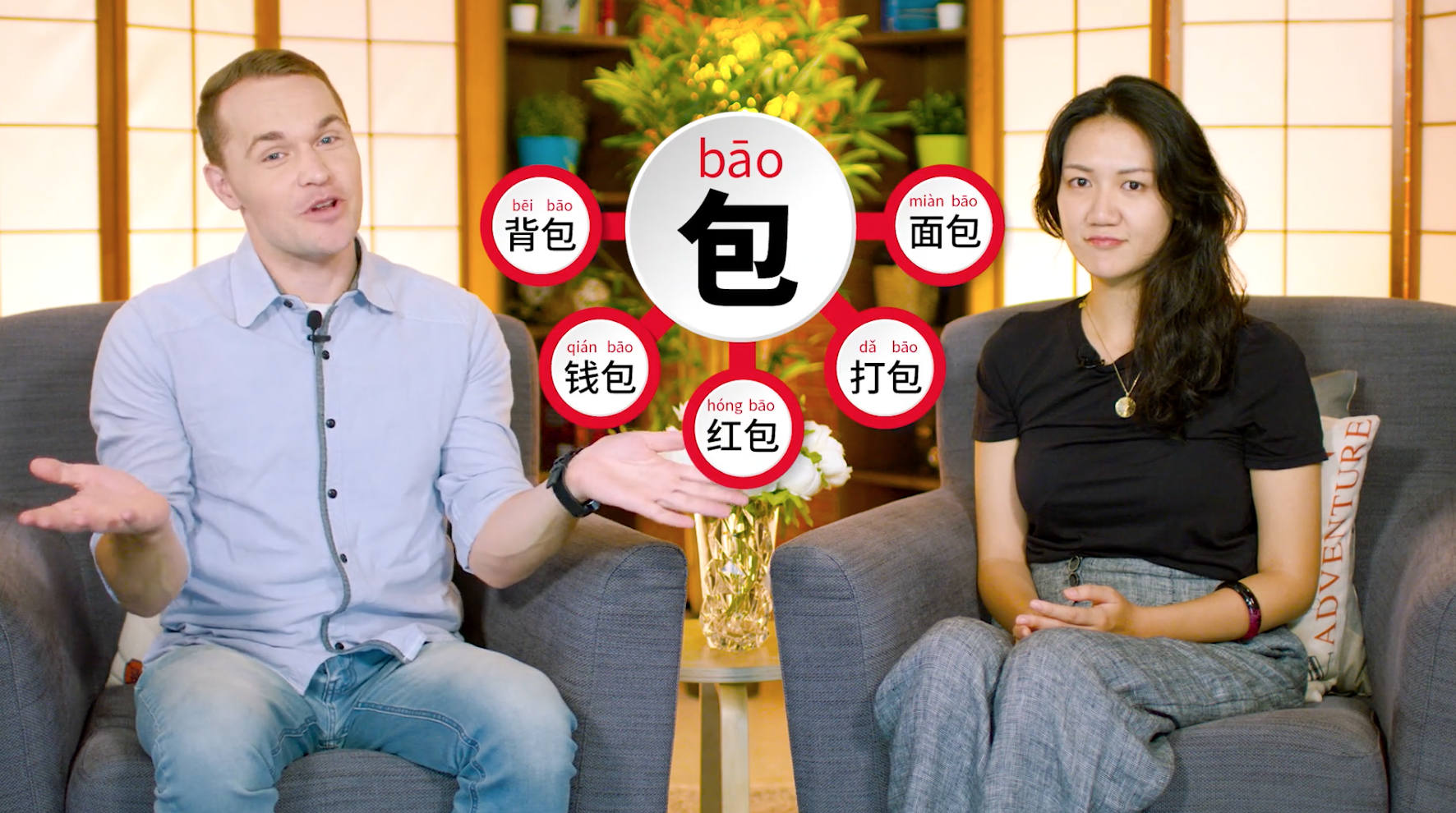
Lesson Introduction
Yes, this is the same health class that deals with the facts of life, however, you will have to patiently sit through a passionate lesson on the circulatory system before you get to that one. In this podcast, learn about what makes your heart go aflutter in Mandarin Chinese.
Comments
To comment, please login.
Comments Policy
Allowed comments do not necessarily represent the views of ChinesePod.com. We also reserve the right to reject personal attacks, false/unsubstantiated allegations, spamming of any kind, and comments that include vulgar language or libelous statements.
New lesson idea? Please let us know at chinesepod@praxislanguage.com.


changye says
July 9, 2008
老师们好!
Thank you for your detailed explanations about biological terms, but I think that you should also have mentioned some important phrases in the lesson, such as 连接起来,分~三种,and 我叫谁,谁起来回答!
standuke says
July 9, 2008
解剖猪胎当然不是佛罗里达的特色。在爱荷华州我们也解剖猪胎。上解剖课的时候,在我们附近的屠杀场送了我们一窝猪胎。有几个连体双胞胎。非常有意思!
Dissecting fetal pigs is not a special characteristic of Florida schools... it is a national rite of passage. In Iowa we were fortunate to live near a slaughterhouse that gave us a special gift of a litter of fetal pigs, including several conjoined twins. (!) As you might imagine it turned out to be quite an interesting class.
mark says
July 9, 2008
虽然我没有生物学细胞,因为谈论解剖让我想吐, 但是多谢中文搏客给我们那种课程。 现在我可以很开心地用中文让自己想吐。 :=) 加油!
guolanusa says
July 9, 2008
我第一次听今天的课程的时候有点紧张,怕自己没办法学好那么多专业的词! 第二,第三词听的时候才发现老师说的很对,很多中文词是很形象的,虽然翻译成英语听起来很专业,中文的词还是比较容易记住,就太好了,我可以轻松地学习,不用紧张了!
看汉字以后,发现连"细胞"也是很形象的,就是一个红色的,微笑的,在身体里面的包! 所以"细胞"的"胞"在左边有表示"身体"的形旁,在右边有"包",太有意思了,也很容易记住!
听的时候我也发现很多生词跟我学过的词有关,比如说,说"吸管"我就想起来"吸烟"和"吸毒",说"猪肽"我就想起来"堕胎".
总的来说,今天的课程让我学得很好,也记住了很多生词,我得意极了!
foleadu says
July 10, 2008
读书的时候,我对生物课特别感兴趣,尤其是神经科学。今天学到的跟生物有关的单词又有用又有意思。一开始学习中文,我被中文吸引住的一个原因是因为中文里有很多非常形象的单词,像“飞机”,“电脑”,等等。看来跟科学有关的词也基本上很容易理解,像”血管“,”毛细血管“等。我希望Cpod以后会有更多生物话题。我觉得你们可以用“解剖”来作为它的内容。
在我们的生物课,除了解剖猪以外,我们还解剖了青蛙.另外,我记得我们在实验当中观察了老鼠的行为,然后给它小手术(I don't think my Chinese is correct here...),让我感觉即恶性又有意思.老鼠死后,我们把它的脑子拿出来看手术的效果怎么样.虽然我的手术的效果很差,可是还是觉得很好玩。
In the Expansion exercises, the tones in the pop-up window for 责任 in this sentence: 对于在运输过程中出现的损坏,我们不承担责 seem wrong. Should be ze2ren4, not ze2ren2, right?
Also, I agree with Changye that occasionally you could spend a bit more teaching time on structural elements. That said, you do a great job 解剖ing the vocabulary and making the topic interesting.
foleadu says
July 10, 2008
guolanusa,谢谢你的“细胞”的解释!没想到这个词也挺形象的,通过你的说明现在很容易记住。
changye says
July 10, 2008
早上我看这门课题目的时候,首先想到的就是性教育。我就以为一个年轻漂亮性感的女老师会给活泼淘气的男生们进行一点色情的性教育,大家觉不觉得这种课挺有意思?还是白日做梦?但是很可惜,一听今天的对话我的邪念妄想很快就烟消雾散了。那位老师听起来好像是个年轻女人,可是很遗憾,从她口里说出来的都是血管动脉等很严肃的生物词汇,太干燥无味,一点情趣都没有。
说到性教育,我以前看见过一条令人吃惊的新闻,其题目竟然是保持共产党员先进”性教育”活动!那时候我深深地感受到中国人改革开放三十年的思想成就,不愧为有中国特色的社会主义,国家特意给党员进行先进的性教育!而且我当然想知道先进”性教育”的具体内容是什么。后来过了一段时间才发现我误解了,其实那个部分不是先进”性教育”而只是”先进性”教育。哎哟,汉语还是难学呀!
dldshanghai says
July 10, 2008
changye, 我第一次看到那个“先进性教育”的说法时,也引发了我的笑点,还有“群众性基础”等等。好想这些都无法避免的会产生歧义。
我的生物课回忆是,解刨蚯蚓的后一周就是解刨蝗虫,之后的第二周是解刨青蛙。很多同学(包括我)都受不了在青蛙的肚子上下刀,所以有的同学(包括我)都悄悄的把青蛙给放了。谁知道,两周后就是解刨兔子。有些女同学还故意请假不去上课,都不想伤害可爱的小兔子。
maoxian says
July 10, 2008
My masseuse often yammers about 血位. I have no idea how to translate that (pressure points, maybe?) and I don't know how they relate to blood (places where blood "collects" maybe -- seems like a silly idea, but it feels good when they're worked on).
I can tell the "teacher" is Shanghainese by how she says "捣乱" -- dao ruan instead of luan.
"xue" is a tough word for foreigners to pronounce, but John says it like a pro.
changye says
July 10, 2008
Hi guolanusa,
As you pointed out, in general Chinese words (and Japanese ones) are very easy to deduce their meanings once you master a certain number of characters, and this characteristic enables both Chinese and Japanese people to relatively easily read academic or technical books.
In China and Japan, even lower grades elementary students can guess the meanings of big words without much difficulty, such as 人类学 (anthropology), 古生物学 (paleontology), 考古学 (archaeology), 眼科 (ophthalmology), 妇产科 (obstetrics and gynecology), and 声音学 (phonetics).
guolanusa says
July 10, 2008
foleadu, 实际上我不知道我关于"细胞"的解释对不对,是我自己想起来的,自己认为很有合理性! 只是,因为不是一位老师告诉我的,虽然有道理,还是可能是完全不对的! :)
changye, 你第二段落的故事太好笑了! 是我第一次看到那样的误会的例子! 因为你的经验,将来碰到那样的说法,我会很清楚!
guolanusa says
July 10, 2008
changye, I didn't read your latest post until after I posted my above comment, sorry! My comment about your humorous second paragraph obviously refers to your earlier Chinese post, not to your most recent one!
guolanusa says
July 10, 2008
dldshanghai, 你们需要用刀的时候,那些青蛙还没死吗?!
foleadu, 你的老鼠还没死的时候需要给它手术吗?!
唉呀,我一定受不了! 老师的要求太严格了,为什么不让学生用一个不产生疼的办法来杀青蛙,老鼠吗?!
dldshanghai says
July 10, 2008
guolanusa,
Those frogs were alive at that time, before we cut it. Oh, actually we did nothing to them but shocked just after our teacher finished his "samples".
And, the 胞 is a very typical 形声字. The left side radical 月, has the meaning of 肉, and the right side radical 包 has the sound.
There is also alot of chinese characters only has the 形 (form). It's very interesting and easy to memorize them. Try these out: 凹 and 凸.
changye says
July 10, 2008
Hi dldshanghai,
In fact, the right part of “胞” has not only the sound “bao” but also the meaning “wrap, cover”, and the shape of “包” originally illustrates “a fetus and its wrapping membrane”. The original meaning of 胞 is 胎衣 (fetal membrane or placenta) which function is to wrap a fetus (肉...!). This type of characters are sometimes called 会意兼形声字, and it is said that most of so-called 形声字 actually belong to this category.
foleadu says
July 10, 2008
guolanusa, 不好意思,我没有把我的“试验故事“正确的标示出来,有的时候因为全神关注地写中文所以内容可能会有错误。我应该说,观察了老鼠的行为之后,好像注射了一种化学品,再看了它的被化学品影响的行为,最后注射使它死的化学品。它死了以后我们终于开始了手术。如果我们在它还没死的时候开刀,那太可怕了!还有,使它死的那个化学品应该不产生疼,可以放心 :)
dldshanghai says
July 10, 2008
Hi changye,
I totally agree with you about the meaning of 胞 and 包. But I don't think the 形声字 should belong to 会意兼形声字.
Chinese characters include Single Characters and Combined Characters. Combined characters can be divided into 会意字 and 形声字. 会意字 combined with two or over two single characters, and you can get the basic meaning (not sound) of this 会意字, according to the meaning of those single parts, like 盥 and 从.
形声字 combined with form (meaning) part and sound part, you can get a basic meaning and sound of this 形声字 according to the 2 parts, such as 露 and 铜.
And the 形声字 has different forms,
左形右声 (form left, sound right, like 铜 and 冻),
右形左声 (sound left, form right, like 削 and 瓢),
上形下声 (form on top, sound below, like 界 and 爸),
下形上声 (sound on top, form below, like 架 and 贡),
外形内声 (form outside, sound inside, like 固 and 病),
内形外声 (sound inside, form outside, like 问 and 闻).
Let's focus on the 包, what we call 字根 (root of the character). This single character can form a lot of combined characters with other different radicals, such as 抱,胞,鲍,跑,泡,炮. We can easily get the basic meaning and sound of these characters, 'cause they have the same root 包, which pronounced as bao1. Look closely, like 炮 or 饱, it's hard to relate them with the concept of 会意字. They are all 左形右声的形声字.
But, some characters are very difficult to distinguish, like 胞 and 闻, which can be accepted in both two different ways. So there comes the 会意兼形声字 (not only 会意, but also 形声).
According to the 《说文解字》, there are 1167 会意字. And 90% combined characters are 形声字.
So, I would say 会意兼形声字 actually belong to 形声字 or 会意字.
guolanusa says
July 10, 2008
foleadu, dldshanghai, 谢谢你们的解释, 我放心一点儿! :)
foleadu, 我和你有同样的问题, 还更严重, 自己清楚我想表示什么, 但是写出来的时候, 意思都改变了, 中国朋友们看的时候, 猜不出来我想表示的观点是什么!
s0395617 says
July 10, 2008
dldshanghai: can you possibly point to an online resource describing 会意字 and 形声字 in more detail? Thanks, Frank
dldshanghai says
July 10, 2008
Frank,
http://en.wikipedia.org/wiki/Chinese_character#Formation_of_characters
francinico says
July 10, 2008
Very nice lesson!
Just wanted to point out something that I found out by checking on my dictionary and using Wenlin: "hemoglobin" in chinese is 白红蛋白, 血色素 means "hemocrome".
Could someone verify this?
changye says
July 10, 2008
Hi dldshanghai,
说文解字 (100 A.D.) is a great dictionary, but in a sense, its content is already somewhat obsolete. A traditional theory known as 六书, six ways to invent Chinese characters including 形声字 and 会意字, also sometimes doesn’t fit the reality of Chinese characters’ interpretation. As for 会意兼形声字,it’s a relatively new concept, I don’t think it’s so important to discuss whether it belongs to 形声字, 会意字, or a brand new category. It’s just a matter of classification.
The point is the fact that sound radicals in 形声字 also often indicate important meanings. Conversely, even 形声字 needs a sound radical’s assistance to make its meaning more clear. For example, 胞 is generally categorized in 形声字, but its sound radical “包” explicitly suggest the original meaning of 胞. Some people mistakingly believe sound radicals always only indicate “sound” simply because they are called “a sound radical”.
I don’t think ancient Chinese people selected a sound radical solely based on its sound. I believe that they naturally tried as much as possible to use a sound radical that is appropriate both acoustically and semantically. And of course, their efforts were sometimes successful, and sometimes unsuccessful, due to limited number of radicals available. The character 胞 is a typical example of success, and you can easily find a lot of “successful” characters in 形声字.
Let’s look into 包-related characters. (A) 胞,泡,袍,苞,雹,鲍,炮,疱,炰,皰,饱 (B) 孢,刨,齙,跑,咆,庖,砲,骲. It seems to me that the characters in group (A) clearly connote “wrapping something” or “something round and wrapped” by using “包”. Please look at 泡, for example, the combination of “water” (水) and “wrapping” (包) beautifully illustrates “foam”. It is 会意字 rather than 形声字,and that’s just why you need a new concept “会意兼形声字”!
henning says
July 10, 2008
BTW: You find the 说文解字 (and a few other "classic" ethymology books) online here. If you can decipher the 古文...
http://chinese.dsturgeon.net/text.pl?node=26160&if=en
amber says
July 10, 2008
hi francinico,
Other authorities say it is hemoglobin. Maybe there is a doctor in the house? Actually, in English, the definitions of hemoglobin and hemochrome sound quite similar. From dictionary.com:
he·mo·chrome:
1. the red coloring matter of the blood
2. an oxygen-containing component of the blood
he·mo·glo·bin:
the oxygen-carrying pigment of red blood cells that gives them their red color and serves to convey oxygen to the tissues
sushan says
July 10, 2008
Here is an online medical dictionary I usually use when I need a very specific term. It uses British English spelling though, so all blood related 'he-*' words start with hae.
michele says
July 11, 2008
hi Amber,
from my old memories of university it seems to me that dictionary.com, at least in this case, is quite misleading, and the words, even if seeming similar, mean completely different things.
I'm not sure if in English it's different, it would be odd I think, but in Italian emocromo is the main blood test, in which is counted the number of all different blood cells, red cells, white cells and blood platelet.
Emoglobina is the protein within red blood cells carrying the oxygen. And it is essential for our life it works properly; even a little defect could imply dramatic consequences. So I'd say that, even if it's correct it's responsible for the red colour of blood, it is quite reductive to call it a simple pigment.
At any rate any doctor's possible confirm about my memories would be advisable and appreciated.
ciao Michele.
xiaoanolga says
July 11, 2008
好是好, 但我们还不知道为什么静脉的颜色是蓝的....谁要知道, 必须回答谁的问题, 是不是?
晓安
青、取之於藍,而青於藍 (荀子)
changye says
July 11, 2008
Hi dldshanghai,
> like 炮 or 饱, it's hard to relate them with
> the concept of 会意字. They are all 左形右声的形声字.
I forgot to mention this in my previous posting. The original meaning of 炮 is said to be “to grill paste-wrapped meat” according to my 古代汉语字典 (商务印书馆). As for 饱, I can easily imagine a guy who got a big belly eating too much! How about you? In this case, the radical 包 suggests that a lot of food is “wrapped in stomach”, just like a fetus wrapped in membrane.
Anyway, be careful not be taken in by etymologies. Every etymology is seemingly very plausible, and there are usually several “plausible” etymologies for one character. And to make matters worse, some scholars employ somewhat distorted reasoning to explain their interpretations. That being said, etymology is a very exciting part in learning Chinese.
michele says
July 11, 2008
hi xiaoanolga@, let me try an unbelievable hazardous (for my poor Chinese) interpretion of you post...
the blood flowing in the veins is coming back from the outer parts of body, it loose its oxygen and than changed its colour, and it' s no more bright red as arterial blood, and it becomes pretty darker, even though not really blue. I think that bluish colour of veins, seen from outside the skin, in part depends from this reason. But I also think that can be related to a completely different structure of venous vassels from arterial vessels, having they to bear pretty different blood pressure.
pinkjeans says
July 11, 2008
Not a doctor, but hopefully my pharmaceutical training will put me in good stead here. Haemoglobin is the component of the RBC which carries oxygen and consists of haematin (also known as haemochrome, a pigment which contains the iron chelate complex called haem), and a protein known as globulin.
haemoglobin - 血红蛋白
haematin/haemochrome/haem - 血红系
pinkjeans says
July 11, 2008
Having just said what I did, I believe for everyday conversations, 血红素 is fine to use as a term for haemoglobin since it translates to 'red pigment of the blood' which is what most people take it to be anyway.
Sorry, typo above:
haemochrome/haematin/haem - 血红素
michele says
July 11, 2008
hi pinkjeans@,
thanks for your correction, it was useful.
BTW, the English name for the blood test usually called in Italy emocromo should be blood count, would you confirm please?
ciao Michele.
pinkjeans says
July 11, 2008
No sweat, Michele. From your description of emocromo, it does sound like blood count. Ciao! :)
changye says
July 11, 2008
Hi xiaoanolga,
> 青、取之於藍,而青於藍 (荀子)
This verse is well known in Japan too. Its Japanese translation is “青は藍より出でて藍より青し”. I don’t know if there is an equivalent English saying, but its free translation should be “outstrip your master” or something like that. By the way, I’ve come up with a new version, 静脉,成之于血,而青于血。
xiaoanolga says
July 11, 2008
Hi Changye, I do not think there is an english equivalent to this Xunzi saying(and I'm sure there is no French one). I always interpreted this as meaning that man is able to alter something natural to get something better (藍 being the plant from which one get the stuff to dye things in blue - polygonum tinctorium: indigo- )
on colour topic: what about 苍? it can also be translated as blue/green but in a sense is an antonym of 青 (as you can see in 苍白, 白发苍苍...). Do you also have in Japan the phrase 天之蒼蒼,其正色邪? (answer: no, 真正天空的 颜色是青的)
changye says
July 11, 2008
Hi xiaoanoga,
苍 is a strange character. As you wrote, its meaning is blue/green, but interestingly, 苍白 means "pale", and 苍苍 "gray, dark green, vast (sky or sea)", and therefore 白发苍苍 literally means "ash-colored hair". Its implication is "old, elder". "沧" also means "blue", and this character usually indicates "dark green water". The chengyu "沧海桑田" is very famous both in China and in Japan. Actually, I "literally" realized its meaning after I came to China. Everything changes so quickly here.
user34695 says
July 20, 2008
Two comments about this lesson. I am a pathologist and perform autopies. Performing autopsies or dissections is not cruel as discussed in this lesson. The only evil in this world is ignorance, whether it be ignorance about the functioning of the body or how a loved one died. (How the Egyptian embalmed the dead for eons and did not contribute to the understanding of physiology is a testimate to human seeing without curiosity.)
Second, the color change in blood in oxygen is due to the shape change in the hemoglobin four complex molecule with the progressive binding of oxygen to each of the heme rings.
rjberki says
July 21, 2008
thank you pathologist user34695. You should post more often. How do you say pathologist in Chinese?
amber says
July 21, 2008
hey RJ,
病理学家 (Bìnglǐxuéjiā) Pathologist
rjberki says
July 21, 2008
Amber,
thanks. Very logical. Study of the reason for illness.
RJ