gracechen7874June 22, 2019
条条大路通罗马。在这儿肯定能发财, could you please explain more about this sentence? thanks.


massine145September 10, 2011
Why is huì translated as meeting in the pop-up box in the 5th set of 3 expansion exercises? It seems to have no relevance to the translations in the exercises themselves.

bababardwanSeptember 10, 2011
massine145,
you are right. While 会 can refer to a meeting, it is not being used in that way in any of those 3 expansion sentences. In those examples it is being used to mean "ability"..so 真会 and 很会 both mean "really good at" [something]. I guess there is probably a set of popups for words that can have multiple meanings and the wrong one was slotted in here.
massine145September 11, 2011
Thank you very much. It's nice to have someone relate positively to me on this day of all days. Yes, I thought that was the wrong meaning assigned to huì. I've noticed the same thing in some other pop-up boxes but never so many in one area as here. Of course, I've left messages about them in the comments but they seldom get fixed. Not so important for students at the Intermediate level as here, but I sympathize with struggling Newbies that run into it. Best of luck to you in the future.
yaomin8808June 11, 2011
Duìbuqǐ, bertson142, zuótiān 'shàngyún' yīnggāi shì 'jīntiān shàngxún zǒu le!' Jīntian zhōngxún lái le!
bertson142June 10, 2011
In the 12th exercise of the expansion the wrong English is given for huā. This is in the little pop-up box that also gives the simplified & traditional calligraphy for the term as well. Just an accident I guess. And now as I say zàijiàn, I will also say xièxie, yaomin8808, for the tip on shàngyún.
leslie130June 10, 2010
Xuyuanchi shi yi ge hao Zhongwen de mingzi jiao de
'Trevi Fountain'. Qing wen ni 'St. Peter's Cathedral'
jiao shenme Zhongwen mingzi? Shenme jiaotang
haishi shenme? Bang wo. Xiexie.

leslie130June 11, 2010
Xiexie, jjinfrance. Wo juede geng hao shi Sheng Bide Dajiaotang haishi Sheng
Bide Zongjiaotang. John haoxiang hu tu le gen wo de
zhongwen. Kan ta de 'info'.
Yi qian xiexie, leslie130
wxgcathyDecember 12, 2008
以为---认为
From 《对外汉语词汇教学》,主编 潘文国 ,华东师范大学出版社 2008年
《现代汉语词典》在对外汉语教学领域发挥了积极的作用,……但是存在着若干不足的方面,……有必要对一些不足进行简单的评述。
……
(四)词义概况不准
以为:认为
照此解释,“以为”和“认为”没有区别,那么“我以为她走了”和“我认为她走了”表达的就是相同意思,可这不符合语言事实。这样解释也许要好一些:“判断(事后证明是错误的)”
simple translation: It's well known that《《现代汉语词典》is the most authoritative dictionary , but it unavoidably has flaws.
for instance: 以为 defined as 认为 which doesn't accord with fact.
this explaination might be better: judgement( which is proved wrong)

klgardensongOctober 26, 2008
Hi, Amber.
Just wanted to send a very belated thank you for the from scratch formulation: 全部自己做 (Quánbù zìjǐ zuò).
K.

tvanOctober 24, 2008
I guess I took your comment too literally. Oh well, good practice. Also, thank you for introducing me to the word sandhi, especially tonal sandhi.
luojieniOctober 24, 2008
N.B.: of course, due to a rather widespread teaching methodology, the pinyin provided above does not take into account sandhi.
luojieniOctober 24, 2008
Hi, tvan, it was not a question really. A correction, rather. I have spent hours trying to figure out why the sentence "all roads lead to Rome. Here, you can certainly make money", or similar, didn't make sense to me at all. It was, as we say, incoherent.
I have enquired a bit, and hypothesized a rather different meaning for that sentence in that precise context.
My idea was to translate that utterance as "we should get to live in Rome by any means, or ways: here, one can certainly make money" - which made way more sense to me.
Not knowing if I was right - since I am a beginner and all - I've challenged a native speaker from Beijing with that sentence pattern. The very same you find in this dialogue. He asked me the reason of my apparently strong desire to visit Rome.
Since a beginner speaking Chinese is usually not understandable, I thought I said something else. I wrote it down to him. The analysis I provided above is his own. He even thought I was quite stupid, btw.
If I understand his interpretation the right way, the final utterance of this dialogue would finally make sense, and have its own coherence. If not...Never mind. Probably, we all got lost in translation.
tvanOctober 24, 2008
luojieni, if I understand your question correctly, I would parse 条条道路通罗马 as 条条 (two consecutive measure words for roads meaning, in this case, "every") 道路 ("path/road") 通 ("passes through/connects to") 罗马.
luojieniOctober 24, 2008
eeeehm...hello?? I am a perfect NEWBIE, but...
条条道路通罗马!(tiao2 tiao2 dao4 lu4 tong1 luo2 ma3 !) "We must get to rome through all kinds of ways !" Not, "all roads lead to Rome"!
At least in that context.
Oh, come on!
Unbelievable.
stolpatOctober 21, 2008
Hi Punter,
I took the elementary test a few years ago and - by some kind of miracle - mastered it (elementary A). But still it was a torture, I felt quite lost. It is not enough to know some Chinese, you have to study especially and only for the test. This means, get a book with HSK test examples, study nothing else for at least three months and when you are able to succeed (30%) with the examples, go for it! Good luck for the next time!

RJOctober 20, 2008
Thanks Punter,
Dont feel so bad, chalk it up to experience and try again. Maybe I will too.
punter888October 20, 2008
Changye,
You are right...it was indeed torture. Hence it reached the point where I quickly filled in the bubbles are random and made a sprint for the exit door, making the best of the remainder of a nice fall Hong Kong day.
This exam could figure prominently as an inner ring in a Chinese version of Dante's living hell!
Fred
punter888October 20, 2008
RJ,
I took the test in Hong Kong, purely out of curiousity to benchmark my progress. I expected a big crowd of takers, but there were only 3 people, myself included. Perhaps this explains why there is so little information available on the internet about it! I took the Elementary version, which is the most basic "grown up" version of the exam. They have recently launched a "rote beginner" version of the test, which perhaps would have been more appropriate for me, but I was unable to find info on where to take this anywhere!
I may have scored some on the listening comprehension...40 questions. Listen to short dialogue in Chinese, listen to question in Chinese, then choose from a selection of photographs which applies.
The remaining 100 or so Q&A were all in Chinese. The first 50 or so were of the format - question in written Chinese, choose from a selection of answers in Chinese. Educated guesses might have enabled me to beat a random score here.
The last 50 or so questions were of the format - paragraph in Chinese, 3 questions in Chinese. With one minute per question, meaning you had 3 mintues to read and digest the paragraph, and get through the answers. This really required mastery of the vocabulary. It was this section were I realized that I was effectively making random guesses.
Now I know what I am up against for next year. Generally speaking, I think it may be a waste unless one has dedicated some serious hours to learning written Chinese. As it is, I did pretty good to get past the Chinese test application. We'll see if I filled in enough of the test form details (in Chinese of course) such that they are actually able to process my score!
This is definitely not something for the casual learner!
Punter

changyeOctober 19, 2008
Hi chrka,
Thanks for the correction. Looks like I mistook "basic (基础)" for "elementary/Intermediate (初中等)". Now, the new question is which test punter888 took after one and a half years of independent learning. If I were him, I probably wouldn't take the Ele/Inter.
chrkaOctober 19, 2008
changye,
actually, what you are describing is the HSK Basic test. The elementary-intermediate is a different, and I would guess, much harder test. It is divided into 6 levels (Elementary C/B/A, Intermediate C/B/A) where the Elementary C level corresponds to the Basic A level.
Basic A / Elementary C is indeed the minimum level to enter a Chinese university, but only for undergraduate science, western medicine and such subjects. Graduate school and humanities require higher levels.
RJOctober 19, 2008
Punter,
at least now you know what you are up against and what to expect. To me the test is a mystery. If you dont mind sharing I would like to hear more about what was on the test and how it was structured. Where did you take it at? Send me a PM if you like. Elementary level A means you can enter a Chinese univ, does that mean you should be able to handle classes taught in Chinese?
RJ
tvanOctober 19, 2008
punter888, first of all, better luck next year; and don't be discouraged. The HSK is a major league test. Also, like many of these tests, there is a unique logic and methodology to taking the test. Oone could learn enough Chinese to function and still fail the HSK.
changyeOctober 19, 2008
Hi punter888,
I think I understand how you feel about HSK. I felt "dizzy" when I glanced over a HSK workbook at a bookstore in China before. It seems that considerable (and exact) knowledge of Chinese grammar is required to get high score even on the elementary level, which is the reason why I never take the test. I just don't want to disappoint myself, haha.
The elementary HSK is further divided into three levels according to your score, namely A (210-300), B (155-209), and C (100-154), and the problem is that the level A is said to be theminimum skills needed for entering a university in China....WOW. So, if you are "a real elementary learner" by ChinesePod standards, taking this Chinese proficiency test would be a kind of torture!
punter888October 19, 2008
Off topic conversation here. Just left the HSK Test Elementary level. Let's just say that these people take a different view of the meaning of Elementary than our friends here at CP! After 1 1/2 years or independent learning, I was way out of my league. With most of the test being written, and with page after page of Chinese characters....you think you know how to read a bit of Chinese....recoginize a few characters here and there....needless to say this is a totally different deal from getting through paragraph after paragraph of characters, with multiple choice thereon. After realizing that the contribution of "educated" in my educated guesses was rapidly approaching zero, I capitulated and randomly filled in the remaining blanks so as to leave ASAP and preserve the remainder of my diminishing afternoon. Hopefully I'll find some encouragement in the form of something better than a random guessing score on the relatively small verbal section! Please join me in wishing me better luck next year!
anonymous239594October 18, 2008
It's great that this lesson features 怪不得, detailed in one of the recent Qing Wens (No Wonder!).

billOctober 17, 2008
谢谢,Jenny !
The weather is windy here and the wedding is outside about 30 feet from a beautiful aquamarine ocean.
Wow! The entire family is here and that is a lot of people. Very nice.
Bill

henningOctober 17, 2008
changye, John, wxgcathy,thanks for this illuminating discussion. It really helped me grasp the concepts, their differences, and their background. I myself love (passively consuming) those nitpicky arguments.
changyeOctober 17, 2008
Hi John,
For practical purposes, stick to the rule "以为 is for mistaken ideas."
You are very right. Actually, I also always use this word only in this sense, hehe. As you know, I love a nitpicky argument. Thanks for your post.
changyeOctober 17, 2008
Hi wxgcathy,
Thanks a lot for your posting. To tell you the truth, I’ve been expecting a native Chinese speaker to give an opinion on this matter, which has long been on my mind. I really enjoyed reading the discussion in 北大中文论坛. To my surprise, it seems to me that there is no clear conclusion reached by native speakers in the forum.
in a word , ”以为” always mean "mistakingly think".
I still don’t think so. I think that “以为” can be used in the sense of “suppose, think” or “guess, feel” depending on the situation and the context. At the same time, I readily admit that “以为” is very commonly used to mean “mistakingly think” in modern Chinese, which is the reason even natives are not sure about its other usage.
Of course, “以为” is not interchangeable with “认为” since the latter connotes firm conviction or judgment about something, and therefore the word should be translated as “regard” or “consider”. On the other hand, “以为” is used to mean “suppose, etc” when you modestly (or humbly) expresses you opinion, often without conviction.
As for 现代汉语词典, I also think that its definition of “以为”, i.e. 以为 = 认为, is not appropriate, or at least it is one-sidedly defined. My 汉日词典, edited for learners and published in Japan, meticulously explains about several usages of “以为”, including ones that means “suppose, guess, feel” and “mistakingly think”.
Interestingly, “以为” meant “认为” in ancient Chinese. It’s understandable, considering 以为 might be a shortened form of “以A为B”. There are some set phrases such as “不以为然” (not consider to be right) and “不以为奇” (not consider to be strange) still used in modern Chinese, although they are usually used in written Chinese.
Judging from above facts, “以为” (= suppose) might be a little out-of-date usage. As is always the case, dictionaries tend to be conservative and behind the times, and I surmise that the definition in 现代汉语词典 will be revised in the near future. Anyway, “以为” doesn’t necessarily always mean “mistakingly think”, exactly speaking.
JohnOctober 17, 2008
It's true that 以为 can sometimes mean "think (not mistakenly)," but this somewhat formal usage tends not to appear in spoken Mandarin. For practical purposes, stick to the rule "以为 is for mistaken ideas."
user16190October 16, 2008
亚比
Dear everybody
Please help, 亚比 is a name of a place, however what is it in English?
Dzung

amberOctober 16, 2008
Hi huasen,
Yes, you can use 以为 where the mistaken idea persists as well as when it has now been revised. Your example sentence is correct.
amberOctober 16, 2008
hi martoian,中心 (zhōngxīn) just means 'center'. So to mean 'city center, you would have to say:
市中心 (Shìzhōngxīn)
This 市 (shì) is the same 市 (shì)as in 市区 (shìqū).

pearltowerpeteOctober 16, 2008
Hi pinkjeans,
You are right, the term coliseum apparently dates only from the middle ages. Fun facts about this barbaric yet enjoyable way to spend an afternoon:
the word "arena" means "sand," referring to the layer of sand that was spread on the floor to absorb blood for easy clean-up.
Emperors could punish unruly sections of the crowd by selectively rolling back portions of the sun shade to expose them to the baking Roman sun.
And there is an on-going discussion about how exaggerated the descriptions of naval battles in the amphitheater really were. Some reports describe full size galleons doing battle in the flooded arena.
RJOctober 16, 2008
Huasen, Im guessing also but I would think that 以为 is used in a situation where the facts have shown someone to be wrong such as I (he she or they) thougt something and it turned out to be wrong or they realized it was wrong. Your example is more of an opinion where one person thinks one thing and another doesnt agree. 以为 is not needed. Just my opinion but it may turn out to be a good example where we can use 以为.

frankOctober 16, 2008
Hi, Jenny! So sweet of you to welcome me back personally. I feel very special. :-)
huasenOctober 16, 2008
Can you use 以为 where the mistaken idea persists as well as when it has now been revised?
That is, can you say 很多人以为这个城市很无聊,其实有不少的令人兴奋的地方 meaning 'People thing this city's really dull, in fact it has quite a few exciting places'?

jennyzhuOctober 16, 2008
oops, double whammy: I meant spring and fall. And 'calendar' not 'calender'.
jennyzhuOctober 16, 2008
Bill,
We have a traditional calender known as 'the yellow calender', 黄历/huang2 li4. It has extensive information on how lucky and unlucky each day is, what one should and shouldn't do on that day. When choosing the wedding date, that's what most Chinese base their decision on. While many may not entirely believe in the validaty of the 黄历, they see it as a tradition and auspicious sign that doesn't hurt to keep. Of course, good months of the year also play a big part in it. Spring and summer are favored time of the year. Choosing good dates from these 2 seasons, preferrably a weekend means that there are only so many days which meet all of these requirements. Therefore, the crazy clash of weddings.
billOctober 16, 2008
PS> An unrelated question? Is there something about this coming weekend that is special for Chinese weddings. We know two Chinese couples that are getting married this weekend.
In fact, we are in Cancun, Mexico for one of the weddings.
The other couple by the way is of note. A good friend, Amber Liu, is marrying Michael Chang (the tennis player) in Newport Beach, CA. on Sunday.
Bill
billOctober 16, 2008
The last time we were in Rome after wandering around the "Colosseum" we decided to look for a restaurant nearby that was not for tourists. We walked up a side street and entered a very small, unassuming place where only Italian was spoken and the owner presented us with a menu in Italian. To make a long story short, we had a delightful fish lunch and when we returned that evening with our friends the owner was so happy to see us that he tried to get us drunk on his best wine and liquor for no charge! Yes, Rome is wonderful place where one can definitely get "culturally rich."
In reference to the lessons closing line, money wise I wouldn't count on it though. I've done business in Rome and have friends elsewhere in Italy. Life financially can be very difficult there even for technically talented people.
But Italy as a country to visit is superb! One needs to get away from Rome and stay in a small village, say, in Tuscany or on the West coast. Amazing times can be had!
And yes, the best coffee in the world is found in Italy.
Bill
wxgcathyOctober 16, 2008
changye
你好。
我认为:“以为” 和“认为”的区别是,简单说,“以为”是不正确或不准确 的“认为”。
词典的例子:这部电影我以为很有教育意义。隐含未说的意思是“但是看完以后,我觉得没有教育意义”
所以说,词典对“以为”的解释欠妥。正好我在“北大中文论坛"(www.pkucn.com)看到有人讨论这个问题,你不妨看看:
http://www.pkucn.com/viewthread.php?tid=195263&extra=&page=1
in a word ,"以为”yi3 wei2 always mean "mistakingly think".
klgardensongOctober 16, 2008
Pete's right, you can't visit Rome without falling in love with it. I was there again last March and never wanted to leave. (Although long-term I'd probably stay in the country and do short city trips.)
Jenny, I saw Roman Holiday for the first time after I got back--and it's definitely a blockbuster in my book, newly released or not.
This trip I skipped the coliseum/Colosseum for a chance to eat lunch in a Roman elementary school. The seats were a little small, but the food was great. Rome's the first major city in the world (I'm pretty sure) to go to almost 100% organic food in their public schools--and they cook from scratch every day. Quite a contrast with the U.S.
How about a "Saved by the Gong" during lunch period!
How do you say "cook from scratch" (meaning to start with separate ingredients and whole foods instead of opening cans and boxes of processed foods) in Chinese? Has hyper-processed food been around long enough for such a phrase to have developed?
K.
changyeOctober 16, 2008
The word "以为 (yi3 wei2)" does not always mean "mistakingly think". It is sometimes used to mean "suppose/think" just like "我想~".
"以为" and "认为" (ren4 wei2) are similar to each other, but the latter is more formal and should be translated as "regard, consider."
Here is an example from 现代汉语词典.
这部电影我以为很有教育意义。I think this movie is very educational.
missworldtravelerOctober 16, 2008
I'm so happy. I didn't understand everything in this lesson but I understood a lot more than I thought I would. I think it's because I already knew some of the vocabulary.
martoiadOctober 16, 2008
Hi,
i've been using chinesepod for almost a year now and i'm really amazed by the results i have achieved so far and that's thanks to you guys! jia1you2 chinesepod;-)
i have a question concerning shi4qu1; i think it was in an earlier lesson that you mentioned that downtown is actually zhong1xin1... can the 2 be used interchangeably?
thx
martin in heidelberg/germany
pinkjeansOctober 16, 2008
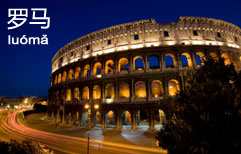
Hi! Just wanted to point out that structure in Rome is called the Colosseum. I suppose it's a Roman coliseum, but I believe it was named the Colosseum because of a colossal statue of Nero near it. Many places later adopted a changed version of that name and called their arenas coliseums, but the Colosseum in Rome still stands.
frankOctober 16, 2008
Hiya, John! You'll be seeing a lot more of me in your neighborhood before you know it. Hehe. Details coming soon!
mikenotinjubeiOctober 16, 2008
Thanks Amber
Those are also very interesting.
I especially like the last. Not being careful and forgetting. Not sure it would go over with my wife if I forgot her B-Day.....
amberOctober 16, 2008
hi mikenotinjubei,
说错了 (shuōcuò le) said by mistake做错了 (zuòcuò le) mistakenly did不小心忘记了 (Bù xiǎoxīn wàngjì le) accidentally forgot
mikenotinjubeiOctober 16, 2008
CPOD
Sorry if this is covered in the lesson discussion. I can not stick earplugs in until I return home. But I found the word :以為[-为] yǐwéi "mistakenly think" very interesting.
In one sense it can be a "weasel word" for explaining a wrong idea even if it was a firmly held opinion when caught out.
Are there similar ways to say
mistakenly said
mistakenly did
mistakenly (accidentally) forgot
others?
JohnOctober 16, 2008
frank,
Great to see you "in my neighborhood." :)
I'll have to see Rome for myself one of these days...
JohnOctober 16, 2008
Speaking of tone changes for 不过 (bùguò), we do have a lesson about this specific tone change rule: Tone Rule: Changes for 'bu' (which bettine mentions above).
Pinyin has rules, including rules for how to write the tones when the tones change, so to write "búguò" instead of "bùguò" would actually be incorrect according to the rules of pinyin as laid out by its architects. (We don't make the rules...)
So that means you really have to know the rules!
frankOctober 16, 2008
I've actually eaten dinner across the street from the Coliseum in a restaurant called Il Gladiatore. Quaint little place. Ah, memories! :-D
PirminOctober 15, 2008
amber, jennyzhu and sharesindavid
thank you very much for your explanation about the tones! The "search" function led me well to the tone rule #2, where the tone changes for "bu" are explained.
I also remembered that the tones with yi 一 can change, but I don't know details.
Sometimes I think it might also be helpful not always to concentrate too much on single tones and over that to forget the prosody or intonation of the whole sentence.
Yes, ChinesePod is overwhelming!

sharesindavidOctober 15, 2008
bu4 becomes bu2 when in combination with another fourth tone. the dictionary entry for 不, however, is "bu4" and sometimes when things are transcribed in pinyin it is still written with the fourth tone even though pronounced as second. similarly, you probably know that 一 yi1 is realized as yi2 when in combination with a fourth tone and yi4 when in combination with any other tone, though the allomorphy is not always marked in pinyin.
but that reminds of a question i had. or two:
1) would 不继续 be pronounced "bu2" or "bu4" ? because the ji4 is kinda doing its thing with the xu4 more than with the bu, if that makes any sense.
2) is 一个 pronounced "yi1 ge5" or "yi2 ge4" or "yi1 ge5" (or does it vary)? i try to listen to natives, but sometimes they blur over both characters so fast it sounds like they're both neutral.
jennyzhuOctober 15, 2008
My first impression of Rome was from the film Roman Holiday. My mom took me to see it in a cinema when I was 5 or 6. There was an influx of Hollywood classics to China in the early 80's after the country opened itself to the world. I remember cinemas would show those classics as if they were newly released blockbusters. In some ways, they were since it was the first time people saw them in China.
jennyzhuOctober 15, 2008
bettine,
It's bu2 guo4, because when 不 is followed by a forth tone, it becomes the second tone. For example, 不去/bu2 qu4/not going. Tone changes are a slightly tricky subject in Chinese. But most of the changes are guided by rules rather than randon such as the case of 不. As a new learner, don't get too overwhelmed by and obsessed with every tone change, just remember some most common ones. That will certainly suffice. We have lessons and guidlines on tone changes. Just search 'tone change' or check the pronunciation guide. Enjoy ChinesePod!
massine145September 10, 2011
Also, your clock is mistaken. I didn't send the previous message by anywhere near 8 min. ago. It was more like 2 or 3.
massine145September 10, 2011
Well, now I see the 1st 8 min. has been reduced to 6 min. What next? I'll have to keep watching.
massine145September 10, 2011
I see now all messages have been moved into the future by saying they were sent more recently. Fascinating stuff there at Chinesepod!
amberOctober 15, 2008
hi bettine,
Yes you are correct. Though in proper Pinyin, the tone change is not reflected, when pronounced, the 不过 is pronounced (búguò).
PirminOctober 15, 2008
How do you pronounce 不过, in the vocabulary list we have bùguò, but it sounds like búguò. (And this is how I learned it before, I heard that "bu" sometimes can change the tone. Does that frequently happen?)
Hello to you all, I came to Chinesepod two days ago and I am in my free trial week. I like it very much, it is great!
I remember a talk with a friend from China about historical places in Rome many years ago. He wondered a little bit that some places look so old and not so well-restored (like historical places in China might be).
changyeOctober 15, 2008
罗马不是一天建成的 (Rome was not built in a day.)luo2 ma3 bu4 shi4 yi1 tian1 jian4 cheng2 de.
汉语不是一天学会的......哈哈。
pearltowerpeteOctober 15, 2008
How can you visit Rome and not fall in love with it?
Here's to the eternal city,
不朽之城!bu4xiu3zhi1cheng2!

What did you notice in this lesson?
You are posting as a guest. Your reply is reviewed before it appears. Log in to post without review.