
byronmeinerthAugust 7, 2010
This lesson was really dramatic and really helped with remembering everything. Thanks!


dunderklumpenAugust 8, 2009
Hi anayelena
I'm not the right one to answer your question but I got an idea when I read it. I just arrived from an 8 day trip in China. I frequently heard the chinese say
人太多了 ren2 tai4 duo1 le5 There's too much people (ren2 is a noun)
and
太热了 tai4 re4 le5 It's too hot (re4 is an adjective).
I also remember my chinese friend say 蚊子太多了 wen2zi5 tai4 duo1 le5 Too much mosquitoes (wen2zi5 is a noun).
With this in mind I guess 风太多了 feng1 tai4 duo1 le5 would be and intelligible pattern (since feng1 is a noun), but I might be all wrong...
mnixonAugust 8, 2009
I understand how 太闷了 refers to "it's too stuffy"...but for a word like wind 风...is it correct to say, "太风了" or is it better to say 有真的风 yǒu zhēnde fēng!
From MDBG.net: 有风 yǒufēng windy
jiantingJune 3, 2009
sballa and Cornelia,
I remember visiting museums in Beijing in the wintertime. There was no heat at all.
If I had been in Washington DC, the buildings would have heated.
My theory is that westerners are accustomed to adjusting clothing frequently during the day as they transition from indoors to outdoors, whereas the Chinese remain dressed one way pretty much all day long since the temperature differences are less extreme...

henningMarch 3, 2009
chengwo,just checked - both in the lesson and the dialogue tab it is clearly "tài lěng le" (太冷了)。
Maybe you are misinterpreting the 3rd tone rhythm of the "lěng" syllable which kind of kneads the sound?
chenggwoMarch 3, 2009
In the dialog, I notice that the woman actually says tai le lung instead of tai lung le. I can't understand why the discrepancy was not noted and expained. Perhaps because it just plain is a mistake and there is no use in pointing it out and explaining it? Perhaps I am mishearing it because the ng ending is so much less emphasized in Chinese.
kanjihanziDecember 26, 2008
Yeah, I know, Jervin.
But that's the problem with Low Cash Flow: can't use all the alternatives the rich guys/gals employ to get even more money ;-) Guess my day will come too.
Best,
KanjiHanzi
jervinDecember 23, 2008
Kanjihanzi,
I was looking at the subscriptions and if you have the year subscription then it bumps the price down to $20/month. I didn't check on the 6 month but subscribing for a longer time drops the prices.
kanjihanziDecember 22, 2008
Very nice lesson, as usual. As a new 'customer' I must say that I am very impressed by the quality of the material here. My only objection is the price of the premium service (which is the only one I could consider): $29/month is steep in these recession times no matter the quality.
That said.... Since 'we' where into character recently - anyone remember The Radical Show :-) (and I can't understand the extremely negative reactions to that rather cute little video) - I can't view the stuffy mēn - mèn 悶/闷 character as Heart Inside/Between Gate. I see nothing but a slightly slanted and distorted smiley locked up there ;-)
Happy Holidays to all!
dunderklumpenDecember 18, 2008
pete, jin1si1, calkins
Nice to see that the le discussion is not dead yet. These were some good examples and a nice explanation. Last days I have been reading about sentence final particles. I understand 了 can sometimes be used to soften tone.
I think maybe 'cause in the first case the person is already crying so it's like, " don't continue crying" or something.
Besides from that function, can the 了 in 别哭了 bie2 ku1 le5 also have the function of suggestion, soft tone kind of thing, mum consoling a child etc. (as opposed to an imperative -别哭了!!!), or would one use an other particle, e.g. 别哭了阿, for that?
(Earlier le discussions here and here.)


pearltowerpeteDecember 17, 2008
Hi jin1si1
Exactly right! It's so cool when poddies help each other out.
If the other person has not started their action, there's no need for the 了.
jin1si1December 17, 2008
Calkins,
I am gonna guess an answer to your question, but I'm not really sure...
I think maybe 'cause in the first case the person is already crying so it's like, " don't continue crying" or something.
maybe you could also say 别说了. "stop talking" or "don't speak"
有的时候我不明白了的意思.
就的意思也很麻烦.
calkinsDecember 17, 2008
Connie is the best! She should definitely win Best Actress Award at this year's CPod Oscars.
I know I'm opening up a can of worms with a 了 question, but why does this expansion sentence have a 了...别哭了!(Don't cry!)
But these two don't...
别动! (Don't move!) 别过来! (Don't come over!)

CorneliaDecember 17, 2008
Hi sballa,I think differences in constitution depend entirely on how you are brought up - it is a sort of gauging for temperature. Watch how babies and toddlers are clothed by their parents in different weather: I have seen bare children‘s legs in the UK when they would be wrapped in warm overalls in Germany - both with parents of seemingly average social stratum. And later in life long johns can‘t be worn together with a British school uniform. Societies obviously differ in how they are afraid of cold - to my experience Anglo-saxon societies are much more robust, whereas Germans and Chinese are pretty compatible in anticipating death by cold. You‘ll see this also in the focus given to house-building and sealing of gaps in windows etc. - but the German anxiety of „draught“ is famous...
huai_houziDecember 17, 2008
Definitely no KaiChuang'ing in this weather. The dialogue made me cold just listening to it!

sballaDecember 16, 2008
Last night, my students asked me if I was cold. I had been teaching class in a short sleeve polo shirt. In the meantime, many of them had their coats on, and were gripping their containers of hot water.
This led to a discussion, instigated by the students, of whether Chinese people are just not able to tolerate the cold as well as westerners.
What really got them was when I mentioned how I was not wearing any long underwear under my jeans. Judging by their reactions, my guess was that every one of them, or nearly so, was indeed wearing layered clothing.
My ultimate take was that although DC and Beijing have reasonably similar weather, one feels colder in Beijing because you are simply outside more. In DC, one walks from the house to the car. Here, it is from the apartment to the bus stop. A lot more time outside.
So I tried to make the case that it was not differences in constitution across east and west, but simply that people here spend more time out in the cold.
This doesn't explain, though, why I was so warm in the classroom and they were so cold...
Steve
CorneliaDecember 16, 2008
Thanks to CPOD for this lesson - sounds so familiar, also for German offices !
Best compromise to be achieved may be that you open the window really wide for 3 minutes per hour and have it shut it between. Thus it cannot become too stuffy and energy for heating the room is best used...
I wonder if there is a proper translation, be it English or Chinese, for our "schocklüften" - to air "by shock", i.e. exchange the air completely in a room in the shortest possible time, which usually is a temperature-shock for the females present ;-), but neither furniture nor walls loose their temperature as they would do if the window would be a bit open for longer time. Good mould-prevention, too.

WillBuckinghamDecember 16, 2008
Of course, arguments over whether the room is 闷 (men1) or not can lead to the kinds of consequences that make you 闷 (men4). Here's Paul Simon in "You're Kind"...
So goodbye, goodbye I'm gonna leave you now And here's the reason why I like to sleep with the window open And you keep the window closed So goodbye, goodbye, goodbye
CorneliaDecember 16, 2008
Thanks, Changye, for this link to the chinese-characters page ! I found it immediately appealing, especially as I haven't done much for characters lately...

matt_cDecember 16, 2008
Jenny, in the case of the laconic person is it pronounced mèn yeah?
Also the pronuciation of men in this dialogue and vocab has a cute southern twist ;)
user37449December 16, 2008
About the description of "闷": your heart was locked(in a door), so you feel very "闷"。 For example, 今天天气很闷。 It means: It is very close and sultry today.


changyeDecember 16, 2008
Hi bababardwan,
喝闷酒 = 喝 (verb) + 闷酒 (noun)老婆走了以后,他天天喝闷酒。Haha, what a depressing example it is!
changyeDecember 16, 2008
Hi wzteachers,
As you pointed out, the shape of “冷” in dictionaries is different from that on web pages, and this is just a matter of typeface. Both are the same (and correct) character. The shape of 冷 you see here in Chinesepod is similar to that in small seal scripts (小篆) and clerical scripts (隶书) used in ancient times. Click on the link and take a look at them.
http://chinese-characters.org/meaning/5/51B7.html

bababardwanDecember 16, 2008
changye,
喝闷酒 ....is that one word ? If so,what a gem ! Another example of how efficient Chinese can be anyway.Interesting how the men 闷 [my 3rd but I see the list goes up to 7 ] character can be the same but the different tones can give different meanings [though they seem somewhat related].Is this phenomenon very common? 'Cos it can happen the other way where you have the same pronunciation and tone ,but different characters.I thought this latter case was more common.

texinchinaDecember 16, 2008
your character for leng doesn't look right. Why is the phone I input on my cell phone quite different from this "冷" that you provided on the lesson. I looked it up in a dictionary and got yours but I swear this is the first time I've noticed it.
If you divide the character into 4ths: the bottom right 4th is quite different. I need to learn the terms for the slashes to be able to properly communicate my issue.
changyeDecember 15, 2008
闷 (men1) = stuffy, 闷 (men4) = depressed
闷热 (men1 re4) sweltering hot喝闷酒 (he1 men4 jiu3) drown one's sorrow in drink
bababardwanDecember 15, 2008
yeah,I love the fresh 冷 air in my lungs always but especially at night.
pearltowerpeteDecember 15, 2008
Hi bababardwan
I am a huge fan of a fresh breeze in the living room. And I sleep better at night if I'm snuggly under the blankets but the air in the room is freezing.
bababardwanDecember 15, 2008
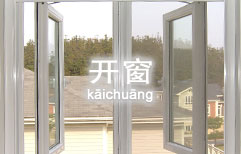
Classic domestic stuff [even if it is mundane].I'm the same ;even in winter I like the 窗 to be 开 and my folks were the same.It's nice to see [as well as the differences in cultures which is great] the similarities in folk around the world.So it seems to me that usually males want the windows open and the females don't.Are there many examples of the reverse out there?

zhong_bideDecember 15, 2008
I always appreciate how you give us these little sayings like hai2 hao3 还好 in context.
Hong Kong is always too stuffy in summer.
夏天香港总是太闷了。Xia4tian1 Xiang1gang3 zong3shi4 tai4 men1le.
What did you notice in this lesson?
You are posting as a guest. Your reply is reviewed before it appears. Log in to post without review.