tonyjhMay 24, 2010
In the vocab list I see "méishìr5" instead of "méishìr" as shown in the PDF file. Is the "5" not supposed to be there or does it have some meaning? I've seen the "5" before in at least one other lesson's vocab list as well.


usr260809August 31, 2009
Henning, you may be right.
Wenlin - my standard source - prefers 凈.
Taiwan dictionaries prefer 淨.
So there are several traditional forms in this case, like in 裡/裏, 什/甚.
tvanAugust 31, 2009
Hello Henning,
Actually, Henning, you are right. My Far Eastern (traditional) dictionary lists the 三點水 flavor as proper. But I have an old John DeFrancis textbook that definitely lists the 兩點. Personally, I've seen both forms used. A quick Google turned up the following:
淨 - 25,600,000 hits.
凈 - 75,300,000 hits.
净 - 75,300,000 hits.
user260809, I think this is one of those instances where there are several "correct" answers.

henningAugust 31, 2009
usr260809, tvan,
are you sure it isn't the other way round?
CeDict also lists 乾淨 as the traditional form of 干净 (with the 三点水-净). 凈 however, is explained to be a "variant of 淨". This is consistent with the entries in MDGB and NCIKU.
Confusing stuff.

matt_cAugust 31, 2009
@usr260809 We'll check the problem when we get to the office tomorrow (11 hrs away). Thanks for pointing it out, I'll make sure we are more careful in future.
Matt
ChinesePod Product Manager
usr260809August 31, 2009
If it's automated, it should (and could) be correct.
We are learners, and we should learn the correct characters, not seldom used variants.
I think the problem is that ChinesePod is in Shanghai, where traditional characters (and variants) are nearly never used.
tvanAugust 31, 2009
usr26089, I believe the CPod mostly relies upon a automated conversion.It must be a standard feature of the automated translation protocols. I use a couple of other programs to drill in the both character sets and have noticed the same thing with the water radical.
Still, as you point out, 三点水 vs. 两点水is a tiny mistake. (Can't think of any examples where the use of one or the other changes a word's meaning.) I've seen a lot worse with the character 干。 For example 干净 rendered as 幹淨。
usr260809August 31, 2009
Argggh!
The traditional script has a tiny mistake (ChinesePod, why?):
the normal traditional form of 干净
is 乾凈,
not 乾淨.
淨 is a very seldom used traditional variant of 凈.

paulinurusAugust 21, 2009
Hi Pete,
多谢你的解释... and I find it quite amusing that the Chinese language can find relationship between sperm and detergent.

helenshen_counselorAugust 20, 2009
@dagah, 你说得对!“洗衣液” is liquid detergent, and I don't even notice there are different laundry detergent for different colors. But you can say "白色衣物专用洗衣粉" Báisè yīwù zhuānyòng xǐyīfěn and "彩色衣物专用洗衣粉" cǎisè yīwù zhuānyòng xǐyīfěn


xiaophilAugust 20, 2009
raymondc
干吗 and 为什么 feel different. 为什么 is used when the person who is asking is unclear about something and truly wants an answer. 干吗 has a criticizing tone, sort of a 'why on earth are you...' kind of statement, and thus often is a rhetorical question.

raymondcAugust 20, 2009
In the sentence 你干吗用那么, 干吗 has the meaning of why . So 你为什么用那么 has exactly the same meaning ?
As for washing clothes, machine do better than humans. But for dishes, nothing is better than human hands.

dagahAugust 20, 2009
多谢, gjyy :)
洗衣粉和洗衣液不是一样的, 对不对? 第二个对我来说就好象liquid detergent, 是吗? 我从来没用这种 :P 但我有时侯用洗洁精在衣服上为了去油污~
我也想知道是否有一个特定的说法说 "白色的衣服洗衣粉" 或者 "颜色的衣服洗衣粉"..

pearltowerpeteAugust 20, 2009
Hi paulinurus,
洗洁精 and 清洁剂 (and 洗洁剂, for that matter) can be translated as cleansers or detergents.
In fact, both 洗洁剂 and 清洁剂 can be used in compounds like 皮肤清洁剂 skin cleaner/cleanser where the English word "detergent" would not be appropriate.
精 means "essence" or "spirit" and this is the source of the connection to sperm 精子 and semen 精液.
paulinurusAugust 20, 2009
The lesson vocabulary says detergent is 洗洁精 xi3jie2jing1.
Dictionaries say detergent is 清洁剂 qing1jie2ji4
请问 what is the difference between the two definitions?
ps: apparently another meaning for 精 is semen.
connieAugust 20, 2009
Hi dedsall78
如果你的朋友很着急,你可以跟他说:“别着急,放心好了。”
如果你的朋友压力很大,很累或者很紧张,你可以跟他说:“出去放松一下吧。”

dedsall78August 20, 2009
Well, my comment didn't seem to appear so I'll write it again :)
@tal_ I find that, if you are inbetween skill levels yourself, it's best to do two (or sometimes even three) different levels. I find that the intermediate levels are typically too easy but they will have new vocabulary, or a review of old vocabulary. The upper intermediate, though, I find to be more difficult and challenging.
我也有一个问题: 如果我的朋友很着急, 我经常说"放松一下"可是你们说"放心好了." 有什么差别?
helenshen_counselorAugust 18, 2009
@light487, "up until now", 到现在为止,Dào xiànzài wéizhǐ or 直到现在 Zhídào xiànzài,“now...”,现在,xiànzài
Eg, What have you been giving up until now ? 到现在为止,你都给了他/她些什么?Dào xiànzài wéizhǐ,nǐ dōu gěi le tā/tā xiē shénme?
pearltowerpeteAugust 18, 2009
Hi user498
Actually, both 干嘛 and 干吗 are OK.
But be careful, as 干妈 could be interpreted in a crude way ;-)

light487August 18, 2009
Hey all.. been busy busy busy.. but I do have a question..
with the 先...在... rule we can say "first this (happens now) and then that (happens after)".. how do I say: "up until now (ie. in the past) and now this".? I assume it's not the same?

svikAugust 16, 2009
I enjoyed this domestic lesson. I am not familiar with this phrase from the expansion: 吃光了
Very minor comments: In the dialogue 哎,你怎么搞的。
should probably have a question mark.
In the expansion, the rollovers of some words are not defined:
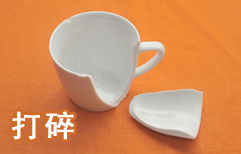
掉 diào, 碎 suì, 玻璃 bōli, 镜片 jìngpiàn, 撞坏 zhuànghuài
怎么了 lacks a rollover
小朋友 is given the literal translation of little friend, rather than of children.


changyeAugust 14, 2009
Hi tal
I agree. Furthermore, it's not a bad thing for elementary learners to find that they can easily understand some conversations shown in Intermediate lessons. "Encouragement" and "low hurdle" are vital for us learners of languages.

TalAugust 14, 2009
There should perhaps be a new Chinesepod lesson category called 'Upper Elementary' - this lesson would fit it perfectly.
The so-called 'Intermediate' level continues to be watered down. Intermediate learners have to go to the UI level now if they wish to be stretched. A good thing perhaps.
changyeAugust 14, 2009
Hi zhenlijiang
我不知道这个做法是否在全中国很普遍,但是我想在中国,特别是在南方地区应该有不少中国人为了去除农药把蔬菜放在水里,或者用洗涤灵洗蔬菜。与此相反,东北地区气候比较冷,农作物病虫灾害没有南方那么厉害,所以农药使用量当然也没有南方那么多,可见害怕残留农药的东北人好像不太多。问你一下,洗干净的南方蔬菜和洗不干净的北方蔬菜相比,你觉得哪个蔬菜更安全?我纳闷儿....

changyeAugust 14, 2009
Hi zhenlijiang
中国某牌子的洗涤灵标签上这么写着,"洁净果蔬易洗易漂"。中国人用洗涤剂洗蔬菜水果的事情,我刚来中国的时候简直不敢相信。厂家说用洗洁精可以去除"残留农药",但是"残留洗涤灵"的问题,我该怎么办?真叫人纳闷儿!据说,在中国南方有些地方蔬菜农药残留问题相当严重,不泡水就会引起急性中毒,所以你必须把蔬菜泡水好几个小时才能吃。太恐怖了!
zhenlijiangAugust 14, 2009
朱琦老师您好!几个礼拜前我在 Activity Stream 上看见过您说到“洗菜”。这个习惯我一个朋友(日本人,住在深圳三年)以前也说过。她说的是,蔬菜只有深深地泡在水里才能用做菜(这是真的?假的?),每天要从三点钟头开始泡,否则六点半开始做饭就来不及了。她也说,好多日本人用日本的洗洁精(洗菜专用的)洗菜。我不知道她的这个做法与看法正常不正常(可能是只限日本 expat community 的一种‘疯常识’?)。您可以说一下使我们了解你们一般的洗菜吗? I would love to know.
也许这个问题有一点离题,对不起。我原来在AS开始写,但在那里要更简洁,字数一下子就没了。于是来这里问问。这样的日常生活的不同我总觉得挺有趣的。
changyeAugust 14, 2009
Hi pinkjeans
I don't want you to deprive your kids of their willingness of doing house chores! Washing dishes is very good for disciplining your kids. Please keep having your kids wash dishes. Otherwise, they will become lazy adult guys just like me.

pinkjeansAugust 13, 2009
Now that my kids are bigger, they are my human 洗碗机. But I'm so getting a real one when we move to our new place. It sure takes the dread out of entertaining.
helenshen_counselorAugust 13, 2009
@remilia, 当然可以了!欢迎你来这里,你可以build a group, 关于中国文化和汉语小知识。但是不可以贴在lesson discussion 里,这里的comments必须是topic-focused, 与课文相关的语言问题可以贴在这里。(Of course! You can build up a group about Chinese culture and language. Then post. But in lesson discussion, off-topic discussion is not encouraged. Just be considerate to our learners!)
You can also go to Activity Stream to share!
谢谢你!

matthiaskAugust 13, 2009
As my wonderful wife cooks so delicious, I'm washing the dishes afterwards. While doing so, I listen to chinesepod :).

WillBuckinghamAugust 13, 2009
According to The Gateless Gate, the monk Zhaozhou (趙州 - known more frequently in the West by the Japanese name Joshu) once received a monk in the monastery. "I've just arrived," said the monk. "Teach me!"
"Have you eaten your rice?" Zhaozhou asked.
"I have," said the monk.
"Well, then, go and wash your bowl," said Zhaozhou. Apparently, the monk was enlightened on the spot.
As for me, however, 我也不喜欢洗碗, and hours spent at the sink have never led to anything quite as exciting as this...
tiaopidepiAugust 13, 2009
@matt_c: 我外公很喜欢洗碗。因为都人讨厌洗碗他觉得做洗碗让他有单独的时候。
My grandfather very much liked doing dishes. Because everyone hates doing dishes he thought that doing dishes allowed him some alone time.
(I think I've passed the limits of my ability to express complex thoughts in Chinese! This transliteration from English structure seems suspect...)
remiliaAugust 13, 2009
呵呵,我既喜欢做法,也不反感洗碗。
shenyajin,我想问一下,如果我个人想在这个交流版块开推广汉语小知识的帖子,允许么?我觉得这里气氛蛮好的,想经常贴点汉语日常运用的小知识一类的东西。
初来乍到,也不知道这里的规矩^_^
helenshen_counselorAugust 13, 2009
做饭的人不能洗碗,洗碗的人不能做饭。要不这个人要烦死了。我洗碗的时候不太喜欢用detergent, 我总是觉得洗不干净。I can not both cook and wash, I'll be freaked out...:-), and I don't like to use detergent, maybe some will be left on my plate.

kimiikAugust 13, 2009
Speaking of "breaking bowls", I looked for the famous baseball expression "breaking balls" in chinese :
变方向的球 (to change the orientation of the ball).


holothurianAugust 13, 2009
What about drying the dishes? I wanted to ask my significant other if she wanted me to dry the dishes last night and put them away, but couldn't say it?


jennyzhuAugust 12, 2009
In the north, people say 刷碗/shua1 wan3 instead of 洗碗. 刷 means to brush. I guess it might have something to do with the tool traditionally used to wash dishes, which was a brush.
changyeAugust 12, 2009
Hi pete
That's an unamusing joke if you see how workers wash dishes at a local restaurant here in China!
pearltowerpeteAugust 12, 2009
Eating and washing dishes were of the most memorable things about my time in the monastery. You would eat your rice and vegetables, and leave a bit of some leafy vegetable behind. Then, you pour some soup or tea into your bowl, use the leaf to wipe it out, and drink everything. Then you turn in the bowls, and there's no need to use any 洗洁精!
Kidding ;-)
bduckieAugust 12, 2009
This topic brings back a lot of memories from my travels in rural China and visits to road construction camps. Hygiene was not always the most important part of a meal, although much of the dish washing occurred at the dinner table where all of my companions used the tea that was so ubiquitous at all Chinese meals to rinse their bowls and utensils.
What did you notice in this lesson?
You are posting as a guest. Your reply is reviewed before it appears. Log in to post without review.