
calicartelJanuary 18, 2010
In one expansion sentence 你最近要特别注意 is translated as "You should be particularly attentive in the next little while". Am I right in concluding that 最近 denotes proximity in time not only for the past, but also for the future?


gloria_counselorDecember 10, 2009
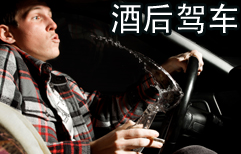
2009年酒后驾车处罚条例:
(1)酒后驾车的处罚是:饮酒后驾驶机动车的,处暂扣一个月以上三个月以下机动车驾驶证,并处二百元以上五百元以下罚款;饮酒后驾驶营运机动车的,处暂扣三个月机动车驾驶证,并处五百元罚款。
(2)醉酒后驾驶机动车的,由公安机关交通管理部门约束至酒醒,处十五日以下拘留和暂扣三个月以上六个月以下机动车驾驶证,并处五百元以上二千元以下罚款;醉酒后驾驶营运机动车的,由公安机关交通管理部门约束至酒醒,处十五日以下拘留和暂扣六个月机动车驾驶证,并处二千元罚款。





sitanNovember 28, 2009
rjberki, 我来改一下:
电召:dian4zhao4 find by telephone (电 = 电话)
的士:di2shi4 taxi
电召的土 = call taxi
RJNovember 22, 2009
Recently at a large restaurant in Guangdong province, I found this note on every table. The translation is mine, so corrections are welcome. They truly have intensified their efforts to contol drinking and driving. Every night I noticed those driving would not drink. This was not the case in the past and I know some of these guys love to drink.
温馨提示
据交警部门通高,将于 2009 年 8 月 15 日起进行特续的酒后驾驶严打行动。
敬请各位宾客饮酒后切勿驾车,我公会力宾客们提供电召的土服务。
特此告知
旺阁渔村
Wēnxīn tíshì
jū jiāojǐng bùmén tōng Gāo, jiāng Yú 2009 nián 8 yuè 15 rì qǐ jìnxíng tè xù de jiǔhòu jiàshǐ yán dá xíngdòng.
Jìng qǐng gèwèi bīnkè yǐnjiǔ hòu qièwù jiàchē, wǒ gōnghuì lì bīnkè men tígōng diàn Shào de tǔ fúwù.
Tècǐ gàozhī
wàng gé yú cūn
Warm prompt
According to the high authority of the traffic police department, starting on Aug 15th 2009 alcohol driving will bring strict action. We respectfully ask that all guests be sure to refrain from driving after drinking alcohol. We will provide local call service for our guests.
Hereby to inform
Prosperous pavilion fishing village
lilac_counselorNovember 7, 2009
不但A,而且B。
在这个句式里,B是说话人更关心的内容,或者表示更重要的信息。
所以我觉得miantiao的句子不算有错,如果他是从司机的角度考虑,酒后驾车给司机本身带来的恶果,应该是司机更关心的内容。
lilac_counselorNovember 7, 2009
changye 解释得很好,我补充一下:“驾驶 ” 是一个动词。开车 是 动词“开”+名词“车”,所以 “驾驶 ”后面可以有 object,而 “开车”不能有。

changyeOctober 23, 2009
Hi kevg
That's right. "罪加一等" means "aggravate an offense".
罪 (crime)加 (add, increase)一 (one)等 (rank, grade)
The difference between 酒后驾车 and 醉酒驾车 (= 醉酒后驾车) lies in blood alcohol level (血液酒精浓度). 醉酒驾车 is more dangerous than 酒后驾车. "醉" means "intoxicated". 酒后驾车 is also simply used in a broader sense, that is, "drunk driving".
kevgOctober 23, 2009
Question about 罪加一等. I wonder why it's glossed as "torture" in the key vocabulary list. Is the wife exaggerating because of the apparent severity of the offense? In the dialogue it's marked in the translation as "double offense" -- as it appears in my dictionaries. Is this a technical designation in terms of the law in this case or just a way to emphasize that the punishment will probably be more severe because of the husband's particular condition.
Second, is there a technical distinction in terms of 酒后驾车and醉酒后驾车?
Thanks.
changyeOctober 20, 2009
Hi sabrinaguenier
"驾驶" (to drive) can be used not only for cars but also for many other kinds of vehicles, planes, ships and even spaceships. In short, 驾驶 is a generic term. So a car driver and a pilot are both translated as "驾驶员" (jia4shi3yuan2) in Chinese. A pilot is also called "飞行员" (fei1xing2yuan2), and a car driver (and other vehicle drivers) is usually referred to as "司机" (si1ji1). 驾驶员 is more formal than 司机.

sabrinaguenierOctober 20, 2009
hi,
Is there anyone that can explain me the difference between 驾驶 and 开车?And how we could use them.
Thanks in advance!

lujiaojieOctober 15, 2009
changye:
You're right! 下 is a measure word like 回。“这下” work in a similar way to “这回”。
changyeOctober 14, 2009
Hi lujiaojie
I have a question. Does "这下" work in a similar way to "这回"? Is the "下" a measure word, just like the 回?
lujiaojieOctober 13, 2009
christine30550:
You're right, 这下 can be translated as sth like "well, then,..", "OK, then", or "in that case". For example:
儿子,你终于回来了!这下妈妈就放心了!érzi, nǐ zhōngyú huílai le! zhèxià māma jiù fàngxīn le!
啊,我忘了老婆的生日!这下完了,她肯定恨死我了!à, wǒ wàng le lǎopo de shēngrì! zhèxià wánle, tā kěndìng hèn sǐ wǒ le!

pinkjeansOctober 13, 2009
lujiaojie 老师, 谢谢。Your reply provided a short, succinct and clear answer to my queries. And I'm glad you did reply as the forum appeared to be going towards a major discussion on drunk driving fatality statistics, with earlier posts at the risk of being buried under the avalanche of these more recent comments!

christine30550October 13, 2009
Talking about license plates - I heard from a professor (who specialises in traffic) the other day that license plates in Shanghai are being auctioned nowadays. Not sure if this helps deter people from getting one, but it most probably drives prices up even higher.
On another note: I am curious about the 这下 (which our drunk driver guy uses at the end of the discussion, and his night out). Recently on the radio, I heard a guy saying 这下我就放心了!
Is it right that 这下 can be translated as sth like "well, then,..", "OK, then", or "in that case"? Could anyone give me some examples?
changyeOctober 13, 2009
Hi bodawei
Tests here are still not done on the open road.
I guess this is because they just don't want to increase traffic fatality toll in China, hehe.

bodaweiOctober 13, 2009
@changye
Thanks again for the figures and sources - I do take care crossing the road (but I still say that personally I have not seen many serious accidents - touch wood.)
Those licence holder figures are in a way amazing - it seems that many more people hold licences than own cars. A friend explained tonight that regulations on getting driving licences have tightened in recent times and there was a rush of people getting licences ahead of the stricter requirements! I am told by a licence holder here that it is both onerous and expensive in terms of lessons, but the actual driving test is painfully inadequate compared to what I am used to in Australia. Tests here are still not done on the open road.

JuriaanOctober 13, 2009
I like your translation of 严打 in the PDF-file. So the famous Shakespeare quote from Hamlet would read
严打还是不严打。

miantiaoOctober 13, 2009
hi lujiaojie,
cheers for that, very helpful. as i understand now, sentence structures in chinese should begin with the individual and then focus on the broader subject/s
hebaoliOctober 13, 2009
thanks for the lesson - just one thing, the vocab list seems to be missing off the the text transcript - I use it to cut and paste into my flashcard program.
changyeOctober 13, 2009
Hi bodawei
Oops, sorry, I made a mistake in culculation. Here is the corrected one.
Fatalities per license holders (100,000) are ....
PRC 38.9Japan 5.5 6.4
lujiaojieOctober 13, 2009
pinkjeans,1两=50 grams他不但学中文,还学日语。(one subject, 可以用“不仅 ...还”)不但他在学中文,而且他爸爸也在学中文。(two subject,不可以用“不仅 ...还”)除了他以外,别人都到了。除了他以外,别的同事都不会中文。
lujiaojieOctober 13, 2009
miantiao:你造的句子不错,我有点小小的建议,可以改成:酒后驾车不但会给驾车者带来不利的后果, 而且会给群众带来危害。除了酒后驾车的问题越来越常见以外,吸毒后驾车也成为现代社会常见的现象。
changyeOctober 12, 2009
Hi bodawei
I can't agree with you more. As I said in my previous post, it's also necessary to look at this problem from different angles. What I showed in that post is merely "a fact", at least they are so-called "official" numbers, and you need to take other factors/conditions (total population included, of course) into account to explain what causes the difference (in total numbers, ratio etc) between China and Japan.
Incidentally, the numbers of driver's license holders in the PRC and Japan are as follows,
PRC 188,830,000 (2009.6)Japan 80,450,000 (2008.12)
So, fatalities per license holders (100,000) are ....
PRC 38.9Japan 5.5
I have no positive reason not to believe that the PRC is less safe than Japan in terms of traffic accidents, especially in urban areas.
请大家小心过马路,小心开车!
changyeOctober 12, 2009
Hi bodawei
Here are links to the sources of the info.
Fatalities in China 2008 (新华网)http://news.xinhuanet.com/comments/2009-07/10/content_11680257.htm
Fatalities in Japan 2008 (Yahoo news)http://dailynews.yahoo.co.jp/fc/domestic/traffic_accident/
Car/bike numbers in China (公安交通管理局/大使馆)http://jp2.mofcom.gov.cn/aarticle/supplydemandofchina/200901/20090105991626.html
Car/bike numbers in Japan (日本自動車工業会)http://www.juntsu.co.jp/jouhou/toukei/toukei14.htmlhttp://www.jama.or.jp/motorcycle/living/04_02.html
bodaweiOctober 12, 2009
@changye
There are reasons why you would expect there to be relatively fewer road deaths in Japan from car accidents - safer cars, better roads?, shorter trips, possibly fewer trips by car (all measured on some meaningful yardstick like 'per capita' or 'per vehicle km travelled per capita per year'.) There may be other reasons like those I mentioned in the Australian context (eg. driver education, RBT.)
But it's difficult to interpret your data on fatalities PRC vs Japan - there are three different sets of numbers. The first two don't say what they are. If they are just totals they cannot be compared easily. If the final set is 'per 100,000 cars and bikes' they would be one meaningful measure of fatalities (but I'm puzzled about how this relates to the previous figures). It still doesn't give a reliable indication of for example 'safety on the roads' or 'risk of dying in a car accident'! It might be that a lot more of total travel is done in cars and bikes in China, or that China does a greater proportion of travel on motorbikes than cars, or that China has significantly more roads per capita - all these things might need to be taken into account. There is a saying: 'Lies. Damned lies. And Statistics'.
Can you point us to the source of the info?
The best kind of information is data collected for the purpose of cross-country comparison - quite often people are comparing quite different kinds of data - can be very misleading.
@chantelle
That 'funny rule' applies in Australia for any accident where you expect there to be an insurance claim. Things go much smoother if there is a police report. So you do get accidents holding up/ closing roads for hours, sometimes a whole day for a really bad accident. Even when there is no insurance to claim in China the delays involve negotiations about compensation.

chanelle77October 12, 2009
My husband and / or driver often drive from NJ - SH and I see a major car accidents every time we go. The most horrible thing I saw was someone who got run over by a truck (could be suicide). There were a lot of flashing lights and police men so I was looking "what's going on here". First I thought it was *just* a pig who was shattered accross the road. Once I understood what I was looking at it was too late to look away. Our driver and my husband and I had to stop after that and get ourselves a bit together to continue our drive. That incident was just too shocking. Never again will I look when there is police with lights etc.
People cross highways without looking. My husband drives to work every day 2 hrs. Once someone crossed the highway at night!!! got hit by his colleage's car and the driver had to pay. Luckily the person survived. I can go on and on about silly unnessary accident, deaths etc. because people cannot drive (i.e. buy their licence) and obviously often lack a moral compass (drink and drive). It seems to be (completely) accepted to drink and drive here (Nanjing).
In Shanghai I had a taxi driver faling asleep behind the wheel on the way to the airport and I suspect was drunk. I tried to keep him smoking and awake during the drive, but decided to go to the first police offcier at the airport. Guess what happened: they did not even care!
This is a very serious problem in China and needs to be dealt with I think. Sometimes I think people just don't care because a life in China is disposable.
Believe it or not today I had my second car accident here. Someone drove his car into my friends car (no one was hurt) just because he was not paying attention to others and was speeding. There is this funny rule that you cannot move the vehicle until the police comes and that cause much more trouble.

pretzellogicOctober 12, 2009
Changye, Interesting what a little searching can do.....
some data from the US Centers for Disease Control (oddly enough, not from the National Highway Transportation Safety Administration)
Impaired Driving
Every day, 36 people in the United States die, and approximately 700 more are injured, in motor vehicle crashes that involve an alcohol-impaired driver.1, 2 The annual cost of alcohol-related crashes totals more than $51 billion.3 But there are effective measures that can help prevent injuries and deaths from alcohol-impaired driving.
How big is the problem?
In 2006, 13,470 people died in alcohol-impaired driving crashes, accounting for nearly one-third (32%) of all traffic-related deaths in the United States.1
In 2007, over 1.4 million drivers were arrested for driving under the influence of alcohol or narcotics.4 That's less than one percent of the 159 million self-reported episodes of alcohol-impaired driving among U.S. adults each year.5
Drugs other than alcohol (e.g., marijuana and cocaine) are involved in about 18% of motor vehicle driver deaths. These other drugs are generally used in combination with alcohol.6
Half of the 306 child passengers ages 14 and younger who died in alcohol-related crashes in 2006 were riding with drivers who had a BAC level of .08 or higher.1
In 2006, 45 children age 14 years and younger who were killed as pedestrians or bicyclists were hit by alcohol-impaired drivers.1
Who is at risk?
Males: Male drivers involved in fatal motor vehicle crashes are almost twice as likely as female drivers to be intoxicated with a blood alcohol concentration (BAC) of 0.08% or greater.1 It is illegal to drive with a BAC of 0.08% or higher in all 50 states, the District of Columbia and Puerto Rico.
Young people:
At all levels of BAC, the risk of being involved in a crash is greater for young people than for older people.7 In 2006, 19% of drivers ages 16 to 20 who died in motor vehicle crashes had been drinking alcohol.1
Young men ages 18 to 20 (under the legal drinking age) reported driving while alcohol-impaired more than any other age group. 4,8
Of the 1,746 traffic fatalities among children ages 0 to 14 years in 2006, about one out of every six (17%) involved an alcohol-impaired driver.1
Motorcyclists:
Nearly half of the alcohol-impaired motorcyclists killed each year are 40 or older, and motorcyclists ages 40-44 have the highest percentage of fatalities with BACs of 0.08% or greater.9
Among drivers killed in fatal crashes, 30% have BACs of 0.08% or greater.9
Drivers with prior driving while impaired (DWI) convictions: Among drivers involved in fatal crashes, those with BAC levels of 0.08% or higher were eight times more likely to have a prior conviction for DWI than were drivers who had not consumed alcohol.1
http://www.cdc.gov/MotorVehicleSafety/Impaired_Driving/impaired-drv_factsheet.html
pretzellogicOctober 12, 2009
and Matt_c, to your point about the powerful, I thought this article was interesting.
http://www.chinadaily.com.cn/bizchina/2009-08/22/content_8602976.htm
miantiaoOctober 12, 2009
what about no wheels, traffic accidents involving pedestrians?
also, i often wonder, because of china's vast population and the difficulties faced by officials in keeping accurate records, how many accidents involving fatalities and severe injury go unrecorded.
pretzellogicOctober 12, 2009
FWIW, I found this article on people's daily. At least these are some statistics. Interesting, in a 2 month period in Beijing, 1119 people were arrested for drunk driving. That's approximately 20 per day. I guess I should get out more. On the other hand, the big entertainment/bar district is about 4-6 miles from my house, where maybe many of the arrests are being made.
More hard drinking in Shanghai than in Beijing though; 1521 were arrested in Shanghai during the same period.
I also note one thing: the article says these people were caught, not arrested. Not sure what that means.
http://www.chinadaily.com.cn/china/2009-08/23/content_8604893.htm
changyeOctober 12, 2009
Hi bodawei, ooka, and pretzellogic
The following is a comparison of fatalities from traffic accidents between the PRC and Japan (in 2008). I think it's also necessary to look at them from different angles, such as "number of drivers", "number of miles driven", and "traveling time". In any case, it may be said, at least, that the PRC is less safe than Japan in terms of fatalities in traffic accidents. How about your countries?
......................PRC...........Japan
Fatalities .......73,484.........5,155
Four Wheels .....6,467........7,571.... (×10,000)Two Wheels .....8,953.........1,773.... (×10,000) Total ...............15,420........9,344 ....(×10,000)
Fatalities per ......47.7..........5.5100,000 cars/bikes
chenhuaOctober 12, 2009
miantiao,
你造的第一个句子有问题,
酒后驾车不但给群众带来危害,而且会给某人酒后驾车带来不利的后果。
应该改成“酒后驾车不但给某人带来不利后果,而且会给群众带来危害。”中文里的逻辑顺序和英文不一样,中文习惯先说自己再说别人。
第二个句子
除了酒后驾车的问题越可见以外,吸毒后驾车也成现代社会常见的现象。
其实这个句子本身没问题,但是吸毒后驾车不是一个常见现象,因为中国新闻没报道过,不知道国外是不是这样。
希望我的建议对你有所帮助:)
bodaweiOctober 12, 2009
@ooka,pretzellogic
It is difficult to get objective data on this (but I would be very interested if anyone knows some sources...?) I saw some data that is now about five or six years old - the fatality rate (per capita, per year) from road accidents in China is almost exactly the same as Australia. Despite the fact that Aust spends huge amounts on road safety, driver education and testing, Random Breath Testing (in every police car), safety standards of cars are generally higher (Chinese cars rate at or near the bottom in Australian safety tests), and more active policing of road rules. It is possible that Australians drive a lot faster on average, and speed kills. Australia also has substantially more road surface per head of population - how this impacts on accidents I am not sure - without going into detail, these extra roads should actually reduce accidents. The quality of road surface is also a factor - I would think that Aust also spends a lot more per capita on road surfacing.
My impression is like that of pretzellogic - it is surprising how few accidents you see in China, in the cities I've lived in. You expect more because of apparent disregard for road rules. And even minor accidents look major because everyone stops to stare. (I was wondering how you define a 'major' accident ooka?) I think the best explanation is that Chinese drivers travel a lot slower on average than in the West (and a lot slower than in Korea.) Also, private car ownership in China is still way below Australian rates (by at least a factor of ten in most cities) - so there is a lower proportion of 'amateurs' on the road in China (believe it or not.)

oranginaOctober 12, 2009
Thanks JasonSch... I do like that in Chinese it is your head or a** and not mine in the saying! I will definitely remember that one.
JasonSchOctober 12, 2009
@orangina
好你个头 is like saying "Good? Yeah right!"
In American English there were a few similar expressions back when I was growing up in the '80s. "Cool my foot!"(The meaning being 'totally uncool')
We also said, "Good my butt!" Which you can do in Chinese as well.
好你个屁! Which is maybe a bit stronger than 个头

matt_cOctober 12, 2009
I used to find it incredible how moneyed up patrons would drive their flashy cars to the clubs, get wasted in the club over a period of hours, then drive away from the clubs - obviously intoxicated.
Currently in Shanghai (and perhaps the rest of China), getting caught drunk driving incurs a 15 day stay at the watch house. Apparently even guanxi won't help - although I find that hard to believe.
pretzellogicOctober 12, 2009
ooka, where do you live? In Beijing and in Lanzhou, I only saw a electric bike on the ground once with a person on the ground looking dizzy, and a group of people standing around 2 guys that ended up in a fight between the two in the middle of the street. I've seen way more major league traffic accidents in the US, in addition to seeing more speeders and people doing things that should result in accidents.
miantiaoOctober 12, 2009
hi pinkjeans,
我试一下造出例句:
酒后驾车不但给群众带来危害,而且会给某人酒后驾车带来不利的后果。
除了酒后驾车的问题越可见以外,吸毒后驾车也成现代社会常见的现象。
不知道我写的对不对,不过一定要有同学能来提供明确例句和说明
pinkjeansOctober 12, 2009
Another brilliant lesson! Does this 两 have anything to do with the international units of alcohol?
I am also curious as to when one would use 驾车 as opposed to 开车。In Cantonese, the distinction is very clear; 开车 is used for starting a car and 驾车 for the actual act of driving, but I know in Mandarin, 开车 is used for driving the vehicle too.
The dialogue has brought to mind 2 other sentence structures that I think can be used to express the same idea as 不仅。。。还:
不但。。。而且 (not only...but also)
除了。。。以外 (apart from...)
If there are some nuances in these 3 structures, I would certainly appreciate it if someone could provide examples.

ookaOctober 11, 2009
Really? well I drive 2h every day and I would say that at least once every week I see one major accident - and several minors - although I don't think they ever have anything to do with alcohol.
pretzellogicOctober 11, 2009
Funny, i've not seen that many accidents here in China, but I've seen enough businessmen in restaurants/bars playing rock/scissors/paper to think there should be a big problem with drunk driving here. Maybe they all have drivers.
What did you notice in this lesson?
You are posting as a guest. Your reply is reviewed before it appears. Log in to post without review.