
fulinaichijianbingApril 6, 2010
Hey, following on from shanghai_helios' question, I was wondering if there is any difference in tone or meaning between:
这是我给你买的礼物
and
这是我买给你的礼物Thanks!

lamps5jam3March 17, 2010
I've never known a Chinese person to open a gift when given it. Usually they wait until later. Perhaps the gifts here are not wrapped?

bababardwanMarch 17, 2010
oh yeah,I remember reading about that somewhere ages ago....it said something about it would make the recipient look too eager or greedy to open it straight away.Any opinions on how true this still is [or ever was...how common]?

helenshen_counselorMarch 17, 2010
Exactly! We don't and even never open a gift right away. I still remember my mom's face when I was trying to open the gift. She said it embarrassed her because my ill-behaved manner. After the guests left, she opened the gift herself. 她真自私,wasn't she?
lanqingMarch 18, 2010
My Chinese teacher told me that many, many men in China wear green hats every day -- members of the army!


menglaoyeMarch 17, 2010
<!-- /* Font Definitions */ @font-face {font-family:SimSun; panose-1:2 1 6 0 3 1 1 1 1 1; mso-font-alt:宋体; mso-font-charset:134; mso-generic-font-family:auto; mso-font-pitch:variable; mso-font-signature:3 135135232 16 0 262145 0;} @font-face {font-family:"\@SimSun"; panose-1:2 1 6 0 3 1 1 1 1 1; mso-font-charset:134; mso-generic-font-family:auto; mso-font-pitch:variable; mso-font-signature:3 135135232 16 0 262145 0;} /* Style Definitions */ p.MsoNormal, li.MsoNormal, div.MsoNormal {mso-style-parent:""; margin:0cm; margin-bottom:.0001pt; mso-pagination:widow-orphan; font-size:12.0pt; font-family:"Times New Roman"; mso-fareast-font-family:SimSun;} @page Section1 {size:612.0pt 792.0pt; margin:70.85pt 70.85pt 70.85pt 70.85pt; mso-header-margin:36.0pt; mso-footer-margin:36.0pt; mso-paper-source:0;} div.Section1 {page:Section1;} -->
Hi all
I have two questions in the expansion section relating to 送 the first one is in the second sentence I thought 送 would mean either to give or to accompany it seems there is a third meaning (sorry Jason I am french and my english is more a lingua franca than a genuine english) and second in the third sentence I would have written 为什么从来没有男孩子送给我花 why this absence of 给?

JasonSchMarch 17, 2010
Hi menglaoye,
In the 2nd expansion, the 别送了 is a polite way of saying to the person, "There's no need to see me off", or "There's no need to take me". 送 can mean either 'to give a gift', 'to take someone somewhere', or 'to see someone off'. The 'seeing someone off/taking them' is similar to 'accompany', (which is 陪), but different in that in both cases, there is necessarily a destination implied.
As for why there is no 给 with 送 in the 3rd sentence, I'm not sure if there is a specific linguistic reason, but I do know that 送 alone can be used to mean 'to deliver', or 'to give as a gift', or both. So, in this sentence, because the context implies giving the flowers as a gift, I think either 'to send', or 'to give' would be accurate.


agentchuckMarch 17, 2010
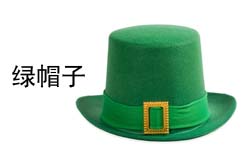
You know, I can't ever remember seeing someone wearing a green hat, other than for St. Patrick's Day. And, I live in Canada, where it doesn't have any special meaning. Considering that this is such a big faux pas in China, can you even buy a green hat there?

iwatachiefMarch 17, 2010
Students love it here (Sichuan) when I tell them we all wear green on St Patrick's day, green hat included! They just can't stop laughing! March 17th, is always a great class!

changyeMarch 17, 2010
Here is another kind of hat that Chinese people don't want to wear. It's called "高帽"(tall hat), and this was used for anti-revolutionalists during Cultural Revolution in the PRC. It's just worth seeing.
http://img3.tianya.cn/photo/2008/1/27/6576610_11368225.jpg

changyeMarch 17, 2010
The CCP's reaction is very quick. It was not blocked a few minutes ago. How about this one? It's a rather long URL.
http://images.google.cn/imglanding?q=%E6%96%87%E9%9D%A9%20%E9%AB%98%E5%B8%BD&imgurl=http://img3.tianya.cn/photo/2008/1/27/6576610_11368225.jpg&imgrefurl=http://blog.tianya.cn/blogger/post_show.asp%3FBlogID%3D888132%26PostID%3D12542150&usg=__XIJR8CAYGU8NuD3iq_g2IlssuKA=&h=640&w=636&sz=59&hl=zh-CN&um=1&itbs=1&tbnid=hETYRl3y67TrRM:&tbnh=137&tbnw=136&prev=/images%3Fq%3D%25E6%2596%2587%25E9%259D%25A9%2B%25E9%25AB%2598%25E5%25B8%25BD%26um%3D1%26hl%3Dzh-CN%26newwindow%3D1%26tbs%3Disch:1&um=1&newwindow=1&tbs=isch:1&start=0#tbnid=hETYRl3y67TrRM&start=3
http://image.baidu.com/i?ct=503316480&z=0&tn=baiduimagedetail&word=%B8%DF%C3%B1+%CE%C4%B8%EF&in=24752&cl=2&cm=1&sc=0&lm=-1&pn=51&rn=1&di=2851574130&ln=372&fr=&ic=0&s=0
bodaweiMarch 17, 2010
I got in quick and saved them! Thanks. They seem to play a similar role to the 'dunce's hat' in the West? Until Dr Seuss came along it seems that a tall hat has symbolised humiliation - in both East and West.
bodaweiMarch 17, 2010
I wonder if the Chinese copied the practice of the Inquisition? I see from Wikipaedia that victims were forced to wear very similar 'tall hats'.
changyeMarch 17, 2010
Hi bodawei
Yeah, it might be worth looking into from the standpoint of cultural anthropology, hehe.
bababardwanMarch 17, 2010
I couldn't see it here in Oz either,so I don't think it's just a GFW issue...or is it?
bababardwanMarch 17, 2010
tallest hats I've ever seen.What's is say on them? From the expression on their faces looks like they're being shamed and their heads will be on the blocks.
changyeMarch 17, 2010
Please just google with keywords "cultural revolution" and "tall hat" (or "cone hat" etc), which is blocked here in the PRC.

si1teng2March 17, 2010
the same page that tells you that you have no right of access to the picture ALSO gives you a direct link to the picture (a couple of lines down)!

shanghai_heliosMarch 17, 2010
The translation of 陈总 in the transcript is "President Chen". As John said in the lesson, the term should be "General Manager Chen" (unless Chinesepod is slipping in a reference to the "Green" Party of Taiwan and the former president.)
President or CEO would be something like 首席执行官, and I doubt staff members would give birthday presents to a CEO.
JasonSchMarch 17, 2010
The word 总经理 can actually be used to describe a CEO or a president of a company in some situations, but that being said, you're right. The best translation here would be 'General Manager Chen' given the context of the situation and the dialog.
As a side note, titles being used as or a part of a form of address, are an interesting issue in translation. Many times, they're unnatural when directly translated, but without them, you lack the clarity of the original. I guess it's good that we have the pop-ups!

go_manlyMarch 17, 2010
Could someone tell me the difference between 适合 and 合适.
bababardwanMarch 17, 2010
John explained that in the podcast of this lesson:
https://chinesepod.com/lessons/lets-just-be-friends
....I can find the time if I get the chance and you don't wanna listen to it,but it was a good lesson I can recommend.

JohnMarch 18, 2010
适合 (shìhé) is a verb, and is often followed by a noun, as in: 不适合你 (bù shìhé nǐ), "it doesn't suit you."
合适 (héshì) is an adjective so cannot be followed by a noun, as in: 不合适 (bù héshì), "it's not suitable."
shanghai_heliosMarch 17, 2010
"这是我在美国给你买的礼物。"
Why does "给你" follow "在美国"? It would seem that "买" would follow "在美国" because that is describing where the hat was purchased.
Can we say :"这是我在美国买给你的礼物。"?
Is another word order for this sentance possible?

ellen_counselorMarch 17, 2010
My colleague told me today is an Irish festival: St. Patrick's day. People should wear in green on that day. It's like their national holiday. Happy St. Patrick's day to people who celebrate it! 圣帕特里克节快乐!:)
mo_hanNovember 4, 2011
Hope it doesn't mean that all wives in Irland cheat on their husbands that day ;)
bababardwanNovember 4, 2011
That would really make it Ire land, but all jokes aside, actually the English name for Ireland doesn't come from the English "ire" but from "Eiru" the matron Goddess of Ireland in Irish mythology. Don't think she was too au fait with such a distant [place and time] cultural faux pas. 万岁 the wearin' o' the green !

chonglangMarch 17, 2010
你的戒指怎么戴在右手上?
Why are you wearing your ring on your left hand
You might want to check this in the expansion i think it might be wrong.....Thanks Tom

catherinemMarch 17, 2010
You are totally correct. I've just fixed it. Thank you for pointing it out!
changyeMarch 17, 2010
我相信,中国人民解放军不可能有“Green Berets”。

anonymous19008March 17, 2010
Well you never know, probably they travel alot on their assignments and are away from home for extended periods.... hey is that why they wear green berets?
dastbehkeerMarch 16, 2010
I'm wondering if it would be rediculous and unheard of if a little Chinese kid wore a Chinese hat out in public. I'm also wondering if it is especially difficult to find green hats for sale in China. If a high school kid(male) wore a green hat out in public, would he be rediculed by all of his peers, or would people just think "he's a high school kid, he obviously isn't married" and not make a deal out of it
dastbehkeerMarch 16, 2010
the writing exercise has a tonal error. It says that the 子 in 绿帽子 is 3rd tone, but it should be neutral tone
lujiaojieMarch 16, 2010
Sorry, I can't find that "tonal error". Can you tell me where is it? Thank you in advance.
dastbehkeerMarch 16, 2010
Question: if we wanted to say "blue hat" or "yellow hat" could we say lanmaozi / huangmaozi, or would we have to say lanse de maozi & huangse de maozi ?
dastbehkeerMarch 16, 2010
this dialog was really predictable. As soon as the girl said "happy birthday" , I thought to myself "I bet someone is going to give him a green hat as a gift and it'll be an akward moment"
Every China culture book and guide book has a section explaining that green hats are no-no's.
JohnMarch 16, 2010
It has to be covered sooner or later.
To our credit, we did wait 4 years before succumbing. :)
anonymous19008March 16, 2010
yeah speaking of 4 years, time flies, soon it will be time for the World Cup episode v2.0!
anonymous19008March 16, 2010
which means I have been studying for how long.... ?
And thinking back, John wasn't that of your first lessons?
Speaking of which, whatever happened to that initiative to re-launch the older lessons (not that there was anything wrong with them....)?
catherinemMarch 17, 2010
For the record I didn't know this cultural fact until we were planning the lesson. Then coincidentally one of the speakers at last weekend's Int'l Literary Festival (Su Tong) here in Shanghai brought up a story about his childhood which involved "green hats." This stuff can come in handy! (Apparently calling someone a turtle in Suzhou means they wear a green hat).

WillBuckinghamMarch 17, 2010
The clue might have been in the name of the dialogue: Special Green Hat...

lydia1981March 17, 2010
maybe the person giving him this present was trying to tell him something? ;-)

What did you notice in this lesson?
You are posting as a guest. Your reply is reviewed before it appears. Log in to post without review.