

weibwoApril 18, 2010
Relative to cheating. I have helped numerous Chinese students in the US rewrite their PHD theses, Masters theses, and papers for undergradute History and English Composition classes. However, I draw the line to rewriting their ideas. Rather I try to pry out the ideas which they can express in Chinese quite adequately, thereby getting them to understand how the Chinese logic can be converted into Western logic.I haveused the time honored Socratic method of discussion with great success I might add, to get the Chineser students to where they need to be. I recommend all Chinese students who want to study in the US or Europe that the first class to take is logic. In this way they can get an understanding of how their ideas in Chinese need to be restructured to meet the logical and syntactical requirements in US or European Universities. Also the Professor's in the west are not going to hold your hand like the Professors in China. They want you to express you own ideas, and to be prepared to discuss the topics in the classrooms. Based on the Rote Memorization epistimology in China this proves to be a real culture shock to Chinese students. Chinese intuition about truth is just not going to cut it here. You need to provide sound reasons and evidence as to why you arrive at certain conclusions.

xiaophilApril 18, 2010
That's a very interesting comment. If you read this again, I am wondering if you are/were a faculty member or just a fellow student?

bodaweiApril 20, 2010
'Rote Memorization epistimology'
This is a popular myth in Western academic circles - popular but a myth all the same. Read the literature. And avoid capitalization I always tell my students - it does not make it more true.

cassielinApril 17, 2010
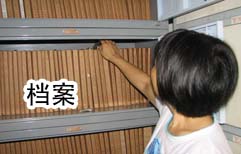
Only government agency and institution can access their employees' record. I read my students' record although i can not read my own record. yes, it is nothing mysterious about 档案. It is about study records and behavior in school life. It also includes health issues and personal information. Bad behavior such as"cheat on exam""fight""theft" and so on. It is not good for one to have these bad behavior written in the record. That would infect you a lot. Especially you can not be a civil servant and work in government.
bad behavior不良记录bu4liang2ji4lu4cheat on exam考试作弊kao3shi4zuo4bi4fight打架斗殴da3jia4dou4ou1theft偷窃tou1qie4

changyeApril 17, 2010
HI cassie 老师
周末过得怎么样?你那儿这次有没有玉树地震捐款活动?看来最近在中国“新闻”太多了。
你的档案里有没有不良记录?哈哈 对了,你朋友之中有入党的人吗?
cassielinApril 17, 2010
Hi uncle changye
很久不见!今天带学生们去参加TEM4考试了。西南干旱,玉树地震,我们都有组织募捐。最近天灾人祸不断,我们一定要懂得珍惜现在。
我的档案里应该没有不良记录,学生时代我还算是个merit student。^_^
xiaophilApril 18, 2010
I just found a related blog post from a Chinese student.
Today,I attend the test of C langugage program,but it isn't my major,and I just wanna a certificate for my future jobs.So I learn it on my weekneds day.Through the case,I find that it is unfair in society.most of students pay money for the test,and they send message to copy the answers,which makes me in a low sprit.I konw it is very dirty and insecure to do this.it belongs to the black operations,some people know nothing about it,however they can pass the test smoothly,I know it is a big problem in education system.why the hot of taking certificate spread so crazy in China?It attracts thousands clledge students to attend in every year,just like me,I am not majoy in the computer,but I wanna the certificate.because many companys pay more attenion on the different kinds of certificates.owing to the situation,many orgnazitions provide the services for the students who wanna a certificate not giving much energy .I don't critisize anyone,just wanna to erperss
my inbalanced mood on the test.I believe no pain no gain.From now on,I will be determined to pay more attenion on my major.I need to strongthen myself to adapt to the complicated society.

benjizhuhaiApril 16, 2010
我发现了老师们大部分不想记录学生的污点。。。
我在中国5年了,讲大学英语课程,所以我比较熟悉老师的观点。为了解释为什么中国同事(老师)都会防守作弊的学生我刚想出来了3个原因:
第一是因为记大过是很严重的惩罚,
第二是因为本学生可能会报仇!将来老师要watch his/her back!
第三是因为通报批评还会影响老师的名声
*有没有其它原因?*
changyeApril 16, 2010
Hi benjizhuahi
抄袭剽窃行为在中国学术界很常见,事情已经到了无药可救的地步了,所以有些大学教师根本就没有资格批评学生作弊。再加上,学生通过作弊而得高分不仅有利于学生,也有利于大学,因为成绩越“好”就业率越高。难怪很多中国大学很善于培养大量“优秀学生”!总之,大学和学生之间存在着一种互惠关系 (mutual back-scratching)。

TalApril 15, 2010
Interesting reading. Part of me feels reluctant to generalize, but I'd have to agree that 'cheating' is rampant, and that the gut feeling of many Chinese is that it's not wrong per se. Students I know have actually told me of collaborative cheating schemes they participate in to help each other get through courses which are 'required' for their diploma, but boring for them to do, (some of these are probably just badly taught.) They certainly feel no shame about doing this, the predominant attitude is that it's a community spirit thing, their way of coping with an unfair and/or badly designed system.
As for Chinese students abroad not being terribly good, I can only speak of a young couple from 福建省 I got to know back in the UK some years ago. The guy (who told me frequently how much he disliked study) was doing a Masters (lol) in Marketing or something, and his industrious girlfriend literally begged me (despite my objections that I knew zip about business and marketing) to go through his dissertation, correcting mistakes and improving his English. I did, (I'm a softie at heart, especially when implored by a pretty girl - lol) but what I did was effectively to rewrite it! The English was so poor and the ideas so lame I couldn't understand how he'd ever even been accepted onto the course!
changyeApril 15, 2010
Hi tal
> collaborative cheating schemes
This reminds me of another episode. The Chinese friend also told me that some of his daughter's classmates held a meeting for "collaborative cheating" the day before national college entrance exam.....over beer, hehe. I don't know if the meeting was fruitful.

suxiaoyaApril 12, 2010
New York Press article today on how cheating in exams is rife in China:
http://www.nypress.com/blog-6248-china-fails-the-honor-system.html
Quite interesting. Perhaps it's indicative of the pressure that students face here, if so many resort to cheating?
Also arguably indicative of the difference in approach to cheating between the East and West (I've heard it referred to as "Shame versus Guilt", whereby in China the risk of shame/losing "face" is far more of a driving/limiting factor than feelings of guilt/conscience)...
bodaweiApril 12, 2010
'Academic fraud, misconduct and ethical violations are very common in China', says one expert in the original piece, and I am in no position to disagree with this statement (I have no personal experience.)
But this is rather different to saying 'cheating in exams is rife in China'. In my experience there is no more cheating in exams here than in Australia - exam rules and conditions I have observed are similar to those applied in the West. In fact, Chinese teachers impose stricter conditions than foreign teachers in my university - simply because they are provided more resources. I have to supervise exams alone, but Chinese teachers are provided two supervisors for each exam.
There are different standards here for referencing and attributing ideas etc. but this does not necessarily amount to fraud - there are different standards here that are consistent with the Chinese culture. Those that want to study overseas or publish in foreign journals have to abide by the foreign standards. This is widely understood and accepted in China.
xiaophilApril 12, 2010
suxiaoya
Funny you should bring this up. Some of my students today are going to get a cultural lesson. I rather despise cheaters, and I do try to catch them early on so that they will straighten up for the remainder of my class. I say cultural lesson because, I'm not sure, but I think Chinese teachers normally don't care much. Anyway, I generally pass out two quizzes, but I don't tell them there are two, and from a quick glance they look exactly the same. It is obvious who the cheaters are because their answers are all wrong but are identical to the correct answers of the corresponding quiz. Let's just say five students are going to lose face today despite their efforts to save face. I won't make them a public example, but I'm sure word will spread fast.
suxiaoyaApril 12, 2010
Wow, xiaophil, is this you taking revenge on the kids that played the April Fool's trick on you?! Hehe, seriously, though, I'd be interested to know the outcome.
By the way, I really don't know enough about the culture of cheating here to comment with much conviction. I just think it's an interesting question. Of course, I am aware cheating is not limited to China, but I do come across this "Shame vs. Guilt" idea quite often.
xiaophilApril 12, 2010
suxiaoya
Cheating is rampant here in China. I have never heard a Chinese person say otherwise, and this has been my observation over and over. If we deny it, we are just trying to be polite. It goes without saying that all countries have cheating. The difference is that in China, everyone thinks it is normal and would never think of complaining to the teacher, administration, etc. That isn't to say there isn't honest students here. There (usually) are, but they seem to feel that it would be hopeless, or wrong even, to try to fight back.
xiaophilApril 12, 2010
By the way, your "Shame vs. Guilt" notion is quite interesting. I do find Chinese values are quite different from what I'm used to. Americans usually stress "right and wrong". I sometimes ask Chinese adults what values they want to stress to their children, and usually number one is "respect for elders". Now I wouldn't even begin to argue that is a bad value. My point is, do many Chinese even feel guilty for cheating? Maybe judging "right and wrong" is something peripheral to them, whereas face is put to the front.... must honor my family...
suxiaoyaApril 12, 2010
xiaophil,
This attitude to cheating is exactly the question I was trying to explore in posting that link, so it's interesting to learn of your findings as a teacher. Of course, it's not a criticism just an observation - an interesting one!
changyeApril 12, 2010
Cheating in exams is not "a personal thing" anymore in the PRC. A lot of people, teachers included, make money helping students cheat especially in college entrance exams. Sometimes cheating is even "supported" by local officials. You can call it "an industry". In my city here in northeast China, test proctors often turn a blind eye to cheating so that local students can enter good colleges. A Chinese girl in my city, who did very poorly at high school, entered a prestigious university last year, of course, with the help of cheating. Everybody knows what happened, and it's nothing new here in the PRC.

hamshankApril 12, 2010
Are Mainland exam's multiple choice like the States (and I think Taiwan)? It's harder to cheat when there are no set answers in my opinion.
suxiaoyaApril 13, 2010
I guess when you're paying the teacher to give you a pass, the particular format of the exam is, well, academic :-)
changyeApril 13, 2010
Actually Chinese "cheating in exam" has a long tradition. Probably its history is as long as that of “科举”, imperial examinations for high-level governmental officials, which dates back one thousand and several hundred years. There have been a lot of kinds of cheating techniques in China. Below are photos of "clothes for cheating". Chinese people are very creative when it comes to "cheating", not only in the sense of "cheating in exams", hehe.
http://www.cpcjapan.com/china/history/historic%20pictures/photo3/cunning001.html
http://www.cpcjapan.com/china/history/historic%20pictures/photo3/cunning002.html
xiaophilApril 13, 2010
A New Zealander told me that many Chinese study abroad students now are not, well, good. This has has prompted a new industry. There are some Chinese that if paid, will take a test for a Chinese student who isn't quite up to the task, provided they look similar enough to each other to fool the teacher.
bodaweiApril 13, 2010
Chinese people feel bad when they are caught (shame).
Phil - I didn't understand your 'plan' above (you see how easy it is to pull the wool over my eyes?) You hand out two different tests - what kind of cheating are you catching? Surely not in-exam cheating - you are there to supervise. So they cannot pass answers around the class. How does the cheating work?
No cheating occurs in my exams because I make sure that no one cheats. But maybe there is a way to cheat I have not heard of - please enlighten me?
bodaweiApril 13, 2010
I've never been known to be polite. I don't believe cheating in exams is rampant in my university - but what do you mean by 'cheating'? There are a whole range of possibilities - i would like to know the method of cheating you are talking about.
changyeApril 13, 2010
Hi xiaophil
Yeah, that's one of typical classical techniques that were already used in 科举 a long time ago. Actually, today there are a lot of high-tech cheating techniques in the PRC. I believe even James Bond would be surprised at how sophisticated/advanced they are. As for the girl I mentioned in my previous post, her cheating was very classical, that is to say, she oversaw exam papers of examinees sitting around her, including the daughter of one of my Chinese friends.
PS My friend's daughter's high school has jamming devices in order to prevent cheating. Can you believe that?
bodaweiApril 13, 2010
Unlikely to work; in the Western world we have checks for confirming identity - let's be real. I have posted my stories before from experience of my spouse who has taught Chinese students in Australia in a variety of institutions including university for the past 7 or 8 years. One student 'tried' have another student to sit an exam for him, but told her that was his intention. Okay, some students are not very bright. :-)
It is true that the English standard of a lot of overseas students is not sufficient for university entry - in that case they are required to do more time in a language school. Chinese institutions are largely to blame; for possibly commercial reasons they set the bar too low. This does not prove rampant cheating, but it is common practice for applications for overseas study to be written by agents, and I know that agents prepare referee reports to be signed by Chinese professors. This is not acceptable practice in the West, but there are double standards here - note that the Western businesses (that is, universities and language schools) are fully aware of these practices when they accept students. Let's not all be high and mighty about this.
xiaophilApril 13, 2010
bodawei
I have two quizzes that at first glance look the same. In fact, the only difference is the order. Some students don't even bother to look at the questions they are trying to answer. They just copy the student next to them. If the person next to them has a different quiz, the answers will be wrong. I am not exactly sure what is the preferred cheating method, but my guess is simply looking over at another students paper when I am looking the other way or whispering quietly out of the side of their mouths.
I find that the problem of cheating varies according to the situation. The younger the students (and I mean university level students) and the smaller the class, the less likely they are to cheat. For example, my freshmen don't cheat much (as far as I know), and I think the biggest reason is because there are less than 30 students in that class and so I can keep an eye on them. The quiz that I mentioned above is from a class with over 200 students. I caught 5 red-handed. Another 10 or so I'm sure cheated, but since their score was almost zero I didn't call them out. Now in addition to them, I figure a significant number of them managed to successfully evade me. Altogether, I estimate at least 30 students outright cheated the whole quiz (and I believe it was more than that), with who knows how many others cheated on an answer here and there. If I keep an eye one group of suspected cheaters, that means the cheaters on the other side of the room will have all the freedom they want to cheat. It is simply hopeless to prevent all cheating.
By the way, my all time worse group of students were the MBA students. I'm embarrassed to say how little control I had over that test.
Bodawei, personally, I would be shocked to find out that cheating wasn't normal in your university. I teach adult students as well. They are from just about every part of China, and this topic comes up from time to time, and I have never heard anyone say that cheating isn't common, and almost always they say it is the norm. Maybe not every class, but definitely it happens here and there, and often is quite organized. Not saying you are wrong. Just saying that I'm very skeptical.
xiaophilApril 13, 2010
Well, just telling a story told to me, which yes, could be false or even rare. (I should have added that disclaimer.) That said, I don't know about New Zealand, but I was never required to show my ID in my American university before taking a test. I can't see why it isn't plausible to have a stand in, especially if there are many, many students taking a test.
bodaweiApril 13, 2010
Thanks for explaining your method - I gather it is multiple choice or True/False. I can see that in a big class it is possible - but I question whether the inclination to cheat is greater in China than the West. [I'm not in Changye's team on this one.] Naturally i have heard the stories - stories abound. I remain sceptical about the stories. I have checked my test results for cheating and suspicious results are negligible. I have no doubt Australian students behave the same way and the numbers would be similar. I find this an incredibly honest society compared with my home country - why would people be 'out of character' when it comes to exams. One answer may be the unusual pressure placed on students compared to the West - granted. This doesn't make the society less honest than the West. On the honesty spectrum I would think that China fares no worse than the West.
My own experience may not be typical:
- my university is ranked one in the province and work with many talented students - most of them would not want to risk promising careers by cheating
- I've never taught first years so I can't comment on that; the ones I teach should know all the tricks :)
- I do generally have classes around 25 and I can space them out for exams; in fact I take extra precautions by shifting them around. I don't let friends sit together and I try to sit boys next to girls. They are only allowed pens in the room - no bags, paper, materials, phones, dictionaries etc.
A final thing - if 'cheating is rife' and I eliminate cheating with my rules, why do they choose my courses? They would be mad to do my course if they can easily cheat in other courses.
Just some thoughts.
changyeApril 13, 2010
Hi bodawei
> my university is ranked one in the province and work with many talented students
This is just what I expected. High-achieving students basically have no need to cheat in exams. They are not the people who oversee other students' papers, but the people who are overseen in exams. That said, good students also sometimes feel the temptation to cheat. Do you know “重庆状元民族身份造假事件” (Chongqing the highest rank student ethnic-disguise incident) that happened last year in the PRC? That's just the tip of the iceberg. There are a lot of "out of exam rooms" cheating techniques in the PRC.
http://news.sina.com.cn/c/2009-06-27/031518103205.shtml
bodaweiApril 13, 2010
I have not seen that - and I will follow it up. 'Know your enemy'!
I don't doubt 'out of exam room' cheating of one sort or another exists - I mention a couple in my post above. There are incentives for this behaviour. But China and the West do have different ideas about what is cheating. Even that word cheating has to be translated. In China it is sometimes 'helping'. :)
changyeApril 13, 2010
Hi bodawei
P/S. Actually, cheating (and its business) is most "flourishing" in college entrance examinations, which is most important for Chinese people.
suxiaoyaApril 13, 2010
I find it fascinating how the definition of "cheating", and by extension also "right and wrong", can vary so much from culture to culture. I mean, you grow up being taught "right" from "wrong" just to hop on a plan and discover the rest of the world has different ideas entirely!
xiaophilApril 13, 2010
suxiaoya
Yes! In fact, I could be wrong, but I don't think Chinese typically talk in terms of "right and wrong." That's NOT to say that morality isn't important here. It definitely is! I'm just saying I think morality is spoken in different terms, and of course is quite valid.

bababardwanApril 14, 2010
changye,
so I suppose the first picture is of a garment that is meant to act as a lining for a jacket or something so it can "sandwich" in the cheat notes in the second photo?
bababardwanApril 14, 2010
Is there an article for that in English? I'm feeling a bit too lazy to work it out at the moment?
bababardwanApril 14, 2010
A Chinese girl in my city, who did very poorly at high school, entered a prestigious university last year, of course, with the help of cheating.
...you'd think this is where the 档案 would come into it's own. An implausible jump in academic performance in a short space of time should prompt questions by anyone who cared.
xiaophilApril 15, 2010
Baba
After arriving in China, one of the cultural lessons I learned is that Chinese people do not want to rock the boat unless a situation become quite intolerable.
I guess that Australia would be much like America. If this situation happened in our countries, usually at least one person would complain, and there would be a legitimate investigation. Afterward, the whistle-blower might be perceived as a hero.
In China, people don't like to jeopardize any relationships. They are afraid that if they complain, the authorities will feel embarrassed that such kind of bad behavior has been exposed in their jurisdiction, or worse yet, the authorities might be involved in the crime, and thus they will silently get revenge. It's not just the authorities they would be worried about. If a person points a finger at one person, who knows what powerful friends that one person has. Chinese people are very prone to forming cliques, and so they don't want to become the enemy of a clique. Actually, I don't know if this all makes sense to you, but in a nutshell, Chinese people in general see relationships as being very complicated and so don't want to risk any unforeseen backlash.
This insight comes from many talks I have had with white collar workers. If anyone here would like to dispute this, please do. I would be interested to hear.
changyeApril 15, 2010
Hi bababardwan
Here are some related news articles in English.
http://news.xinhuanet.com/english/2009-07/02/content_11641001.htm
http://www.bjreview.com.cn/forum/txt/2009-07/27/content_209270.htm
xiaophilApril 15, 2010
Changye
I just read them. I say let the boy go to Peking University (assuming this was the only cheating he did), and throw the parents in jail.
bababardwanApril 15, 2010
thanks xiaophil for your insights.The old guanxi comes into play again,eh .

christine30550April 8, 2010
I have a question about "好了,就因为这个好几次都没被评上三好学生。" The translation says: It was over. Just b/c of this he wasn't awarded the "merit student" status more than a few times.
The way I understood it was that the guy never got the "merit student" status -> "Just because of this (就因为这个) he very often missed being / failed to be (好几次都没) nominated a "merit student".
哪个对?
And what about the "好了" here?

JasonSchApril 8, 2010
Hey Christine,
In, "It was over. Just because of this he wasn't awarded the 'merit student' status more than a few times." I meant to convey that he was up for the award, but never got it, more than a few times. So, he never got it!
The 好了 is in the sentence before and is translated as, 'It was over'. This 好了 is similar to 完了, meaning something like, 'He was finished'. (after his behavior was marked down in the record)
Hope that helps. :)
lalmatiApril 8, 2010
Yes ,epdchina .We can say "during university"
For example,
I used to study a lot during university.
Achievements during university.
Living at uncle's home during university.

epdchinaApril 8, 2010
好,因为这是Chinesepod,我应该用中文问这个问题:
我有一个英文语法的问题关于最后一句话。我们可以说,"during university“吗?我只在Chinesepod看过这个"during university";之前没看过。在美国,即使我是本科学生(不是专科学生),我还是使用“during college"。 我们会说“我的大学(my university)“。
上初中,上高中,上大学,都是做得事情,不是去某个地方。虽然他们都是地方,我们不说“上我的高中”。这个好像工作。你会说,“我上班“,不是“我上公司”。
我知道大学跟学院不一样,但是还是说:"go to college"
不好意思问你们一个英文语法问题,但是我是洋人英文老师,所以比较重要!
epdchinaApril 8, 2010
Here's an English grammar question about the translation of the last sentence. Can you say"during univeristy"?
I never saw the word "university" used this way until I saw it in Chinsepod. In the US, I always heard and said "during college", "go to college", etc. instead of "during univeristy","go to university", etc. even though we went to a univeristy. If we used the word "university", it would most likely be this way: "my university","the university", etc.
"Going to college" is like "going to work" because it's more broad. You wouldn't say "I'm going to company today". You could say "I'm going to my company today".
I know that "colleges" and Universities are not the same (Universities are 4-year), but we still don't say "during university'
(sorry about posting English questions on Chinesepod, but since I'm an English teacher I wanted to ask!)

JohnApril 8, 2010
This is a speech habit that Americans tend to pick up from non-Americans while abroad. I'll admit that I've changed my way of speaking since coming to China in order to avoid confusion. In many English-speaking parts of the word, "college" means something like "community college," so when you mean "university" you say "university."
rocky26April 8, 2010
British speakers use the word "university" in coloquial speech much like Americans use the word "college" . For example, a Brit might say "Are you going to university today?" Americans would probably say "Are you going to school today" , even when referring to a college/university. Interestingly, this might be an indicator of Americans' views on education.
bodaweiApril 8, 2010
In Australia there is a legal as well as linguistic difference - all universities are funded by the Federal Government. Only some colleges receive taxpayer funds. A college is .. well it can be almost anything .. it is certainly not just a community college (also 'community college' is not the same in Australia as the US.) One of the main uses, like the British I think, is for residential accommodation at university - I think that these are always called colleges. More broadly it means an educational institution. But it is also a fancy name for a doctor's trade union (eg. College of Surgeons.) Some colleges have the final two years of high school - the Australian Capital Territory has this system. And private high schools (Grade 7 - 12) are often called colleges. The only thing it is not is a university! Not even colloquially.

wangpingliquanApril 7, 2010
It's interesting to know the 档案 system in China. Since it seems to be accessible by companies, can you see your own 档案, if you are 人事部长? Or is there any more complicated system to prevent one from accessing his own record?

jennyzhuApril 7, 2010
According to a colleague at ChinesePod, a large portion of 档案 is self-assessment written by oneself. She says there is nothing mysterious about 档案 nowadays and most people don't have the desire to look at their 档案。

shanghai_heliosApril 8, 2010
I believe that individuals can't access their own 档案. And foreign companies can't hold the 档案 for employees. Instead, the 档案must be held by a government authorized third party.
wangpingliquanApril 8, 2010
Hi Jenny and shanghai_helios,
Thank you for your useful information. That made me clear out the 管理 of档案.
shanghai_heliosApril 7, 2010
John, the U.S. doesn't have a similar system to a 档案, which follows a PRC citizen for life through school and work units.
macApril 7, 2010
yeah, in the US it's totally different. We have permanent records that get erased and restarted at age 18. They're not secretive like they seem to be in China (based on the dialogue) ; Americans can request to view their permanent records, but for the most part rarely do because people usually know exactly what's in their records (i.e criminal offenses, expulsions, etc) .
The Chinese 档案 includes health issues, which apparently can be used to demerit people. This, unfortunately, is typical of China.
JohnApril 8, 2010
I admit, this was slightly confusing for me as well.
I know that in the US, you do have an academic record which follows you through your schooling, and may also include disciplinary issues. This is different from your "pernanent record" which the police keep, and which really only starts from the age of 18.
As I understand it, this academic record comes into play when a student applies to universities, but not when applying for jobs.
Please, anyone, feel free to correct me (especially American school and university administrative staff!).
bodaweiApril 8, 2010
Hi Mac! Would you care to elaborate on your comments?
You say that the system can be used to 'demerit people' - how does that work exactly?
You also imply that the system here is inferior to our systems of personal records in the West. I would find it most interesting to hear how you have compared issues of privacy and the impact of personal records on peoples lives etc., between China and the West. It sounds like you know a lot about China.
What did you notice in this lesson?
You are posting as a guest. Your reply is reviewed before it appears. Log in to post without review.