
wanglixue51December 30, 2010
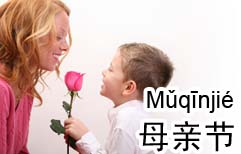
Today is mother'day, but I love my child so much,I want to give gifts for my baby, that is a good baby-setter,I know the VeryMaids company’ operation mode is staff style, Its good household service depends on legal contract with the company and the domestic helper, neither on good person nor good luck. The following is the Philippines drillmaster's interview material.
http://www.beijingtoday.com.cn/feature/the-secret-world-of-ayi-a-look-into-the-highly-unregulated-housekeeping-industryhttp://beijing.globaltimes.cn/society/2010-11/592368.html

xiao_liangMay 10, 2010
In the expansion sentences, we see "辛苦你了" (xīn kǔ nǐ le) translated as "thanks for your trouble" (and 辛苦 itself translated as "to touble", but that's just a typo...).
The lesson doesn't allude to this meaning, how does it fit into thanking someone in that form? I can if that's a definition it can mean "it troubled you"...
bababardwanMay 10, 2010
For what it's worth I'll tell you what I reckon and hope it helps. I think 辛苦 refers to tiring [mentally or physically] effort that has been put into something. The 了 I think indicates that it's a completed action,and 你 obviously refers to the person who has gone to the trouble of putting all the effort in. The rest I think is just implied.The fact that you are voicing an acknowledgment of the trouble they've gone to has an applied note of appreciation...an implied thankyou I think. Do you reckon that answer your question mate?
xiao_liangMay 10, 2010
oh, I got it wrong, the translation is "I really appreciate it". I suppose it is just a loose translation, I just find it a weird one, but it's all contextual. My problem, not the language, I guess. (apart from the typo).

JasonSchMay 10, 2010
Woops, sorry about the typo and thanks for pointing it out.
辛苦你了 is one of those expressions that doesn't always directly translate well into English. So, like you said, it's all about the context.
Here, 辛苦你了 is like a set-phrase that expresses gratitude. It may carry a bit of a feeling of 'troubling the other person', but as much so, it's about recognizing their efforts. (I think, 'thanks for all your hard work', would work just fine here as well)
Also, 辛苦你了can be used simply as a sincere 'thank you', to anyone who's done something for you. (a service worker, a teacher, etc)
Hope that helps clear things up. :)
xiao_liangMay 10, 2010
Thanks Jason, that does make it much clearer (and thanks Barbs too!) Useful phrase to know. I suppose Ken would have said "memoroise this as a laaairxical chunk" :-)
Does it also come under the "two third tones" rule, so the 苦 becomes a second tone?
JasonSchMay 10, 2010
No problem. Oh, and thanks to Barbs as well! I guess I hadn't read the comments clearly enough before I posted.
As for the tone sandhi, phonologically the sentence would be split up like this:
辛苦 xīnkǔ / 你了 nǐle
So here, kǔ remains, kǔ.

alwingateMay 9, 2010
John Pasden: Thank you so much for the native speaker saying the Premium content. The difference is amazing and I am learning the rhythm, flow, and tones of this beautiful language. I think the attention to this section is a must for Premium members. I hope others appreciate the very, very nice change.
anna_suMay 9, 2010
wo jintian dadianhua gei wo mama ,mama gen wo shuo ,ni shibushi you yixie dongxi yao gen wo shuo?liao le zheme jiu dou bushuo!duo keai de mama.
我今天打电话给妈妈,妈妈跟我说:“你是不是有一些话要跟我说?聊了这么久都不说!”多可爱的妈妈~
today ,i made a call to my mother,and she said you have something talk to me ,right?why dont you say quickly?" haha~so lovely she is!
bababardwanMay 9, 2010
Now this is an interesting situation because initially I really wasn't sure if it was your English or my Chinese [though I did strongly suspect it was my Chinese here] that didn't get over the line with this:
聊了这么久都不说
..being translated by yourself as this:
why dont you say quickly?
..which,before I looked at your translation,I thought you meant:
"it's been such a long time since we've chatted."
However now I see your translation,I realise that it's my Chinese and I realise that I'm pretty sure what happened here is that you had been chatting with her for some time but she sensed there was something more important you had to say to her and wanted you to come out with it..right ? So I think the bit I intially struggled with,you meant:
"we've been chatting this long and you still haven't said what it is you called about"
..with the preceding bit being:
"do you have something you want to talk to me about?"

bodaweiMay 9, 2010
Hi Barbs
My guess is that it translates closer to what anna_su says herself! 'You want to talk to me about something? I don't have much time to talk!' Not as you suggest 'we've been chatting this long...'
I think the 这么久 (说) refers to how long she has to talk, negated by the next couple of characters.. 都不 . What do you think?
bababardwanMay 9, 2010
My guess is that it translates closer to what anna_su says herself!
..yep,well that's always a fair bet,hehe :)
My initial interpretation I am certain I was wrong about.....I think I went more for what I was expecting it to be about rather than thinking too much about the meaning of the words or the grammar etc.It was only when I saw the translation that I had to pause and give more thought.Look clearly you're way ahead of me mate,but you've asked what I think,so I would say you may well be right,but the 了 tends to make me see it a different way. Obviously there are many uses of 了 so I may be just picking the wrong use...but the 聊了 tends to make me thing that she's saying they've already chatted...and then this is followed by 这么久。。this long 。。and you still haven't gotten to the point...[you still haven't said what it was you rang about....was this a specific matter? or was it that she was hanging out for the 母亲节快乐...this latter I will not ask of anna su as I don´t want to pry]
bodaweiMay 9, 2010
Someone may put us straight - I also am weak on 了. I am going to defend my translation because even if she has said one word it is in the past, and if that fails, the rule that Chinese abhors a single character (like nature abhors a vacuum) so the 了 is there to keep 聊 company. :)
I'm guessing that you would say it this way even if these are the only words uttered. I hope we get help from an expert, like anna-su (who was witness.)

zhenlijiangMay 9, 2010
I'd say you're right Baba. You impress me always with how well you read.
I interpreted this (as usual, taking some liberties) like
"Isn't there something you have to say to me (you called to say to me)? We've been on the phone so long, talked about just about everything already--(when do you think you might get around to it?)", something along those lines. Hope anna su can confirm/correct.
bababardwanMay 9, 2010
so the 了 is there to keep 聊 company. :)
...lol. I must admit I'm often tempted to throw a 了 or at least a 的 in just for good measure or because it sounds good without really knowing what I'm doing,hehe.It does feel lonely without 'em.
yeah,you're probably right mate.It was also the 这么 that made me think the way I did,but I'm sure I just have a not flexible enough view of how that can be used.If 这么久..means this long ,how long is this if it refers to the future? ....but even as I type it I realise it could be more like the use of "so"..."so long".....hey,I don't have so long to talk so cut to the chase mate,hehe....out with my happy mothers day [j/k anna su...I'm not referring to your particular case...I'm just joking on a hypothetical...joking around with the language].Yeah,so is not specified in English and can refer to the future in that way.I think I'm starting to see it your way,and as you say ,the source is the safest bet.
hehe,yeah,come back anna-su. I hope she's not a drive by....a drive by quandry leaver
bodaweiMay 9, 2010
'.a drive by quandry leaver' :)
Sounds like a convenient thing to have in the neighbourhood, if you own a car. Sorry, that would be a 'drive in quandry leaver'.
bababardwanMay 9, 2010
If they've got it anywhere they'll have it in the States.I remember once seeing a drive in church there.
We'll have to make do with what we've got here....like our drive in dry cleaners.Drop the laundry off and hit 'em with questions like "how do you get it clean if it's all dry...what no liquids" [as per Seinfeld],or "这个松散的线代表我的生活。那,这个线开始哪里哦?“ 这样我们有一个laundry and quandry one stop shop [ 一个所谓 qualaundry]
bababardwanMay 9, 2010
Thanks for your input zhen. Well this bit:
why dont you say quickly?" haha~so lovely she is!
...kinda tends to fit in with our interpretation....esp the "haha" and so lovely tending to suggest to me that it was thought endearing that she was trying to elicit the well wishes for 母亲节...she'd been hanging out for it and just couldn't wait any longer。。kinda explains why it was funny and gives more of a point to the post] and the point of it being consonant with this thread ,but I might be reading too much into it there.

iwatachiefMay 9, 2010
Today is the d-day! (anybody out there knows how to say that in chinese?)
Anyway, to all the mothers:
母亲节快乐!祝天下所有的母亲一个特别漂亮的一天!

iwatachiefMay 9, 2010
Hi Changye! I didn't know "D-day" refered to a day in particular (?) I was just translating the equivalent of the french "jour J" into english. I thought d-day could be used everytime the day you had been expecting for a long time finally arrived. For instance if I had my birthday today, today would be the d-day for me.
Would there be an equivalent in Chinese (of d-day)?
iwatachiefMay 9, 2010
Thanks Grace! But can't you say that you wish a beautiful day to someone? I just wanted to change a little bit from the usual 快乐 version?
changyeMay 9, 2010
Hi iwatachiel
I had no doubt that you meant "Normandy campaign", hehe. There is a similar word "X-day" (X デー) in Japanese, but it's usually used for possible serious incidents/events, but not for something like Mother's day. Even "Xmas day" is not called "X day" in Japan, hehe.

polarbearMay 6, 2010
Only in China:
你儿子真乖,会自己吃饭了。
It all starts and ends with eating. So the sooner you can show your eating skills the more you are thought of as well behaved. :)
I feel that way when I go to my inlaws. The more I eat the more they love me :)
You got to like it unless you are on a diet. Then you are a bad bad misbehaved boy!
PB
sydcartenMay 6, 2010
Mother's Day is big in Indonesia too, at least in the bigger cities like Jakarta, Bandung and Jogjakarta
changyeMay 6, 2010
Selamat hari ibu! Tolong beritahukan kapan hari ibu di Indonesia. Apakah ada juga hari ayah di Indonesia? Hari ayah apakah sama penting dengan hari ibu?
sydcartenMay 6, 2010
tanggal 22 Desember
here's a fairly comprehensive list:
https://id.wikipedia.org/wiki/Hari_Ibu#Daftar_Negara
changyeMay 7, 2010
HI sydcarten
That's very close to Christmas. I don't know if it's a good thing for mothers who believe in Christianity, hehe. Terima kasih banyak atas bantuan anda!

oakleysteveMay 6, 2010
One of my friends where I used to work would always get up early on Mother's Day and play golf with his buddies so his wife wouldn't have to get up and make him breakfast :)
benchannevyMay 6, 2010
辛苦:hard; toilsome;laborious.
辛苦的工作:hard work; laborious work.
辛苦地工作:toil at one's task
我的一切辛苦都白费了:All my trouble went for nothing
你们陪我们参观,辛苦了:you must be tired taking us around
你们工作辛苦了:You've been working very hard
你辛苦了,多谢:thank you for all the trouble you have taken
justbeingmeMay 6, 2010
Hello guyzz!can somebody help me to translate this- HAPPY MOTHERS DAY TO ALL THE MOTHERS OUT THR...xiexie :-)


helencao_counselorMay 6, 2010
可以说 :“祝天下所有的母亲节日快乐!”。
"zhu4 tian1xia4 suo3you3 de mu3qin jie2ri4 kuai4le4".

dunderklumpenMay 6, 2010
宝宝不乖,妈妈不喜欢你了。If baby doesn't behave, mom won't like you anymore.
Can you say that to a child in China? If you were to say that to a child where I come from I guess you'd be accused for child abuse. I'm not saying we are more civilized or something, just that cultures are different.
bodaweiMay 6, 2010
This sentence is child abuse in any language, Or culture. The mother's unconditional love for her children is human and little to do with culture. This is particularly unsuitable for a lesson titled 'Mother's Day'.
I suspect the author of the sentence (or at least the English translation) has no experience with or raising children, so we could conclude that it is something of an innocent mistake. Or maybe a rather black sense of humour? Nevertheless it is a nasty sentiment to portray in sample sentences for learners, whatever the motivation.
This is a case of where 'art' and real life meet - I am not actually advocating censorship. But I think if ChinesePod is going to use edgy sentences like this it should note (to avoid confusion) that this is not a reflection of Chinese culture.
changyeMay 6, 2010
HI bodawei
Come on, you're learning Chinese culture through learning Chinese, aren't you? Nothing is strange with the sentence. When I was a child, my mother sometimes even said to me, “今天开始你不是我家的孩子了!” (From now on, you are not my child anymore!), hehe.
sydcartenMay 6, 2010
I'm reminded of my mother.
I found out when I was very little that I had been adopted, and every time I was naughty my mother used to say to me, "If you don't behave then we'll send you back where we got you from!".
That made me behave all right, it scared the shit out of me!

connieMay 6, 2010
You can hear this sentence a lot in China. We don't view it as abusive - the tone isn't serious. If the child 不乖, the parents will say that to their child. It doesn't mean the parents won't like their child any more, but is instead a way to get their child to stop his or her bad behavior. I'm told that this isn't uncommon in Spanish, too.
zhenlijiangMay 6, 2010
if ChinesePod is going to use edgy sentences like this it should note (to avoid confusion) that this is not a reflection of Chinese culture.
Hmm Bodawei--ah I see Connie just confirmed what I thought--I'd just like to say that this sentence doesn't strike me as edgy or nasty, and I am just as certain as you are that mothers unconditionally love their children in China too.
Dunderklumpen from his western background brought up a good question because he wanted to understand something that is very foreign to him.
To keep sentences like this one--which obviously is proving very educational--out of lessons is a denial. That's counter-educational, and in effect would be forcing a westernized, Christianized, and (though I realize this isn't your point) Political-Correctness world view on China.
I do have high respect for your views Bodawei and think of you as having a special role among us--you play devil's advocate and make us think hard and well about our views on China and ourselves. But sorry, I have to say I am getting the impression that your love of China is blinding to some degree. It may be better to be blinded by love than by hate, but denial is never good. Denial makes us miss the point.
bodaweiMay 6, 2010
Hi Connie
I will reply to you first. (I seem to have provoked a few responses.) Let me just say that you hear this sentence in Chinese, you do not hear it in English. It is no doubt considered a joke in China (the Chinese expression does not surprise me at all), but in English-speaking countries this sentence expresses a form of child abuse. (I want to assure you that I am not making idle comments here - I have worked in this area professionally for some ten years or so, and have in the past couple of years worked on a project reviewing standards relating to the treatment of children. In this work I was able to review current attitudes and Government policy in Europe and America as well as Australia and New Zealand.) This is a difficult topic because of culture differences. I stand by my original comment, but I am not attacking ChinesePod over this; I think the learning material here is of a consistently high standard and that the material is prepared with the best of intentions from an educational point of view. I mean to convey some friendly advice.
[Apologies that my Chinese is not up to expressing the above in your native language. Must keep working at it.]
bodaweiMay 6, 2010
We are showing our age here Changye, the world is changing in this respect. Yes these comments were common when we were young. :)
bodaweiMay 6, 2010
Thanks Zhenlijiang for you kind comments and I appreciate your honesty.
But I am actually not denying that these comments are commonly expressed in China (see my separate comment to Connie.) And I repeat: 'I am not actually advocating censorship'. As I said to Connie I am offering advice.
The kind of 'commentary' I would suggest for this sentence is that it is commonly expressed in China in a joking way, and that it does not reflect real intentions of mothers not to love their children.
Ha ha, yes I am sometimes accused of wearing rose-coloured glasses. But I see all kinds of things in China that make me feel uncomfortable or even outraged. I know from observation that what we in the West call child abuse exists in China. But I do not think that child abuse is the same in China and the West by any stretch of the imagination. It is different (I think - I have made no special study of this) in both kind and quantity.
bodaweiMay 6, 2010
And they used to cane students in school too - remember? The community values around acceptable behaviour in relation to children has changed over time.
sydcartenMay 6, 2010
Yes, I was caned a few times, not always deserved either.
Once, the PE teacher caned ALL the boys of our year, once a day, for a week.
He was attempting to force 2 boys to own up to booing a visiting school sports team.
Eventually complaints from parents started to roll in and he had to stop.
We never did find out who the real culprits were.
zhenlijiangMay 7, 2010
*edited* Thanks Bodawei, I see. I wasn't interested for now in the state of child abuse in China or elsewhere, just in your view that that sentence is edgy, and the assertion that it "is not a reflection of Chinese culture"--which struck me as quite a bold denial. Connie confirmed it is heard all the time, so in what way is it not a reflection of Chinese culture? Do you really believe learners here are going to see that sentence and think Chinese mothers would seriously withhold their love unless their children behaved? That we need a little note beside it to explain? I don't know, maybe younger people need it (unlike you and Changye and myself) because they don't know that behavior we now consider unacceptable used to be very common in previous generations, in our respective societies--?
In any case can you see how the meaning you've explained to me was not at all clear from your original comment?
You said to Connie,
you hear this sentence in Chinese, you do not hear it in English. It is no doubt considered a joke in China (the Chinese expression does not surprise me at all), but in English-speaking countries this sentence expresses a form of child abuse.
I'm sure English-speaking westerners were involved along with Chinese staff in producing this lesson. All the sentences are translated into English, and John's co-hosting it after all. Isn't what you're asking for really for "westerners" to understand that this is not child abuse? Not that ChinesePod should provide such commentary?
You say this is a difficult topic because of culture differences. Yes it is a cultural difference. And it's not difficult to me! As a learner here I want not material that westerners may find easier to accept (esp as I'm not a westerner); I want real stuff that lets me gain insight into Chinese culture and the things Chinese people say. In my opinion the question simply needed to be asked (and Dunderklumpen did)--and answered, which Connie did. Then maybe other people will have input, more questions, comments. A discussion would follow, and everyone would take away a lot of cultural insight from it. That's what we have the Discussion boards for isn't it?
sydcartenMay 7, 2010
//Do you really believe learners here are going to see that sentence and think Chinese mothers would seriously withhold their love unless their children behaved?//
It works like rules on sexual harassment. It doesn't matter how the speaker intended his/her statement to be taken.
What matters is how the listener interprets that statement, and how they react emotionally to it.
My mother said similar things to me and I felt traumatised by it at the time, because I BELIEVED her.
A person shouldn't be mocked or have their feelings discounted, simply because they were innocent enough to believe what they have been told, rather than assuming that the speaker must 'obviously' have been lying.
zhenlijiangMay 7, 2010
Also Bodawei your first sentence in response to Dunderklumpen's question was quite strong:
This sentence is child abuse in any language, Or culture.
So in your subsequent comments you've amended this view, acknowledged that in China it does not constitute child abuse, is that correct?
I'm not interrogating you, or laying traps hoping to "catch" you at anything. But you can see how I was confused.
bababardwanMay 7, 2010
sydcarten,
I've only just caught up with this thread and you've only just beat me to say the same thing,namely:
It doesn't matter how the speaker intended his/her statement to be taken.
What matters is how the listener interprets that statement, and how they react emotionally to it.
..well said mate.
All I can say is good on you bodawei for raising this as an important issue.I too have no doubt that in the vast majority of cases this sort of statement is said in a joking cajoling type of way with no ill intent.However I view it as a form of ignorance.I'm a big believer in trying to understand cultural differences but I think some things are just fundamental.I think children need protecting and I think it has only been in more recent times that it has been better understood the impact of such upbringings.I also think that culture is just what we've inherited in our societies from our ancestors and that that shouldn't mean that we can't modify our behaviours as we all become better enlightened over the eras.Otherwise there would be no progress and it would be acting on a presumption that there were no errors or areas that could have been improved on in the past.
zhenlijiangMay 7, 2010
I am sorry if again you took offense at something I said. I do have a feeling you find me to be a generally insensitive person. However I was not, as you can see, talking about the point of view of any child whose mother might say that to him or her. I was not mocking anyone, especially not a child. I was talking to Bodawei about how learners here unfamiliar with China might interpret that sentence and form views on Chinese mothers.
I edited this out of my previous comment, but had said that I personally would never say such a thing to a child of mine and would be very upset if the child's father or grandparents should. I personally consider that bad parenting. At the same time, though I might raise the point, ask them questions and try to trade views--I'm not going to preach at Chinese parents on this thing they might say to their kids. It's a cultural difference, and I can share my perspective without preaching at the other.
Hope I've made myself clear.
bodaweiMay 7, 2010
Hi Zhenlijiang
My opening sentence is quite strong as you say, but it is true. Context is important - if the sentence had made it quite clear that the comment was made in jest - and provided other information about the culture, evidence if you like that this is not abuse - then that would be different. In the absence of this context the sentence describes a situation that is abusive. This occurs in any culture, including China. In Western countries this would constitute psychological abuse. In some countries there is a legal process to be followed when such abuse is identified. I haven't amended my view - in China it would constitute psychological abuse in principal - I am unsure of the legalities here though. Hope this clarifies my comments?
sydcartenMay 7, 2010
@ Zhenlijiang
I wasn't offended by your statement, I just strongly disagreed with it.
As I said previously, it is how the listener interprets and reacts to a statement that is important, NOT what the speaker may have intended by it.
When I speak about having my feelings mocked or discounted I am referring to my own childhood experiences.
At the time my mother used to threaten to send me to an orphanage I was only 5 or 6 years old. I was devastated by the thought that my parents may have been capable of withdrawing their love and support of me, and terrified at the prospect of I might possibly lose the only place I had known as my home.
By the age of 11-12 I had become more sophisticated and realised that it was only a ploy to make me behave. Nevertheless I felt it important to communicate to my parents that their threats had seriously traumatised and upset me at the time, no matter that they never intended to carry them out.
My parents reaction varied at different times. Sometimes they simply denied that any such threat had ever been made. Other times they told me to 'suck it in and grow up', which I felt to be a denial that my feelings and emotional experiences mattered as much as their own.
bodaweiMay 7, 2010
Hi Zhenlijiang
Now on your first response (it gets confusing with these threads), I agree with Sydcarten on this one. In my opinion it is not just enough to provide the sentence without context, ask a question (as Dunderklumpen did) and wait for Connie's response. Not enough in my view, and we are all entitled to express a view I hope.
The thing is Zhenlijiang, you cannot possibly pick up the context you need from the sentence in the exercises. And I'm sure that you don't want all of the language used in China appearing in ChinesePod,, without exception. What about a discussion between a Chinese man and the manager of a child providing sexual services? This is another form of child abuse, relatively common, particularly in some parts of China. It's relative frequency does not make it okay. That would have many people unhappy I think. The language needs cultural context, particularly on something as controversial as this.
zhenlijiangMay 7, 2010
I'm not sure which statement you strongly disagreed with--the sentence of mine you picked up and quoted I think you may still be misinterpreting?
The point is I have no trouble understanding (as I've already said, I personally would never say something like that to a child of mine or to any child for that matter) that parents need to make sure their children understand the love is unconditional and will never be withheld.
it is how the listener interprets and reacts to a statement that is important, NOT what the speaker may have intended by it.
I can't agree more. I've said the same thing myself so many times sydcarten, so many times here on these boards.
I've read your last comment and appreciate your sharing such personal things, things that are probably not easy to talk about, with us. I really hope you don't imagine you and I are in some sort of argument, because I see nothing you've said that I'm disagreeing with. So I wish you didn't think you were strongly disagreeing with me.
zhenlijiangMay 7, 2010
Bodawei, actually your comments have been surprisingly difficult for me to follow. The difficulty I'm having is understanding what you want here. I think it's several things, but can't tell in which order they are most important to you. I'm going to go away for a bit to try to sort out what my problem is, and hopefully I can come back and articulate it better.
Now here--
I'm sure that you don't want all of the language used in China appearing in ChinesePod,, without exception. What about a discussion between a Chinese man and the manager of a child providing sexual services? This is another form of child abuse, relatively common, particularly in some parts of China. It's relative frequency does not make it okay.
our arguments are getting extreme aren't they? I'm sure you could have made your point without going there.
changyeMay 7, 2010
When I was a child, my parents sometimes (jokingly) told me that I was "picked up" at the foot of a bridge when I was a baby, which is one of pet-stories of Japanese parents. I remember that I said the same thing to my son ..... he was very angry then, hehe.
bodaweiMay 7, 2010
I got a similar story from my mother - she used to wonder if she got the wrong baby at the hospital, because I am so much better behaved than my siblings. No-one is going to believe that. And my mother is the only evidence I have. Sigh.
zhenlijiangMay 7, 2010
Bodawei let me put my question this way:
Say you're eating out with a Chinese mother, someone whom you got to know through work maybe, someone with whom you have a friendly, mutually respecting relationship. She's probably (excuse me) quite some years younger than you and she has her toddler with her (her first child). And she had just said this 宝宝不乖,妈妈不喜欢你了 to the toddler, maybe with a mock frown. What would you say to her?
Obviously this mother doesn't in the slightest bit think she may be doing anything harmful or bad to her child. How, in the situation I just gave--not on an online discussion among many English-speaking westerners--do you personally raise that concern of yours, face to face with your Chinese friend? I'd appreciate it if you could take the trouble to share with us.
Connie's is the only Chinese voice we've heard so far; I realize it's difficult but wish there could be more in this discussion.
bodaweiMay 7, 2010
I'll do my best - I'll answer your question this way Zhenlijiang. I have frequent contact with a couple of families with small children and occasional contact with others. They come from various walks of life (China is a class society.) I have never heard parents express anything remotely like this. And knowing the parents and extended family I cannot imagine any of them expressing such a thing. If I did hear something like this I would protest, no question. What can we conclude from this? I have already acknowledged that such behaviour no doubt happens in China, but how common is a moot point. It is terribly difficult to say (Connie's anecdotal evidence, or anyone else's anecdotal evidence notwithstanding.) It is difficult to say in the West where we have fairly well developed data sets on reports of child abuse.
changyeMay 7, 2010
Hi bodawei
I will call my son first thing in the tomorrow morning to ask him not to say "I picked you up at the foot of a bridge" to his future children, hehe.
zhenlijiangMay 7, 2010
Mmm Bodawei I wanted to know how, not if. I assumed you would protest. How would you make that point with a Chinese friend, face to face, I wanted to know.
I appreciate the effort you made to humor me though, thanks.
I'm not interested here, like I said, in the state of child abuse in China or elsewhere, not commenting on how common it is (not that I could even if I had wanted to).
I have not agreed that with this sentence here we are talking about child abuse. It is your view that this Expansion sentence constitutes child abuse and that it does not reflect Chinese culture. I've obviously failed to get you to see things from my point of view, but you've also failed to convince me how it (the sentence, not child abuse) is not a reflection of Chinese culture (my question--I never pose rhetorical questions, not that you should know that, I only ask questions I expect answers to--was never addressed).
And if Connie's comment is "anecdotal evidence" I obviously don't understand what anecdotal evidence is. Is she not speaking from her whole life's experience growing up and living as a Chinese in China? If you have never heard a word being used a certain way ever in all your time in China but someone asks Connie and she says "we say that all the time" do you question that? Do you say "we can't be sure how common it really is, it's terribly difficult to say, Connie's anecdotal evidence notwithstanding"?
bababardwanMay 7, 2010
zhen,
And if Connie's comment is "anecdotal evidence" I obviously don't understand what anecdotal evidence is
The way I view it,and the way I interpret what bodawei said is this:
Connie said
You can hear this sentence a lot in China. We don't view it as abusive - the tone isn't serious.
I think we all here have great respect for Connie and her opinion and would give a lot of weight to it.But regardless of who is reporting such a thing,wikipedia has one use of anecdotal evidence as:
The term is often used in contrast to scientific evidence,
No one hear seems to be denying that this sentence is heard in China. The key word in Connies statement is "lot". This has not been quantified and will evoke vastly different quantities in different peoples minds. So I think here we are contrasting anecdotal evidence with a comprehensive study of the issue with best possible data collection [which as bodawei has hinted at is still likely to be flawed]. Also there is the potential of observer bias. How representative can any one individuals experience be of the 1.4 billion Chinese?
zhenlijiangMay 7, 2010
Baba, of course I've said already I wish more Chinese voices were being heard here. We've only had Connie and we've failed to engage her in the discussion.
You say we have great respect for Connie and her opinion--her view is based, I repeat, on her lifetime experience growing up and living in China--and would give a lot of weight to it. Ok. I'm not getting that sense from Bodawei. Of course we don't expect her to represent the entire population of China, why would anyone suggest such a thing?
Anyway are we to expect people to have scientific evidence, data, every time they share their view with us? Rather than share what they know from experience? Then I should never share my view should I, I never have any data. But what good would that do these discussions?
Connie is not trying to prove anything. I am not trying to prove that the majority of Chinese parents say that sentence to their kids at one point. Bodawei seems to me to be trying to deny something that no one is trying to prove. So just what is the point here?
Sorry but you guys are losing me on this. I think we're slipping further and further away from the point!
bababardwanMay 7, 2010
of course I've said already I wish more Chinese voices were being heard here
..sure,I'm always wanting to hear more Chinese voices too.That still would fall into the category of anecdotal evidence.But I'm not saying there isn't good value in that.
Of course we don't expect her to represent the entire population of China, why would anyone suggest such a thing?
..so this is why I commented zhen. I'm not disagreeing with you here. You posed the question of what is meant by "anecdotal evidence" and I just put in my 2 fen of what people often mean by that ,and the way in which I thought bodawei was using it [of course I can't speak for him and he can correct me]. There are other ways of using that expression that can be interpreted as a little dismissive but I didn't sense that here and having read many of bodawei's previous posts I have noted that he often has a bent for data and evidence and good studies and that's further why I suspected this is what he meant.But yeah,when he's online again let's hear from him.
Anyway are we to expect people to have scientific evidence, data, every time they share their view with us?
..not at all. Personally I love anecdotes and there is a lot to be learnt from them.In fact they are usually much more entertaining than studies and can be very instructive and more memorable,and in many areas of study it can still be the best evidence we have to date.But I think its reasonable to see things for what they are and understand their limitations.
Then I should never speak here should I.
For goodness sake don't say that.As you know I love reading your posts and have learnt so much from them and for that I thank you.I'm sorry if I've been offputting to you here...I was just trying to shed light on a term, that's all to clarify what I thought was being said.Much respect for you zhen.Cheers :)
bababardwanMay 7, 2010
just to elaborate on the use of the word "lot". Does this mean the majority of Chinese parents use the sentence in question on a daily basis ? a weekly basis? a monthly basis?..or is it a small but significant minority? If it's the latter,does that constitute being an inherent part of Chinese culture? Is it something most wouldn't do themselves but is just accepted in others? How much thought has been given to it?
..I don't know the answers to these ,but I think they are things that can be pondered.
zhenlijiangMay 7, 2010
Baba, it effectively ends up being dismissive, when on a question like this Connie shares her view to the best of her knowledge from her experience (I realize she's not an "expert" in that she's not a social scientist who's done research on this--Connie correct me if I'm wrong here--but we're listening to her because she is a Chinese, raised and living in China), to then call it "anecdotal evidence", as if she ought to have come prepared with some hard data before she spoke. And of course that does not mean we must then treat her view as the final definitive answer on behalf of all of China.
I'm saying I don't think Connie when she came up to comment here today thought she was "offering anecdotal evidence". That's what I meant.
Just how many of us are going to have scientific evidence in a discussion like this? If you start making light of all views and opinions expressed without data you effectively dismiss most comments on these boards. And extinguish lively discussions, because no one wants to express their view only to have it be dismissed like that.
And again. The point. How did we get to talking about lack of data, from Dunderklumpen's question which to me involves no need for it?
bababardwanMay 7, 2010
as if she ought to have come prepared with some hard data before she spoke.
...well I certainly don't see it that way.I certainly don't think she needed to come with hard data and as always value greatly her contribution.
I'm saying I don't think Connie when she came up to comment here today thought she was "offering anecdotal evidence". That's what I meant.
..ok. Well as I say I'm sorry but I was just trying to give my view on how that term is sometimes used. If I offer you my opinion on something from my experience...say ...how often people say g'day in Australia I would also view that as anecdotal evidence.I would also say this of myself if it was something that I had expertise in if I was just relying on my experience and I didn't have any data to back up my opinion.As I've tried to say before that doesn't mean it isn't worth expressing or had some merit [in many cases a great deal of merit worth noting] or should be dismissed,but I see it for what it is.In fact I quite often hear experts say this themselves also...we know this in this area from these studies..in this area we don't have any proof but anecdotal evidence shows this. I don't think it hurts to have a questioning mind and debate these things. Sorry zhen, I thought I was just clearing up your question of what was meant by "anecdotal evidence" but it seems that I have not been helpful...for that I apologize. Wan an :)
zhenlijiangMay 7, 2010
Baba there's no need to apologize. Sorry for making you do that.
I don't have trouble seeing Connie's view for what it is. I don't know if anyone here does. And I'm repeating again, but she is not trying to produce proof of anything and neither am I.
bababardwanMay 7, 2010
she is not trying to produce proof of anything and neither am I.
...and nor should either of you. I suppose what it boils down to is that when you don't have proof of something there is a limit to how much others can extrapolate from it.It's late and I'm sorry but I've gotta hit the sack and I don't have time to go and look back through this thread to work out what was being said along those lines.But just let me conclude on this. Not only does Connie not have to provide proof,but I have taken her advice on board,have the greatest respect for her opinion,and have learnt from it and am grateful for her contribution.wan an. :)
bodaweiMay 7, 2010
Hi Zhenlijiang
I don't want to prolong this or to slog it out with you, or to repeat too much of what has already been stated, but you deserve a response. Like Barbs I too respect what you have to say. I would summarize the important points you have made as: 1. that you want culture relevant language, 2. that the sentence doesn't strike you as abusive, 3. that Connie's view confirms your view.
I don't want to re-state my views, it's all been said above. But you seem concerned that I don't take Connie's word on this. I have great respect for Connie as a teacher, but her personal views on this don't change my views. I keep my own ear to the ground on all sorts of things and I often trust my own observations over views expressed by Chinese people. If I hear something interesting I at least like to interrogate them, but I always rely more on what people do than what they say. (None of this is meant to be disrespectful to Connie - I hope that she observes Westerners the same way.) I have already acknowledged that the behaviour is likely to occur, and worse; that is a sad fact of life. I am not persuaded by an explanation that it is okay because it is said 'jokingly' - it is an adult joke; it's not funny at all for the child. Why is it important to know how I would respond? Do I lack a sense of humour? On this subject, probably. Hope this helps. :)
zhenlijiangMay 7, 2010
Thanks for your response Bodawei. You have me still unclear on this--you seem to take varying positions on the appropriateness of the sentence. I'm not going to list the different things you've said, it's all up there. Anyway in total they did confuse me.
I didn't ask how you would respond; I asked how do you make that point with your Chinese friend--or acquaintance even, doesn't have to be a friend--face to face? How do you begin. What do you say and how do you get her to hear you and accept your morals over the ones she's always taken for granted? Over the morals that came from her parents and grandparents and ayi's and shushu's?
This is not an assault. Maybe you see no validity in this question but I really want to know how this would be done person-to-person. It applies whenever there's anything "controversial" or "difficult because of culture differences" like this.
But I understand, if you don't feel like responding, esp in this thread.
bababardwanMay 7, 2010
Over the morals that came from her parents and grandparents and ayi's and shushu's?
zhen, I think this sort of thing occurs in all societies,all cultures but I don't accept that this means it has to be an inherent part of that culture,and I find it difficult to accept that these things can just be attributed to a cultural difference and that as I'm from a different culture I wouldn't understand and thus am in no position to comment.I still see the same sort of thing here.I never think it's an easy thing to address though and how one responds will I think depend on the specific circumstances and requires great tact. I think that deep down we are all fundamentally the same...same human emotions,need for parents love etc.So in answer to your question:
how do you get her to hear you and accept
...I think it comes down to this.Parents love their kids and want the best for them.If one can gently guide them to an understanding of the impact of certain words,certain sentences..of how they can be misunderstood by the child and be damaging then if they can see this can be the case I don't think any parent would deliberately hurt their kids.I think that many have just not reflected on this ,and just think it's a bit of a joke,so raising it will hopefully ,at least in some cases,give them pause to reflect on it.Of course many will not want to listen,but I think when you see the way kids can be hurt it's important to try and help.Surely we all want the best for kids and all parents need help ,myself included.Ask any new parent about how they are going to raise their newborn.They don't come with a guidebook so most parents are a little terrified at the same time as excited.Mostly they have their own upbringing to rely on.Sometimes they were not happy about hurtful things that occurred in their childhood but they have no other model to replace it with.So I think we parents all need to discuss these issues and try and see where we can improve.For me it is a lifelong education.But yeah,it is also a very sensitive area and one in which folk don't take kindly too if they feel they are being criticized,so great tact and a spirit of caring and concern is important.Never easy. :)

tvanMay 7, 2010
@bodawei, I think your sensitivity to the whole 宝贝不乖... phrase is absolutely fatuous; you'd probably regard me as a little Hitler. However, since the point of this (lesson) thread is to learn Chinese, and the phrase is obviously genuine and widely used, who cares what we think?
Regarding the debate as to its appropriateness, I would suggest moving the discussion to web sites such as this one (http://www.essentialbaby.com.au/forums/index.php?showforum=58).
zhenlijiangMay 7, 2010
Baba, no I wouldn't think it's ever easy.
I think this sort of thing occurs in all societies,all cultures but I don't accept that this means it has to be an inherent part of that culture
We are not talking about "this sort of thing", we are talking about why a sentence like 宝宝不乖,妈妈不喜欢你了。is in the Expansion.
Of course I'm not saying we should feel hesitant to comment if something is a cultural difference. I said yesterday I wouldn't preach at Chinese parents if I heard them saying that. I was asking Bodawei what he would personally say, not for a general reply on the general approach. I wanted specific words. I asked in this "what-if" situation I gave (that an acquaintance of Bodawei said that sentence to a child in his presence. and Bodawei would protest if he heard that), what would he say. And I understand if he doesn't feel like replying. This discussion is getting really long and there aren't enough participants in it unfortunately.
I don't think any parent would deliberately hurt their kids. Well some do unfortunately but that's never been an issue here in this discussion, we're not talking about parents like that.
bodaweiMay 7, 2010
It seems that a lot of people care what we think, or at least a few people care quite a lot. You sound like you may not be too interested, but on this topic there is quite a cultural divide between the USA on the one hand, and Europe, Australia, and New Zealand on the other.
Fatuous - yikes! We will all need Changye's dictionary.

xiaophilMay 7, 2010
I know this debate is winding down, but just from one guy married to a Chinese woman, saying things like "我不喜欢你" to loved ones is common. What it really means is "I'm not happy with you now". I don't really like this manner of speaking too much either, but I try to keep in mind the true sentiments.
bababardwanMay 7, 2010
What it really means is "I'm not happy with you now". I don't really like this manner of speaking too much either, but I try to keep in mind the true sentiments.
..yes,I'm sure that is what it means,and at the risk of sounding repetitive you are an adult with an adults ability to "keep in mind the true sentiments" that a child,esp a young child is not necessarily going to be able to process. I don't think the sentiments are in question here.However,there is a significant risk for misinterpretation and children do tend to take things very literally..they have concrete thinking and I think it's important to raise awareness of this...many do not realise it. Anyhow thanks for your input mate and sorry everyone,I think I have gone on too much in this thread already so I think I'll bow out at this point.Cheers and peace :)

RJMay 7, 2010
I think we sometimes underestimate the strength and understanding that children have. This kind of teasing can also communicate love, when done against a backdrop of continuous love and caring. Especially in a culture where it is common. My parents occasionally said such things to me and I always knew they were kidding, even at a very young age. I never said such things to my children but I think we have gotten way too PC. I dont think you can so narrowly define "abuse". There is a lot more to consider here than the literal meaning of the words.
bababardwanMay 7, 2010
RJ,
Well you know I'm no good at ignoring comments directly addressed to me,so even though I said I'm bowing out ,I will give you a response [but please let me bow out after this gracefully or I'll really be getting up everyone's nose...unintentionally I assure everyone...again apologies for going on too much here..please tune out if this is of no interest )
I think we sometimes underestimate the strength and understanding that children have
..absolutely...there is that as well. I've seen heaps of adults speak in front of kids as if they're not going to understand stuff that they probably shouldn't be hearing when in fact I think the kids pick up on a lot.Sometimes this can be a problem as well.Sometimes there is partial understanding and a misinterpretation.
This kind of teasing can also communicate love
..perhaps that is the intent in some cases,but I think it's shaky ground,and my point would I think that it's important to be careful the message that kids receive...what do they take away from such interactions.
we have gotten way too PC
..I agree...I am no fan of PC. I don't view this as a PC issue.I think it's a different ball game with kids and I view it more as a word of caution to what kids take away from such interactions.
I dont think you can so narrowly define "abuse".
..don't you mean that you don't think it can be so broad? Look I don't know that I would be in a rush to label it thus esp when that is not the intent [it's a strong word and evokes a strong emotional response so I don't know how helpful it is and of course there is a wide scale in terms of degree],but at the end of the day it can be damaging in some and I think we as a world society should be aiming always for the betterment of kids upbringings....we all want the very best for our kids so lets look at areas that could be improved upon.
There is a lot more to consider here than the literal meaning of the words
..sure,but again kids can be very literal. You may have been an exception rather than the norm.
changyeMay 7, 2010
Looks like western children are overprotected, hehe. Joking aside, actually there is also dispute over this kind of "harassing" words by parents in Japan (and perhaps in China). However, it's not a matter of child abuse in Japan, but merely a matter of child rearing techniques.
zhenlijiangMay 8, 2010
Bodawei (and Baba) it was late last night and I went on too long about anecdotal evidence. Actually I'm pretty clear what it is. I suppose because I said way up there that "Connie confirmed what I thought" you felt you had to make sure I understood her view is not proof that that sentence is widely said in China. Fair enough, maybe I should have expressed more caution there.
I wouldn't say I'm concerned that you "are not taking Connie's word for it". What I do think is that you are a bit too dismissive of the view she shared, in light of your claim that "this is not a reflection of Chinese culture". (I suppose it would have not only "helped her case" but would have been more interesting for us, had Connie shared more specifics.)
This is a bold claim Bodawei. It's surprising, to me anyway, and I can not see how you get there. (The other biggest problem I have is with your insistence on discussing how common child abuse is or is not in China, but we've been through that, we simply do not agree there). For someone who obviously regards evidence to be important you've shown us none in its support. You've offered this, but I question if you can call this evidence:
I have frequent contact with a couple of families with small children and occasional contact with others. They come from various walks of life (China is a class society.) I have never heard parents express anything remotely like this. And knowing the parents and extended family I cannot imagine any of them expressing such a thing.
What does that mean? That's such a limited sample observed. And I understand you have knowledge of those people's character and values but you do not watch them around the clock either. Sorry, but if I were required to decide who to listen to based on the "evidence" from you and Connie, I'd rather in this case listen to Connie.
Isn't there something else you haven't shared with us that could help us see how the introduction of the sentence "宝宝不乖,妈妈不喜欢你了" in a Chinese language lesson having to do with mothers and children is not a reflection of Chinese culture?
I keep my own ear to the ground on all sorts of things and I often trust my own observations over views expressed by Chinese people.
Actually I am the greatest believer in relying on your own eye and ear for "what to believe". Sometimes even smart people will refuse to believe something that is happening before their eyes because it completely contradicts things written in textbooks and such, and I'm glad to see you're not like that. Not living for the time being in China, I can't see for myself; I can only rely on information put out there by other people. I am comfortable enough being in a state of "not knowing anything" about China. However I will listen and allow myself to be informed from views expressed by Chinese people--as well as foreigners.
And despite having said "Connie confirmed" I'd like to assure you, really I do not have trouble taking her contribution for what it is. I am not going to take her (one Chinese person's) expressed view plus the fact that I saw this Expansion sentence in the published CPod lesson, put those two "pieces of evidence" together and go around telling people that "I know most Chinese mothers say 宝宝不乖,妈妈不喜欢你了 to their kids" (not that I'd be doing much harm if I did, in that who would take me seriously, when I told them how "I knew"?).
OK sorry for another long one. I think I've finally managed to articulate my problems with our discussion.
bababardwanMay 8, 2010
高剛说:所有我想要是一个大大拇指上起来从爸爸。。。可以听听在36秒:
https://www.youtube.com/watch?v=qFhCjlqXHRg
http://images.amazon.com/images/P/B000BAVLYI.01.LZZZZZZZ.jpg
http://tvshack.net/movies/The_Emperor_s_New_Groove_2__Kronk_s_New_Groove__2005_/
呵呵 :)
changyeMay 8, 2010
Hi bodawei
Why don't you ask your Chinese friends about this issue? Seeing is believing, but sometimes asking is more important than just seeing, especially when there aren't enough samples.
bodaweiMay 8, 2010
Thanks guys, Changye, Zhenlijiang, Barbs, et al., for keeping the discussion going, I think. :-) [Actually I need an emoticon for a 'weak smile', any suggestions? Maybe Tal's got something?]
One point - acknowledging difficulty with judging whether the sentence is 'common' and therefore welcome because it reflects Chinese culture (and leaving aside my contention that whether or not it is common it, in the absence of context, describes a form of child abuse, namely psychological abuse) - would everyone agree that seeing it on TV shows portraying contemporary life in China would be a fair, if imperfect, indicator? I'd be interested to hear reports from anyone seeing it on TV. I'll do my bit; I've got 98 channels to monitor. At any one time about 50 of them are showing Japanese war movies so that leaves just 48. If it is common it shouldn't take me long to find it. :)
bodaweiMay 8, 2010
Your problem with 'this does not reflect Chinese culture'.
A couple of points -
I said up front (first post?) it is the English translation without context I have trouble with.
Culture is not only has an 'average' meaning it also has connotations of being widespread. In Australia perhaps 10% or 15% of families are affected by some form of child abuse at some stage (for example.) Despite this alarmingly high statistic we would not say 'this case of child abuse reflects Australian culture'. We wouldn't say it for several reasons, one being that the activity described is breaking the law of the land. It is considered aberrant or deviant.
Both these points should illuminate the sentence in my post that you have trouble with. Either it is aberrant compared to the majority, or it does not adequately explain what is going on.
zhenlijiangMay 8, 2010
It's still Saturday here and I too would like to sign off with this comment, before it is actually Mother's Day.
Bodawei what I would welcome is hearing from other Chinese on how common they feel this sentence is (I don't share your need for "scientific evidence" on this), with specific anecdotes and stories--not that I don't trust your ability to monitor 48 TV channels.
Thank you for your patient explanations. You do only begin to explain yourself in your first rebuttals, so relatively speaking (in this long subthread) it is up early, but you were not really upfront about it being the context-less English translation you have trouble with (but then you seem inconsistent on that point all throughout the thread).
Bodawei please look at your first post again, see how hard it is to understand your meaning there. I guess the subject matter made you emotional; as a presentation of your argument I would say it was a somewhat problem-ridden post. It's good to raise questions and engage others in a debate, but important explanations like that should be given when you make assertions like those made there.
I understand your thinking better now and though I still don't see this issue like you do, I do hope you are consistently applying the same level of scrutiny to all the material (on lesson levels that you follow) here on CPod, not just to this lesson or that one expansion sentence.
So I am satisfied. We don't agree here. Let's call it a day.
Though I don't see any moms on this thread, 祝大家母亲节快乐!
Cheers ☆彡
bodaweiMay 9, 2010
'you were not really upfront about it being the context-less English translation you have trouble with'
Yeah, I was up-front Zhenlijiang, In my very first post, 49 posts ago!, I refer to the deficiency in the English translation and/or the need to supply some context for the sentence to avoid mis-understandings for people relying on the translation. That passes the test for being 'up-front'. Admittedly I am raising something that many people found unusual so it is perhaps not surprising that we needed nearly fifty exchanges to bring some clarity.
Cheers

TalMay 9, 2010
哇, 49 posts.
Why don't you guys go on for another 49? It's so interesting and worthwhile... err, really.
bodaweiMay 9, 2010
Hee hee. Hi Tal, sorry, did we wake you up? Your post took it to 55 (I never could add up properly), Valuable comment, thanks. I think Zhenlijiang and I are now licking our wounds. Isn't this what threading was brought in for? :)
TalMay 9, 2010
Wake me up? No mate, you guys are the best cure for insomnia I know of. Or you would be if I had the time to read through all this, (no wonder you lose count.) No sorry I try to get more learning-Chinese related stuff done these days. I'm envious though to be honest, I wish I still had such time to waste.
zhenlijiangMay 9, 2010
Tal it if bores you just skip it. No need to come all the way up and post a comment on how other people seem to have so much time to waste (what do you, or any others who make this type of remark, know about other people's lives?). Just because you're a friend doesn't irritate me any less!
dunderklumpenMay 9, 2010
Connie, zhen, bodawei, baba, xiaophil, 大家..., thanks for all the replies. I didn't realize you'd wear out your keyboards when I posted that question ;-)
Maybe we can close this discussion with a final period.
。
TalMay 10, 2010
zhen, if it irritates you just skip it. No need to snap back at an expressed point of view and suggest I expect your response to be mediated by our friendship. If you guys have the time to spend writing (the usual) inordinately long and verbose 49 (no, sorry, 55) posts about the cultural import of a single expansion sentence, then I'm happy for you, (no kidding!), but I still think that doing so speaks for itself.
period
zhenlijiangMay 10, 2010
Why waste the precious little time you do have to comment in this subthread?
TalMay 10, 2010
Well living is mostly wasting time, 是吧? Anyway this is my lunchbreak, I'm in a 15-minute slot with nothing useful to do right now. How long did it take you to compose all the above? Have a good day!

DocRaccoonMay 10, 2010
i'm stunned. how did world war three break out here from what appeared to be an innocuous question?
bababardwanMay 10, 2010
well from my viewpoint it was just a friendly debate,but I guess it's such an emotive topic that there are lessons I'll have to learn about being careful not to offend or annoy. I certainly harbor no hard feelings but if I have caused offense to anyone then I am truly sorry and hope I can be forgiven. Peace guys.Come on..we're all such good mates here..it's not worth quarreling over. Let's just shake hands and get on with being friends and sharing our passion for this language and this wonderful resource. Cheers :)

bababardwanMay 10, 2010
hehe,you got me mate. I wrote that in a rush and don't think I 打'd the "u" hard enough [or do I have to admit I may have overlooked it all together?...what's happening to me?..aiyo]
idesofmarch2010May 6, 2010
I've been told that there is a qualitative difference between 做饭 and 做菜 - the latter implying more skill and technique. Is this still the case, or are they completely interchangeable?
Also, you guys either need to hire an actual child for the children roles, or tone down the shrillness of the modified-pitch adult voices. Yick.
zhenlijiangMay 6, 2010
I thought this child voice was a lot better actually than many others I've heard here before. I think this is an improvement!

louisita72May 6, 2010
haha! I was just thinking the same thing.... a bit shrill for me too, but great dialogue!.... reminded me i better do something this Sunday...

xiaopaulMay 6, 2010
As for me 宝贝's voice is very funny and easy to understand. (I wonder who 宝贝 is in reality...) Because it's extraordinary the sentences might be easier to remember. Also funny background music - I like it!
xiao_liangMay 6, 2010
在英国不是母亲节!我们的今年的母亲节是3月14日... "The 4th Sunday of Lent".
Zài yīngguó bùshì mǔqīn jié! Wǒmen de jīnnián de mǔqīn jié shì 3 yuè 14 rì

jennyzhuMay 6, 2010
Mother's Day is quite big in coastal cities in China. For example, here in Shanghai, shops are all over it. Bakeries do Mother's Day cakes, department stores push for cosmetics, clothes and shoes, even car dealers have Mother's Day promo.

maktubhelouMay 6, 2010
Wow! Now if only I were rich enough to buy a car for my mother for Mother's Day.
在中国儿童给不给她妈妈礼物?
Normally in Canada, at least where I grew up, we would do something nice for our mothers on Mother's Day, like cleaning the house, breakfast in bed, and so on.
bodaweiMay 6, 2010
'..shops are all over it.'
For the benefit of poddies who are all over English, and even those who are all over English, I would like to point out that the term 'all over it' has two diametrically opposed meanings.
This is not highlighting an Americanism (I will of course leave that to more able poddies). In the latest Prairie Home Companion podcast Garrison Keilor tells the story of the young man tasked with organising the annual Prom. With the date approaching the townsfolk ask him how it's going and he replies that he is 'all over it'. They optimistically assume he means that it is all under control, but he actually means that he has made no arrangements at all because he is 'all over it'. :)
grace_counselorMay 9, 2010
Hi Mark, 在中国小孩子给妈妈礼物。我昨天看到一个男孩儿手里拿着一束花,我猜那是他给妈妈的母亲节礼物。I saw a boy had a bundle
of flowers in his hands. I guess it's the gift for Mother's Day.
tvanMay 9, 2010
Hi Grace, 我有个十二岁的小朋友,我问他怎么样过母亲节。她说她帮他的妈妈洗衣。晚上它的妈妈会带他去她外婆婆的家昨晚反。这是正常的吗?
Hi Grace, wǒyǒuge shíèrsùidexiǎopéngyǒu, wǒwèntā zěnmeyàng gùo mǔqīnjíe. tāshūo tābāng tādemāma xīyīfù. wǎnshàng tāmāma hùidàitāqù tāwàipódejīa zùowǎnfàn. zhèshì zhèngchǎngma?
Hi Grace, I asked a twelve year-old girl (friend's daughter in Jiangsu) how she was celebrating Mother's Day. She said that she was washing everybody's clothes and, in the afternoon, her mommy would take her to her grandmother's house to cook dinner. It sounds a lot like America; the greatest gift for a mother is a day of rest!

maktubhelouMay 6, 2010
Would it be fair to say that xīnqǔ could also be translated as "dedicated"?
TalMay 6, 2010
Do you mean 辛苦 (xīnkǔ)?
I'm afraid not, it has quite a different inference. It can be positive or negative depending on the context.
maktubhelouMay 6, 2010
Really? Now I'm wondering whether we have a different understanding of the Chinese word or the English word, ha. At least where I'm from, "dedicated" can have the meaning of "hard-working", but now that I think about it it's probably a regionalism.
How could xīnkǔ have a negative meaning? Would you mind sharing an example?
TalMay 6, 2010
Well... sometimes Chinese people will deny it or not accept it if you say to them:
"你辛苦了." Nǐ xīnkǔ le.
I remember saying this once to a guy who had been driving a school bus for hours and looked really tired. What I meant, or at least wanted to express, was something like "you've been working so hard and I'm appreciative", but he wasn't pleased and with a look of slight indignation replied: "不辛苦,没事儿,没事儿.“ Bù xīnkǔ, méi shìr, méi shìr.
I got the distinct impression that to him it had a negative connotation, perhaps suggesting that he wasn't up to his work or some such.
maktubhelouMay 6, 2010
Thanks. There goes my idea of equating it to a Korean expression I know. Trial and error ;-)
jjinfranceMay 9, 2010
To tal,
I think when the bus driver answer answered 不辛苦,没事儿,没事儿, he was just using the "standard" way to respond to a compliment. He's not angry. It's just like when you say to a mother "your son is very intelligent", the standard reply should be "He's not intelligent at all. He's very dull."
To deny the compliment is the traditional way to show our "humbleness". In modern days or in big cities, this may be not true any more, but I think the older generation still prefer to be modest instead of answering "thank you".
TalMay 9, 2010
Ah yes, thanks jjinfrance. That's very likely. He did look a bit indignant though! Anyway would you agree that 辛苦 can be both positve and negative, or have I got the wrong idea?
jjinfranceMay 10, 2010
To my knowldge, 辛苦 is usually neutral, sometimes positive. For example, 妈妈每天洗衣做饭很辛苦。 is to show the compassion for mother's hard work.
I haven't heard it being used in a negative way. Do you have any examples that 辛苦 is negative?
TalMay 10, 2010
If you say something like 我的工作很辛苦 (wǒde gōngzuò hěn xīnkǔ), doesn't that have a negative, complaining tone?
ellen_counselorMay 5, 2010
今年的母亲节是5月9号吧。母亲节送什么礼物给妈妈好呢?
jīnnián de mǔqin jié shì 5 yuè 9 hào ba. mǔqin jié sòng shénme lǐwù gěi māma hǎo ne?
May 9th is this year's Mother's Day. What present will you give to your mom?
helencao_counselorMay 5, 2010
我妈妈今天来上海。我要带她去看世博会!:D
wo3 ma1ma jin1tian1 lai2 shang4hai3. wo yao4 dai4 ta1 qu4 kan4 shi4bo2hui4.
My Mum is coming to Shanghai today. I'm going to take her to the Expo.
dunderklumpenMay 6, 2010
买礼物好麻烦吧,不过在瑞典今年的母亲节是5月25号。还有些时间不用决定什么礼物好吧。^_^
这么说可以吗?
Mai3 li3wu4 hao3 ma2fan ba, bu4guo4 zai4 rui4dian3 jin1nian2 de mu3qin jie2 shi4 wu3 yue4 er4shi2wu3 hao4. Hai2you3 xei1 shi2jian1 bu4yong4 jue2ding4 shen2me li3wu4 hao3 ba. Zhe4me shuo1 ke3yi3 ma?
Buying gifts is such a trouble... However in Sweden we will celebrate 2010 Mother's Day on May 25th, so there's still some time before I need to decide what makes a nice gift. :-)
kaixin_in_tampaMay 6, 2010
Helen,太好了!祝你们玩儿的开心!
Helen, tàihǎole! Zhù nímen wánr de kāixīn!
Helen, great! I hope you have fun!
helencao_counselorMay 6, 2010
谢谢 shanghai _ rocks!
Oh, bye the way, just a small correction here, it should be this"得" in the sentence "玩儿得开心"!
Sorry, I am so mean to you!
:D
kaixin_in_tampaMay 7, 2010
你好Helen, 没关系, 哈哈。Thank you for pointing it out, I really thought it was 的.

pretzellogicMay 5, 2010
Certainly Mother's day is big back in the US, but in China, I haven't seen much telling us that mom's day is on the way. You also end up missing the Father's day drumbeat while in China as well.
hamshankMay 6, 2010
Really? Wow, in Taiwan it seems pretty big. In fact me and the misses have had to buy cakes for any friends and relatives that are technically mothers. It doesn't seem to matter that they are someone else's mother either ;) Lucky ladies.
Also all the shops seem be pretty stocked up on mothers day presents/cosmetic kits/general money making tat too!

brendaninausMay 6, 2010
Just give them a few more years of capitilism. The shops will soon find the benefit of inventing gift giving days for people to spend more money.
What did you notice in this lesson?
You are posting as a guest. Your reply is reviewed before it appears. Log in to post without review.