
user18362November 14, 2010
大家知道在乡下买的祖传艺术作品一定是假的。可是有的时候大家是错的。上星期四 一个此花瓶在拍卖的销售价格达到六十九百万美元!两位兄妹发现那个花瓶在他们父母家的阁楼,完全不知道它是一个清代的杰作。
郝德安
hebaoliJuly 6, 2010
In the exercises section, the sentence re-ordering no longer appears to work using google chrome. Can somebody take a look at this please?
谢谢!

xiaophilJune 17, 2010
我希望更了解中国画。在我的梦中,我的房子的墙都贴着这样的画。如果你感兴趣想深入了解,你可以去看下面的连接。
人物画(figure painting), 著名的人物画家有顾恺之、吴道子等。
山水画(landscape painting),著名的人物画家有李思训、范宽、唐寅等。
花鸟画(flowers and birds painting),著名的人物画家有朱耷、郑燮、齐白石等。
顺便提一下,这些连接都用繁体字。

simazhongJune 10, 2010
What's interesting is that I have found this one of the hardest lessons yet. In a good way ... it deals with ways of thinking about art that, being very much Western, I don't hink.
I don't use art words every day in real life, let alone in ways that are normal to China. This lesson made me feel really foreign to China.
Are the types of paintings well known by the average Chinese person? Or would he / she consider this language specialist as well?

mandarinkoalaJune 7, 2010
Actually my wife does traditional chinese painting. I tell her how beautiful they are, & she says "You only say that because you are my lao gong" . True is, I seem drawn to the Chinese culture, and have a strange attraction to paintings. Don't know why I jsut love them. She also does Calligraphy.
mandarinkoalaJune 7, 2010
I have trouble paying the Bill too. So my wife takes care it (arguing), but doesn't always win. Is it usually the husband's duty to pay for guests?
quasifrogJune 5, 2010
Upper Intermediate is a big leap from Intermediate, but it's time I made a move. John, your Chinese is very pretty. First time I hear so much of it. Man this is a tough language!



KethJune 2, 2010
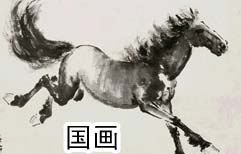
我什么时候去过中国我从来不看马了连在农村也不。但是奔马图的真有名。很奇怪

bababardwanJune 2, 2010
我不同意是奇怪;我觉得那些马是“奔马”因为它们害怕人民想吃它们,以后我们发现那些奔马的怀疑是对了。。现在都被吃掉了,所以你没有看过
。。而且,连古代的时候,别忘了兵马俑
bababardwanJune 2, 2010
当然我开玩笑,而且我听过中国有大概1.3千万个马,或者七百万个:
http://www.horsetalk.co.nz/archives/2007/09/105.shtml
bababardwanJune 2, 2010
当然我们澳大利亚人都骑袋鼠:
http://2.bp.blogspot.com/_ewQuGGy0QbI/SwYZ9w9yJLI/AAAAAAAAAXA/sbGgHlse07E/s320/kanga-school.jpg


alexyzyeJune 1, 2010
Hi,
I have a few quick questions, hope someone here can clarify.
Does the 藏 in 收藏 imply that the exhibit is hidden from the public? Can I use 收集在博物馆 instead?
Is 鉴定 the same meaning as 证明 ?
I'm also a bit confused why 这纸张 was used instead of 这张纸, I thought 张 was the measure word.
Thanks.

si1teng2June 2, 2010
Hi alexyze,
I see that no native speaker has answered your questions in the last 21 hours, so I'll give you my best response. (I defer, of course, to the corrections of any native speaker.)
收藏 means that the collection is kept or held in a certain place, and though it does not explicitly mean that the collection is exhibited, it does not necessarily imply that the collection is hidden from view either. 藏 does mean 'hide' but can also simply mean 'to store'.
鉴定 is a very specific technical term and means 'to appraise/authenticate'. 证明 as a verb is more general and simply means 'to prove something to be correct'.
In the discussion Jenny explains that 纸张 is a word in itself, more formal than 纸. The 张 in this compound word is not being used as a measure word.
sterlingsinJune 1, 2010
那个“你喜欢这些画图吗?那么我的老师可以。。。” John 说的scam我第一次去中国被骗了。
Second day in Beijing, a friend and I are doing a little 逛街 when we 遇到 two cute girls our age. They call themselves art students and after a few minutes invite us to their "studio" to have a look. Their "art school" is on the second floor above a mid-range restaurant. (In retrospect, we had many tip-offs this would end 不那么特别好。)
It's a single room, crammed with desks and shelves of cheap paper and used scrolls. We sit down on a miniature couch, and the two girls show us a "portfolio" of their previous work as some older gentleman supervises and churns out a pair of leaf drawings to give us for free. If, of course, we bought some other work as well.
Pretty much trapped at that point. I escaped "only" 300RMB poorer. My friend wasn't so lucky. The 山水画图I bought made a good souvenir, though, grandparents didn't know the difference 嘿嘿
changyeJune 1, 2010
That's not a scam or anything, but a kind of "legitimate transaction", at least, by Chinese standards, hehe. Please be noted that as far as a fraud concerns, "blame (or laugh at)-the-victim" mentality is very strong here in China.
peterocJune 2, 2010
A similar thing happened to me in Beijing when I was in a shopping mall. The trickiest thing about it was the very soft sell in the beginning. I was just killing time waiting for a friend outside Starbucks and I swear I initiated the conversation. After a few minutes small talk in Chinese, they mentioned they were art students and their school was just in the next building. I still had time to kill so I figured might as well take a look. Knowing there are always potential scams I was paying attention the whole time about where we were going. The building was more of an office type building, but not that unusual for a private art school in the west, so I wasn't too worried. In the end it was basically a show room with a lot of paintings to buy. The paintings were actually quite nice and reasonably priced and would have made nice souvenirs. Fortunately, I escaped without having to buy anything and didn't encounter any large gentlemen. However, along similar lines, I do have a friend that got stuck buying a "nice couple" expensive tea after they invited my friend to join them. Be careful out there!! And don't ever follow strangers into tea houses or art studios that aren't visible from a busy street.

brendaninausJune 2, 2010
I agree with Changye, as far as being a "scam", it is at worst of the mild degree if it is called a scam. Yes they get pretty unpleasant if you say no I don't want any, but at least they don't start using physical force, unlike the various "tea house", "karoke" and "cheap and/or lady bar" type scams.
bababardwanJune 2, 2010
start using physical force, unlike the various "tea house", "karoke" and "cheap and/or lady bar" type scams.
...start using physical force...真的吗? I'd like to hear more about this.
peterocJune 4, 2010
bababardwan - from what I understand, the physical force is mainly making it clear you can't leave until some payment is made. a kind of temporary kidnapping or false imprisonment. and i get the feeling that even if the police showed up they wouldn't necessarily be sympathetic if they felt there was a real dispute about money being owed. best to avoid such situations.


mikeinewshotJune 1, 2010
I saw a TV programme recently in England about a huge industry in Shenzhen to paint copies of famous pictures for selling. Apparently Shenzhen is the capital of the world in this respect
markcohenJuly 2, 2010
There is a section in Shenzhen where this is concentrated in. There is even a district office of the local copyright authorities there. Guangdong has a long history in this area. The portrait of the U.S. one dollar bill - of George Washington by Gilbert Stuart, was copied onto glass in Guangdong in the late 1700's and early 1800's, and the merchant who did the copying was later sued in the US by Gilbert Stuart.

pretzellogicJune 1, 2010
spsuperlamp, there are plenty of lessons at multiple levels around paying the bill.
Newbie - Paying the Bill
Qing Wen - Pay Verbs
Elementary - Tomb Sweeping Day
Elementary - Your turn to pay!
Elementary - Going Dutch
Elementary - Learning the Lei Feng Song
Elementary - Outrageous Power Bill
Newbie - Taxi Conversations: Arriving at your Destination
Elementary - How embarrassing!
Intermediate - Fighting over the Bill
Intermediate - This is outrageous!
Elementary - Paying a Bill
Probably the "Fighting over the Bill" is closest in the fight that you want, but not clear on your level.
spsuperlampJune 1, 2010
May I make a suggestion for a lesson? How about arguing about who is going to pay the bill?
I'd like to learn some phrases like:- "Put that away! It's my treat!" or "You paid last time!" etc.
This seems to be a huge thing in restaurants. I never pay, because I don't know how to argue.
Please help!
changyeJune 1, 2010
据说这几年来电视“鉴宝”节目很受中国观众欢迎,进而兴起“古玩古董”热潮,甚至引起全国盗墓热,这已经成为让考古专家头疼的一个社会问题。其实“盗墓”这个拥有几千年历史的中国传统“产业”最近又兴隆起来了。看来在中国什么都崛起!


jennyzhuJune 1, 2010
Most Chinese don't know even the basics of traditional Chinese painting. They don't teach it in school. What a shame...
xiaophilJune 1, 2010
Jenny,
Well, that goes for the West too. But I wouldn't get too bummed out. Many years ago only the upper class of just about every society had the time or opportunity to learn painting, and I figure that includes perhaps all countries. Now many people have the time for such pursuits. They just don't want to learn. I guess it ends up being about the same percentage of people appreciating paintings as before.

What did you notice in this lesson?
You are posting as a guest. Your reply is reviewed before it appears. Log in to post without review.