gracechen7874September 25, 2019
哈哈, 很有意思的一节课,所有的男人都会有自己的小金库, 我老公也有, 有一次把100USD放在书里夹着,结果被我发现了,女人都是很厉害的,哈哈。

stavrosJuly 16, 2012
坦白从宽,抗拒从严
I can't claim to the etymology of this sentence, however, I have seen it used in a best selling novel called 兄弟 bu 余华. (I recommend the book in either in English or Chinese.) In the book, the sentence is used in a satirical nature. From the tone of the spurious seriousness in this dialogue, I get the impression that nobody would use this line without at least a strong sense of irony.
newsemesterFebruary 11, 2012
question : is the 房 in 私房錢 meant to be neutral tone, or is it supposed to be 2nd tone ? It sounds like it's being read as a 2nd tone, but the pinyin has it as neutral tone

tingyunFebruary 12, 2012
Dictionaries list it as neutral, and most of the time I've heard it pronounced neutral. But these things differ alot between regions, and in particular most southernors make alot of neutral tones more or less recover their original tone. This isn't restricted to southernors though, take 情形 qing2xing0 for example, most people seem to pronounce it as two second tones, even a friend of mine from 河北 says it that way, though I've definitally also heard it pronounced the dictionary way. And then there are the long list of words where the dictionary insists are full tones but basically everyone has turned them neutral (to the extent it seems weird if you try pronouncing in full tones), ie 面积, 刺激,荒唐 , all still full tones according to the dictionary but not really in practice.

GrambersFebruary 10, 2012
I'm having a very hard time trying to understand how 找出个千八百的 translates as 'find 800 to 1,000 yuan'. Jenny dealt with the 'ge' briefly in the dialogue (though only to say that she wasn't sure why it was there - which is fair enough) but I'm confused as to how 千八百 becomes 800 to 1,000? I guess 八百千 has the potential to be confused for a completely different (and much bigger) number, but why not ’八百一千‘ - this would seem to fit with the normal rules of ordering numbers in Chinese.

podsterFebruary 10, 2012
wild guess here: I think the 个 is in there because it is a pattern of ”(一)个。 。 。 。 。 。 的。“ There is an implicit word at the end of the sentence that comes after 的 which is not spoken because it is understood. That word would be 私房钱 , or some equivalent. 找出个千八百的 (私房钱).
As for the "800 to 1,000" that is a new phrasing for me too.

dagahFebruary 8, 2012
我有一个问题(与这节课无关的)。我很久想知道有没有一个很口语的方法说"good/bad timing"? 比如"thats a really good(or bad) timing'?
谢谢!

dagahFebruary 8, 2012
Thanks for the reply,
So what about bad timing?
So if you want to express really good timing, would it be "真的很刚好的时间“? 不对吧?In some contexts just "刚好的时间" could be used, but I feel not everytime(or maybe I'm just not too used saying it)?. I might be looking for the word "timing".. do you know?

dagahFebruary 8, 2012
合适/不合适的时间翻译成英文应该是appropriate time, 可能这个是最接近的翻译。我只是有点有这种感觉timing/timed和’时间(time)‘ 有稍微的不同。可能中文只有这个 ^^ 没问题,我只是好奇。谢谢你们的答复!

DavidXuzhouFebruary 8, 2012
根据上下文,可以有很多种说法。1. 及时/不及时 2. 恰当的时间/不恰当的时间
3. 好时机/不好的时机 4. 真巧/真不巧 ...
例句:
That's a really good timing. 真是及时 or 时间(时机)掌握的真是恰当
That's a really bad timing. 真不巧 or 时机不对(不好) or 时间(时机)没掌握好
希望可以帮助到你。
dagahFebruary 9, 2012
谢谢你的例子David,有帮助!
我知道‘很巧’(偶然)-- 但没有学过”真不巧“。可以这样用吗?: ”人1来找人2,但是人2刚刚出去了,真不巧“ 是对的吗?
excaliburFebruary 7, 2012
在这种情况下,老婆用警察一词很幽默。但是,到底这对话真是荒唐而且可怕的。你说在中国,这种情况是普遍的。不可思议。我不能想象中国的男人怎么如此软弱。他要经济自由吗?这样的丈夫应该穿一条裙子。他该怎么办?每一个月他求老婆给他零用钱吗?老婆听起来像一个间谍。其实,这个老公不需要养小三。他老婆像个二奶。在美国,如果老婆查找老公的银行账户或者私房钱,她就得准备离婚。
GrambersFebruary 7, 2012
This all reminds me of 'The Streets' seminal 2004 concept album, 'A Grand Don't Come For Free' where Mike loses £1,000 in Track 1, eventually to find it again on the last track of the album hidden inside his TV. Better in the computer desk (or the TV) than in the bank where it's only gonna get gambled away by some *gentleman* with a smart suit and a PhD in particle physics, no?
GrambersFebruary 8, 2012
Thanks for the softly-softly-catchee-monkee approach to moderation. It sure beats deleting the whole thing. Apologies for the profanity!:)
GrambersFebruary 7, 2012
坦白从宽,抗拒从严
This phrase sounds like it may well have originated during the good ol' 文化大革命. Any clues on etymology?

WillBuckinghamFebruary 9, 2012
Tracked it down! It comes from 毛泽东 in 1951/1952: 关于“三反”、“五反”的斗争,so well before the 文化大革命 and the overall context is this:
一、在“五反”运动中对工商户处理的基本原则是:过去从宽,今后从严(例如补税一般只补一九五一年的);多数从宽,少数从严;坦白从宽,抗拒从严;工业从宽,商业从严;普通商业从宽,投机商业从严。望各级党委在“五反”中掌握这几条原则。
I found this translation online as well:
(1) In the movement against the "five evils" the basic principles in dealing with industrial and commercial units are: leniency for past offences and severity for new ones (for instance, payment of taxes that have been evaded is generally retroactive only to 1951); leniency towards the many and severity towards the few; leniency towards those owning up to their crimes and severity towards those refusing to do so; leniency for industry and severity for commerce; and leniency for commerce in general and severity for commercial speculation. The Party committees at all levels are asked to adhere to these principles in the movement against the "five evils".
The five evils, incidentally, are as follows: 行贿 taking and giving bribes ;偷税漏税 tax evasion; 盗骗国家财产 generally plundering and cheating in respect of state property; 偷工减料 skimping on the job and stinting on materials; and 盗窃经济情报 theft of economic information. And so, in the context of the dialogue, this is all pretty fitting for the husband's domestic economic "crimes"...
GrambersFebruary 9, 2012
Wow. That's some serious sleuthing. I salute you, Sir! Thank you. Your archival work has me feeling sufficiently smug that my inner communist claptrap-detector was working....I was pointed in the right general direction:)



markFebruary 6, 2012
哎呦, if my household were run like this one, I might not be able to afford CPod.
@pretzellogic, I have been pretty much just reading the hanzi for a while. I like the roll-over translations of individual phrases in the dialog to look up the words I get absolutely stuck on, but those are fewer and fewer, over time.

pretzellogicFebruary 6, 2012
yes, but for me, it's not a habit yet. Plus, I still don't really enjoy reading hanzi. I guess i'm still in the "eat your peas" phase of Chinese learning. Plus, I only know 717 characters, so it gets to be slow going at times.
pretzellogicFebruary 9, 2012
Mark, not that you're still around looking at this, but why did you use an "at" sign with my username?
markFebruary 13, 2012
I used the at sign, because I was lazy about separating my thoughts into two messages. One was general to the discussion thread. One was in response to your comment. @username is a convention I picked up from somewhere for indicating that sort of thing.
pretzellogicFebruary 6, 2012
Apropos of nothing, I find that going to the dialogue tab, and reading the hanzi first, then trying to translate the hanzi into English is a great way to practice reading, and also slowly get the meaning of some of the many stock phrases in Chinese, like 说不定。
pretzellogicFebruary 6, 2012
And as I was reading the dialogue, I remember thinking that this would be a great lesson for Sunix to portray the husband. I then downloaded the dialogue and gave it a listen. And of course, Sunix was portraying the husband.

pretzellogicFebruary 6, 2012
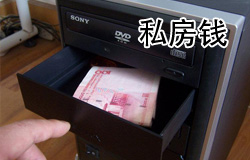
Huh. The picture for this lesson is a neat idea. I never would have thought to look at a unused desktop computer bay.
pretzellogicFebruary 7, 2012
I hear you :-) I forget the name of the show. But in the US, there was a TV show where a professional small time burglar, and a private detective teamed up to show how burglars easily robbed homes. I don't recall they said "check the PC" but it didn't matter. 9 times out of 10, people left critical doors unlocked/partially secure, windows open and so on. Turns out homeowners think to lock the front door, but thieves were smart enough to go into the back door. Thieves didn't bother checking for fake drawers because the loot was in the usual places in everybody's house.
What did you notice in this lesson?
You are posting as a guest. Your reply is reviewed before it appears. Log in to post without review.