
PurrfecdizzoAugust 28, 2012
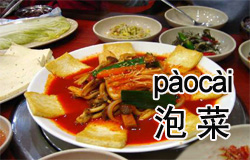
I listened to this lesson, and as I reached the end of the dialogue, I was thinking about the last part where the woman said 天天都吃,烦死了. One lesson I have learned repeatedly in China is to never make assumptions about culture. I have learned this through repeated frustration and misunderstanding. I listened to the explanation as to how 烦死了 is used here, and the explanation is very clear, but my question is, what is the role of sarcasm in Chinese conversation? Sometimes, someone my say, 'oh this is such a pain', but really it isn't. Even in this case, when I first read the dialogue, I didn't know whether to interpret the comment as sarcastic because I didn't know the attitude toward Kimchee (but this was all explained in the lesson). More specifically, do people use this expression in a sarcastic way that someone might in English?
Consider if it was an example of it were a food that no one was familiar with, or maybe a food that Chinese people may understand, but foreigners, or even Chinese people from different regions may not understand, how can they determine if the comment is sarcastic?
DaveCraginAugust 6, 2012
John mentioned that he thought the meaning of liàolǐ came from Japan. This agrees with an interesting exchange I had with a friend in Japan.
She sent me the characters for "iron chef" in Japanese: 料理の鉄人.
The last 2 characters made sense: iron person (and の = de.). I looked up liàolǐ (料理) in my various Chinese dictionaries and they said it meant: "take care of".
A Chinese friend who studied Japanese explained "take care of" is the old Chinese meaning. That China imported the Japanese meaning (i.e., cuisine) for liàolǐ 料理.
Considering that these characters are Chinese, it's an interesting influence by Japanese on Chinese.
manenJuly 18, 2012
I know that hán 韓 (Korea) and hàn 漢 (Chinese) are different tones and different characters, but does anyone at ChinesePod know why these two words are so similar? I read in a dictionary that 韓 is one of the Seven Heros of the warring state period...
I would like either a Qing Wen or a BST on the relationship between China, Korea, and Japan in history (from the Chinese perspective :)

tingyunJuly 18, 2012
I'm not sure that makes them so similar, a tone difference is a big difference (and they may have been different in sound in the period we are talking about, in addition to the normal process of sounds drifiting, a few thousand years ago and it might have been before tones replaced certain sound differences).
Hmm, seven heroes isn't how I would translate 七雄, seven strong countries is more descriptive if lacking in poetry, is heroes an official translation of sorts? Oh well, it also bugsme how they insist on translating 王 as prince in later eras....
So given the timeframe i guess the question bouls down to whether 刘邦 liu bang the founder of the han dynasty, getting his original title of 汉王 back when cooperating with 项羽 xiang yu and before winning the entire country, had anything to do with the old 韩国? I dont think so, 韩国 would be out by modern 山西 shanxi province, while i dont know the origin of liu bang's title, i would guess it was from becoming 汉中王 after seizing 咸阳 xianyang, 秦国's old capital, which would be in present day 陕西 shanxi (the other shanxi, i think sometimes spelled shaanxi), and thus perhaps had something to do with the 汉江 river that starts there? Not sure if thats all correct, but at any rate i dont see how it could have any connection to 韩.
Definitelly no connection to korea, i dont think korea started to use 韩 charecter until much more modern times...
As for the seond part of your question, a way oversimpilified but also largely accurate description of common attitudes among chinese might be, korea historically copies/follows china, japan copies/oppresses china. ;). (remember, the korean court for most of the last 1000 years recognized the authority of the chinese dynasty)
MingmaoJuly 12, 2012
I have heard of 法式料理; was this wrong?

PurrfecdizzoAugust 28, 2012
So this means that, although both 法式 and 法国 both refer to french cuisine, you can't use it for both? is it because of the 国 character? For example, I know it was pointed out specifically in the lesson that we cant use 美国料理, can we use 美式料理?
yangmei91July 10, 2012
My Kazakhstan-born mother-in-law occasionally treats us to "Korean Carrot Salad" and a Kimchee soup. It was also fun to discover that Russian wareniki/pelmeni are siblings of jiaozi, they usually come in a different shape, though. She was pretty amused by the way I fold them, with the crinkled edges and fish shapes... I find this culinary overlap between two rather distinct cultures quite fascinating.
@RJ Homemade kimchee doesn't smell as off-putting. The main caveat for me - when making kimchee, sauerkraut etc, the top sometimes becomes moldy, the rest is said to be edible. I'm not sure whether I'd want to try it in that case...
Canned kimchee has a rather "strong" taste.
Can anyone recommend a good (veggie-friendly) Korean restraurant in Shanghai?
jungmpJuly 13, 2012
I enjoyed eating at 正一品. They have two locations but I don't know which one I went to.

jugglingJuly 10, 2012
The lesson PDF looks different. The fonts are smaller and harder to read. I hope this a one time problem.
dougwkimJuly 10, 2012
韩国料理很好吃,但是去了韩国我才发现了地道的韩国料理是跟在外国吃的很不一样。 韩国的烧烤特别好吃,吃了好几次也要吃,其实在韩国的某个地方也可以吃用国内牛肉的갈비 ( 烤牛排)。 我爸妈原来是从韩国来的, 所以我小时去过了首尔几次。不过几年来因为韩国的文化啊音乐啊等的东西很潮,所以韩国越来越商业化了, 也突出了整容手术的问题,根据知名的报纸,今年在韩国做手术的男生比去年的增加了百分之十五分,好可惜啊。 再这样下去的话, 肯定会出现问题的。

jerryrockJuly 10, 2012
Both dàodì 道地 and zhèngzōng 正宗 mean authentic. Are these two words used completely interchangeably or are they used in different contexts?
yangmei91July 10, 2012
In my experience, 正宗 is more common on signs advertising "authentic XY". 道地 seems to be far more common in writing, based on the number of search results.
There is a slight difference in meaning, thus they often appear together for emphasis - "Experience the most pure/typical 道地, authentic 正宗 travel experience"
正宗
- authentic, preserving local style, often with food
道地
- typical 你汉语说得道地 ni3 han4yu3 shuo1 de dao4di4you speak Chinese with a typical accent

meihuar2006July 9, 2012
I lived in Korea for one year, speak Korean, but never once found a Korean restaurant that served Dog Stew.
BUT--
In Beijing, every Korean restaurant serves dog stew. ;)
Maybe it is a North Korean or Manchurian Korean cultural thing. I did once find dog meat for sale in a farmer's market in Pyoengtaek City, South Korea. A dog's head and four upright paws on display. ;) Actually, it was far less hideous than the pig heads I've seen for sale in the USA. Now that's disgusting!
For all the controversy, Dog Stew is one of the blandest, most toughest meat that I've ever eaten.
Purportedly, in Korea, dog meat is prepared by setting a living dog on fire because the dog's panic makes the meat more tender. An American friend of mine while in Korea showed me photographic evidence that he'd taken of one of his neighbors hanging a dog by the neck and setting it on fire.
I remain skeptical. Like I said, when I lived in Korea, I never once found dog meat on a menu, and trust me I would have eaten it for the shock effect alone. I had to wait over ten years until my wife and I wandered into what turned out to be a Beijing Korean Restaurant run by the North Korean Embassy. Of course how could I resist not trying the dog stew (kae-gogi-tang).
Bland, sinewy, tough. Blech.
There's a Korean Fast Food restaurant in a lot of Beijing mall food courts that serves a pretty flavor-less Dog Stew also.

bababardwanJuly 10, 2012
"because the dog's panic makes the meat more tender"
Jeepers ! Sounds cruel...you'd get locked up for that here. I find the reasoning very hard to swallow.
This touchy subject sparked 231 comments here:
https://chinesepod.com/lessons/dog-meat-and-animal-rights
and a change of lesson avatar which was much milder than what you describe.
meihuar2006July 10, 2012
Thanks for forwarding me the link to that lesson!
Again, I'm not sure what the deal was with burning the dogs alive, though the "panic makes the meat more tender" was something I'd heard from Koreans as being a concept within Korean cooking (we're talking early-mid 1990s, a generation ago).
But, maybe I should let the topic pass back to less controversial and more delicious foods, like Kimchee. Really good kimchee is difficult to find in Beijing.
Another great Korean food tradition is Panchan (side dishes). At a good Korean restaurant (and good often means the small restaurants in out of the way places), you get nine or more panchan prior to your main dish. Panchan comes in all shapes and styles local to the area the restaurant is in. Panchan outside Korea, however, tends to be simpler with less variety, usually only six dishes. I've yet to experience exciting panchan in Beijing (same goes for the USA). There's nothing terribly complicated about panchan--I guess outside Korea, Korean restaurants don't try as hard!
And, then there is Kimbab, which is Korean sushi (rice rolled in seaweed, not the raw fishmeat).
My favorite all-time Korean dish is Ojingeo-Paekban (Squid with Rice Entree). Hunan (?) cuisine serves a very similar dish, but the Korean Squid is peppered up with a spicy paste called Gochu-Jang and other Korean red peppers. As far as I can tell, Gochu-Jang is unique to Korean Cuisine.

humalinJuly 10, 2012
I tried some dog meat in a korean restaurant in beijing last weekend, it was pretty good actually!. Located in the 建外 SOHO area if anyone interested ;).
dougwkimJuly 10, 2012
I am Korean, but I also have never tried "dog stew." Actually, it is not that common in Korea because during the Olympics it became illegal.
jungmpJuly 13, 2012
I am a Korean living in USA. Dog stew may not be the most common Korean dish in Korea but if you find the restaurant that knows how to cook, they can be quite tasty. I don't think they kill the dogs by burning them anymore. Dog stew is supposed to give good stamina and soft skin. I think they taste much better when it is served spicy.
putonghualoverMarch 1, 2013
What's interesting is if you go to certain districts in many big cities in Korea where Korean-Chinese (中国朝鲜族人) migrant workers do business, there are so many restaurants that serve dog meat. They have signs like 延吉狗肉汤, etc.
They also eat dog in the Philippines which I heard is prepared in a completely different style than how Koreans prepare it.
The only meat I never really liked is horse meat. So rough...


What did you notice in this lesson?
You are posting as a guest. Your reply is reviewed before it appears. Log in to post without review.