8890909September 25, 2019
Can I say 还没开始,他就开始放弃了?

anonymous1068458January 30, 2020
Grammatically speaking, it is correct. Although 开始放弃 sounds weird in this context, the sentence should be 还么开始,他就想放弃了。
moose861April 8, 2013
面试还没开始,他就紧张起来了.
别难过了,一切都会好起来的.
Sorry if this is a basic question! But from the grammar section: I was just wondering, why does the first sentence have 了 after 起来 and the second sentence have 的?For the first one I guess 了 is used because it's an ongoing action, is 的 used because things haven't yet started to get better?
Thanks for any help!

lujiaojieApril 8, 2013
Following a verb, 起来 (qǐlái) can indicate that an action has started and then continues.
面试还没开始,他就紧张起来了. "就……了…… " is a sentence pattern which means "already......"
别难过了,一切都会好起来的. Here "会" means "will" and the "的“ at the end of sentence has no meaning. In this case, "的" is a tone particle, which is used for emphasis.

tonybranigan168February 14, 2013
A query about the translation of the following expansion sentence: 不行了,我的头又痛起来了。Taking it as a standalone sentence, the words 不行了 would seem to make more sense as "It's not working" (i.e aspirin or whatever). On the other hand, the given translation "No way" would make sense in response to a suggestion to do something unduly active.
Right-WingnutFebruary 15, 2013
My online dictionary has different entries for 不行 and 不行了. It translates 不行了 as 'on the point of death; dying'. So it seems that this is an exclamation, in this case meaning 'this is killing me'. As such, it does not appear to refer in any way to a drug not working.

easymuffinDecember 17, 2012
According to Pleco, 给力 is translated as "amazing; cool; awesome; nifty; impressive; great; wonderful". But in the context too the dialogue, 不给力 seems to imply "not working" rather than "not good".
What other contexts would you use 给力 in? 可以说:
我的朋友是给力的
我的电脑都不给力
Thanks

verazxlDecember 18, 2012
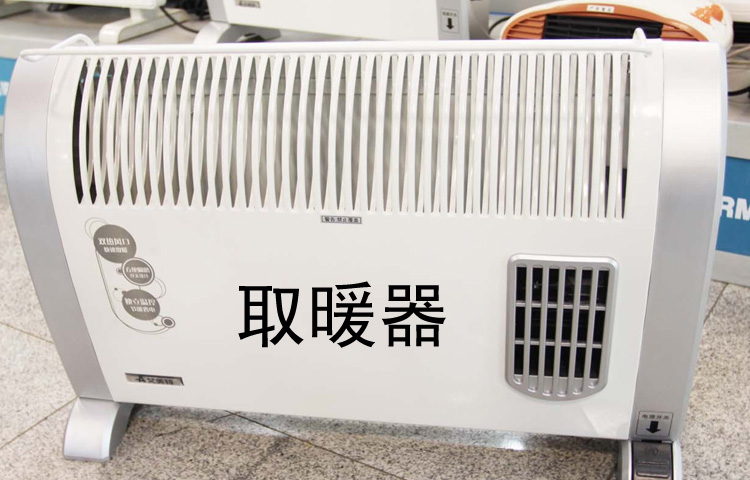
All these are right. 给力 is a word has different meaning in different situation. 取暖器不给力Lit means 'the heater is not good/awesome.' We translated it into 'not working well' instead.
我的朋友是给力的。My friends are cool/helpful/good/amazing/impressive/....
我的电脑都不给力。My PC is not cool/helpful/good...
So it's widely used.

RobXDeckerDecember 15, 2012
In the expansion sentence, "你别老是坐着,出去跑跑步就会暖和起来的," what the sense/purpose of the final “的”?
verazxlDecember 18, 2012
的 here is a particle word to emphasize. In the sentence, we can consider 会……的 as structure. To emphasize something will happen.
你马上(就)会好的。You will get well.
我会吃的。I will eat.
RobXDeckerDecember 15, 2012
How does one ask if the heat can be "turned-up"? Also, how does one as for the AC to be "turned-up," here meaning stronger/colder, not turned to a higher temperature?

zhong_bideDecember 15, 2012
A lot of interesting language chunks/ phrases in this lesson. Thanks.
On another point, I know there are special sales around Christmas and New Years Day. Could "sales" be a topic of discussion - eg markdowns, crowds, rush, sales adverts, announcements etc.
Another one, the winter solstice 冬至 is coming up (in the China anyway) when everyone either makes or buys Jiaozi. Could you have a lesson about this?

florenciafengDecember 13, 2012
John, Dilu how are you? Please help me out with the following sentence... "靠得近的话挺暖和的" What is the function of 靠 here? Is it a verb?
Is it correct to say "你靠近的话, 挺暖和的"
Thank you so much guys

mafanniDecember 13, 2012
Off topic but speaking of warm can you do a qingwen on 例假 and I don't mean the holiday. More so about idioms on the subject and examples sentences when lady's 'feelings' go from loving one minute to 'postal' the next.
verazxlDecember 13, 2012
这个啊,it's a little bit weird to talk that with John. Anyway, I will let him know. :)

luobinzhenmeiDecember 15, 2012
I didn't know that phrase, but it's clear what you mean. Good to know.

rjaksDecember 13, 2012
Can you guys fix your links for recently changed 'Mark studied' buttons? If I use the button, the lessons don't get marked 'studied' in my library.

Justin.ODecember 13, 2012
Yep! Our tech team is currently tackling this bug and this should be resolved by early next week.

marcopolosrhinoDecember 13, 2012
sorry hadn't read this when i wrote my last comment (on 'sentence grammar' lesson) - thanks team

rjaksDecember 13, 2012
The biggest problem in Shanghainese (and other 南方的城市) housing actually is the lack of insulation. That's what makes 地暖 so expensive. No matter how much you heat it, it all goes out of the poor standard windows and non-insulated walls. In Northern Europe 地暖 is very popular and is relatively competitive with other types of heating just because of proper insulation. The same applies for cooling down the room in summer heat. If only there would be higher standards of building insulation, it would save huge amounts of energy.

toianwDecember 13, 2012
晒小太阳...
richDecember 13, 2012
This reminds me, I need to buy one of these for my home...so cold during winters in Shanghai, and the only A/C that puts out heat is in my bedroom...
marcopolosrhinoDecember 12, 2012
室内 , 室外 - perhaps a better translation for these would be 'indoors' 'outdoors', as it seems that this is how they are used?
richDecember 12, 2012
Just going by the name of this lesson, I wonder: Do Chinese have any equivilent to the game we have in the West, at least in America, of "Getting warmer" "Getting colder" when trying to find an object? The game goes that you pick an item in the room or house and the other person tries to find it where you only say "Warm" or "Cold"..."You're getting warmer", "You're getting colder." I think I tried to play this with a Chinese friend, who was trying to find something in my room, and he didn't understand at all, lol....“我不感觉热" haha
richDecember 13, 2012
So, no guesses? I wanted to say "You're getting warmer", but then again, I am the one that asked the question. :P



What did you notice in this lesson?
You are posting as a guest. Your reply is reviewed before it appears. Log in to post without review.