

salvadorOctober 16, 2014
Question:
The father says "手机还我“。
On what occassions would you rather use "把手机还给我“?

salvadorOctober 16, 2014
Dialogs are so very well written! Congratulations to whoever writes them. Interesting dialogs keep us excited and motivated. Ji xu jia you!
cowenparkseattleSeptember 19, 2014
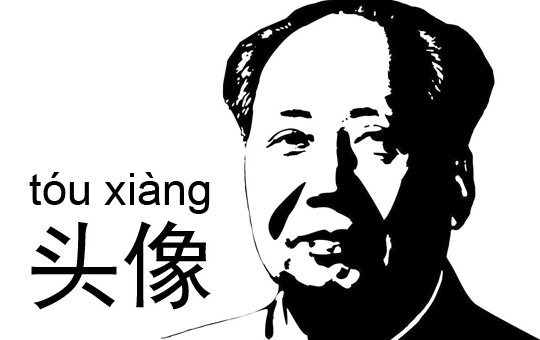
This lesson brings up something I have wondered about for a long time: 像 vs. 相 Why is is 头像 but 相册??
先打开你的“个人信息”,点“头像”,再选,“从手机相册选择”。
x
DavidXuzhouSeptember 22, 2014
Hi cowenparkseattle,
A good question. 象, 像 and 相 have the same pronunciation and similar original meaning. They always make people confused even for a Chinese. According to different writing customs, 像 and 相 are sometimes mix together, like 照相 and 照像, it's hard to say which one is not correct. But 照相 is more used as a meaning of 'take photo' in modern Chinese.
像/xiang4 could be a noun or verb, is more referring to the meaning of 'symbolization', 'to imitate' or 'to be similar as', like 头像, 塑像, 图像。
相/xiang4 is a noun. It's more referring to the meaning of 'natural appearance', 'objective image or impression' , like 相片,真相,相貌。
My suggestion is try to remember these characters in words and don't be afraid to use them.

jimmy867609896August 12, 2014
Uploaded a task but got no feedback, bit disappointing
Gwilym-ChinesePodSeptember 15, 2014
Hey Jimmy. The tasks tab, (which we have now changed to homework on the website for clarity) is a way for you to upload a file onto our system, and if you like, share it with your fellow classmates. ChinesePod is a self study resource, but some students like to go a bit further and practice writing out an assignment, recording a short video/audio of themselves speaking, or perhaps just a fun picture. I noticed you didn't share your task with the community, so perhaps if you click back on the tasks/homework on the app/website, you will see a share button. That way the community and Cpod staff can see it and give feedback. Hope that clears everything up.
applejan9August 1, 2014
thank you root. I checked out your link - i have never heard of dummy verbs before.

rootAugust 2, 2014
No problem, I think the more official term is 'auxiliary verb', like will, or do. Btw, I think a lot of the confusion here is caused by the English translation, 'You can choose the place to meet.' It should be more along the lines, 'Why don't you...' Or 'How about you choose ...'

mafanniAugust 2, 2014
great explanation root. There are other elementary lessons that give examples of this.(maybe the staff at CPOD can point them out.)
It's just a matter of getting used to it....especially the ba's, a's, etc that they use at the end of sentences.
applejan9July 31, 2014
in the expansion exercises, the following statement: 你来选择见面地点。You can choose the place to meet. 1 (You can choose the place to meet.) Please could you explain the use of the character 来。 I would have chosen 可以 and even now (second time reading these expansion sentences, the 来 doesn't feel right.
rootJuly 31, 2014
Excellent question, applejan9, although not covered in grammar pages or wiki, this use of 来 is definitely a pattern.
i am only a UI student, so my explanation could be very wrong, but here: it seems to be used in imperative phrases to soften the order. This means, the phrase would still work without the 来, but would sound like barking an order. I am not clear what the exact rule would be when you can use it, so I am, too, hoping for a more clear explanation in this page. Again, great question.
ps The closest thing to an explanation I can find is here http://resources.allsetlearning.com/chinese/grammar/%22Lai%22_as_a_dummy_verb, I think it's part of the same pattern

apeselizJuly 29, 2014
I don't understand why the father uses hao instead of feichang or hen...I have never seen hao used as a way to say very?
(好麻烦)
Is this commonly used?

babyeggplantJuly 29, 2014
It's very, very common to use it with adjectives. Just one of the several meanings of 好 other than good. Some other common examples:
好聪明
好舒服
好便宜 好贵
and of course there's the great phrase 好久不见 (long time no see)
mafanniAugust 2, 2014
hao, feichang, hen are the common ones. the hao in front is tricky to get used to because on first hearing it( as a newbie) the first meaning ascribed to it is 'good' but then it can mean very. takes hearing it a lot to get used to it.
babyeggplantJuly 28, 2014
Great job, both of you. I think you balance each other nicely. I'm really looking forward to hearing more from Ryan. I'm sure he'll have an interesting perspective on many topics!

jennyzhuJuly 28, 2014
This is Ryan's first lesson besides Qing Wen. Look forward to recording more lessons with him!
jennyzhuJuly 28, 2014
This lesson is so long...We are still trying to find our groove. Will get better. Please bear with us in the meantime.

veronique21July 29, 2014
This lesson is too long to be listened to at midnight (I know, I've tried...), but it's a very detailed and interesting lesson. And a good team once again ! 加油 !

What did you notice in this lesson?
You are posting as a guest. Your reply is reviewed before it appears. Log in to post without review.