
arjuna856993622December 10, 2014
Interesting dialogue!
Regarding the difficulty in translating the expression 別老窩在這裡 (别老窝在这里), I think that the verb 窩 wō, of course has the nuance of "nesting," evoking the classical word for nest or burrow 窠 kē, which is also used in the modern language to indicate set patterns 窠臼 kējiù.
What it also evokes is someone staying indoors, such as the male geek or nerd who stays home all the time: 宅男 zháinán (cf. Jap. otaku お宅), or the equivalent female 宅女 zháinǚ. This is the kind of vocabulary missing from dictionaries.
Maybe it sounds like "don't do the otaku!"


kamillo153917515October 27, 2014
Maybe you could translate 窝 with cocooning ? In German the best word is einigeln, which literally means hedgehoging!

hdalOctober 29, 2014
But cocooning has a positive connotation, and 'hole up' sounds a bit negative in this dialogue.
philip8November 12, 2014
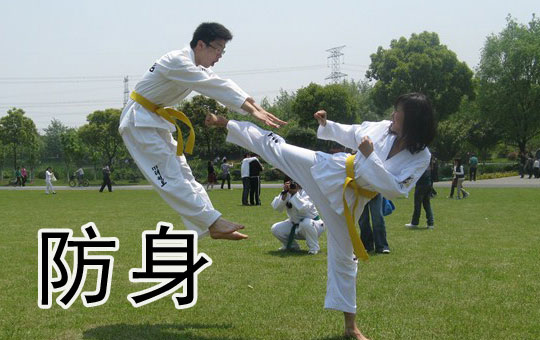
Am trying to find Expansion: Self-Defense Course.
No luck.
Appears to have disappeared.
Even from the list.
Even when searched by way of C2558.
Please advise.

Gwilym-ChinesePodNovember 13, 2014
The lesson seems to be missing from the Search database so we will work on making it searchable again.
To view the expansion, you should be able to click on the expansion tab or click this link:
https://chinesepod.com/lessons/self-defense-course#expansion-tab
elsesophie111October 24, 2014
In Expansion is this sentence: 张老师认为在地震时保护好学生是自己的责任. If 张老师 thinks, is the students own responsibility, how would you say that ? ....是他们自己的责任?谢谢 Else

DavidXuzhouOctober 30, 2014
Yes, you're right. But I think here you also need to change the '保护‘ to make it clear of your purpose. So the whole sentence will be 张老师认为在地震时学生安全是他们自己的责任。
What did you notice in this lesson?
You are posting as a guest. Your reply is reviewed before it appears. Log in to post without review.