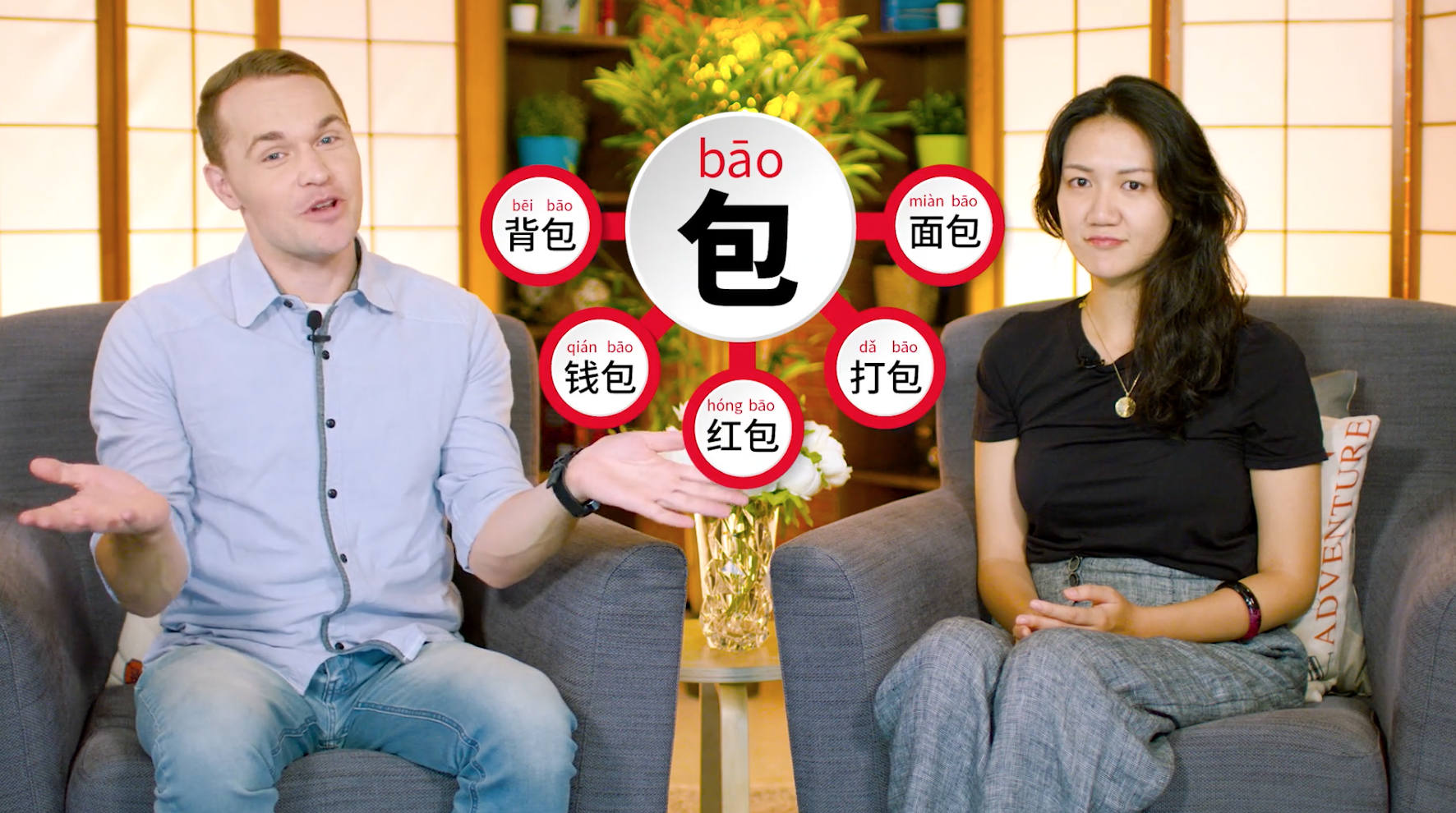
Lesson Introduction
Comments
To comment, please login.
Comments Policy
Allowed comments do not necessarily represent the views of ChinesePod.com. We also reserve the right to reject personal attacks, false/unsubstantiated allegations, spamming of any kind, and comments that include vulgar language or libelous statements.
Out of consideration for our Newbie and Elementary users, English translations should be provided with any Chinese (characters or pinyin) written in Newbie and Elementary lesson discussion posts. New lesson idea? Please let us know on our contact page.

bababardwan says
September 3, 2008
What about the fear of rabies? Would it be possible to get some vocabulary on how to ask a doctor for rabies shots?
How widespread is eating dogs in China? Is it more common in the South ? Is it declared on the menu ,and if so,do they use the word gou 狗 ,or do they have another word for it [like venison for deer in English ]?
I was interested in the differences in onomatopoeia around the world for the dog bark and wondered if there was a difference in the predominence of breeds in different parts of the world that was having an influence.Was there a predominent breed in China historically? I mean the bark of a small dog is quite different to a large dog.
light487 says
September 3, 2008
Well I am at work and can't listen to the podcast but I am looking through the transcript and I am definitely intrigued by the content.
mikenotinjubei says
September 3, 2008
I can't help it in the debate of traditional versus simplified characters. From the expansion section which character looks more likely to "怕 pà," you ?
Bugs - chóng
虫 (simp.)
蟲 (trad.)
I have no fear of dogs but I do fear being stuck outside with hungry mosquitoes and lots of them like the traditional character for bugs. Athough the Chinese Character for mosquito is :
mosquito n. 蚊子wénzi for both traditional or simplified to me it should be :
蚊蚊蚊蚊
蚊蚊蚊蚊蚊蚊蚊子
蚊蚊蚊蚊
auntie68 says
September 3, 2008
Hi light487. This one's definitely a keeper. And it's a situation which I've seen played out so many times here in Singapore!
Sadly, the average Singaporean Chinese person still has a lot to learn about keeping dogs as pets (rather than as scruffy guard dogs which are never allowed into the house).
The nervous ones are too nervous, the "nouveaux" dog lovers can be very irresponsible, Eg., letting their dogs go unleashed and leaving young children unattended with one (or even two...) dogs, a recipe for disaster if you ask me. I really appreciate the way in which "Western" expats who own dogs here love their dogs without upsetting their neighbours.
About five years ago, I was badly bitten -- on the back of the hand -- by a former neighbour's small breed. The scars are still visible; the A&E doctor told me that I was lucky the dog didn't get its teeth behind the small "carpal" (?) bones, or I would have been looking at many surgeries.
I'll never forget what the owner said to me when I spoke to her after the "accident": "I don't know what to say, my dog is like a member of the family. Actually, we've all been nipped by her, but it was always nothing serious and she's actually very loving."
I'm afraid I made such a stink that they sent the dog to a "doggie psychiatrist" (yeah, sure...). But I'm ashamed to say that I made her cry by asking her to consider how she would make amends if her dog bit any of the tots in the apartment block around the head or face; this was before the Stunt Toddler was born, but the dog had already nipped a toddler living there. To this day, I still can't help asking ST's nanny for reports on how the owner/dog is behaving! I'm glad to say that they have learned to carry the dog in their arms when there are small children about!
tucsonmichael says
September 3, 2008
fun lesson; in the expansion section, i think that 他不想跟我们说话。
(I don't want to speak to you.) should really be (He doesn't want to speak with us.) To answer one of the expansion exercise questions, I am most afraid of snakes 蛇 she2 ....yeek!
shi3ma3ke4 says
September 3, 2008
I'm only afraid of centipedes (蚰蜒 yóuyán) that used to come out of the bathtub drain at my old house.
changye says
September 3, 2008
Hi mikenotinjubei,
You've raised a good topic.
Before the advent of simplified characters, 虫 and 蟲 had different meanings respectively, i.e. the former mainly meant "serpent", and the latter "insects and worms". Btw, I hate snakes very much.
And that is the reason why reptiles are interpreted as "爬虫类" (pa2 chong2 lei4) even in modern Chinese. Unfortunately, simplification sacrificed the original meaning of some Chinese characters.
johns says
September 3, 2008
I just read "The Man and the Dog" blog a few days ago. See (http://chinesepod.com/lessons/the-man-and-the-dog/discussione ).
I was looking to see if there were any more lessons as enjoyable as the man who was shaped like an onion. Finding humor in such corney jokes and a whole topic of conversation about a scary little dog is really charming. Wonderful lesson.
jennyzhu says
September 3, 2008
From the avatars, we know we've got quite a few dog lovers on the site. Changye, johns immediatelty come to mind. Hope your dogs havn't been given the cold shoulder here.
bababardwan,
Rabies is a legitimate concern. It's 狂犬病/kuang2 quan3 bing4/,which literally means crazy dog disease. Rabies shots is 狂犬病疫苗/kuang2 quan3 bing4 yi4 miao2.
Eating dog meat is a custom in 东北/North East of China, partly due to the cold climate (Chinese believe dog meat generate heat in the body, lamb meat too). But a lot of young people frown upon it. And it's not common in the rest of China.
amber says
September 3, 2008
tusconmicheal,
Fixed! thanks!
garry says
September 3, 2008
大家好!
I was reading the comments, and I asked myself, Does Chinese have the same ambiguity as English in sentences like, 'Look there is a man eating dog"?
If it is written you can tell if the man is eating the dog or the dog is eating the man, but not necessarily if spoken. I suppose there is a Chinese word for man-eating which is not just two words tied together.
Just food for thought....
joannah says
September 3, 2008
auntie68, Theres a good chance they weren't joking about the doggie psychiatrist. Our cat got sent to a pet psychologist and was prescribed prosac for "depressive anxiety disorder"!
changye says
September 3, 2008
There are two Chinese characters that mean “a dog”, namely 狗 (gou3) and 犬 (quan3). The former one, 狗, is a word for daily use, and the latter one is a rather formal character.
犬 is used for words such as 警犬 (jing3, police dog), 军犬 (jun1, military dog), 导盲犬 (dao3 mang2, guide dog), 犬齿 (chi3, canine tooth), and 狂犬病(kuang2 quan3 bing4, rabies).
auntie68 says
September 3, 2008
@joannah: Oh no! Your poor cat. A feline on fluoxetine! If it doesn't sound too ungenerous of me to say this, I would guess that the diagnosis for my former neighbour's dog was more like "violent psychopathic disorder"... I know that small breeds can be more highly strung, but this little doggie was something else! But I could never blame the dog, I actually felt sorry for her because the former neighbours were entirely responsible.
changye says
September 3, 2008
My chubby dog probably suffers from binge eating disorder.
kybod4 says
September 3, 2008
Speaking of dogs, I've read about the 狗屁 [gǒupì] to be equivalent of the english BS.
Is it used this way?
chris says
September 3, 2008
Hi all,
As usual, a grammar question from yours truly!
I would like some more understanding of the positioning of "gen1...." in sentences.
In the expansion, we have:
"Ta1 bu4 xiang3 gen1 wo3men shuo1hua4"
Jenny said in the lesson that the "gen1" has to come before the verb. However, in this sentence we have two verbs, namely "xiang3" and "shuo1hua4". Is the positioning rule actually for the "gen1" to be before the final verb?
For example, would the following be incorrect:
"Ta1 gen1 wo3men bu4 xiang3 shuo1hua4"?
Thanks, Chris
chris says
September 3, 2008
And another one.....
"yi1qi3" (together). Are there any rules when this word is and is not required.
For example:
"Wo3 gen1 ni3 yi1qi3 qu4 ba" (I'll go with you)
Could we simply say:
"Wo3 gen1 ni3 qu4 ba"?
Thanks, Chris
changye says
September 3, 2008
Hi kybod4,
You are right. 狗屁 is BS, and it's sometimes used like "狗屁废话" (gou3 pi4 fei4 hua4), where 废话 also means BS.
amber says
September 4, 2008
hi kybod4,
Yes, 狗屁 [gǒupì] is kinda like saying 'BS' in English.
amber says
September 4, 2008
hi Chris,
他不想跟我们说话。
(Tā bù xiǎng gēn wǒmen shuō huà.)
The 跟 (gēn) comes before the verb that is related to the 'with', which, in this case, is 说 (shuō)... i.e. "He doesn't want to speak with us.'
Putting the 跟 (gēn) before the 想 (xiǎng) is incorrect.
amber says
September 4, 2008
hi again Chris,
A + 跟 + B + (一起) + V
When the 一起 (yīqǐ) is used to describe doing something together at one time, it can be omitted. There are three ways you could say it:
1.我跟你一起去吧。Wǒ gēn nǐ yīqǐ qù ba.
2.我跟你去吧。Wǒ gēn nǐ qù ba.
3.我们一起去吧。 Wǒmen yīqǐ qù ba.
However, when you describe working together, living together, you cannot omit the 一起 (yīqǐ)... as in:
我们在一起工作。Wǒmen zài yīqǐ gōngzuò.
他们住在一起。Tāmen zhù zài yīqǐ.
mikenotinjubei says
September 4, 2008
Amber
Your explanation for Chris helps us all. THANKS! I think turning this into a very simple videopod would be very useful.
chris says
September 4, 2008
Thanks Amber, very clearly explained as ever!
light487 says
September 4, 2008
Great acting and sound effects in this one, really makes it an enjoyable lesson to listen to.
Speaking of repeating patterns, Ken. I would like to be able to get some MP3 resources with lots of repeating patterns. So rather than just dialogues that flow well, like this lesson and most of the others on cPOD, I would also like to be able to string together chunks of patterns and have them repeat. May be this could be an addition to what is already on offer in the extras on each lesson. Similar to the "Fix" I guess but more pattern-centric.
Wangwang.. sounds like a small dog.. woofwoof, the english version, sounds like a big dog with a loud booming "voice". It's interesting at a cultural level this point that Jenny brings up. All those different sounds we make for the dogs, speak a lot about the common types of dogs we keep as well.
On to the lesson specifically...
你看 (Nǐ kān).. why is this used instead of just 看 (kān) by itself? Is this because "I" am directing the instruction to "look" at "you" (not to be confused with "look at you")? It may seem like I am over-analysing this but I just wanted to clarify the syntactical rule here. Also.. why is it just 看 (kān), and not 看看 (kānkān)? From what I understood, 看看 (kānkān) means "to look".
Thanks! :)
hitokiri6993 says
September 4, 2008
Hehe, Connie sounds 可愛 in this 對話!:)
BTW, the dialogue is missing some words:
A: 別怕,它不咬人。你看,多可愛。
light487 says
September 4, 2008
How can you tell it is Connie?
barryb says
September 4, 2008
I love the 好吧 - hao3ba at the end - no need for translation.
Does 好吧 always sound petulant, like the English phrase "if you must", or does it depend on the tone of voice? Could I say it enthusiastically, without irony?
hitokiri6993 says
September 4, 2008
A人 sounds like Connie. I already heard that infamous 好吧 on 請問。:)
Correct me if I'm wrong though...
bababardwan says
September 4, 2008
Jenny,
Xiexie ni for your informative reply.Very aptly named ;crazy dog disease ,and thus should be easy to remember.Thanks also for your cultural insights re eating dog.I'm always interested in both traditional Chinese beliefs and the modern Chinese outlook/attitude.
Thanks also to Changye.Previously I only knew of gou3 for dog,but gathered from what Jenny wrote that quan3 is an alternative word.Your expansion of this was helpful.
changye says
September 4, 2008
When I walk my dog here in China, local Chinese children usually call her "小狗,狗狗,and 小狗狗".
When you refer to your dog in Chinese, you can say "我的小狗,我的狗狗,小狗宝贝(bao3 bei4),小狗宝宝 etc", although some of them might sound a bit narcissistic to other people.
I always refer to my chubby dog as "我家的胖狗 (wo3 jia1 de pang4 gou3)", but she doesn't like it very much.
hitokiri6993 says
September 4, 2008
changye, 你狗兒的名字是甚麼?
changye says
September 4, 2008
Patty (Patricia, 芭迪, ba1 di2, パティ)
chiongzibide says
September 4, 2008
I cannot get any audio for the "listen & type" in the expansion.
hitokiri6993 says
September 4, 2008
파티? Hehe...how cute. :) 多麼可愛吧!
Could you say, "好多麼可愛啦!" 嗎?
urbandweller says
September 4, 2008
哦小狗狗真可爱!哈哈!
xtna says
September 4, 2008
Hi, all. I'm new to the boards and I haven't listened to the lesson yet, but I'm excited about it, as I'm quite a dog lover myself! :)
Changye: "小狗宝宝" Hahaha, that's really funny to me. I haven't heard that one before. Wouldn't really apply to my dog anyway--he's almost 80 pounds, too big to be a 小宝宝! Or a 小 anything, for that matter! :D
jackfrombelgium says
September 4, 2008
I can give orders to my dog in Dutch and Chinese.
When I go to a chinese restaurant here in Belgium Chinese people can't believe there eyes.
Greetings
Jack
trevorb says
September 4, 2008
H'm
Yes, 狗屁 [gǒupì] is kinda like saying 'BS' in English.
Is there reason why this is so (don't know what pi4 means)......ah thanks MDBG now I do!!
I guess the sentiment is the same just different animals... Thing is the sounds are pretty familiar for those of us in the UK too (if you listen to them as english) so I'm not likely to forget but can't use them on my colleagues ;-)
xtna says
September 4, 2008
Jack: that's awesome! I taught my dog commands in English, some Hungarian, and hand signals (my partner's mom in Hungary doesn't speak any English, so when we brought him there, it was the most easy way for her to communicate with him). Gotta start teaching him commands in Chinese now, too. :D
Your dog is a major cutie. You can bring him into restaurants in Belgium? O.O
changye says
September 4, 2008
Hi xtna,
Haha, a big dog is called "大狗" (da4 gou3) or "大狗狗" in Chinese. My chubby dog weighs 18斤 (9 kgs), i.e. about 20 pounds, so she is small enough to be called 小狗, but at the same time, she is fat enough to be jokingly called 胖狗 (pang4 gou3) by my neighbors.
light487 says
September 4, 2008
I often joke with my dog that he is not a puppy anymore because he always acts like a puppy, or at least tries to. :) bu shi xiao gou!
matt says
September 4, 2008
I find dog meat quite common in 广东, particularly in my most frequented city of 佛山. It's impossible not to find it in a wet-market in the winter-time. And my 湖南朋友 also tells me it is common eating in her province.
changye says
September 4, 2008
Hi dog lovers,
Find the Chinese breed name of your lovely dog. Most of them are transliteration of English ones, but some are (nicely) translated literally or freely.
A small dog
= 小狗 (informal), 小型犬 (xiao3 xing2 quan3, formal)
A large dog
= 大狗 (informal), 大型犬 (da4 xing2 quan3, formal)
1 Affenpinscher 艾芬笃宾犬
2 Afghan Hound 阿富汗猎犬
3 Airedale Terrier 万能梗
4 Akita 秋田犬
5 Alaskan Malamute 阿拉斯加雪橇犬
6 American Eskimo Dog 美国爱斯基摩犬
7 American Staffordshire Terrier 美国史特富郡梗
8 American Water Spaniel 美国水猎犬
9 Anatolian Shepherd 安娜图牧羊犬
10 Australian Cattle Dog 澳洲牧牛犬
11 Australian Shepherd 澳洲牧羊犬
12 Australian Terrier 澳洲梗
13 Basenji 贝吉生犬
14 Basset Hound 巴吉度猎犬
15 Beagle 贝高犬
16 Bearded Collie 古代长须牧羊犬
17 Bedlington Terrier 贝林登梗
18 Belgian Malinois 比利时玛利诺犬
19 Belgian Sheepdog 比利时牧羊犬
20 Belgian Tervuren 比利时坦比连犬
21 Bernese Mountain Dog 伯恩山犬
22 Bichon Frise 卷毛比雄犬
23 Black and Tan Coonhound 黑褐猎浣熊犬
24 Bloodhound 血猎犬
25 Border Collie 边境牧羊犬
26 Border Terrier 边境梗
27 Borzoi 波索尔
28 Boston Terrier 波士顿梗
29 Bouvier des Flandres 法兰德斯畜牧犬
30 Boxer 拳狮犬
31 Briard 伯瑞犬
32 Brittany 不列塔尼猎犬
33 Brussels Griffon 比利时粗毛猎犬
34 Bull Terrier 牛头梗
35 Bulldog 老虎犬
36 Bullmastiff 斗牛马士提夫犬
37 Cairn Terrier 凯安梗
38 Canaan Dog 卡南犬
39 Cavalier King Charles Spaniel 查理士王小猎犬
40 Chesapeake Bay Retriever 乞沙比克猎犬
41 Chihuahua 吉娃娃
42 Chinese Crested 中国冠毛犬
43 Chinese Shar-pei 中国沙皮犬
44 Chow Chow 松狮犬
45 Clumber Spaniel 克伦伯犬
46 Cocker Spaniel 曲卡犬, 可卡犬
47 Collie 牧羊犬
48 Curly-Coated Retriever 卷毛寻回犬
49 Dachshund 腊肠犬
50 Dalmatian 斑点犬
51 Dandie Dinmont Terrier 短脚狄文梗
52 Doberman Pinscher 都柏文犬
53 English Cocker Spaniel 英国曲卡犬
54 English Setter 英国塞特犬
55 English Springer Spaniel 英国曲卡犬
56 English Toy Spaniel 英国玩赏曲卡犬
57 Field Spaniel 田野猎犬
58 Finnish Spitz 芬兰猎犬
59 Flat-Coated Retriever 平毛寻回犬
60 Fox Terrier (Smooth) 猎狐梗
61 Fox Terrier (Wire) 刚毛猎狐梗
62 Foxhound (American) 美国猎狐犬
63 Foxhound (English) 英国猎狐犬
64 French Bulldog 法国老虎犬
65 German Shepherd Dog 德国牧羊犬
66 German Shorthaired Pointer 德国短毛指示犬
67 German Wirehaired Pointer 德国钢毛指示犬
68 Giant Schnauzer 大型史纳莎
69 Golden Retriever 黄金猎犬
70 Gordon Setter 哥顿塞特犬
71 Great Dane 大丹犬
72 Great Pyrenees 大白熊犬
73 Greater Swiss Mountain Dog 大瑞士山地犬
74 Greyhound 格雷伊猎犬
75 Harrier 哈利犬
76 Havanese 哈威那
77 Ibizan Hound 依比沙猎犬
78 Irish Setter 爱尔兰塞特犬
79 Irish Terrier 爱尔兰梗
80 Irish Water Spaniel 爱尔兰水猎犬
81 Irish Wolfhound 爱尔兰猎狼犬
82 Italian Greyhound 义大利格雷伊猎犬
83 Jack Russell Terrier 积奇罗素梗
84 Japanese Chin 日本犬
85 Keeshond 荷兰毛狮犬
86 Kerry Blue Terrier 凯利蓝梗
87 Komondor 可蒙犬
88 Kuvasz 哥威斯犬
89 Labrador Retriever 拉布拉多犬
90 Lakeland Terrier 湖畔梗
91 Lhasa Apso 拉萨犬
92 Lowchen 罗秦犬
93 Maltese 玛尔济斯
94 Manchester Terrier 曼彻斯特梗
95 Mastiff 马士提夫犬
96 Miniature Bull Terrier 迷你牛头梗
97 Miniature Pinscher 迷你笃宾犬
98 Miniature Schnauzer 迷你史纳莎
99 Newfoundland 纽芬兰犬
100 Norfolk Terrier 罗福梗
101 Norwegian Elkhound 挪威猎麋犬
102 Norwich Terrier 罗威士梗
103 Old English Sheepdog 古代英国牧羊犬
104 Otterhound 奥达猎犬
105 Papillon 蝴蝶犬
106 Pekingese 北京犬
107 Petit Basset Griffon Vendeen 迷你贝吉格里芬凡丁犬
108 Pharaoh Hound 法老王猎犬
109 Plott Hound 普罗特猎犬
110 Polish Lowland Sheepdog 波兰低地牧羊犬
111 Pointer 指示犬
112 Pomeranian 松鼠犬, 博美犬
113 Poodle 贵妇犬
114 Portuguese Water Dog 葡萄牙水犬
115 Pug 八哥
116 Puli 波利犬
117 Rhodesian Ridgeback 118 Rottweiler 洛威拿
119 Saint Bernard 圣伯纳犬
120 Saluki 东非猎犬
121 Samoyed 萨摩犬
122 Schipperke 舒柏奇犬
123 Scottish Deerhound 苏格兰猎鹿犬
124 Scottish Terrier 苏格兰梗
125 Sealyham Terrier 西里汉梗
126 Shetland Sheepdog 喜乐蒂牧羊犬
127 Shiba Inu 西巴犬
128 Shih Tzu 西施犬,狮子狗
129 Siberian Husky 西伯利亚雪橇犬
130 Silky Terrier 丝毛梗
131 Skye Terrier 斯开岛梗
132 Soft Coated Wheaten Terrier 爱尔兰软毛梗
133 Spinone Italiano 史毕诺犬
134 Staffordshire Bull Terrier 斯塔福郡斗牛梗
135 Standard Schnauzer 标准史纳莎
136 Sussex Spaniel 塞式猎犬
137 Tibetan Spaniel 西藏猎犬
138 Tibetan Terrier 西藏梗
139 Vizsla 维兹拉犬
140 Weimaraner 威玛猎犬
141 Welsh Corgi (Cardigan) 威尔斯柯基犬 (卡狄根)
142 Welsh Corgi (Pembroke) 威尔斯柯基犬 (宾波基)
143 Welsh Springer Spaniel 威尔斯激飞猎犬
144 Welsh Terrier 威尔斯梗
145 West Highland White Terrier 西部高地白梗
146 Whippet 惠比特犬
147 Wirehaired Pointing Griffon 钢毛指示格里芬犬
148 Yorkshire Terrier 约瑟夏梗
xtna says
September 4, 2008
Very informative! Thanks, Changye! I just told my Atlas that he's a "Fist Lion Dog," and he seemed okay with it, so long as I kept petting him. :D
"大狗狗" seems like an oxymoron, with 狗狗 acting as a diminutive or cute-ifier. Is it common? I've actually never heard that, but then again, I never knew people with dogs when I was a child. :)
changye says
September 4, 2008
Hi xtna,
I also think that "狗狗" sounds a little childish, and actually I often hear Chinese children use it. Probably 大狗 is much more frequently used than 大狗狗. Btw, wow, your dog is a boxer! I have to tell my chubby dog not to pick a fight with him! She is a Shih Tzu (西施犬, 狮子狗, a lion dog), but she doesn't live up to both breed names.
P/S. 西施 is the name of a famous beauty in Chinese history.
amber says
September 5, 2008
hi hitokiri,
The correct thing to say would be:
好可爱啊!
Hǎo kě'ài a!
多么可爱啊!
Duōme kě'ài a!
amber says
September 5, 2008
light487,
你看 (Nǐ kàn) is used because you are telling a person to look.
When the 看 (kàn) is reduplicated, it is a bit softer, kind of like 'take a look'.
amber says
September 5, 2008
eyux,
好吧 (hǎo ba) can also be used when making a suggestion. Therefore, in this kind of circumstance, there is no petulant feeling.
user44756 says
September 5, 2008
da jia hao
peter
hitokiri6993 says
September 5, 2008
Thanks Amber.:) BTW, is the girl in the 對話 really Connie or someone else?
houban says
September 5, 2008
My dog is quite the linguist. He knows his name and comes when called in 3 different languages. Boss in English, Laoban (老板) in chinese and Jefe in Spanish.
spryte says
September 7, 2008
I can't even begin to count how many times I have had this exact conversation! I owned a dog in China and went through this conversation routine at least 3x a week. I left my dog with a Chinese friend - about the only one I could find that wasn't terrified of dogs.
light487 says
September 7, 2008
Hey.. so I have been watching my new Chiense movie "Secret" a fair bit lately. I think I have watched it through about 4 times now, and bits and pieces a few more times. Since I have now learned the "ni kan" expression, I keep seeing it pop up in the dialogue of this movie! :)
It's really amazing how much more you notice with the english subtitles OFF rather than on. I watched the movie through once with the english on, to understand and enjoy the movie but now I watch it with just the simplified chinese subtitles. I can't understand 90% of it to be honest but I keep seeing chunks here and there that I recognise.
One thing I have been noticing is that a lot of the particles aren't actually spoken in the dialogue. I'd say 60 to 70 percent of the particles are left out.. so it's not that the actors are rushing through the lines.. there is just so many particles being dropped because that's how you speak in the real world, that it's hard to keep up a lot of the time.
At least I know "ni kan" now though! :) hehe..
connie says
September 7, 2008
Hi hitokiri6993
对话里的主人是我。怕狗的人是vera.
hitokiri6993 says
September 8, 2008
Connie: 啊啊啊:) 妳們好厲害啦!:)
我有一句問題: Voice actor 是聲音的主角,對不對?
connie says
September 9, 2008
Voice actor 应该是配音演员,一般国外的电影、动画片里都有。
我们经常叫自己是“录音的人”。
losona555 says
September 10, 2008
it's so so!
greasy8 says
September 11, 2008
da jia hao!
I have a question about this sentence: "它想跟你玩儿呢!" (ta1 xiang3 gen1 ni3 wanr2 ne!)
First, why is 玩儿 (wanr2) used here instead of just 玩 (wan4)? Does the 儿 change the meaning at all, or is it just a regional accent? Would it be incorrect to leave it out here?
Also, what does the final 呢 particle indicate here? I thought it usually indicated some type of question, but that doesn't seem to be the case in this context.
Thanks!
lanhuacao says
September 11, 2008
hi,greasy8!
"儿" is just a regional accent for people in beijing ,meaning nothing,you can leave it out.
"呢" is used in question sentence,it can also be treated as a regional accent,but you'd better not leave it out!
amber says
September 12, 2008
Hi lanhuacao,
Adding the "儿" (er) sound on to the end of certain words is a characteristic of speakers of Mandarin from Northern China. It doesn't change the meaning.
The 呢 (ne) here is just a particle that softens the tone of the sentence.
vikram says
September 12, 2008
老虎犬+狮子狗 = 狗屁 hahaha
bad one
xtna says
September 12, 2008
Though my father was originally from Beijing, he didn't speak with much of an accent. But watching some Chinese programming on TV in NYC, I grew to be familiar with this "儿" (er) sound, where it's tacked on to add a little flava ;) and is usually dropped by folks not from the northern parts of China.
Thinking about it now, though (my mom is from Taiwan), I've never heard non-mainland Chinese people drop the "儿" from "一会儿," as in "等一会儿," preferring instead to use "等一下." If they use "一会儿," they tend to keep it as is, with the 儿.
Amber or anyone else notice this? Am I off? Anyone have any ideas as to why this is, that the 儿 would be kept in this instance?
xtna says
September 12, 2008
Wow, something funky happened with the formatting of my question here. I don't have any software for typing in chinese, so I suppose I should just stick to pinyin from now on. =o.O=
Here's what my question SHOULD have been:
"Thinking about it now, though (my mom is from Taiwan), I've never heard non-mainland Chinese people drop the 'er' sound from 'yi4 hui3 er2,' as in 'deng3 yi4 hui3er2," preferring to use instead 'deng3 yi2xia4.' If they use it at all, it seems that they always keep the 'er' specifically in the 'yi4 hui3er2' and use it as is.
"Amber or anyone else notice this? Am I off? Anyone have any ideas as to why this is, that the 'er' sound is consistently kept in this instance?"
Thanks for any feedback, and sorry about the formatting issue above. Bleh.
light487 says
September 13, 2008
Hehe.. 我的姐姐有小狗! (Wode jiejie you xiao gou).. not sure how to say she has new puppies.. but anyway.. here is a picture she took of them:
lanhuacao says
September 14, 2008
Hi,amber!
I am a English learner and a chinese girl.My name is "兰花草"(lan2 hua1 cao3) which is a kind of plant. Nice to meet you!
As to your reply,I have something to say.
Your explanation about "呢" is very good! I am wrong to treat the "呢"(ne) as the "吗"(ma1) for careless. I am sorry to mislead others and I will be more careful later.
But about your explanation about "儿", I don' agree all. In our English-Chinese dictionary,the word "mandarin" means official(adj).If so,I think you are wrong."儿" (er) is not just a characteristic of speakers of mandarin from northern china , but a regional accent of some northern areas especially Beijing, the so-word "京片子"(jing1 pian4 zi3),means the accent of Beijing.
lanhuacao says
September 14, 2008
Hi,light487
I can tell you how to say "My sister's dog has new puppies."
"我姐家的狗生小狗了."(wo3 jie3 jia 1 de gou 3 sheng1 xiao3 gou3 le) .
"我姐" is short for "我的姐姐"; "家" means "home"."我姐家的" means something is owned by your sister and in her home most times. So "我姐家的狗" means "my sister's dog".
"生" (sheng1) means "have","小狗"(xiao3gou3) means "puppies" here."了"(le) is used at the end of a sentence meaning something has happend.
joannah says
September 14, 2008
light487, 你姐家的小狗很可爱!他是什么品种?
(someone correct me if i didn't say it right, my grammer isn't very good)
light487 says
September 14, 2008
我姐家的买小狗了 wǒjiě jiā de mǎi xiǎogǒu le
Would be more accurate as her own dog didn't have puppies, she bought them but you have helped me to see the best way to say it at least. :)
@joannah:
他们是吉娃娃。。
lanhuacao says
September 14, 2008
hehe,I misunderstood your meanings.
But "我姐家的买小狗了" is not right.This expression equals "My sister's bought dogs." You see,is that right? I think what you are mean is "My sister bought dogs."So you shoud say "我姐买小狗了" or "我姐家买小狗了"."我姐家的" does not equal with "我姐"(my sister),but "my sister's".
I am a chinese student .I am happy you can understand what I have mean. It' s further more excited than doing the works our teacher gives us.
What a perfect study place here!
changye says
September 14, 2008
我姐家买了两只吉娃娃狗。
我家的胖狗没有下过崽子。
penhui says
November 8, 2008
Shiba Inu 西巴犬
I totally wasn't expecting this. I've always assumed that the Chinese name would be "柴犬."
How does one say "mixed breed," or "mutt"?
penhui says
November 8, 2008
Sorry for answering my own comment, but it's been much more than 15 minutes now.
They apparently do use "柴犬" in Chinese: http://zh.wikipedia.org/wiki/%E6%9F%B4%E7%8A%AC
I'd still love to know how to describe my shiba inu/fencejumper mix in Chinese, though. Shiba and chow (she has a purple tongue) are all that we're reasonably certain is in there. There's probably something that resembles a german shepherd as well.
changye says
November 8, 2008
Hi penhuizc,
柴犬 is much more commonly used on the Internet than 西巴犬 is. I don't think the transliteration "西巴" is good because it doesn't sound "Japanese", but sounds somewhat "Brazilian" (巴西), haha!
A mixed-breed dog is "混种狗/混种犬" in Chinese, and the latter is more formal than the former. A purebred dog is "纯种狗/纯种犬". My chubby dog is "self-proclaimed" 纯种狮子狗 (西施犬, Shih-tzu), but I doubt it.
Your lovely dog is "柴犬和fencejumper的混种狗" or "柴犬与fencejumber的混种犬". I don't know what a fencejumper is like. What kind of dog is that? Incidentally, Japanese people love 柴犬. They are really lovely.
P/S. Be careful not to use "杂种狗", since 杂种 usually means "bastard", a curse word, in Chinese.
penhui says
November 8, 2008
:is very embarrassed:
Sorry about that. "Fencejumper" is a figure of speech, used -- in casual speech -- when only part of the breed ancestry of a mixed breed dog is identifiable.
In Foxy's case, that would be the shiba part. She's listed in our vet's record as a "shiba inu mix," and that's all I was trying to get at -- how to describe a mix when part of the parentage is known (the rest of her is probably chow and german shepherd, but no one will ever know for certain).
So I guess it'd be just "柴犬的混种狗", then?
changye says
November 8, 2008
Hi penhuizc,
In that sense, my chubby dog is also a fencejumper, but I'm afraid that she is too fat to jump a fence, hehe. As for "shiba-inu mix", just saying "混种柴犬" would be OK. Probably my chubby dog is not a 纯种西施犬, but a 混种西施犬!