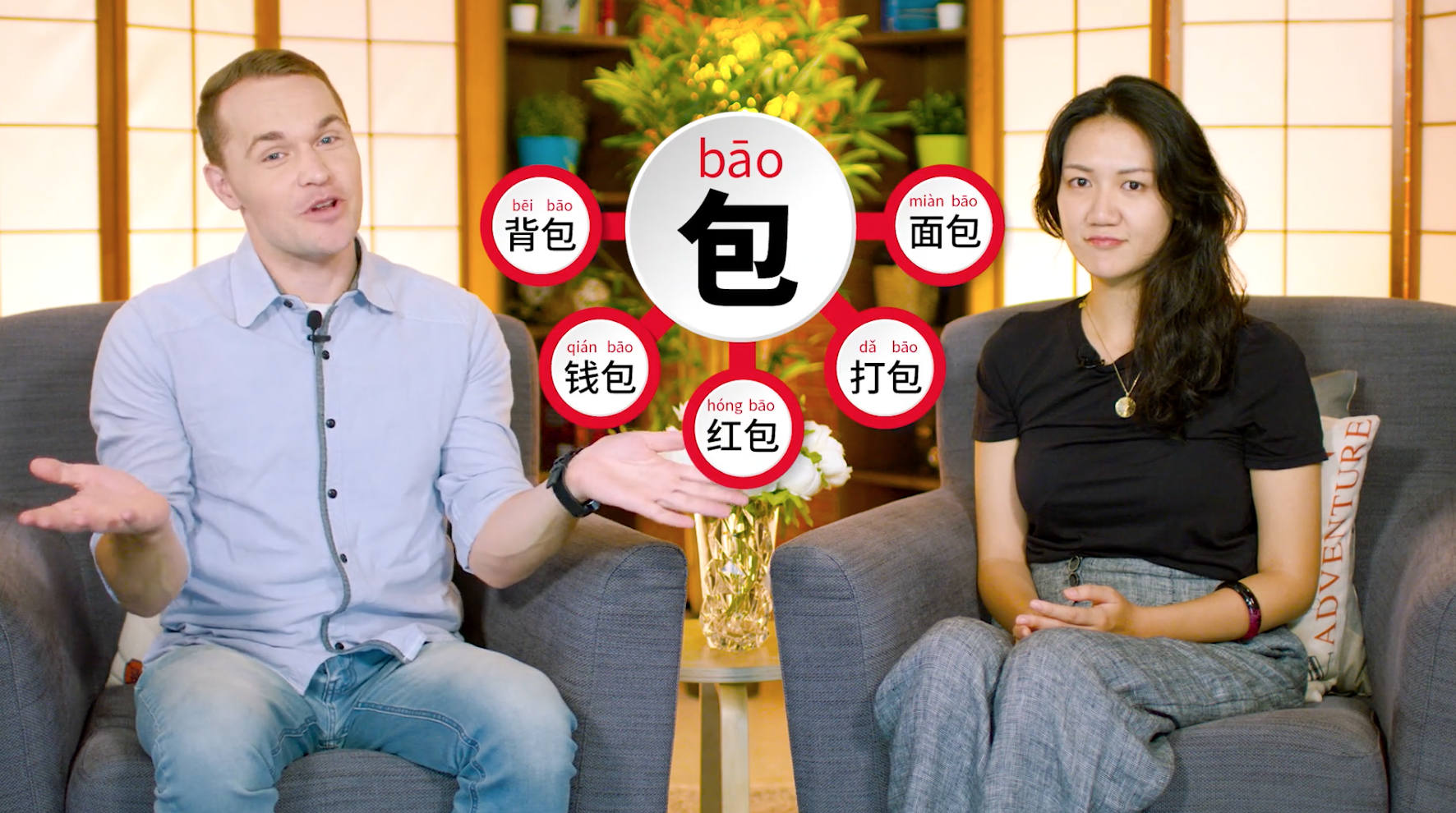
Lesson Introduction
Comments
To comment, please login.
Comments Policy
Allowed comments do not necessarily represent the views of ChinesePod.com. We also reserve the right to reject personal attacks, false/unsubstantiated allegations, spamming of any kind, and comments that include vulgar language or libelous statements.
Out of consideration for our Newbie and Elementary users, English translations should be provided with any Chinese (characters or pinyin) written in Newbie and Elementary lesson discussion posts. New lesson idea? Please let us know on our contact page.

clay says
This was inspired by my recent experiance trying to buy some double A's for my camera. Ha, no such thing here. So either study this lesson, or bring the dead battery in question to the store with you....March 10, 2008
mandomikey says
So glad to see this lesson, as I was wondering about this very topic as recently as yesterday. Thanks!March 10, 2008
foleadu says
I saw that the 'Vocabulary' tab is using a new application to present the vocab. Now, when I uncheck a word (i.e. I don't want to save it to my vocab manager) a popup windows comes up that says 'false'. Just a bug? I'm using Firefox The lesson was useful. I had noticed that China doesn't use the AA/AAA system, but never gotten around to learning what they use in its place. On the supplementary vocab you have '没电' for no power. How would you say it has a full charge? 满电?March 10, 2008
changye says
Absolutely one of the most helpful lessons ever! I still sometimes have trouble buying batteries here in China. Below is a comparison of battery names in English, Chinese, and Japanese. Btw, I suggest that you do not buy very cheap batteries in China since they leak easily. Size D battery 一号电池 (単一) Size C battery 三号电池 (単二) Size AA battery 五号电池 (単三) Size AAA battery 七号电池 (単四) Button battery 扣式电池 (ボタン電池)March 10, 2008
goulnik says
must be a new app, doesn't work for me, returns an error : 装载数据失败!A URL must be specified with useProxy set to false. so long as the html file is still there I don't really mind thoughMarch 10, 2008
tucsonmichael says
Great lesson, John, Jenny and crew! Very practical and useful. Thanks also to changye for the sizes not mentioned in the lesson....I didn't know if only AA and AAA (五号或者 七号) were the only sizes available. I hope to retire to Shanghai in the future, so this is a "must" lesson for me.March 10, 2008
panda2 says
Try buying a 9 volt battery in China ??? or even most of Asia ...you cannot get themMarch 10, 2008
panda2 says
PS: a follow on to above Good advice:.... If you have tech equipment that uses 9 Volt battery carry spares from home. For Multimeters etcMarch 10, 2008
clay says
After pulling up a picture of one online, the girls here had never seen one off those odd looking 9v batteries in China. However, if you find a store that has one, you would say: 九V电池 (jiǔ V diànchí) I'm not sure why this makes me laugh, but it does.March 11, 2008
chittttywangwangwang says
Is 电频 also meaning battery?March 11, 2008
wande says
hi chittttywangwangwang for what I know 电频 diàn píng is a battery in a carMarch 11, 2008
lunetta says
Tapping your tongue on a 9 volt battery??? I'm completely at a loss here. Is that part of growing up in North America or some bizarre Canadian or Texan ritual? :-)March 11, 2008
clay says
you aint lived till you licked a 9volt battery...March 11, 2008
henning says
Lunetta, never did that? Did you ever have a childhood? Better catch up quickly. :PMarch 11, 2008
texastochina says
That is how we test them to see if they are active. Thanks for the tips before my trip in two days to Shanghai!March 11, 2008
henning says
This open up a gate of forgotten memories. Suddenly the sour taste of those 9V batteries is flowing back into memory. Sigh!March 11, 2008
xuchen says
哈哈。。 有问题买一节七号电池!好玩儿! 我以前在别的中国城市有电动车,一天有贼偷我车子的大电池。。就有很多麻烦再买,差不多七,八块钱。。 Needless to say my next purchase was a fold up bicycle that fits nicely in my living room.. Also, I completely agree that licking a battery is required at least one in a life time. -许尘March 11, 2008
lunetta says
I've never in my life licked a battery but I grew up on a farm and we had plenty of electric fences around... And luckily I'm not boy. ;-)March 11, 2008
changye says
You cannot grow up without once licking a battery at least in Japan. It is really electrifying!March 11, 2008
adamb says
Whoever is writing the intro copy for these lessons recently, they are freaking awesome.March 11, 2008
changye says
A car battery = 电瓶 (dian4 ping2)March 11, 2008
rich says
Clay, when you say that, my tongue starts to tingle... ah, the memories of youth (or whenever I change my 9V in my guitar tuner...)March 11, 2008
rich says
(adamb, shh, don't say that too loudly or Clay will hear and it will go right to his head... and Amber will be hurt...) Well, unless Amber wrote it [sounds more like a guy thing to do though], and in that case, GOOD JOB AMBER!March 11, 2008
user12317 says
Good lesson. On a previous tourist trip to China, Yunnan mostly, I had to buy a lot of replacement batteries for my camera- I think AA - I just showed the old batteries or pointed - most of them had a very short life, so next time I'd try to take what I needed.March 11, 2008
henning says
Wow! My wife said they did that in China, too (albeit with a more ladylike, lower-voltage version). Obviously we discovered a piece of universal human culture that unites all cultures, nations, and people. Well, with the exception of the Danish countryside, obviously. :PMarch 11, 2008
lostinasia says
Back in the day in Laos we bought China-made AA batteries to power a diskman. The batteries couldn't do it. I don't mean they ran out of power--I mean they didn't have enough power to activate the darn thing.March 11, 2008
cassielin says
The mobile phone often needs a rechargeable battery. 充电电池chong1dian4 dian4chi2=rechargeable batteries 充电器chong1dian4qi4=battery chargerMarch 11, 2008
auntie68 says
Casie is back! Yay!March 11, 2008
bazza says
What does Jenny say after 不一样 just before the dialogue? 什么……什么……听听看吧?March 11, 2008
jillybterp says
Great lesson! Learned so much from the lesson and comments. Thanks!March 11, 2008
rpaldanius says
This lesson was fantastic. I remember trying to buy AA batteries in a small corner store in Shanghai, and I kept asking for 两个"A"电池 (as well as shaping out the letter 'A' with my fingers), nobody understood what I was talking about haha. What made it worse was that the lady knew I needed batteries, because she kept picking out the wrong size. Finally, with the support of other shoppers, I was able to score the correct size for my camera. Now I know. Thanks guys, keep up the good work.March 11, 2008
bazza says
Looks like 9v batteries are usually 9伏电池 http://www.shanghaibattery.com/ArticleShow.asp?ArticleID=109March 11, 2008
cassielin says
bazza, Jenny said:"对,很不一样哦。那我们赶快来听听看吧!" I guess you missed the word “赶快”gan3kuai4=at once/immediatelyMarch 11, 2008
obitoddkenobi says
I'm not sure, but I think its something like: Well then, lets take a quick listen and see how it goes. 那我们赶快听听看吧。March 11, 2008
obitoddkenobi says
Oops, I somehow missed Casie's comment...good to see you back again Casie.March 11, 2008
auntie68 says
obitodkenobi, my goodness you are truly a Mandarin Jedi Master! I love that.March 11, 2008
cassielin says
Thank you auntie68 and obitodkenobi, yes, i am back.^_^March 11, 2008
chittttywangwangwang says
Changye, wande. Thank you for your 电频 infoMarch 11, 2008
mayue says
I got a question about the MW for batteries: jie2. Does yi jie2 dian4chi2 mean a battery or a pack of batteries? The translation and Jenny and John's explanation seem somewhat at odds.March 11, 2008
mayue says
Anybody knows what the English system (AA, AAA, etc) is based on? And more to the point, what does the Chinese system (no. 5, no. 7, etc) refer to?March 11, 2008
lostinasia says
Now that I've listened to the lesson... fantastically well done. A touch easy for an intermediate, so it's bridging the Ellie/ Int gap. Great explanation and parsing throughout, with a good level of detail for the different sentence and usage patterns. It wasn't just a summary of the vocabulary. Thanks a million John and Jenny! Maybe one day I'll even be able yongbudao and yongdedao in natural conversation.March 11, 2008
wolson says
Somebody must be following me! I have had to buy batteries twice during the past week. My watch stopped and I had to buy a new battery for it. The the batteries went out in my GPS. Both times, I was successful in buying batteries. I already knew the work for battery so that helped greatly.March 11, 2008
chittttywangwangwang says
wolson...i also find it helps to know the word of the thing you want to buy.March 12, 2008
chittttywangwangwang says
And here is some nice basic electricty vocab. in case you need to buy that... Watts 瓦特 Frequency 频率 current 电流 volts 电压 resistance 电阻 AC 交流电 DC 直流电 AC/DC (the band) 交流电/直流电March 12, 2008
jennyzhu says
Bazza, I said what Casie wrote, referring to how different battery types are in China.March 12, 2008
bazza says
It was a bit quick for my ears. ;)March 12, 2008
amber says
hi mayue, You're right, and the PDF has been amended now. 节 (jié) is in fact the measure word for battery. A package is: 包 (bāo) or you can say 板 (bǎn). Generally, 一包一般有4节 (Yī bāo yībān yǒu 4 jié) one pack has 4 batteries in it.March 12, 2008
rechoboam says
我每星期买电池因为我的孩子有很多的电子玩具!Thanks for the great lesson!March 12, 2008
kimiik says
Changye, In france, the name starts with R : Size D battery 一号电池 (単一) R20 Size C battery 三号电池 (単二) R14 Size AA battery 五号电池 (単三) R6 Size AAA battery 七号电池 (単四) R03 CWWW, Did you get your battery back ?March 12, 2008
raymondc says
Talking about energy. What is the voltage appliance in China ? 110 or 220 V 电池用多少电压 ? Am I correct in this question ?March 12, 2008
matthiask says
its 220VMarch 12, 2008
changye says
Hi bbjt, Thank you for battery names in France. Please someone tell us how to say them in German! ....英语…………..汉语…...日语…法语…独语 D battery……..一号电池…単一…R20… C battery……..三号电池…単二…R14… AA battery……五号电池…単三…R6…. AAA battery….七号电池…単四…R03..March 12, 2008
pjmyers says
I'm a trial-period newbie, but enjoyed this dian4chi2 segment very much. The witty illustration of grammar/vocab by John and Jenny was well-above average, so special thanks to them and any script-writers they employ. Great fun and very educational. I could never remember: remote = yao2kong4qi4, but the remark that it was "far control instrument" somehow cemented it. Are John and Jenny the couple in the xiao zhao pian on the site's main page?March 12, 2008
henning says
changye, nowadays the (American) ANSI system is the system most commonly used in Germany. But you also still find the terms Mignon, Micro, Baby, Mono and Block. On the packages and batteries there is additionally the IEC-notation bbjt listed above. So you can expand your table to: ANSI - German - IEC - 日语 - 汉语 AAA - Micro - (L)R03 - 単四 - 七号电池 AA - Mignon - (L)R6 - 単三 - 五号电池 C - Baby - (L)R14 - 単二 - 三号电池 D - Mono - D - (L)R20 - 単一 - 一号电池 9V-Block - 6 F22 resp. 6 LR61 - 1604 D - [?] - [?]March 12, 2008
henning says
Last line should be: 1604 D - (9V-)Block - 6 F22 resp. 6 LR61 - [?] - [?]March 12, 2008
changye says
Hi henning, Thanks for your post. I like the way German people call the batteries. They are very literal!March 12, 2008
sushan says
I've seldom bought batteries in a package; generally get them per battery and the salesperson pops however many you need out of the package. Very convenient.March 12, 2008
amber says
hi raychenon, You can ask your question about the voltage used in China this way: 一般中国用多少伏的电压? Yībān Zhōngguó yòng duōshao fú de diànyā? The answer is 220 V.March 12, 2008
kimiik says
What's the chinese name of the famous 4.5V battery called 3(L)R12 ? This 3LR12 is used in many flat flash-lights.March 13, 2008
changye says
Hi bbjt, I have never seen the famous 4.5V battery so far both in China and Japan.March 13, 2008
henning says
changye, it is the ultimate tool for tickling your tongue. I remember it to be the classical device for boring physics experiments on electrical circuits (because it is so easy to attach wires to it).March 13, 2008
changye says
HI henning, In Japan, this type of 9v battery was relatively popular, but not anymore. http://www.protom.org/battery/006p.htmlMarch 13, 2008
henning says
That is our German "Block".March 13, 2008
fdf12222 says
亲爱的JENNY老师您 好, 我刚刚 听完 这课。 我 觉得 你 说 “电池” 的时候, 你的 发音 好像不太 对。 “电池” 的 “池” 你 会 说“shi2 ” 。 所以 你 说 “电池” 的时候 , 听起来 “dian4 shi2 ” 。March 13, 2008
brooke says
Great lesson, and very useful. I saw it on my home lesson page awhile back but had been too busy to listen in lately. Then last night one of my students (an older Chinese) was talking about my electronic dictionary and used the word 电池. I flashed back to the lesson photo, complete with pinyin, and immediately recognized what he was saying - and that was BEFORE listening in! Thanks guys!March 13, 2008
user21377 says
I've just graduated from elementary level after about 9 months, and have been studying several of the Intermediate lessons. I'm afraid that the "jump" in level is too great for me. I spend huge amounts of time trying to understand the explanations. I don't learn simply by absorbing the sounds of chinese...I really do need to understand a little of what is going on. I'm tempted to ignore the explanations. Has this worked for anyone else ? In fact I'm considering abandoning Chinesepod for the present untill I can improve my chinese sufficiently to follow the explanations. I'm sure I'll be told "just stick at it", but this way of language-learning doesn't seem to suit me. I don't expect to be spoon-fed, but I do need to understand things a little more by being able to relate them to English. I'm sure the pod intermediate method works for many people, but not for me. Is anyone else having the same difficulties ?March 13, 2008
depredadora says
"you aint lived till you licked a 9volt battery..." And you dunno what pain is until 8 times that much voltage has surged through your hand*. The student who considered precautions superfluous and I have had severe trust issues since. (It's the current that kills you, not the voltage. ;-) 110 V are pretty much lethal, btw) @user21377 "I'm sure the pod intermediate method works for many people, but not for me. Is anyone else having the same difficulties ?" Well, I listen to all levels, even Advanced, though this is definitely way above my skills. Yet I benefit from the constant exposure to Chinese. btw, it took me about 6 months to reach intermediate, and it was really a plunge into ice cold water. Ah, I remember ordering a stack of books for Intermediate students, and feeling paralyzed upon opening them on the first page. A huge number of CPstudent has reported the same difficulties- perhaps you could really introduce a kind of Upper Elementary (containing just a few lessons, that will suffice) level to make the transition easier. Or even "wrap-up" lessons, to consolidate what we've learned so far. In order to produce these, you'd simply have to lump together several editions of "the fix" and a few grammar comments taken from the lessons, as well as the dialogues in natural speed. I think everyone would gain a lot from this. And, I vow to become a paying subscriber as soon as CP introduces more consolidation opportunities.March 13, 2008
raymondc says
Thanks Amber. For user21377 & depredadora , let me tell you about my experience. I tried to improve by taking books, CD on HSK. But Chinese Pod remain the best way to me. Because you have the hearing and writing. Great to learn 成语. It's not dry like a class (well it depends on the teachers, I'm sure if it's Jenny or Ken, it will be much better)March 13, 2008
raymondc says
一般中国用多少伏的电压? Yībān Zhōngguó yòng duōshao fú de diànyā? I don't understand 一般 in the phrase construction. 般 is the measure word for what ? RaymondMarch 13, 2008
amber says
hi raychenon, 一般 (yībān) means 'in general' So the sentence means, "In general, what power voltage do they use in China?"March 13, 2008
andrewm says
Hi raychenon "一般 Yībān" in this sentence means "in general" or "generally" or "ordinarily", etc. user21377 and depredadora I definitely agree. However, I think once we're able to understand Jenny's Chinese explanations, we'll be able to progress by leaps and bounds. Bazza, indirectly pointed this out.March 13, 2008
auntie68 says
Yes. And raychenon, don't be rattled if you come across the "other" meaning of 一般, which is "average/ so-so/ nothing special". Examples from my dictionary: 学习成绩一般 xue2xi2 cheng2ji1 yi1ban1 最近生意一般 zui4jin4 sheng1yi4 yi1ban1 你买的这套家具太一般了 ni3 mai3de zhe4tao4 jia1ju4 tai4 yi1ban1le All the best.March 13, 2008
auntie68 says
Aiya. 成绩 is cheng2ji4. Sorry.March 13, 2008
changye says
I sometimes use 一般般 (yi4 ban1 ban1), which is more colloquial and a little humorous. 你这次考试怎么样?一般般吧! 一般般的电影。 她长得一般般。March 13, 2008
fdf12222 says
亲爱 的JENNY 老师, 我 今天又 听了 这课 的 解释, 然后 发现到 我 昨天 听错了。我 昨天 听你 讲 “电视” 的 时候, 我 以为 的 意思是 “电池” ,所以 让我 觉得很糊涂。真不好意思! 谢谢 你们的 课程。 我觉得你们都 教得 非常好! 加油!! -RudolphMarch 14, 2008
jennyzhu says
Rudolph, Really appreciate your comments. 谢谢你!March 14, 2008
beikaisi says
大家好!Great Lesson. Hey, here is a potential mnemonic for remembering the counter 节, which can refer to the length of bamboo between the knots. Batteries are tubular just like bamboo. 节 also is used in holidays, such as 国庆节, because they represent a kind of threshold between specific points in time - one knot of many on a bamboo tree, if you will. Just by inference, are bones counted with 节 as well? Anyone know? 从日本, 贝 凯斯March 14, 2008
shen3dan1lin2 says
For those desperate to lick a 9V battery, I can assure you that they are not so hard to find in China, at least I've never had a problem finding one. In fact I changed one yesterday and still have the packaging... It's labeled as 9V 6F22 and this one is 德赛 brand. Available in any big supermarket, but much more expensive than 五号电池 - this one was 3.9 元 and I'd normally get a pack of 4 AA's for 1 元!March 16, 2008
changye says
If you cannot find a 9v battery, connect six 1.5v batteries in series. You can certainly enjoy 9v excitement!March 16, 2008
myworld says
Hi, why can't download to my mp3? i'm thinking about listening to Jenna and John while jogging but it won't let me copy to my mp3...kind of disappointed. Please let me know if there is a way. ThanksMarch 17, 2008
agentchuck says
Hey user21377, I have found that the Intermediate lessons are very useful because of the difficulty in understanding Jenny's explanations. The trick is that very often John will repeat in English what Jenny has just said in Chinese. So this actually gives you a couple of learning vectors at the same time: you learn the chunk of lexis (as Ken would say) that they are discussing and you also learn the Chinese way to describe it. For every Intermediate lesson, I always find that there is one or two points that I just don't get, so then I'll check out the PDF to see what I'm missing. Because learning is all about patterns and multi-dimensional exposure and chunks of lexis and so forth. Or so I'm told.March 18, 2008
emberswift says
估计 = to estimate, guess What about the English saying "I'll bet..." For instance, your boyfriend has just ravaged the kitchen and emerged with a series of thrown together food items and you want to say "hhm, I'll bet there's a mess in the kitchen and I'll bet you're not planning clean it up anytime soon!" (At which point he smiles sheepishly and you make a mental note to not clean it up yourself no matter how crazy it makes you...) Can 估计 be used in this case? 我估计厨房现在特别乱,而且我也估计你不打算快收拾我们的厨房,对不对?March 30, 2008
amber says
hi emberswift, The Chinese equivalent of "I'll bet" is: 我打赌 wǒ dǎdǔ So you could say: 我打赌现在厨房一团糟,而且你也不打算马上收拾! Wǒ dǎdǔ xiànzài chúfáng yītuánzāo, érqiě nǐ yě bù dǎsuan mǎshàng shōushi!) I'll bet that the kitchen is a total mess, and you don't plan on cleaning it up any time soon.March 30, 2008
mandomikey says
How would one ask for an electrical socket adapter and/or a voltage converter?April 5, 2008
jordaenchen says
In the lesson, the word 节 was discussed as one of the mysteries of Chinese as the measure word for classes and batteries. The way my Chinese teacher explained it to me was that 节 originally referred to sections of bamboo (bamboo has the little niches in between each "section"). This explanation also accounts for the grass radical. Batteries resemble those sections of bamboo stalks, classes are like the parts of the school day (more metaphorical), and the holidays divide up the year into sections. Hopefully that helps people remember the word 节 a little better.April 12, 2008
phettu says
June 3, 2008
hi All
I also have just lept from Elementary to Intermediate, wow thats a shock to the system, Jenny said 2 words in English i think, LOOKS LIKE FUN, i'm gonna enjoy this, I see others above have thought its too tough for them, and i kinda feel the same, but i think if its not hard how am i going to learn and push forwards, I guess its all about (as Ken would say) drilling down and making yourself understand, and keep re-listening to it , when you get it BOY have you got it,
so keep it up OLD L.Es
good luck
Phill :)
arosenbloom says
June 21, 2008
I was wondering if I could get a tip on how to make my computer to type mandaring for "here", nar? The first character (na, 那) is fine, but what about the second character? Stand-alone "r" does not produce any character.
rjberki says
June 21, 2008
arosenbloom-
the character is "er" 儿
arosenbloom says
June 22, 2008
Thank you big big, rjberki! It worked!
teamonmyemail says
August 1, 2008
I'd like to make an educated guess on why Battery's count-word is JIE2. Jie also stands for guanjie...the joints. When you use batteries, they are usually put into devices long-ways (look like bamboo segments). That's probably why...
- Seattle -