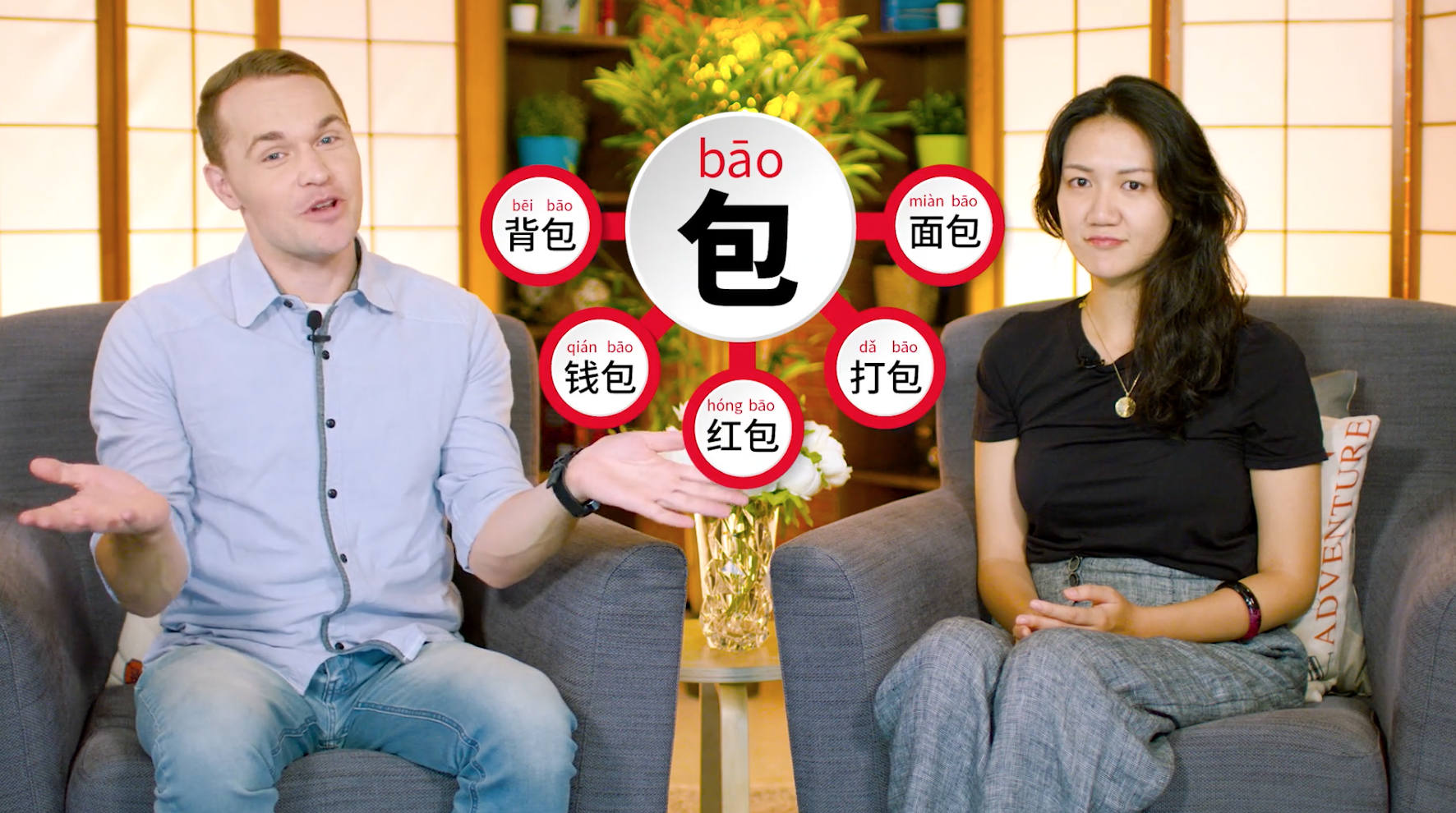
Lesson Introduction
Comments
To comment, please login.
Comments Policy
Allowed comments do not necessarily represent the views of ChinesePod.com. We also reserve the right to reject personal attacks, false/unsubstantiated allegations, spamming of any kind, and comments that include vulgar language or libelous statements.
Out of consideration for our Newbie and Elementary users, English translations should be provided with any Chinese (characters or pinyin) written in Newbie and Elementary lesson discussion posts. New lesson idea? Please let us know on our contact page.

evelyne says
有问题。 Imposible to have the right speed...incomprehensible, too fast!there is a technical problem for this lesson i guess. Can you fix it? 谢谢,evelyne from FranceJanuary 24, 2008
vann0000 says
我很喜欢课January 24, 2008
andrewm says
I notice that the conjunction "and 和 he2" between the words "gloves 手套 shou3tao4" and "scarf 围巾 wei2jin1" was absent in the Chinese dialogue. Can other words like hat 帽子 mao4zi, earmuffs 耳罩 er3zhao4, etc. be added to the sentence without using the conjunction "and 和 he2?"January 24, 2008
darylk says
What a perfect lesson. Car is in the shop so today I had to ride to school in the freezing rain on my bike. My Shanghai friend taught me to say "bo si te le"--stuffed to death. Perhaps that's Shanghainese?January 24, 2008
jennyzhu says
darylk, 'Bo si te le' LOL. Andrewm, 和 isn't absolutely indispensible in many cases such as this, as it doesn't alter the meaning of the sentence. Yes, you can add those words without using 和。 Incidentally, I wear everything that you listed in your comment, plus a 口罩/kou3 zhao4/surgical mask. It is magic, once you block the cold air from your nose and mouth, you feel like in Hawaii (at least half of your face does).January 24, 2008
ewong says
can you also use 帶 instead of 戴 in this sentence? im more familiar with using 帶January 24, 2008
misterjess says
Perfect lesson for today, it snowed in the Greater Los Angeles area today.January 24, 2008
henning says
Ken, catering for the German audience today? Kein Wunder, ziemlich viele Krauts hier. ;)January 24, 2008
changye says
As is always the case with life in China, I have a trouble getting enough steam at home at the moment. Some of the radiators in my apartment are dead. This is caused by the people downstairs, and they don’t listen to my complaint. Fortunately, my chubby dog seems to be very resistant to cold. But I am NOT. 屋里太冷了!(wu1 li3 tai4 leng3 le) The room is too cold!January 24, 2008
jennyzhu says
Henning, How was Hawaii? Welcome back!!January 25, 2008
henning says
Jenny, it was great. One day (after the conference) I was lying in a hammock under palm trees by the sea for a nap and thought: "It is suddenly getting really cold!". But of course not so cold that I needed to wear a T-shirt. Can you say: 舒服死了? :)January 25, 2008
lujiaojie says
Hi , ewong You can use 带 instead of 戴 in this sentence , however, they have different meaning . 下次别忘了戴( to wear )手套、围巾。 下次别忘了带( to bring )手套、围巾。January 25, 2008
ewong says
hi lujiaojie, thank you. oh no i've been wrong all this time. i always use 帶 when i say wear eyes glasses as in 帶眼鏡January 25, 2008
suburbanite says
How do you say wind chill?January 25, 2008
brucevandenburgh says
It is hun leng here in OC today, glad it's friday. What time is it right now in Shanghai?January 25, 2008
alwingate says
I am not sure I can express this accurately. I going to give it a try to solicit feedback. First of all, I do enjoy the C-Pod approach to learning Chinese. It is elegant, humorous, developemental all the good stuff. However, my learning obstacle is this: I don't know the structure of the language well enough to create my own sentences. That's it. I try to create a conversation and I am stuck with structural problems. Any solutions? Thanks AlJanuary 25, 2008
alwingate says
By the way, the pacing of the Newbie and Elementary lessons is just great. I can reproduce the sentences quite well. When I read, my Chinese friends now understand me and tell me when I speak more slowlly, they understand me better. So, I am gratified by my progress. I am able to hear those beautiful "lexical chunks" and patterns Ken talks about. New learners listening skills are not up to speed to those who are fluent or advanced in their Chinese proficiency. So, therefore, it seems to me it is quite appropriate to allow the music of the language to be heard.January 25, 2008
alwingate says
Thank you andrewm for including the pinyin for those of us who are not character oriented and probably never will be. I must say that most elementaries or ele's are not familiar with characters. It is helpful to glean from your experience through communication in Pinyin which otherwise would be lost to those of us who are character deficient. :)January 25, 2008
alwingate says
Hello evelyne from France. You may want to revisit the Newbie lessons and notice how the pace of the presentation is delivered there. Also, I checked the Expansion section of the lesson and the pace is quite understandable for me. Now, I am slow to hear and the presentation of the Expansion section allows the words to be heard quite clearly. It does take time to develope one's ear for the language. Be patient. Have you considered becoming a Premium member. It is well worth the money. I must say it is a bargan. Take the seven day free trial and listen to the pace of the presentation. I think you will find it compelling.January 25, 2008
alwingate says
One more comment: the dialogue presented in the Premium section is at a more appropriate pace for learning. But, if you are really serious about learning the Chinese language, it is my opinion only, that you need to be a Premium member. No, I am not receiving a commission from CPod, but this is how I truly feel. You will see and feel the difference. Try the seven day trial and then it is quite easy to quit after that time period. I trust CPod. It is a real business. Unlike other online enterprises. Yes, with some you have to be very careful.January 25, 2008
jackfrombelgium says
Hi, 我肯定回来。I definitively come back. ...hui2 lai 我肯定会来。I definitively will come.... hui4 lai2 Here a good pronunciation is necessary. Jack.January 25, 2008
jackfrombelgium says
Hi, ewong You can find "to wear" on Elementary - I can't find my glasses and " to bring" on Newbie - I didn't bring my umbrella. Greetings, JackJanuary 25, 2008
sebire says
Great lesson guys.January 25, 2008
user11695 says
I have a question. I the expansion the sentence " Next time I'll give you a pair of gloves". uses yi fu shoutao 一副手套. I was expecting yi shuang 一双.So is yi fu the measure word for a pair of gloves. Also "give you" uses song 送, and I wanted to use gei 给.Is it because the sense of the sentence is that it is a gift?January 25, 2008
jackfrombelgium says
Hi user11695, 送 song4 = give; deliver,send 给 gei3 = give;for 送给 song4 gei3 = give; to give as a present (see Elementary Mother's Birthday) If this can help you. JackJanuary 26, 2008
jackfrombelgium says
Hi, user11695, fu4 is a classifier for pairs.(a pair). JackJanuary 26, 2008
laorui says
I've noticed recently that the tone marks on the PDF's are only included on the occasional word in both the translation and Key Vocabulary sections. Is this intentional on the part of CPOD?January 26, 2008
laorui says
Mmmm. Just found the problem. My printer is only printing 1st and 2nd tones. Sorry about that.January 26, 2008
kriskringle says
I noticed Ken talking in German with a light Bavarian slang here. Is there a Bavarian podcast underway? ClausJanuary 27, 2008
clay says
suburbanite, It is not as commonly used in China like it is in the west, but the word 风寒 ( fēnghán) would best decribe it. Literally wind and cold.January 28, 2008
astoria says
I thought this was a pretty interesting lesson.January 29, 2008
aryeh says
Great lesson, since it is cold here in Washington, DC, but I am wondering about the use of dai4 vs. chuan1. -- both meaning "to wear." For example, wo chuan yi jian da yi, dan shi wo dai shou tao. Is dai4 used for accessories like mao zi he wei jin, whereas chuan used for more essential clothing like ku zi or chen shan? Thanks all!January 30, 2008
clay says
aryeh, you are right, 戴 (dài) is used for accessories like glasses, hats, and gloves, while 穿 (chuān) is to wear the essentials.February 4, 2008
adamtavernier says
a good name for a boy who's always hungry? howard. a girl: ursula.February 21, 2008
rsmith91 says
I've got a quick question about this lesson: hái hǎo is used to mean 'it's not that bad', but I don't really get where that translation comes from. I know that hái means 'still', as in still going to do something, and hǎo means 'good', but I don't see how 'still good' converts to 'it's not that bad'. Does hái have another meaning? Thanks in advance to whoever helps me out with this one! :)February 22, 2008
kuaizi says
A question: Could 你刚到上海吗? also use a 了 at the end (before the 吗 of course) or would that alter the meaning/be grammatically incorrect? (And why?) @rsmith91 Basically, hái means "there is still", either implying "there is still something (to do)" (e.g, like in hai2shi), or in this case "there is still good in the overall situation", which obviously can be expressed as "get a grip, it's not that terrible, see, there still good to be found". I hope I managed to convey this properly, I realize it sounds slightly odd. ;-)March 26, 2008
amber says
hi rsmith, 还好 (hái hǎo) is a set phrase that means 'not bad' or 'passable'. It is very high-frequency!March 26, 2008
amber says
hi kuaizi, 你刚到上海吗? Nǐ gāng dào Shànghǎi ma? When you have 刚 (gāng) in the sentence, it already indicates that the action just happened, therefore an extra 了 (le) would be redundant, and would not be needed to express past tense.March 26, 2008
hegazy says
please,looking for a way to learn chinese characters,for help, keep in touch.cauliflowerinchina@gmail.comApril 26, 2008