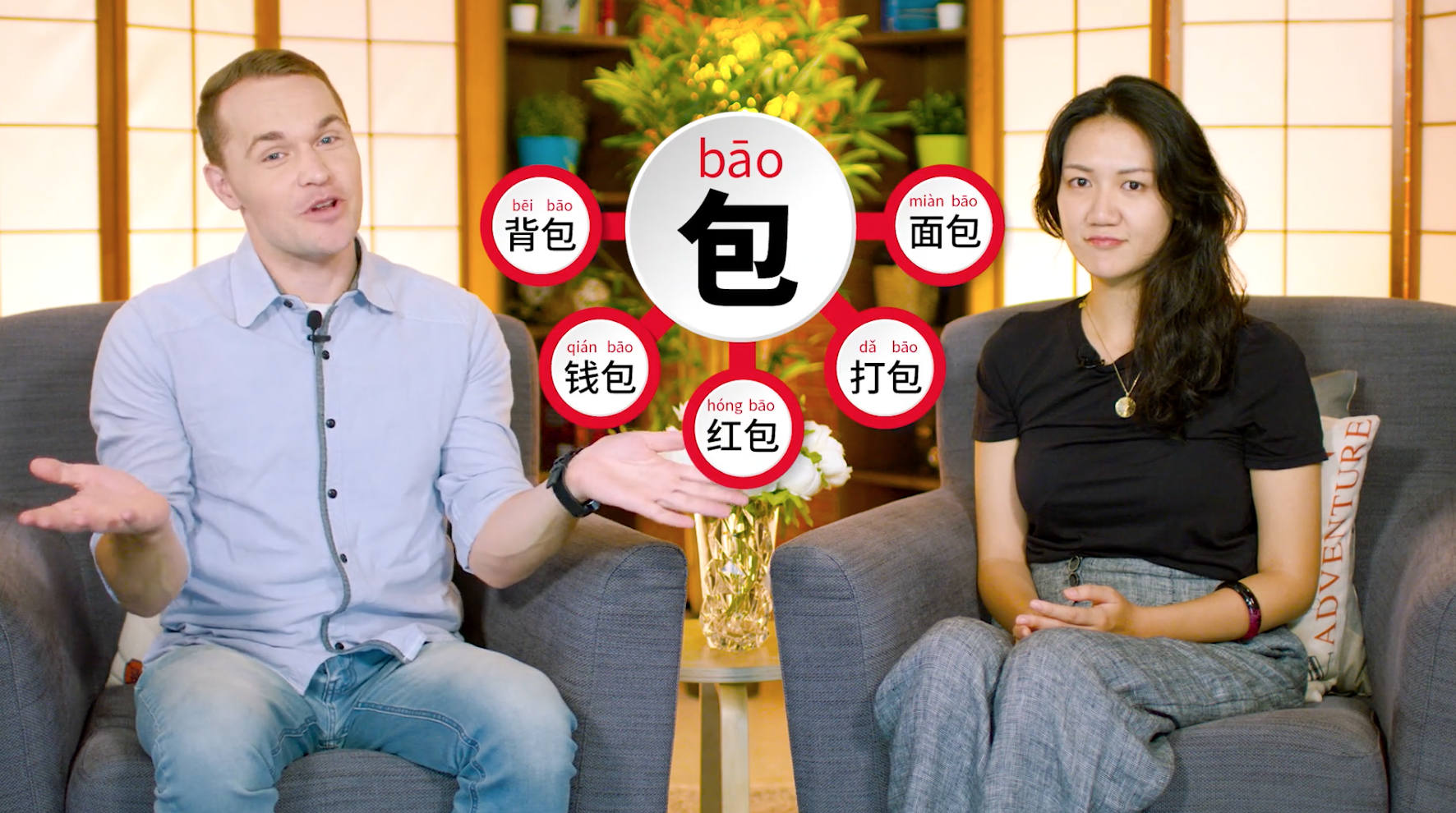
Lesson Introduction
Comments
To comment, please login.
Comments Policy
Allowed comments do not necessarily represent the views of ChinesePod.com. We also reserve the right to reject personal attacks, false/unsubstantiated allegations, spamming of any kind, and comments that include vulgar language or libelous statements.
Out of consideration for our Newbie and Elementary users, English translations should be provided with any Chinese (characters or pinyin) written in Newbie and Elementary lesson discussion posts. New lesson idea? Please let us know on our contact page.

says
ConnieNovember 19, 2006
Supplementary vocab for this lesson: 再 (zài) again (future); once more 再说一遍。 (Zài shuō yī biàn.) Say it again. 你说得太快了。 (Nǐ shuō de tài kuài le. ) You speak too quickly. 听不懂 (tīngbudǒng) not understand (lit. "hear but not understand") 我听不懂。 (Wǒ tīngbudǒng.) I can't understand. 听清楚 (tīng qīngchǔ) hear clearly 我没有听清楚。 (Wǒ méiyǒu tīng qīngchǔ.) I didn't hear clearly. 好喝 (hǎohē) good tasting (of drinks) 好玩 (hǎowán) fun; interesting
says
Ron SpencerNovember 19, 2006
New York, New York Your course(s) and outline are terrific. I am terrible in language acquisision, but your Newbie(s) are a delight. Thanks Ken & Jen. Ron
says
Mike in JubeiNovember 19, 2006
Jenny and Ken A very useful lesson and "a must know expression" no matter your level. You will have to say it. I usually say: (simp) 你可以慢慢说吗? (trad) 你可以慢慢說嗎? nǐ kěyǐ màn màn shuō ma Which I hope is correct and has the same meaning. Yes? btw: since it is that time of the year and based upon the Saturday video maybe you can follow up with a show where the comment is : 'take that hairy crab out of your mouth I can't understand a word you are saying' As always Connie your supplemental words and expressions are very helpful. Mike in Jubei
says
ChinesePodNovember 19, 2006
Mike in Jubei, 你可以慢慢说吗? (Nǐ kěyǐ mànmàn shuō ma?) is an alternative way to say the same thing. -John
says
Bazza 吴白锐November 20, 2006
Good lesson. How do you say: 'It tastes very bad, I think I'm going to throw up.' ?
says
amber @ chinesepodNovember 20, 2006
Hello Bazza, Great question. In fact, we have a lesson coming up soon on that very note! You must be able to read our minds. You can say ‘It tastes very bad, I think I’m going to throw up.’ like this: 太难吃了, 我快要吐了。 Tài nánchī le, wǒ kuài yào tù le. Have fun! Hope you don't need to say this anytime soon! amber :D
says
Bazza 吴白锐November 20, 2006
Thanks, amber. :) Maybe it's you that can read our minds. ;)
says
MichelleNovember 20, 2006
I really like the backline buildup method of remembering things. It really helps to make the phrases stick in the mind - excellent learning tool.
says
Mark(马克)November 20, 2006
Contrary to the introductory text, my experience is that 你好 and 谢谢 are not enough to make Chinese people think I speak Chinese. I find I have to say something more complicated before they will either stop trying to speak English with me (if they are comfortable to speak English) or stop trying to avoid conversation with me (if they are not). Do you have any tips on how to negotiate what language to converse in? ( Short of wearing a sign, "虽然我看起来我是西方人,但是我想要练习口语。“) Thanks, Mark
says
ChinesePodNovember 21, 2006
Mark, I wouldn't recommend using such a long sentence. It'll be harder to remember, leaving higher likelihood of mistakes, which could, in turn, undermine your efforts at convincing the Chinese person that you're capable of conversation in Mandarin. You could say: 我们说汉语,好吗? (Wǒmen shuō Hànyǔ, hǎo ma?) Let's speak Mandarin, OK? Another option is: 我想说汉语。入乡随俗嘛! (Wǒ xiǎng shuō Hànyǔ. Rùxiāngsuísú ma!) I'd like to speak Mandarin. "When in Rome..." right? -John
says
liz goddardNovember 21, 2006
I have just been away on holiday.....4 days in Hong Kong......it would be great to have a dialogue about holidays...where you went? What you thought? etc.....just a few basic questions and describing sentences....
says
RightDoneMarch 7, 2007
i want to have some friends who speak English,i am from China,we can get some interchange
says
RightDoneMarch 7, 2007
my msn is dengyong623@hotmail.com
chris says
Hi, I've just revisited this lesson and have noted a pinyin omission on the pdf. It currently says: "Ni3 ke3yi3 shuo1 yi1dian3 ma?" I think it should be: "Ni3 ke3yi3 shuo1 de man4 yi1dian3 ma?" Thanks ChrisApril 21, 2007
f1b1 says
How could I say "Please correct my mistakes."? I think this would be useful for me, as a newbie.May 3, 2007
mlowe says
Can someone explain the use of the possesive "de" after shuo1 to me? I'm not sure why we would use shou1 de instead of just shou1 here. Thanks! MikeMay 7, 2007
f1b1 says
I think it means "your speaking of Chinese language". I could be wrong, but this will at least keep the thread alive. :)May 9, 2007
sadelux says
Since I am a Newbie, I might be wrong, but doesn't she say "Qĭng -> nĭ* <- shuō màn yī diǎn" at the "Please speak a little slower" Phrase in the Expansion set???May 15, 2007
jacob says
Just wondering, what’s the difference in meaning (if any) between: 你可以说慢一点吗? and 你会说慢一点吗?June 26, 2007
franch says
Jacob, 你会说慢一点吗 would not be used, huì indicates a capability (am I speaking English here?), it would mean "Are you able to speak a bit slower?" cf 你会说中文吗? Can you / Are you able to speak Chinese? 他会说两个小时说得不休 tā huì shuō liǎng ge xiǎo shí shuō de bù xiū : "He can / He is able to speak two hours without pausing" HIHJune 27, 2007
ewilc773 says
I have a Chinese teacher that I'll be using this lesson a lot with! Very useful!October 18, 2007
trustymutsi says
Question: I don't remember the "de" in "shuō de" being explained. What's "de" mean?January 17, 2008
soulman2001au says
there are many 'de'. one is 的,得, and 地. here 得, goes after verbs and adjectives, and indicates the result, possibility or degree of that verb. so in the sentence 你说得太快了. you speak, but how fast? the word(s) after 得 is how you speak. in this case very fast. i hope that makes sense.January 17, 2008
soulman2001au says
compare it to the phrase, 你说太快了. with the 得, it would mean, "you said, 'too fast'". So the 得, while it has no meaning, changes the entire meaning of the phrase.January 17, 2008
trustymutsi says
Thanks, that helps, except I can't read chinese characters. Should I be learning that too?January 18, 2008
julesong says
Well, the focus on Chinesepod the podcast is on spoken language. I'm doing the best on spoken language that I can. At some point, however, you might want to look toward the written. The PDFs help with that. But still, Chinesepod.com podcasts from their beginning were stated to focus on the spoken language.January 18, 2008
trustymutsi says
Cool, thanks:)January 18, 2008
triphazard says
I was wondering, is there a difference between 一夏 (yi1 xia4) and 一点(yi1 dian3)?April 8, 2008
triphazard says
Woops, I forgot to add this in also, is there a difference between "ke3yi3" and "neng2" ?April 8, 2008
amber says
hi triphazard, There is a little difference in the usage. Here are a few set sentence patterns, to show you how they are used differently: V + 一下 (yīxià): 请你等一下。 Qǐng nǐ děng yīxià. 我可以试一下吗? Wǒ kěyǐ shì yīxià ma? V + 一点 (yīdiǎn) + N: 我会说一点汉语。 Wǒ huì shuō yīdiǎn Hànyǔ. Adj + 一点 (yīdiǎn): 有大一点的衣服吗? Yǒu dà yīdiǎn de yīfu ma?April 9, 2008
triphazard says
So you use yīxià when it is just a verb before it, and yīdiǎn in other cases?April 11, 2008
amber says
Hi triphazard, As a general rule, yes.April 14, 2008
triphazard says
Thanks amber.April 16, 2008
chenggwo says
June 4, 2008
The podcast omits discussing the "de" for a very good reason. Its use is almost impossible for an English speaking newbie to understand, even though it is a very common contruction in Chinese. In this context it is the most natural way for a Chinese person to say it.
"Ni3 ke3yi3 shuo1 de man4 yi1dian3 ma?"
"nǐ kěyǐ màn màn shuō ma"
The second way is the most natural way for us, but is incorrect in the sense that it is not the most natural way for a Chinese speaker to put it. The way I think of using "de" is that it changes a verb to a different part of speech, but I don't try to understand which part of speech that would be.
I learned "de" while studying Cantonese (duk1). Translated to Mandarin, this is the phrase I learned.
"Wo3 Zhong1 wen2 shuo1 de bu2 hao3"
"I don't speak Chinese well."
Which is an excellent phrase to know considering that saying "I only speak a little Chinese." can be taken to mean that you are already fluent.
chenggwo says
June 5, 2008
"Wo3 Zhong1 wen2 shuo1 de bu4 hao3"
OOPS!!! bu4 does not change to second tone in front of a third tone, only in front of another fourth tone, I believe.
See
http://chinesepod.com/lessons/tone-rule-changes-for-bu
houban says
June 17, 2008
'no data' error on the Dialogue and expansion tabs.
jim_parker says
August 22, 2008
I don't want to bog down my learning with a bunch of grammar, but the "de" after "shuo" surprised me, as it did some others. A couple of earlier posts explained this usage as a grammatical construction that indicates that you are speaking about the degree of the verb (not just the fact that you speak, but HOW you speak). This sounds to me like it just means that there will be an adverb modifying this verb. Is this basically correct?
amber says
August 24, 2008
hi jim,
说得慢一点
Shuō de màn yīdiǎn
is a verb/adj.+得+complement structure in Chinese. What comes after the 得 (de) expresses an evaluation, judgment or description related to the verb or adj. that is being complemented.
jim_parker says
August 25, 2008
Thanks, Amber.
ps Love your show!
cjd60 says
August 25, 2008
Hi Love the discussion bits! Am I the only one who got the same list of words for both parts of the vocabulary? Usually it seems you get the vocab from the podcast as well as supplementary words.
misteregg says
September 18, 2008
This is my first post. I too am confused with the pinyin in the pdf and the repeated words in the vocab.
Maybe when the dialogue was translated they spoke too fast!
everett says
As others have pointed out there are some bugs in the lesson, and since it's for newbies and concerns a really key phrase, doesn't it deserve to be fixed up? The pdf omits transcribing two characters into pinyin: 你可以说 _得慢_一点吗? nˇı kˇeyˇı shu ̄o y ̄ıdi ˇan ma? The "key vocabulary" is actually a repeat of the supplementary vocabulary in the vocab window and in the pdf. The actual key vocabulary, such as for the character 慢, is missing. In the dialogue window the little yellow box explains 说得慢 as "shuo1 to speak slowly" – omitting the pinyin for "de man4". Thanks a lot for running a great site. I'm sure you're all really busy but if someone can find time to look at this it'd be great. Pod on, dudes!December 11, 2008
kennethshultz says
June 16, 2009
once again, chinese pod has hit the nail on the head. very useful language, thank you!