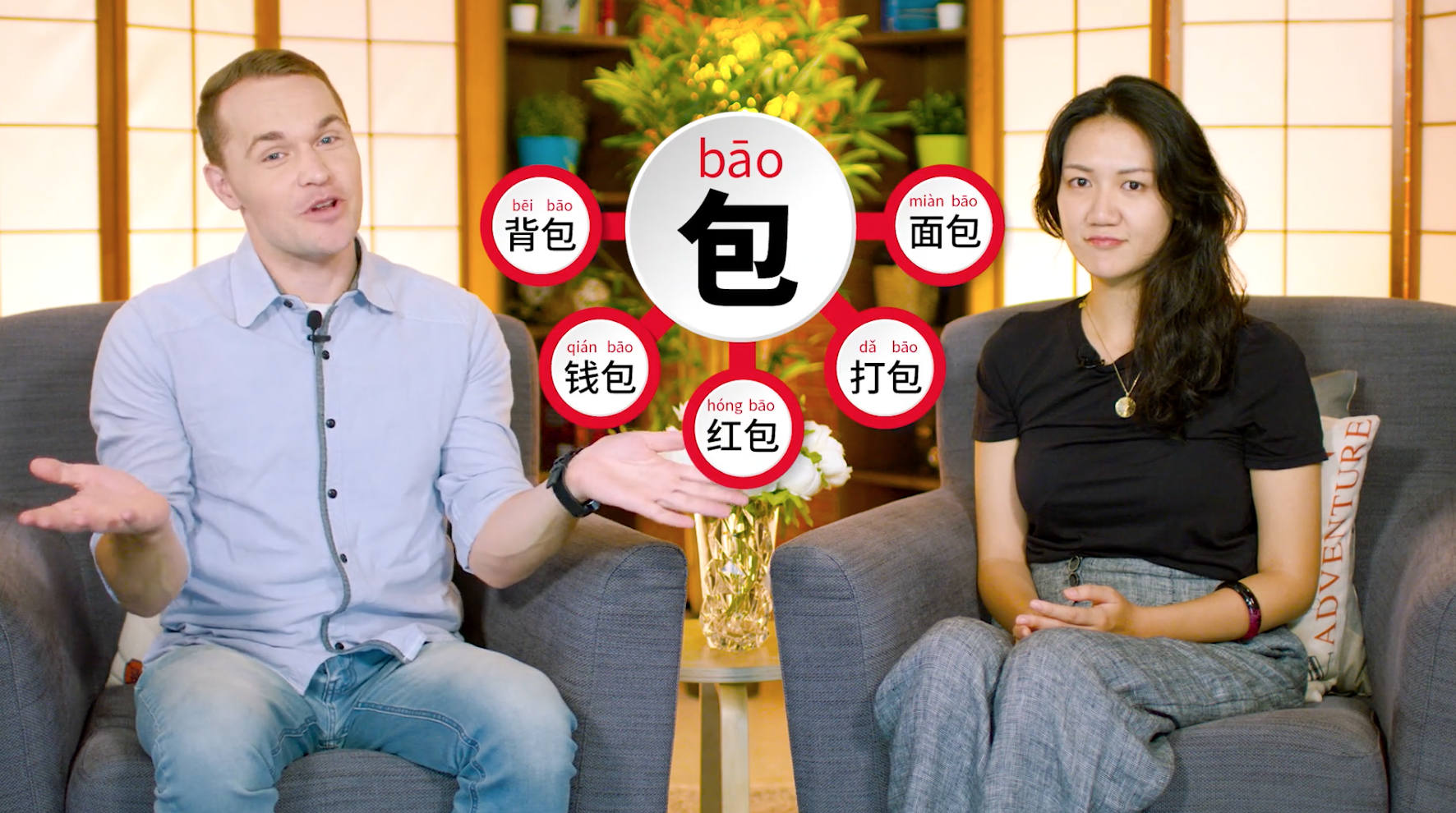
Lesson Introduction
Comments
To comment, please login.
Comments Policy
Allowed comments do not necessarily represent the views of ChinesePod.com. We also reserve the right to reject personal attacks, false/unsubstantiated allegations, spamming of any kind, and comments that include vulgar language or libelous statements.
Out of consideration for our Newbie and Elementary users, English translations should be provided with any Chinese (characters or pinyin) written in Newbie and Elementary lesson discussion posts. New lesson idea? Please let us know on our contact page.

jennyzhu says
Juriaan, I checked the expansion sentences. 国家 is consistent on the writing and audio. Re the use of 座,it's a measure word for objects that are 'rooted' on the ground, which can also contain or 'host' people . For example, architectural constructions (temples, churches, skyscrapers) and 'constructions' of mother nature, e.g. mountains.April 29, 2007
jennyzhu says
Bazza and Henning, You will stir up double buzz at cpod.April 29, 2007
Juriaan says
Jenny, Thanks for the explanation. I made a mistake. I meant the fifth line of the dialogue. On the podcast I hear and in the text I read 哪些城市, but on the dialogue page, pressing the button, I hear 哪个城市。My question was about the correct measure word of 城市.April 29, 2007
dave says
Mexicanhat I had the same problem you did a few months ago. My solution was to subscribe and really work on each intermediate lesson slowly. I'd work through the translations and the expansions. It was frustrating for quite a while but I am finally feeling comfortable at intermediate. I do have some problems with the format of the intermediate lessons but that's another story...April 29, 2007
Juriaan says
In the expansion section I read 哪些城市,but I hear 哪个国家。When do we have to use the measure word 座?April 29, 2007
mexicanhat says
I'd just like to say its great that this elementary was abit longer than the other ones. I was wondering though should there be a lower intermediate category? because I find the gap between elementary and intermediate is quite big. Anyone feel the same?April 29, 2007
hanyuxuesheng says
Thanks a lot for 500 great podcasts and congratulations!April 29, 2007
bazza says
我在十月份到上海来。April 29, 2007
jennyzhu says
user26485, Thank you for the congrats! Dave, Thank you for putting me right.April 29, 2007
chris says
Thanks Jenny, I see what you mean. I was starting to doubt that I'd learnt my pinyin pronunciations correctly there! I'm actually sat in my office at the moment and asked one of the locals to listen - he confirmed that he understood it perfectly, but mentioned that the "ing" sound would be more pronounced up north. I've still got a long way to go with the listening part of the learning! ChrisApril 29, 2007
jennyzhu says
Dave, Thank you! We've almost lost track ourselves.April 29, 2007
jennyzhu says
Chris, I just listened to the expansion sentences. 'Ying yu' might sound slightly off tone because the lady really went full throttle on the 'ng' sound. Do it a few times and you'll get what I mean.April 29, 2007
dave says
Jenny I think you meant to thank user26485, but congratulations too! I had no idea you guys had made so many lessons.April 29, 2007
dave says
Great Lesson. Compact and Complete. 5/5 Thanks!April 28, 2007
bobbie says
500 lessons today! Congratulations Chinesepod for this fantastic feat!April 28, 2007
chris says
In the audio in the Expansion, I'm struggling with the young lady's pronunciation of English (yingyu) in the sentence "Chinese is harder than English". She doesn't seem to be saying the "ing" sound in "yingyu" - it's more like a "yao" sound. Am I missing something, or is it just the speed at which she is speaking? Thanks ChrisApril 28, 2007
alwingate says
Just a small point or question. "You are taller than him" in the expansion section of the site is I believe to my recollection incorrect grammatically. I seem to remember that when using the verb "be" the subjective complement needs to be used, ie (He is taller than I." Could be I wrong, but let's here what our grammarian has to say on the subject. What say you John Pasden?April 28, 2007
jennyzhu says
Mexicanhat, Dave said it better than I could do, which is to slowly walk through the lessons. I have to say that some of the early intermediate lessons were way too hard while the eles too easy, creating a rather big chasm. That's why we started to 'beef up' the eles and appropriately take the intermediate lessons down a bit. But there is would be a watershed between these 2 levels as it is with langauge learning in general. In my experience, exposure to the language, even to the point of over exposure was key. But equally important and regarldess of how cliche it sounds, take it step by step.April 29, 2007
henning says
Bazza, 你已经知道具体的日期吗? 我大概九月到中国去。。。April 29, 2007
lai4ha2ma says
Are these the intended exercises for this lesson?April 28, 2007
amber says
Hi lai4ha2ma, They are the proper ones now. ~amber :)April 28, 2007
smithy says
Neither MP3 file plays in WMP! I can see the captioned dialogue (English and PinYin) for the shorter dialogue-only MP3 file, but no sound for either file. Is this a known problem or should we be playing them in iTunes? If so how do you see the captions in the iTunes player?April 28, 2007
smithy says
Regarding the Supplementary Vocabulary. I'm new to this and I can't work out even the first word! Is it qi nyan or qin yen ? and how would I be able to tell in the future, if the Pin Yin words are joined together? The girl pronouncing the words in the sound file is not at all clear! The second phrase sounds like qi nyan kan ka... without a final 'n' sound!! Sorry to sound so negative, but learning Chinese can be a bit frustrating at times.April 28, 2007
kencarroll says
I think there's a difference between usage and rules. "You are taller than him" is a fairly likely possibility in English. It contravenes a rule that most native speakers neither know nor understand.April 28, 2007
chris says
Lantian, Juriann, Doesn't Ken say in the podcast that the "xie" is used to indicate the plural more generally. I implied from that comment that "ge" would be for the singular. So in English, it would be the different between "that" and "those", if that makes sense? I may be completely wrong, but that's what I took away from the podcast. ChrisApril 29, 2007
Lantian says
NA GE - Hey Juriann, you're right, the recording says 哪个城市, (aka unidentified 'feature') rather than 哪些城市. I don't think 座 applies to cities (at least not in that sentence). The '些' would mean 'that' or 'which' cities, and '个' the more colloqial variation. Which obviously caught Connie :) Maybe in a sentence that 'counts' cities you'd include a measure, like 中国内有5,986座城市. (?) I'm not a teacher though, nor native, so let's see what others say.April 29, 2007
bazza says
Henning, 十月22-十月31April 29, 2007
henning says
糟糕! 太晚了。 十月22日新学期已经开始了。April 29, 2007
antoniov says
This is the 500th podcast! congratulations!April 29, 2007
user1283 says
Jenny Great lesson,we are coming to Shanghai in June, any chance for us to dropby? what is the address and tel number? thanks,April 29, 2007
mexicanhat says
Thankyou both Dave and Jenny for the tip. I'll keep that in mind and study even harder!April 29, 2007
smithy says
thanks for the feedback above /irony offApril 29, 2007
kencarroll says
500 hundred podcasts and counting. Keep the feedback coming and we'll try to produce the lesssons you want.April 29, 2007
amber says
Juriaan, Thanks -- you're right, it should have said "那些" (nǎxiē), and it's been fixed now. On that topic, 哪些 (nǎxiē) is "which" (plural) 哪个 (nǎge) is "which" (singular) 那些 (nàxie) is "those" 那个 (nàge) is "that" The measure word for 城市 (chéngshì) "city" is either 座 (zuò) 个 (ge) both are acceptable. Bazza, Henning, and user 1283, That's great you all are coming! The address: 3rd Floor, Building number 4, 751 Huangpi Nan Road, Shanghai. About a 10 min walk south of XinTianDi (pretty famous landmark). Nearest subway station is HuangPi Nan Lu station. ~amber :)April 29, 2007
user13805 says
smithi qin 1 yan 3 qin mining family (by blood ) and yan mining eye. Smithi mining smile hindi bhashaApril 30, 2007
bazza says
BTW shouldn't Travelling have 2 l's?April 30, 2007
bazza says
Or is that the American way of spelling it? ;)April 30, 2007
amber says
Hi Bazza, That's funny 'cause when I was writing it I thought it should have two l's as well, but our American friends differed! Then I was thinking, am I crazy for thinking it should have two l's?! Anyway, I looked it up on dictionary.com and sure enough, they have it there with one l. I think it looks weird too. Yes, spelling is the never-ending dilemma for our international group of people here at Cpod ;) ! ~amberApril 30, 2007
chow says
To Dave, Jenny and everyone at Chinese Pod, Greetings from Singapore. Ni men de gong zuo shi wei da he re cheng. Xie xie da shi. Regards, ChowApril 30, 2007
chow says
Dear Ken, Jenny and everyone at Chinese Pod, My humble apologies. I have wrongly keyed David instead of Ken. Qing duo duo yuan liang ge wei da shi. Regards, ChowApril 30, 2007
rajat says
Hey guys! Great lesson - I definitely like how this lesson was more advanced and complex than normal eles, since I am still struggling in that great sea between ele and intermeditiate (although I can see land now!). I do have to say though - I was in the same position where I was totally lost in the Intermediate section, even though elementary was far too easy. I still cant do the fully Chinese stuff, but yeah you really need to listen carefully to each lesson and replay it several times before you get over the 'hump' in terms of listening. It takes a lot of hard drilling to be honest - but its worth it to totally understand the Tragedy of Zhang Liang and Lili . The problem with the intermediates I have is that it takes time to really understand what Jenny is saying... it took me two months to finally get what 'de ba' exactly means (although I kinda could guess it from context). I still think it'll be worth publishing even just one transcript of a lesson of what Jenny says, so that some of us can finally satisfy our curiosity over certain phrases! But keep up the good work ChinesePod - I like how you're all really involved with the comments now ;)April 30, 2007
Lantian says
Hi rajat, message me, transcripts are availableMay 1, 2007
Joachim says
amber: any chance of posting a google earth marker where to finde chinesepod or coordinates like 31°13'1.44"N, 121°28'12.82"E to enter in google earth? 太谢谢!May 1, 2007
bazza says
Joachim, here is the location on Google 地图 if that's any help.May 1, 2007
bazza says
That marker is for someone who shares the same building as ChinesePod I think.May 1, 2007
wmackie624 says
is "qin1" from the vocabulary list "qin1yan3" comparable with "ziji" as in "ziji lai" or "ziji zuo" when referring to yourself? are there other examples where you can use "qin"? "tones. tones? i don't need no stinkin' tones!"May 1, 2007
bazza says
Here is a Google Earth link for ChinesePod. It may not be the right building though.May 1, 2007
amber says
Hi wmackie624, The character 亲 (qīn) on its own can have a few different meanings, however, when it is combined with 眼 (yǎn) it means: 亲眼 (qīnyǎn) with one's own eyes, to have personally seen 我亲眼看 (Wǒ qīnyǎn kàn) I saw with my own eyes you can also combine 亲 (qīn) with other words, i.e.: 亲手 (qīnshǒu) with one's own hands 他亲手交给我这些文件.(Tā qīnshǒu jiāogěi wǒ zhèxiē wénjiàn.) He handed me these documents with his own hands. (or, "He handed these documents to me personally") There is also 亲耳 (qīn'ěr) with one's own ears. When you combine 亲 (qīn) in this way, in means to personally experience something (in what way depends on which body part (as above) you combine it with). 自己 (zìjǐ) is different, it means "oneself", i.e.: 我自己看吧. (Wǒ zìjǐ kàn ba.) I'll look myself. 是你自己不好. (Shì nǐ zìjǐ bù hǎo) It's your own fault. Hope that helps clarify the difference! ~amber :)May 1, 2007
jweissgerber says
How would you say: "it was as much fun there as I thought it would be"? 那儿有我想象的好玩? Thanks.May 3, 2007
john says
jweissgerber, You could say: 跟我想象的一样好玩。(跟我想象的一样好玩 (gēn wǒ xiǎngxiàng de yīyang hǎowán)) You can add the 那儿 to the front or leave it off. You can also see Chinese people using this exact sentence if you follow this link.May 4, 2007
jweissgerber says
Thanks, John. The reason I asked is because the negative form of this sentence appears in the expansion part of this lesson, without the grammatical point ("comparative of equality") having been touched on by your team. The positive and negative forms turn out to be quite different in structure. Maybe a subject for a PhD thesis! What happened to my face? How can I remove it? JacquesMay 4, 2007
Joachim says
Bazza, thanx for the map and the google earth marker!May 5, 2007
rich says
Dang, you guys talking about the exact location of ChinesePod's building makes me regret not trying to at least see the outside of the building and stalk around when I was there last week. And I was so close to it when I met Jenny, Amber and John for coffee... guess I gotta go back again to worship the ground they walk/work on... heh! Okay, I actually came here to ask a question about traveling, having just got back from traveling: 旅行:I think I know what Ken was getting at when he asked Jenny if this word was in the vacation sense or business, or any general traveling. I was surprised at Jenny's answer, as I thought it refered to any type of travelLing, 出差 or 旅游. So am I wrong, or was Ken's question just confusing? Sounded like it was kind of asked in the wrong way that even I was going "What exactly are you trying to ask Ken?". Yet the answer sounded like 旅游 and 旅行 are interchangable but not 出差?Right or wrong?May 5, 2007
amber says
Hi again Rich, Yes, it was nice to meet up! As far as travelling, yes, there is a distinction. 出差 (chūchāi) is not considered to be 旅行 / 旅游 (lǚxíng / lǚyóu). They are seperate entities. When there is an overlapping, i.e. you are on a business trip but at the same time you do some fun stuff on the company's tab, there is a word for that, it is 公费旅游 (gōngfèi lǚyóu).May 7, 2007
eleric says
It seems these dialogues are becoming deserted a few days or at most a few weeks after publishing. What a pity as it is a great lesson to be studies at any time, even years later. 5 Points. Thank you.August 6, 2007
azul says
I listened qinyan with an English "a" sound but I thought it was "e" sound. Can you tell me which is the right pronounciation. Very good lesson. Xiexie nimenOctober 26, 2007
Kyle says
Hi sylvia, The 'a' sound is correct there. Try not to follow English pronunciation when learning Mandarin, especially the finals. It's really only the consonant sounds that transfer. It might behoove you take a look at the Chinesepod pinyin chart available in the pronunciation section. =)October 26, 2007
changye says
Hi sylvia, What Kyle said is right. To know how to pronounce pinyin correctly in the earliest stage is extraordinary important. Learning to read pinyin is not difficult, but sometimes very confusing to foreigners.October 26, 2007
azul says
I had a look at the prononciation section and it confirmed what I had previously learned. Thanks to both of you. I do need a trip to China.October 28, 2007
arturogatti says
Wow! This was my first lesson on chinesepod and I fell in love with the voice of the lady... Amazing stuff! ;-) Good work.May 19, 2008