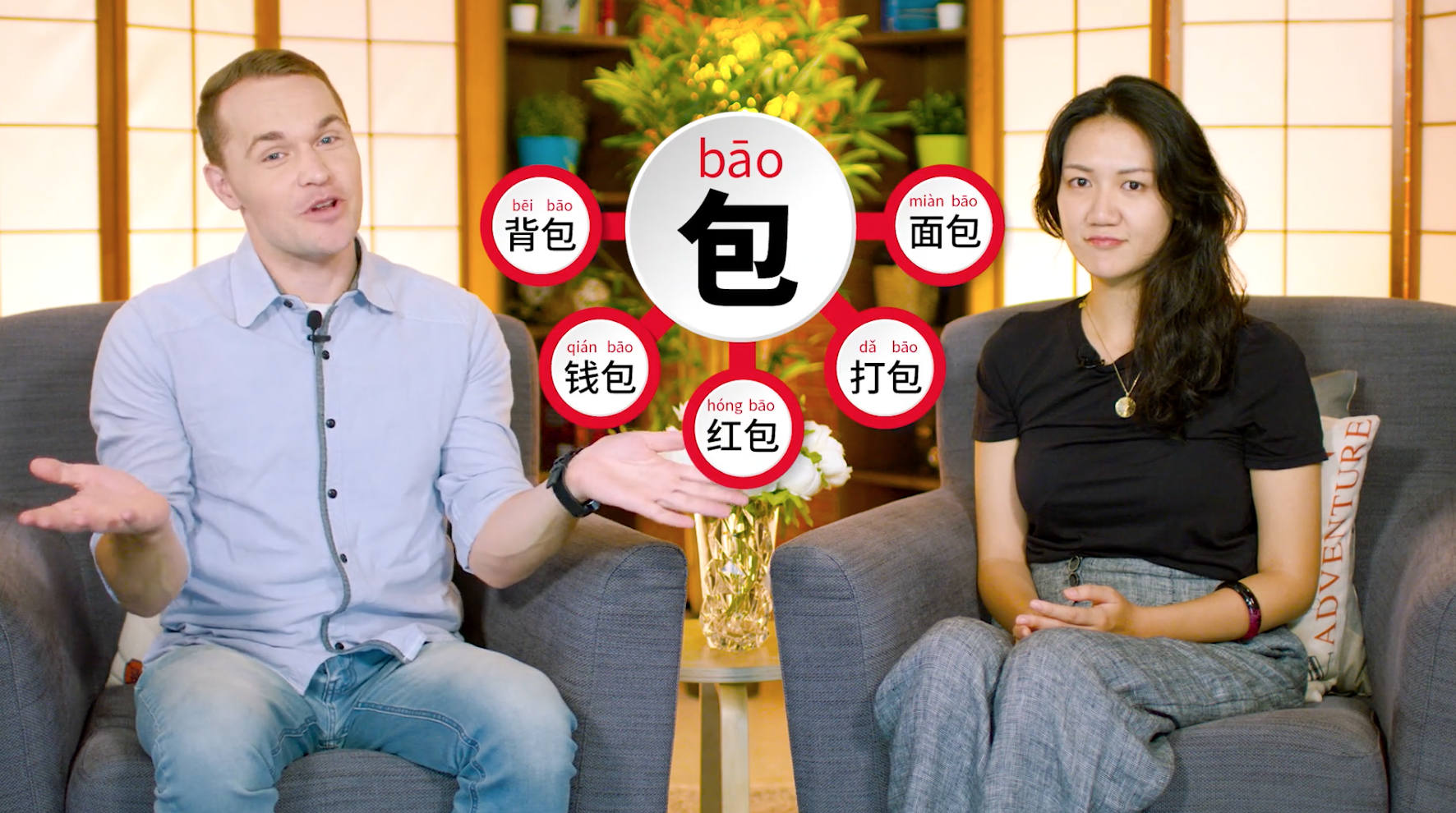
Lesson Introduction
Comments
To comment, please login.
Comments Policy
Allowed comments do not necessarily represent the views of ChinesePod.com. We also reserve the right to reject personal attacks, false/unsubstantiated allegations, spamming of any kind, and comments that include vulgar language or libelous statements.
New lesson idea? Please let us know at chinesepod@praxislanguage.com.


architpol says
June 18, 2008
Nice lesson and very useful. I think I can say:
wo mei tian dou you tai dou le kai hui.
我每天都有太都了开会。
dududu says
June 18, 2008
thanks ken and jenny!
it's really a woderful lesson!
dududu says
June 18, 2008
i'd like to know why the number 250 二百五means a foolish person?is there a story behind this?
seekeroftruth says
June 18, 2008
dammon2008,
250 is 1/4 of 1000. Now, I forget the meaning of 1000 exactly, but I believe it symbolizes completeness of some sort, possibly of mind or of being, in China. Therefore, being 250 means one is one quarter of being complete, and therefore foolish or half-hearted, absent minded, etc.
I don't think this covers it completely, but I hope that it answers some of your questions, and I also hope someone else is able to answer it more fully and accurately.
dududu says
June 18, 2008
seekeroftruth
thank u very much to help me know the truth!
哈哈
dududu says
June 18, 2008
which one is correct :
我和他在说
or
我在和他说
???
john says
June 18, 2008
dammoon2008,
我在和他说 (wǒ zài hé tā shuō) is correct.
dududu says
June 18, 2008
john!
thanks!
rebecca1166 says
June 18, 2008
dammoon2008
you know so much about Chinese!
have you been to China ?
texastochina says
June 18, 2008
dammoon
I purchased a book whose title was 250 most common Chinese Characters. My friends started laughing calling me 250. They said that 500 is a complete brain so 250 is a "half wit". This happened last week so the lesson is well timed.
johns says
June 18, 2008
Enjoyed this lesson.
dududu says
June 18, 2008
rebecca
yes i live in beijing
chinese is my favourite language
haha
jennyzhu says
June 18, 2008
I remember going to work with my mom during school vacation, because there was no day care facility or baby sitters. Her 单位/ dan1 wei4/ 'work unit' had huge meetings where the entire workforce attended. But no one was really listening. There were people reading, eating melon seeds and even knitting. And of course, my mom brought me along as if it were a day care center.
jill348 says
June 18, 2008
When I bought some souveneirs while I was in China, I managed (after a whole LOT of haggling!!!) to get the price down to 250 RMB. When I told my Chinese friends that I had paid 250, they told me it was sort of like an inside joke amongst the sellers at the market, when they can get a "foolish foreigner" to pay 250. But honestly, they had started at something like 2000, so I was really proud of myself that I got them down so far!! And I'm still happy with my purchase -- it was worth the 250 to me!
caughtin says
June 18, 2008
250has two stories.
One is: In the Warring States Period, there was a man called SuQing, who worked as a lobbyist in all the six contries, &enjoyed power/prestige at that time. But he also had a lot of foes. &he was killed in the state of Qi in the end. The Qi's king was very angry about it &want to revenge SuQing. But the murderer was difficult to find out.
The king hit upon a strategy----claim that SuQing was a traitor,&who killed him worth a thousand ounces of gold as reward. There were 4people came to the king to admit that they killed Su. &all of them admited once more when the King asked twice.
King asked ' Total one thousand ounces of gold as rewards, then how would you apportion the fortune?'.
The 4s said in one voice: 250 per person.
&the King shouted: chop these four 250!
Therefore word '250' has been going round as foolish or half-hearted, absent minded, etc.
rebecca1166 says
June 18, 2008
dammoon2008
你好!你在北京住了多长时间了?我的爱人是北京人,我在北京住了四年,不过现在我住在南宁。你到过南宁吗?
have a good day
rebecca
osckeezee says
June 19, 2008
Very useful lesson. Actually, I just had a meeting at my work last week. Unfortunately, it was in Chinese so I did not undertood much. At least, I will be able to ask when is the meeting for next time, haha!
osckeezee says
June 19, 2008
Sorry about the media file. I was trying to upload a picture. Did not upload.
bazza says
June 19, 2008
For some reason this dialogue is very funny.
martin16 says
June 19, 2008
今天的课文照常很有意思,可是我有一个问题: 怎么翻译 "我在和他说" 和 "我和他说"? 是什么差别?
(Todays lesson was interesting as usual, but I have a question: How to translate "wo zai he shuo" and "wo he ta shuo"? What's the difference?)
yangdn says
June 19, 2008
in chinese , there is no difference between them. all of them is same meaning, you are talking with him
yangdn says
June 19, 2008
"我在和他说" mean you are talking with him. but in some case "我和他说" mean something you do not want other people tell "him" and you want tell him by yourself.
amber says
June 19, 2008
hi architpol,
You can say:
我每天有太多会要开。
Wǒ měitiān yǒu tài duō huìyào kāi.
user31946 says
June 19, 2008
My name is Sergio from Brazil. I received an e-mail stating that the e-mail subscription was not due anymore. I would like to have the PDF of the newbie lessons. PLease advise me how can I get them. Should I have a specific subcription to get that them.....and what web link
Thank you very in advance for your help
patmethenywesmontgomery says
June 19, 2008
for anybody, isn't it a bit more accurate to say:
hui4 shen2mashi2hou4 kai1shi?
meeting starts when?
rather than saying
wo3men shen2mashi2hou4 kai1hui4?
we start meeting when?
Thanks.
patmethenywesmontgomery says
June 19, 2008
actually, I should have written that the pdf for this lesson has translated
wo3men shen2mashi2hou4 kai1hui4?
as:
"When is the meeting?"
when I am thinking that it should be translated as:
"we have the meeting when?"
And my question was more around which translation was more accurate.
a1pi2 says
June 19, 2008
@Pat Metheny: CPod often prefers "natural" translation to "direct" translation. The sense of 我们什么时候开会 (wǒmen shenme shíhòu kāihuì) translated into English is "when is the meeting" or "when is our meeting". You could argue that the "correct" translation is "Us what time meet?" I'd argue in support of CPod's method--translate word order as well as word meaning.
Interestingly, I heard on the radio this morning that Beijing is renaming dishes which don't translate well. Mapo Doufu, which directly translates as "tofu made by a pock-marked old woman" is being renamed to appeal more to foreign visitors. Others, like "husband and wife's lung" are obvious candidates for whitewashing.
xinjiapo2703 says
June 19, 2008
are you kidding me, this is the perfect lesson on chinespod since I have been a member!!!! (December 07).
I find that some of the beginning conversations are done very fast but this was paced very very well. I could pick up on every word the people were speaking. I hope this is a indication of things to come as as it easier to wrap my head around it when the conversation is slow.
and i like when ken and jenny actually use the key word while chatting in their conversation.
thanks cpod for this perfect lesson
bubobubo says
June 19, 2008
How would you say "a time to die of boredom" is Chinese?
patmethenywesmontgomery says
June 19, 2008
a1pi2, in that case, what I think i'm taking out of what you're saying is that both ways are reasonable. Thanks.
triphazard says
June 19, 2008
Just a general question.... I have been listening to ChinesePod for a few months and I am getting a bit better with my Chinese but I am still listening almost completely to Newbie lessons. (I need to slow down when I speak so I can get the tones as correct as possible.) Anyways, my question is, when should I start listening to the elementary lessons?
amber says
June 19, 2008
hi bubobubo,
You could say,
非常无聊的时期
Fēicháng wúliáo de shíqī
dududu says
June 19, 2008
hi triphazard
i think you should break the ice and start to listen
to the elementary lessons;as long as you have
already listened to the newbie ones!
time is flying by...so what are you waiting for?!
as for the tones,you should try to control your
tongue before you utter any chinese word
i hope that would be useful for you!
a1pi2 says
June 19, 2008
Yep, both ways are reasonable. Whatever helps you learn! I prefer CPod's method for the podcasts but I do "direct translation" with my textbook.
pab205 says
June 20, 2008
Can you all do a lesson on the sound effects that you do for Chinesepod? I would find that VERY interesting.
- Priscilla
horsiebabe says
June 20, 2008
Why does 侯(hou) sometimes have a 4th tone and others it has a 5th?
Thanks
albertogz says
June 20, 2008
Thank you ! I really enjoyed this lesson.
Blessings !
Alberto
badge says
June 21, 2008
I just got to this lesson today... it's funny how things get reinforced. Last night some Chinese friends were telling me to be careful with a word because in certain contexts it would be calling someone dumb. Then they also said 二 (er4) could be used to call someone dumb (I am guessing here on the Chinese character). I suppose it is related to 二百五? Now if I could just remember the first word they told me, I could stay out of trouble.
amber says
June 23, 2008
hi horsiebaby,
什么时候 (shénme shíhou) should be written with neutral tone. That was an error in the PDF, which has been fixed now! Sorry about that!
triphazard says
June 28, 2008
Thanks dammoon2008! I'll give that a try.
drsami says
July 26, 2008
Hi everybody. I am new here. Could anybody point me to where I can find audio for the "Supplementary Vocabulary" section? Thank you.
amber says
July 27, 2008
hi drsami,
The supplementary vocab audio is here.