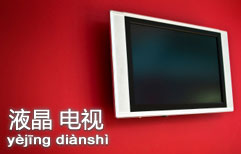

shanghaichangesMay 1, 2014
I'm glad I bought a cheap plasma TV, I spend much more time on the internet with VPN. Too much propaganda trash on each Chinese channel. I can't believe they're trying make a \"healthy\" version the Big Bang Theory. Rather than focusing on more \"healthy\" TV shows, they should be focusing on making more \"healthy\" air, food and environment.
我很高兴买了便宜的液晶电视,因为我用VPN上网比较多。中国电视频道有太多宣传垃圾。我真难相信他们准备一个“健康”种的Big Bang Theory. 而不是把重点农\"健康\"的电视节目,他们应该专注于“健康”的空气,菜和环境。
renatom100July 19, 2012
this is a very important lesson, could i have more explanations about zhe preposition?thanks folks

dubaobaoSeptember 13, 2011
Sorry to be so late (almost three years!) in catching up on lessons, but I couldn't help responding to Jenny's comment above of Nov. 4, 2008 (I'm referring to her third comment on that day) about the importance of TVs in early 改革开放 China.
That very topic is the subject of one of my favorite Chinese movies of that amazing period, "Ermo", or "二嫫", directed by 周哓文. The movie, released in 1994, is about a peasant wife whose sole obsession in life is owning a TV. Now that I am back in Beijing after several years and I see how thoroughly materialism has gripped China, I think it's fair to say that movie, more than any by far more famous directors such as Zhang Yimou or Chen Kaige, saw clearly where China was headed. It's a genuinely hilarious and touching movie. Also one which if shown today to Chinese people, would make them think hard about their headlong rush into the obsession with money over social good. Anyone stuck in today's typical Beijing traffic will have a lot to think about. Is it really worth it sitting in your own BMW if it takes 2 hours to get home? What if those resources had gone to building more subways and providing more buses, so your commute was only 30 minutes, and thus you could spend 3 more hours per day with family?...
At the current time, "Ermo" gets little notice, partly because Zhou Xiaowen has not had a successful career since then – not internationally anyway. But as film historians start to write more about that period without the influence of modern celebrity, I think the movie will gain more recognition.
Maybe it's also worth noting that I do see the lead actress, whose name in English is spelled (sometimes) A Li A (she's Mongolian, I believe), constantly on Chinese TV series. She seems to be doing well. She gives a fantastic performance in the movie.
The movie is very difficult to find on DVD, including here in China. Most people I ask, including my friends in the film business, have never heard of it. For those of you who are film buffs, it's worth keeping in mind. I think a DVD might be available in France.
Here's a wikipedia page about the movie, and for all I know, it is easily available, like all other movies, online in China.
https://en.wikipedia.org/wiki/Ermo
bolcseszbotondJuly 7, 2011
Please, is there anyone who could tell me the name of the music in the background? I have been searching for it since i was born ;)
Very nice podcast!



calicartelJanuary 11, 2009
Here a couple of words I looked up from the J&J dialogue, no guarantee:
常见 chang2 jian4 commonly seen / common / to see sth frequently
流行 liu2 xing2 to spread / popular / fashionable
照相机 zhao4 xiang4 ji1 camera
状态 zhuang4 tai4 state of affairs / state / mode / situation
提到 ti2 dao4 to mention / to raise (a subject) / to refer to
About LCD vs. plasma, I heard plasma TV had to be kept upright all the time so you can't buy one off-the-shelf to take home yourself. And you may have a problem when moving home. This is probably one of the reasons LCD is in the lead although there would be a size-related choice (big vs. very big).

doezeedoatsNovember 19, 2008
If you are really in the market for a big screen TV, it's good to maintain the distinction between plasma screen TVs and LCD screen TVs - 電漿電視 vs. 液晶電視 (电浆电视 vs. 液晶电视). I've heard that, for technical reasons, the really big screens are cheaper and better if they are plasma. The not-so-huge ones are cheaper and better if they are LCD. (In terms of 幾吋, according to one website: "Under 40 inches, LCD , Over 42 go for plasma TV")
danielchicago2November 17, 2008
hmm, then i'm not sure i understand. Where's the state in:
"My home?" Without knowing, she unconsciously pushed the bike forward a few steps. ?
I would understand if it was 'she didn't realise that she was unconsciously pushing the bike forward' as i can see where the state is.
Yours seems more like: 她把车子往前推. This is bad right?
Here's a more simple one, i think its got enough context:
"再遇到人,一定开口。" 他想着,抬眼望了望胡同里的灯。
"i must open my mouth if i meet another person" he was thinking as he lifted his eyes to the hutong light.
thanks for your help, I appreciate it.

pearltowerpeteNovember 16, 2008
Hi danielchicago2
It's tricky to translate these sentences without context. Even with context it's not easy. And while we basically know what 着 means in Chinese, sometimes we change it around a little to avoid Chinglish. But it looks like you did a pretty good job. Anyway, here are my suggestions:
1. "是车子坏了吧?" 一双一笑非笑细长眼睛望着他。
I think that this should actually be 似笑非笑, "smiling eyes." With that change, we can say:
"Your bike's broken, right?" A slender pair of eyes seemed to be smiling as they looked at him.
2: 他低着头,心里升起一线希望的光。
He lowered his head, and hope rose in his heart.
3: "我家?" 她没了主意,不觉推着车子往前走了几步。
"My home?" Without knowing, she unconsciously pushed the bike forward a few steps.
danielchicago2November 15, 2008
this has a nice explanation of 'zhe' representing a state. Sometimes its still a little tricky to fill in the blanks and translate a chinese sentence into English. For example how would you translate these:
1. "是车子坏了吧?" 一双一笑非笑细长眼睛望着他。
2. 他低着头,心里升起一线希望的光。
3. "我家?" 她没了主意,不觉推着车子往前走了几步。
I guess:
1. "has the bike broken?" a pair of thin slender eyes asked him.
2. as he raised his head, his heart....
3. "my house?", before she knew it she was pushing her bike..

bababardwanNovember 10, 2008
jackfrombelgium,
Well done.Was it the words at the bottom of the painting that gave it away? Otherwise it would be very difficult to work out if you don't know the characters.I believe there are some high tech tools out there that can scan Chinese and recognise characters.Is this a painting you own or something? Is there a story behind it?

jackfrombelgiumNovember 10, 2008
Hello,
After long searching I found the answer to my own question.
The picture says: 表晶酒楼
Biao3 jing1 jiu3 lou2
crystal palace
I have to congratulate myself.
Greetings.
Jack
suxiaoyaNovember 10, 2008
Hi Changye
Thank you, that makes sense.
However, it seems to me quite strange how 放 can be used in this way at all! To 'put' or 'release' something suggests to me that the object will only ever be in that state temporarily but, never mind, I do think I understand the use of 着 a bit more now!

changyeNovember 10, 2008
Hi su1xiao3ya3,
(A) 我的新液晶电视在那里放着。(B) 我新买的液晶电视放在那儿了。
I think that both basically mean the same thing. Very exactly speaking (?), their nuances might be a little different. The example (A) probably slightly emphasizes "continued state", and (B) emphasizes "I have just put it over there".
suxiaoyaNovember 10, 2008
Thanks, changye. So, it's not actually necessary to use 着 when emphasising a state is unchanging?
bababardwan, let's hope pearltowerpete shares his experience via podcast soon! My friends and I are currently training for the Shanghai half marathon, so my thoughts are all on running at the moment (when they're not on improving my awful Chinese, of course...)!
bababardwanNovember 10, 2008
su1xiao3ya3,
I've been asking about it here, but I think you might have more luck with b b b bad Pete.
suxiaoyaNovember 10, 2008
Thanks, Pete. That makes sense.
On another note, when do we get to hear about your latest marathon experience?!
pearltowerpeteNovember 9, 2008
Hi su1xiao3ya3
The sentence you are looking for is 我的心液晶电视在那里放着。
Since the TV is an inanimate object we shouldn't say that it is 站着。
tiaopidepiNovember 9, 2008
It seems to me that people either watch too much TV or proudly proclaim that they don't own one. I always think of alcohol when people tell me they don't own a TV: "Oh, I never ever drink!" I think I watch just enough TV but I also think I don't drink too much : )
The "boob" in "boob tube" doesn't refer to a breast. It refers to the first, and oldest definitions of the word: a boob is a stupid, boorish, awkward person. TV, it is commonly thought, makes you stupid. (But Bud makes you wiser, according to an old American kids' joke...)
Here's someone who is pretty stupid even though he doesn't watch much TV. He always watches shows with dogs or horses, though, and this is his favorite movie.
suxiaoyaNovember 9, 2008
Thank you for your very clear explanation of the usage of 'zhe', guys. I was never sure quite how to use it before.
Could you use 'zhe' to emphasise that a plasma TV, for example, is standing in the corner? Would you use the verb to stand?
'wo xin de yejing dianshi zai nali zhanzhe'
- Something like that???
Thanks!

marcucheNovember 9, 2008
I work in a company that supplies glass. Plasma and LCD-TV are two totally different technologies, and plasma is loosing out as their color fades over time and the cost of LCD-TV's is coming down. So please buy LCD-TVs as we don't sell as much glass to the plasma guys.
weibwoNovember 8, 2008
Plasma TV uses more energy than LCD TVs. It is recommended if you watch sports or nature shows that a Plasma TV is better. LCD blurs or loses some resolution when there is a lot of background movement.

jackfrombelgiumNovember 8, 2008
Hallo,
Can someone explain what is written on this picture?
pinyin
Thanks very much.

bababardwanNovember 7, 2008
jackfrombelgium,
No worries.But the funny thing is that I posted your photo above to show you that it could be done,and it was on the site and now it's gone.Oh well,it's your photo ,so if you want it reposted you should be able to do it now.Let me know if any problems.
changyeNovember 7, 2008
Hi John,
Thanks a lot for all the trouble, and I'm sorry for my insistent nitpicking, hehe. As you might know, 老人爱罗嗦啊! Have a nice weekend, guys. Thank you again.

JohnNovember 7, 2008
Hi all,
We have changed all instances of 液晶 (yèjīng) to LCD in the text of the dialogue and vocabulary sections.
Sorry for any LCD/plasma confusion!

jennyzhuNovember 6, 2008
siteng,
呢 can also be used to indicate something obvious. And an ongoing action is something unambivalent and obvious. That's why your teacher made the association. Chen Lei's example demonstrates this very well. Hope this helps.
bababardwanNovember 6, 2008
Jackfrombelgium,
If you want to know now how to post your photos on this discussion:
Find your photo on the website you've posted it on.Then right click on the photo.Go to properties and copy the url and note the dimensions.Next go here and click in on the symbol 2nd from right at the top of the dialogue box.There paste the url and enter the dimensions.

tvanNovember 6, 2008
yehuangyen, 10% off = 打九折; 30% off = 打七折; 50% off = 打五折. As you've probably surmised, in Chinese discounts are expressed as a percentage of the discounted price compared to the original price, using base 10. Thus 25% off = 打七点五折 or 7.5 out of 10. Also, price tags commonly omit the 打 character and use Arabic rather than Chinese numbers. So, for example, for 10% off instead of 打九折, you might see 9 折.
yehuangyenNovember 6, 2008
Hi,
I have a question:
20% off is 打八折
So , How do you say 10%, 30%, 50% , etc. ?
Thanks
Yehuangyen.
jackfrombelgiumNovember 6, 2008
Hallo,
Can someone give me the pinyin of the tekst on the picture below.
https://picasaweb.google.com/Jackfrombelgium/Chinese#
Thanks
Jack

chenleiNovember 6, 2008
It can be used in the way that your teacher has said. If you look at this sentence:
我正在听对话呢
Now, 正,在 and 呢 are all used in this sentence to convey that present continuous sense.... 'I am in the process of listening to the dialogue (right now). In theory what can happen is that you can use all 3, any combination of them or just one on their own to convey the same sense. (You will usually see one or both of 正 and 在 though.)
With regards to other meanings of 呢, it seems like your explanation covers most of it. It can be used at the end of a sentence to indicate "what about...." as well though, in case you didn't know.
I hope that helps.
si1teng2November 6, 2008
I have a question about the grammatical particle 'ne' in 这里写着呢。I was taught that it is used for emphasis, for an interrogative rhetorical effect, to pause, or perhaps to 'soften' the feel of the sentence. All dictionaries and textbooks I have checked agree with this.
However, one teacher insists that it indicates a present continuous sense. I have never found corroboration of this definition, and since I have great respect for this teacher, I am confused about what to think.
If Jenny, or our resident linguist, John, could shed light on this, I would be very grateful!
bababardwanNovember 6, 2008
jackfrombelgium,
I believe that you can't post photo's directly from your computer.I've not done this myself ,but I'm pretty sure you have to first put them on a website like picasa [ website address is https://picasa.google.com/] which is here or flickr [http://www.flickr.com/ ] which is here.Good luck.
jackfrombelgiumNovember 6, 2008
Hallo,
How can I insert an image from documents on my computer here?
Thanks.
Jack

kimiikNovember 6, 2008
In wikipedia, the blood plasma is 血浆
血浆是血液除去血细胞后的成分。血浆 (plasma)血液 (blood = plasma + blood cells)血细胞 (blood cells)
xuchenNovember 6, 2008
Punter888,Good advice on buying a TV, but I'm not so sure I want to add to the exsisting pollution of it just yet! And yes, those are the right characters!
punter888November 6, 2008
Separately, IMHO, the noise pollution from flat screen TV's is the bane of modern China. Lift lobbies, back seats of taxis, in the lifts, on the bus, waiting for the train, inside the rooms at the spa, next to the hot tub at the spa, even floating up/down the Bund. They are inescapable. The audio cacaphony from flat screen TV's in China is simply ubiquitious! 我受不了。。hehehe..are those the right characters?
punter888November 6, 2008
I just this morning met with a Chinese company that sells US$5bn of LCD/plasma screens every year. Chances are, they manufactured the screen you are looking at right now.
Up until June their average selling price was falling at a rate of about 5% per year. In the past couple months the bottom has fallen out of the market and the price decline has accelerated to 30%, and there is still huge inventory sitting around that needs to be offloaded. Bottom line, if you're buying a flat TV and sensitive to the price, better to wait for these abnormally large wholesale price declines to hit retail, as the impending drop will be steeper than the usual rate of decline.
chistudentNovember 5, 2008
I think getting the right definition is important here.
I agree with changye flatscreen TV (平板电视) can be either LCD TV (液晶电视)or Plasma TV(等离子电视).
(not the other way round as in the dialogue)
I think in the dialogue, the vendor should ask the buyer whether he would like to buy a flatscreen TV which could be either a LCD or Plasma TV. And from there CPod can then introduce the term 液晶电视 and 等离子电视 to clear the confusion.
Hi bababardwan, nice presentation. But could you explain more on the technical aspects. Thanks!

cassielinNovember 5, 2008
some related words for you!
频道pin2dao4=channel
音量yin1liang4=voice
遥控器yao2kong4qi4=remote control
屏幕ping2mu4=screen
按钮an4niu3=button
开kai1=on
关guan1=off
^_^
wxgcathyNovember 5, 2008
液晶显示器:Liquid Crystal Display,缩写为LCD
液--液体---liquid
晶--晶体---crystal
显示器---Display,monitor
液晶(显示器)= LCD
no brainer .
wxgcathyNovember 5, 2008
I don't think " 等离子电视“ 和” 液晶电视“ are being used imprecisely in China.
although ,it's true that a lot chinese may not know what they really mean.
but, in the store, salesperson definitely know what 等离子电视 and 液晶电视 are。and , likewise , the TV-shoppers need to know or would know the two different types of TV.
changyeNovember 5, 2008
Hi John,
According to the latest research result, plasma TV has only 10% and 20% shares of the flat-screen TV in Japan and the US respectively. And it seems that the same holds for the Chinese TV market. Please look at this news article titled “液晶电视市场占有率远大于等离子电视”. So I still don't think that defining “液晶电视” as “plasma TV” is appropriate.
http://www.2gosen.com/Html/dianshiji/dianshixinwen/2008/1/10514814.htm
bababardwanNovember 5, 2008
John,
In Australia I think you would hear LCD TV close to as much as you would hear Plasma TV.I don't know the exact market breakdown here ,but while I believe Plasma's are still market leaders ,I think there are nearly as many LCD TV's in the stores.Here the terms are not used interchangeably and everyone knows the difference.But I appreciate this may not be the case in all cultures;interesting.I'm wondering how long it's been since you've been back in the US [not that I'd know the story there] because these technologies change quickly [and here in Oz ,Plasma's came first ].
I didn't quite get the human plasma comment at the end of the podcast.Of course I know about plasma in blood ,but my Mandarin wasn't up to knowing whether that is what you were referring to or what you were saying.
changyeNovember 5, 2008
Hi John,
Thanks for your detailed explanation. In Japan, the term "plasma TV" is commonly used to distinguish it from "LCD TV". Haha, Japanese people are really particular about home electric appliances!
Judging from you comment, I think that Chinesepod should have defined "液晶电视" as "flatscreen TV" or something like that, because "液晶电视" doesn't always indicate "plasma TV" in China. Tks.
P/S. Gee, there is the Chinese term "平板电视" for "flatscreen TV"!!
JohnNovember 5, 2008
changye,
I think this is definitely a case of words being used imprecisely in different cultures. In China, you hear 液晶电视, but 等离子电视 is not at all common unless you're in a technical discussion with those in the know. In the U.S., I have heard "plasma TV" a lot, but rarely ever "LCD TV" (and other Americans, please correct me if I'm wrong). What you hear a lot is "flatscreen TV," which seems to encompass both plasma and LCD, but in fact refers to the outward appearance of the screen rather than the display technologies at work inside the screen.
So you're all definitely correct in pointing out some imprecision in our terminology, but I think this imprecision stems from corresponding imprecision in both Chinese and (American) English.
If other native speakers feel that LCD TV is a more natural translation, we can definitely change it, although I'm afraid it's a bit late to change the words we used in the podcast...
Translation issues aside, though, in Chinese, you're definitely best off using 液晶电视!

pearltowerpeteNovember 5, 2008
Hi kimiik,
No innuendo intended. Not this time, anyway.
But the point remains the same. If every TV in the planet suddenly split down the middle, this would be a smarter, freer, greener, and less fearful world.
aximumNovember 5, 2008
Television is a brain-washing machine, that's a great phrase! It's 14 years I don't see it... keep it smart use the keyboard!

daiziNovember 5, 2008
奥巴马总统:好听极了!一月份后不得继续不好意思地说,“我是美国人或用假話说,“我加拿大人”。
Ōbāmǎ zǒngtǒng:hǎotīnglíle! Yīyuè fèn hòu bùděi jìxù bùhǎoyìsi de shuō,“wǒ shì Měiguórén” huò yòng jiǎhuà shuō,“wǒ Jiānádà rén”.
jackfrombelgiumNovember 5, 2008
Hallo,
About "crystal"
How do you say or write "crystal palace"?
Thanks.
Jack

user28880November 5, 2008
Didn't mean to leave comment twice. There doesn't seem to be a way to delete my comment.
jennyzhuNovember 5, 2008
Tens of millions of us witnessed history on TV. Like Obama said in his victory speech, it's a victory of the people.

pinkjeansNovember 5, 2008
I think I'm all Chinesepodded out from my listening marathon trying to catch up after being away last week....I read "buying" as bù yìng 不硬。
chenleiNovember 5, 2008
I've just realised that reply may sound really patronising.
Sorry if it reads like that!!
changyeNovember 5, 2008
公司为了促销搞活动。
P/S. Hi chenlei, I should have read your post before posting my post, haha. It's too late.
chenleiNovember 5, 2008
lanshala
促销 comes from 促进销售 which is more literally to 'promote sales'
搞活动 if taken more literally would mean to hold an activity. 活动 is an activity, but in context this means to have a sale.
I suppose you could say
为了促销而搞活动 - promoting sales by having a sale.
(correct me if im wrong, but i think thats right.)
kimiikNovember 5, 2008
That's really funny to see the old north american slang "boob tube" used on a "chinese based" website to speak about flat TV in China. Is it a deliberate innuendo ? ;o)
changyeNovember 5, 2008
Hi Juriaan,
Thank you very much for your info. The situation is the same in Japan too. You need to know the difference between LCD TV and Plasma TV when you purchase a TV set at Akihabara, although I don't think that my old mother knows about this, hehe.
On the other hand, I suppose that the word "等离子" is a rather "big" word for ordinary Chinese people, especially for middle-aged or older adults, which might be the reason why 液晶电视 is sometimes used in the sense of 等离子电视, because of their similar appearance.
P/S. Look forward to Cpod admin's explanation!

JuriaanNovember 5, 2008
Changye,
In China, they probably mean LCD TV when they say LCD TV. To my knowledge, the same holds for Europe. Maybe ChinesePod mixed up LCD TV and Plasma TV. What about the USA?
thatguydanNovember 5, 2008
Speaking of TV's (or in my case my computer)... who else saw Obama speech as he become the new Preseident Elect? Woot, Woot!
oh yeah, and Chinese stuff, kung pao chicken, etc. etc.
changyeNovember 5, 2008
P/S.
But, in reality, both words might be used "interchangeably" among Chinese people.
On second thought, this is not a proper explanation. I should have said that, in reality, the word "液晶电视" might be often used in the sense of "等离子电视" among Chinese people.
大屏幕电视 (da4 ping2 mu4) a large-screen TV
cassielinNovember 4, 2008
John,
我觉得你说“看电视的确就是浪费时间”有点太绝对了!
这是一个度的问题!做任何事情一定要适度!
适当的看一些电视节目,例如新闻,采访之类的,可以了解时事动态,知道中国乃至世界的变化!
但是,如果过度沉迷于电视剧,那我同意你的观点,那是浪费时间!
bababardwanNovember 4, 2008
In answer to the intro's question: 1/2 x 0 =0.Just as well I don't intend to work off that formula to work out how much Chinese I'll be learning on CPod.
JohnNovember 4, 2008
mark,
I have a big-screen TV in my 1-year-old home (Chinese style), but my wife and I only use it for watching DVDs and playing PS2.
看电视的确就是浪费时间!
changyeNovember 4, 2008
Exactly (?) speaking, 液晶电视 (liquid crystal TV) and 等离子电视 (plasma TV) are two different things. But, in reality, both words might be used "interchangeably" among Chinese people.
离子 (li2 zi) ion等离子 (deng3 li2 zi) plasma超薄电视 (chao1 bo2) super thin-screen TV
bulaile2April 10, 2011
lí zi is electron not ion.
Ion is not the same thing as electron, but they are related. See wikipedia for details,
anyway Plasma is the flat screen TV's Betamax anyway so who cares :-P
posterboyApril 10, 2011
I am afraid you are wrong on that one. 离子 (lízǐ) does mean 'ion'.
An electron is 电子 (diànzǐ)
A negative ion is 负离子 (fùlízǐ).
A positive ion is 正离子 (zhènglízǐ).

jennyzhuNovember 4, 2008
misterjess,
That makes it a collector's item.
Much like how cars and houses represented the American dream in the 50's and 60's, TV sets (and appliances in general) defined the China dream beginning in the 80's when China set out on a fundamentally different new path. TV started to be adopted by households. But only those relatively well-to-do in big cities could afford it. And it cost a few months' salary. People used to gather in the home of a TV owner and watched TV together with genuine excitement, envy and hope that they would one day own a TV too. It's an emotional object.
macallus88November 4, 2008
lol. I don't have a Plasma, but I have a 55 inch Full HD TV. It's great for surfing Chinesepod on! :D

jennyzhuNovember 4, 2008
Until John brought it up, I've always thought upgrading TV sets was universal.
What did you notice in this lesson?
You are posting as a guest. Your reply is reviewed before it appears. Log in to post without review.