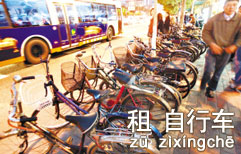

ericcjensenAugust 27, 2013
This is a good lesson for me as I plan to travel to China next month and rent some bikes. Hopefully "zu" will also be understood for renting a room, too. I know that is not correct but I am trying to get by with 'survival Chinese', haha. ;-)
One question I have refers to the examples in the expansion section. One of them reads, (sorry, no pinyin on my dad's computer),
niu rou zenme mai?
Which Chinese Pod translates to, "How much does beef cost?" To me, it seems like this should mean something a bit sillier, "How does one (do you) buy beef?"
I am used to hearing zenme in questions such as "huochezhan zenme zou?" and so forth.
Is there a difference between the beef-related question and asking,
Niu rou duo xiao qian?
This is what I have always used to ask prices, and I am wondering if there are any differences.
Xie xie da jia!
Eric
eupnea63355January 13, 2010
I've decided to tackle this lesson so I can mark it "studied." Since I knew most of the vocabulary, I looked for some extra to add to my flashcards.
Here's a list of bike-related vocabulary I found to add to my flashcards for this lesson. Many thanks to the original poster. (OP)
http://forum.wordreference.com/showthread.php?t=873112
bicycle and spare parts 自行车及零件 bicycle bell 自行车车铃 bicycle bottom bracket 自行车底架 bicycle brake 自行车刹车 bicycle chain lock 自行车链条锁 bicycle chain set 自行车全链盒 bicycle chain 自行车链条 bicycle chainwheel and crank 自行车链轮曲柄 bicycle dynamo 自行车发电机 bicycle ergomotor 自行车功量仪 bicycle expansion brake 自行车涨闸 bicycle external gear-shaft 自行车外变速器 bicycle frame 自行车架 bicycle freewheel 自行车飞轮 bicycle front fork lock 自行车前叉锁 bicycle front fork 自行车前叉 bicycle gloves 自行车手套 bicycle hand brake 自行车手闸 bicycle handle bar 自行车车把 bicycle handle grip 自行车把套 bicycle hub brake 自行车车轮闸 bicycle light 自行车灯 bicycle lock 自行车锁 bicycle luggage carrier 自行车行李架 bicycle maker's pliers 自行车钳 bicycle mudguard 自行车挡泥板 bicycle of plastic wheel 塑料轮自行车 bicycle parts production line 自行车零件生产线 bicycle pedal 自行车踏板 bicycle pump 自行车打气筒 bicycle rim 自行车钢圈 bicycle saddle 自行车鞍座 bicycle safety fork 自行车保险叉 bicycle spare parts and accessories 自行车零配件 bicycle spoke 自行车辐条 bicycle stand 自行车支架 bicycle steel ball 自行车钢珠 bicycle tire pump 自行车轮胎打气筒 bicycle tube 自行车内胎 bicycle tyre and tube 自行车内外胎 bicycle tyre 自行车外胎 bicycle wind accelerator 自行车风力增速器 bicycle wrench 自行车扳手
kaohsiungMay 18, 2009
我以前在加拿大以為多半臺灣人題腳踏車(自行車)來臺灣后發現臺灣人民都騎機車也不敢腳踏車因為路上的情況非常亂!可是最近用腳踏車越來越方便而且對你的身體好所以很多自行車機構建開始建立。
在中國大陸 最有名的自行車的名牌是什么?
這裡 美利達 跟 GIANT 銷路好
yuikocMay 15, 2009
Hello! I'm a college student studied in Shanghai . I'm now looking for a partner to help me improve my poor english . Of course , at the same time I can teach you the pure chinese as well.We can have a free talk once a week .Anything can be the topic.I believe it will be a good time.
If you are interested in my suggestion,please send me message and we can have a try.
I'm waiting for you .Sincerely!
urbandwellerMay 5, 2009
大家好!
For more BIKE related info go here:
Dear Amber - Bike Riding Rules and Living Quarters
https://chinesepod.com/lessons/bike-riding-rules-and-living-quarters/discussion
and here
Dear Amber - Skateboarding and Biking Across China
https://chinesepod.com/lessons/skateboarding-and-biking-across-china/discussion

zhangdaweiMay 4, 2009
No, I am also 大伟 like you. My Chinese surname is 张. Years ago my Chinese surname was 吴. I changed it because many Chinese people found the name funny for at least three reasons.

bodaweiMay 4, 2009
@zhangdawei
This is maybe a bit personal but is your name 蒋大为 - after the famous 60-something singer? Hope you don't mind me asking. I saw hi perform in Sydney a few years ago. (As one dawei to another - but I am 大伟.)
zhangdaweiMay 4, 2009
It seems ele. lessons are pretty easy for me but I wanted to listen to the ele. lesson for the sake of vocabulary enhancement. I didn't find any new words but I caught the little joke that the female speaker makes at the end.
The humor found in some if not many of the lessons is a big reason why I like chinese pod. There is nothing more satisfying to me than gaining knowledge and finding an little joke as well.
rui4xi1May 2, 2009
如果租一天五块所以: ru2 guo3 zu1 yi1 tian1 wu3 kuai4 suo3 yi3:If renting a bike for one day is 5 kuai, therefore:五块乘三百六十五天等于一千八百二十五块。:-)5 kuai4 x(cheng2) 365 tian1 =(deng3yu2) 1825kuai45 kuai multiplied by 365 days equals 1825kuai. 我觉得骑车对环境很好。wo3 jue2 de qi2 che1 dui4 huan2 jing4 hen3 hao3. I think that riding a bike in relation to the environment is very good!但是我不喜欢骑车在忙忙路。很怕!dan4 shi4 wo3 bu4 xi3 huan1 qi2 che1 zai4 mang2 mang lu4. hen3 pa2!But I don't like riding on the busy roads. It's scary!

jackfrombelgiumApril 30, 2009
Hi,
You have also zenme mai , for exemple葡萄怎么卖?putao zenme mai?See lesson elementary 0413 How is this sold?
Jack

kaixin_in_tampaApril 30, 2009
Nǐ hǎo, great dialogue.
In this lesson we used "zěnme zū?" meaning "how much does it cost to rent?" Is there any other instance in which the word:zěnmeis used to ask how much/many?For "how?" as in "how many?" we usually say "duō shǎo...?", i.e., "duō shǎo qiān?" (how much money?), "duō shǎo qì chē?" (how many cars?), etc. and for "how?" as in "how to...?" we typically use "zěnme...?", i.e., "zěnme qù?" (how to go?) or "zěnme shuō?" (how to say?).Here we are using "zěnme" to ask how much, which I had not seen before. Is this unique to the word "zū" or are there other cases? Xiè xie.Carlos

miantiaoApril 30, 2009
@sushan
呵呵,mum's the word!
you wouldn't believe what the same women at nine holes bridge sell by nite! ......咋卖?not that i partake in such dubious nocturnal activities, but have been accosted several times on my way home from said district after a nite out.
sushanApril 29, 2009
Was trying not to make my post an ad for hot bikes, but yes, that is the place : )
miantiaoApril 29, 2009
@sushan
好像无论用啥方法来锁好车,除了在停车场有人看好车外,车到底要被偷走了。你说的那个地方是不是九眼桥?我在那买过了自行车。 我买过的自行车已经三次了,都被偷了。
hao3xiang4wu2lun4yong4sha1fang1fa3lai2suo3hao3che1, chu2lezai4ting2che1chang3you3ren2kan1hao3che1wai4,che1dao4di3yao4bei4tou1zou3le.
ni3shuo1dena4gedi4fang1shi4bu2shi1jiu3yan3qiao2?
wo3zai4na4mai3guo4lezi4xing2che1. wo3mai3guo4dezi4xing2che1yi3jing1san3ci4le,dou1bei4tou1zou4le.
it seems that apart from using a bike parking lot where there are poeple to watch over it, no matter what method you use to lock up your bike in the end it'll get stolen.
is the place you mentioned nine holes(eyes) bridge? i've bought a bike from there before. i've bought three bikes before and they have all been stolen。

sushanApril 29, 2009
To prevent theft, I would bring a good bike lock from my home country so that it is unfamilar to thieves. One foreign friend's bike was left untouched while his classmate's was scoffed for this reason.
In Chengdu, and I would expect elsewhere in China, stolen bikes are a huge racket. Know one place in town where women sitting on the curb mutter '买自行车?' when you pass by. And I hear if you follow them they will take you to some concealed place while someone else stands guard outside.

wsrbro01April 29, 2009
Thanks everybody for the quick responses and helpful explanations. I have a clearer way of thinking about that phrase now. I was just wondering, would it be good Chinese to also say "租自行车多少钱?", or does that sound clumsy, like something a foreigner might say?
Thanks again, everybody.
billbagApril 29, 2009
last time we were in beijing I wanted to rent a bike and go riding with my wife, we saw many bike rentals, but was reluctant when she told me she had over 15 bikes stolen growing up.
天哪!!!good heavens!!!
:)
jiantingApril 29, 2009
Once you have rented it, how to ask yourself:
How much time is left?
How much time before it is due back?
Also, can you apply the word 租 to a parking meter, where you are basically renting a parking space?
Xie4 xie4 !


light487April 29, 2009
Something to do with taxes maybe? I'm just guessing.. but that would make a little bit of sense if taxes were done using grains of rice as a unit of currency when the character was formed?
bodaweiApril 29, 2009
在杭州我从未祖过自行车可是我租画舫了。。 zai Hangzhou wo congwei zu guo zixingche keshi wo zu huafang le. In Hangzhou I never rented a bike but I did rent boats (for viewing the lake). 我有自行车一年左右, 新的买价一切包括在内的是两百块钱。 I bought a bike and kept it for about a year - it cost 200RMB new, all inclusive (lock, basket).
Anyone know why there is a 和 he2 (grain) radical with 租 zu?

zhenlijiangApril 29, 2009
自行车怎么租? --the english translation provided is "how much are bike rentals"? because that's how we would speak in natural english, to get the same info you want out of the vendor. (of course since you're not buying the bicycle you don't say 自行车多少钱?)
i think actually the way ken and jenny explained this usage of 怎么 in the lesson could be a bit confusing.
when you ask 怎么租? what you're doing is asking the rental terms, which include of course how much it will cost. for me anyway it does make a lot of sense to think of it literally = how are these bicycles rented? and you get the terms: 2kuai/hr; 5kuai/day.
as changye says, 怎么卖?(lit. how are you selling these?) is used at stores. i learned it in a tea-purchasing context so it was easy to understand. nobody buys a tea leaf. so after tasting maybe, you can ask the shopkeeper 怎么卖? and they tell you 40kuai/50克kè (grams), 150kuai/1斤jīn (500 grams) or whatever. you're asking actually two things--you sell by the XX?, and how much per XX?
therefore i don't think you would ever ask 怎么卖? for items you buy individually.
hope this makes sense!

changyeApril 28, 2009
Hi wsrbro01
"怎么租?" virtually means "how much are rentals?" in Chinese conversation, but at the same time, it also connotes "How is it rented?", as miantiao explained above. The same goes for the phrase "怎么卖?" (How much is it?). This phrase is often used when buying, for example, meat and vegetables at a market, but not so often used when you buy electric appliances at a department store.
miantiaoApril 28, 2009
@wsrbro
自行车怎么租 refers to how the bike is rented. is it rented by the hour/day/second etc

tvanApril 28, 2009
wsrbro01, your translation makes sense to me as well as to a couple of overseas Chinese sorts. However, that may not be an accurate reflection of 大陆/Dàlù nuances.
Not much help I'm afraid; maybe a mainlander and/or Cpod staffer can rescue us.
wsrbro01April 28, 2009
In the dialog, the first line is, "自行车怎么租?Zìxíngchē zěnme zū?", and has been translated as, "How much are bike rentals?"
I would have translated this as, "How do you rent bikes?", which doesn't really make sense. I’m confused as to how you get “how much” from “怎么租”. I need help, please.
changyeApril 28, 2009
租 (rent) 我租了他的汽车。租 (rent~out) 我把这辆汽车租给他了。
借 (borrow) 我跟他借了一本书。借 (lend) 我把这本书借给他了。

panda2 / Panda BeerApril 28, 2009
To own a bike in China you need to buy a lock and chain worth 10 times the cost of the bike if you want to keep the bike!! I have "lost " two so far the third was just saved the chai and lock had gone but the borrower! was also gone whe I got there!!
Riding a bike is no big deal just ride as if there are no rules and think every one is out to kill you !!
It keeps you fit and is faster than a car in heay traffic
light487April 28, 2009
I've also heard that for larger amounts, yuan2 is often used. However I have to agree with xiaoluoyu that based on my own experiences in all the different cities I went to, kuai4 was the most commonly used term for money. The only times I remember hearing the term yuan2 used is when the hostel staff were talking to people who didn't understand Chinese, so as not to confuse them and also on a few occasions where the person I was dealing with wasn't aware, up until that point, that I spoke Chinese. Given that is more formal and used for larger amounts, I would expect that bank clerks might also use the term yuan2.
The moral of the story is to use kuai4 when you are talking with native Chinese speakers and yuan for everyone else.. :)
I would never rent a bike in the city though.. have you seen how crazy the traffic is??? :) C-R-A-Z-E-E!! :)
luoyuApril 27, 2009
@dec1980
块(kuai4) is mainly used in spoken language, while
元(yuan2) is kind of more formal and often used in written language. Anyway you can also use it in your 口语(kou3yu3)
加油! 天天向上!

jennyzhuApril 27, 2009
tucsonmichael,
Deposit is 押金/ya1 jin1. Yes, it tends to be quite hefty in China.
jennyzhuApril 27, 2009
Suburbanite,
Electrical bike is 电动自行车/dian4 dong4 zi4 xing2 che1. 电动means 'powered by electricity'.
Folding bike is 折叠自行车/zhe2 die2 zi4 xing2 che1. 折叠 means to 'fold'.

dec1980April 27, 2009
well according to the guys on the recording, chinese people say yuan or kuai instead of rmb, which is only used by tourists.

tucsonmichaelApril 27, 2009
Although rental prices in Hangzhou are quite low, I remember the deposit fee for me being around 300 kuai4 块. Was that just because I was a foreigner? How do you say "rental deposit"? ya1zu1? 押租?
suburbaniteApril 27, 2009
How do we say the following:
electric bicycle? 电行车 (dian4 hong2 che1)?
folding bicycle? (the Dahon bikes that fold up)

What did you notice in this lesson?
You are posting as a guest. Your reply is reviewed before it appears. Log in to post without review.