




dwfndleyMay 29, 2011
I AM SO HAPPY YOU GOT RID OF THIS ANNOYING GUYS' VOICE I'M SURE HE'S A NICE GUY BUT OH-MY-GOODNESS HE'S SO ANNOYING TO LISTEN TO
besides who in china talks like that?

babyeggplantMay 29, 2011
Annoying? If you're talking about who I think you are, I'm pretty sure he's a fav around here.

pretzellogicFebruary 24, 2011
in the sentence, 怪不得取不到媳妇儿, why is xifur in the sentence at all, since qǔbudào is translated in the popup as 'unable to find a wife'? Thanks.

bababardwanFebruary 25, 2011
pretz mate,
I reckon this is where you need to start ditching the popups where possible....they're just a guide. Sure it means unable to find a wife, but wife is implied and not actually stated in that expression [as qu is the verb used for selecting/finding a wife], so it doesn't seem to be redundant to follow it with a word for wife. I guess the other thing is you can likely qu other things..it just means fetch etc. The usual caveat of just going with gut feeling here for what it's worth.
pretzellogicFebruary 25, 2011
Hey baba, at the end of the day, my gut feel is what i've been doing all along; I just figured I would check in with others on these kinds of things as an experiment. I thought it was redundant to say wife, but you brought up a good question I had about what other words can you use qu3budao with. My guts would have said ony finding a wife, but i'm not sure.
bababardwanFebruary 25, 2011
pretz,
I wrote that post in a hurry between tasks and was not entirely happy with how I couched it. I'm just glad we're good enough mates that you know I was trying to be helpful and just give you the way I look at it and haven't taken it the wrong way. It's a good question though and worth asking and I'd encourage you to keep asking such questions. I also hope you get a more insightful answer than mine from someone who actually knows the answer, hehe.
pretzellogicFebruary 25, 2011
not a problem dude, I was ok with what you said. Hopefully you are ok with how I said what I was saying. I'm up late my time zone, so who knows what's coming out of my fingers :-)
bababardwanFebruary 25, 2011
hehe, yeah I know the feeling. Yeah, no [see] ..no I was thinking that before I saw your reply. I knew you'd be cool. [dude]
pretzellogicFebruary 25, 2011
I tried saying "mate" because its cool and friendly, but then I end up putting on the Australian accent, and sound like Crocodile Dundee or Steve Irwin (or a bad Americanized version of them) and then I think every Australian is going to think i'm making fun of them, so I refrain.
bababardwanFebruary 25, 2011
haha, I'd love to hear that accent mate. I enjoy that sort of thing am not one to groan at a poor attempt. Give it a shot...I wouldn't think you're making fun but you can make fun if you like. We don't take ourselves too seriously. It does raise an interesting point though for we foreign learners of Chinese. What can we and what can't we get away with saying in Chinese? What is just going to sound weird/ unnatural coming from a non native? Can we go around calling locals 哥们儿 for example? You've given me this as an idea for a separate post.
toianwFebruary 27, 2011
Hi pretzellogic,
Note the correct verb is 娶 and not 取。This 娶 is a special verb meaning to take/get a wife / get married. But both 娶 and 取 are pronounced qu3, so baba's explanation above is valid.
Another way to think of it is that 娶 is just the verb that collocates with 媳妇儿 if you want to say "get a wife", so when you put them together you get 娶媳妇儿 (to get/take a wife) or 娶不到媳妇儿 (unable to get a wife).
I guess there are plenty of things you could 取不到. For example, if your bank card wasn't working you'd 取不到钱。
pretzellogicFebruary 27, 2011
thanks. Blame this error on my bad eyesight, and limited familiarity with using this Windows Chinese character writing app.
but I guess part of a question that I didn't ask, is 娶 usable with other things, or just wives?

byronmeinerthDecember 1, 2012
So true! I like playing around with local variations and slang and generally think we take ourselves to seriously if we start feeling like there's language we shouldn't use. (I'm not talking about swear words and the like, which is a different discussion.) If I hear an Aussie say "dude" instead of "mate", I think there's something cool and endearing about it. It shows a bit of cultural literacy, as well.
pretzellogicFebruary 23, 2011
Is the translation for 可 kè, short for 可是 kèshī in the sentence 可我才骑了五分钟。。。, "but"? In the dialogue, its' translated as "that's not such a big deal".
toianwFebruary 23, 2011
Hi pretzellogic,
"that's not such a big deal" is the translation of the phrase immediately before "这就算了"
bababardwanFebruary 23, 2011
good question pretz. As toianw has pointed out that was the translation for the preceding phrase, the translation for the phrase in question was given as:
"but then after riding it for 5 minutes"
..so this has treated it as a 可是 or but [which seems to make the most sense]
..but the rollover has it as "really" ...which I guess is just a default definition rather than being specifically applied here.

JasonSchFebruary 23, 2011
Hi guys,
That 可 should be understood as it is in the sentence-level translation (but). The 'really' pop-up, as Baba said, is just the default translation for 可 when it comes alone, and it slipped by.



giannisDecember 3, 2010
Shouldn't "娶不到" be "qǔbudào", not " qǔbudǎo"? Sorry, I don't mean to be the tone police.
I love: "喜新厌旧" One of my favorite expressions!

tvanNovember 29, 2010
A minor question on the character 踏. In the vocabulary section it lists the character's accent as 4th tone (i.e. Tà). In Nciku the character is listed as having a 1st tone accent. In MDGB it is listed as 4th tone.
Given what a mess my tones are, it doesn't really matter, but is this a multi-tone character or is Nciku just wrong?

azzoteNovember 29, 2010
Am I wrong or is there only one actor playing the dialogue ? I cannot depart the 2 voices.


bweedinNovember 26, 2010
請問一下,David/許洲(?)說:”非常tiě的兄弟“
哪個tiě? 是“鐵”嗎?


bweedinDecember 3, 2010
我小時候學過法語,但是我都忘了。我想學意大利語,因為在中國認識一些意大回來的中國人。
我也學過韓語,但是我發現了,同時學兩個東亞語言這麼複雜,真的受不了。

hiewhongliangNovember 23, 2010
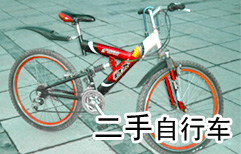
By coincidence I was talking to my teacher in my lesson on Monday about bikes. From my Malaysian Chinese vocab I am used to calling bicycles 脚车/Jiao3che1 or 脚踏车/jiao3ta4che1 , literally "leg mobiles". She pointed out to me the more accepted use of 自行车 in the mainland China. Anyone else with experience with the "leg mobile" usage? Wondering how widespread/limited it is.
hiewhongliangNovember 23, 2010
I have a friend who goes nuts because his daughter keeps buying really EXPENSIVE second-hand clothes. I think it is called "Vintage" fashion. Hmm... the power of branding!
zhenlijiangNovember 23, 2010
I enjoy vintage/used fashion, but buy only inexpensive, fun things like huge lavender-blue lamé flared pants from the 70s. I don't like taking fashion so seriously.
I was impressed by an article in the Financial Times magazine some years ago about "dress agencies". Yes, naming is everything! We have things called "recycle shops" in Japan and those many people wouldn't be caught browsing in, many are even embarrassed to be taking their used clothes there to sell. But oh a dress agency on some high-end shopping street of London now, that's entirely different. You can only wear a 名牌 gown once can you? And some beautiful designer coats--well they go out of season, after one season.
Both kinds of 二手 clothes are just castaways hoping to be picked up by someone else, but calling your shop a dress agency might encourage people who otherwise wouldn't be caught dead, to come in and take a look.
bweedinNovember 23, 2010
Some Chinese people thought it was really weird, going on disgusting that I bought second hand clothes.
Anyway, I like the duo of John and Xu Zhou. I look forward to hearing more lessons hosted by them.

JohnNovember 23, 2010
Yeah, I gotta say, you're not going to impress many Chinese people by telling them about all your vintage clothing. Ah, cultural differences...

jen_not_jennyNovember 23, 2010
I don't think you're going to impress many Chinese people by telling them about your secondhand ANYTHING!
It's funny, even expat culture varies from city to city...in Mexico, and also in Guangzhou, my expat friends and I would compete to see who could spend the least on stuff...not in Shangers!! I don't dare tell anyone how much I pay for my ghetto-fab anything! They'd laugh!
I agree with bweedin, too...John and David (Xu Zhou) make a great all-guy teaching team!

billNovember 25, 2010
While John and David do a great job here, I still prefer the Female+Male teaching teams. 为什么?The contrast in voice timbre is a better teaching tool for learning to hear the language.

dahouxiaohouNovember 23, 2010
hey great bike vocab -
can I ask, is 刹车 correct for brake as a noun and a verb?
thanks!


chonglangNovember 23, 2010
I have to say, I was in Tiashan last week and have a friend there who is into moutain bike riding. We had the best time! To get to the trail we had to ride through the streets during rush hour that was a little scarry but once on the trail we were having the time of our lives. One problem he speaks Tiashan so comucations was a little weird. But all in all great trip. BTW got great waves on Hainan Island (surfing on the east side of the island during typhoon seasion is great. If there is any other surfing china pod people out there and the locals speak Manderin and can surf really well and are not local butt heads!).....Thanks Tom....now back in San Francisco (Moss Beach Land of the Big Waves!)
byronmeinerthDecember 1, 2012
Tom, do you get back to China at all? I live in Nanjing now, but had some great surfing, bodysurfing, and paddleboarding down in Hainan with a couple buddies last winter - 日月灣 was the place, I believe. Nothing huge, but plenty of decent waves.


leftofcoolNovember 23, 2010
在美国,二手衣服也很流行。不过,不太便宜。 越来越时髦的。只是'hipsters'要买很贵很贵的二手衣服。比较奇怪的现象,可能是他们要让别的人觉得他们活得很低碳的生活?

lidiluNovember 23, 2010
David is so right about 二手房! I'm wondering if we can buy 二手房 in 二手货市场 in the near future.
rawleyNovember 23, 2010
A little inspiration from the famous Communicate in Chinese lessons ?
http://english.cntv.cn/program/learnchinese/20100524/101774.shtml
JohnNovember 23, 2010
Are you talking about the “除了铃儿不响,其他哪儿都响。” line? It's actually a pretty famous line. We didn't actually make it up, but neither did Communicate in Chinese!

bodaweiNovember 24, 2010
I think this is one of your funniest dialogues in quite some time.. had a good laugh thanks.
But this raises an interesting point .. if you didn't make this line up, shouldn't you attribute authorship? Or are you saying that it is so famous it's in the public domain? I don't think so; I'd not heard it before, and something 'famous' normally has an equally famous author's name beside it, or 'anon'.
toianwNovember 24, 2010
Hi bodawei,
I was also interested in where this phrase came from, and did a bit of digging around online. It seems to be attributed to a 相声 sketch by a guy called 侯宝林 which was performed on the CCTV Spring Festival gala in 1956. The sketch is called 夜行记 and I think the actual line was,
"反正除了铃儿不响,剩下哪儿都响".
bodaweiNovember 24, 2010
toianw
That is impressive research! I hope you didn't have to look through 50 + years of Spring Festival galas. :)
But thanks for the info - and the original line. Don't you hate it when you are mis-quoted?
JohnNovember 24, 2010
Wow, good work!
That's one of those things where everyone has heard the line, but no one knows what it's from. Now we do!
toianwNovember 24, 2010
ha ha - Now you mention it, I don't think the CCTV Spring Festival Gala goes back nearly that far. I think the first was in the early 80s, so just had another look. This was on a pre-recorded film called "春节晚会", perhaps a precursor to the modern-day version.
As for usage, 除了铃不响哪儿都响 seems to be quite commonly used as an adjective to describe an old bike - at least on the net.

tan1985November 22, 2010
This is my first time
bodaweiNovember 28, 2010
Not exactly, I thought I was being more clever than that. :)
First visit... first visit ... are you a 'newbie'?
Second visit ... second hand (reference to lesson)
I meant that they can't claim 'first time visit' when clearly it was a second post. The post could be said to be second hand.
I was just playing with the language.
What did you notice in this lesson?
You are posting as a guest. Your reply is reviewed before it appears. Log in to post without review.