

salvadorApril 10, 2012
Hi all,
When "A" says, "以前喝二锅头呗" towards the end of the dialog, what does the "呗" (bei) at the end mean? (It is not translated in the pop-up box.) Thanks,
Salvador


miantiaoFebruary 10, 2011
我也发现,白酒有另外作用,那就是可以把厕所弄痛了

bababardwanFebruary 10, 2011
诶,欢迎回到这里,好久不见啊!那,“可以把厕所弄痛了” 的意思是什么?可能意思是。。。厕所很臭,所以如果你喝白酒,以后你的嗅觉迟钝。。这个是不是你的意思? 或者弄其他的厕所痛【?便秘】
bababardwanFebruary 10, 2011
oh, wo diyici kandu ni de tiezi wo juede shi zhege yisi, danshi wo pengdao zhege ci "tong"...pain de yisi [xianzai wo cai ni keneng dacuo le] suoyi wo xiangxiang biede de yisi . xiexie ni de jieshi.

bababardwanFebruary 10, 2011
oh, na ta bushi xiansheng Aīdé, erqie ni bu hui shuo lǘchúnmǎzī
fanzheng, tingqilai "luanpao" biaoshi [zhītǐ yǔyán] ta de ganjue, hehe

bababardwanFebruary 10, 2011
Hey, this is really strange. Just above the lesson avatar there is now this ad for qzone.qq.com. It's not happening on another other CPod pages, or any other sites, but if I open a a second tab with this page on it, it's there again. And I swear I haven't touched a drop of this baijiu [or anything else, hehe]. Is anyone else seeing this?

tonymeadows100February 10, 2011
Aye - I can see it too, has someone hacked a freebie advert onto the CPod web site over CNY?

johnbFebruary 10, 2011
Yeah, I'm seeing it too. It's not really an advert -- it's says: "This photo is from QQ Spaces and is being used without authorization." I'll get rid of the offending photo.
johnbFebruary 10, 2011
Done. Sorry about that, and thanks much for the head's up.
I swear, though, if I ever drink anything that gives me QQ advert hallucinations, I'm giving up alcohol forever. :D

catherinemFebruary 10, 2011
This issue has been resolved. It was a problem of a photo posted, which had been copied from QQ. There was a problem with the HTML as it was copied, and that's why the image is in a funky fixed position. On top of that, the image belongs to QQ, hence the QQ warning message.
bababardwanFebruary 10, 2011
hehe, jiushi. meiwenti pengyou..wo zhi shi haoqi haiyou kuānwèi..tebie yinwei wo mei huànjué le

panda2 / Panda BeerFebruary 10, 2011
Baijui is no different to other distilled products you get what you pay for !!!.
I love a good price bottle with a good hotpot.
in fact with most meals. But be warned do not mix it with beer you will come unstuck very quick!!. The other good think is you do not get a hangover like you do with beer, but it will repeat on you all the next day
Ganbei !!! 干杯

brendaninausFebruary 9, 2011
I can remember my first experience with baijiu. On my first trip to Beijing I met up with a friend. She asked me what I want to drink and I said to her to give me something Chinese.
When I found it hard to get through the bottle I suggested she help me drink it and I got the "I'm allergic to alcohol" excuse.
user271828February 9, 2011
I have a question about 嘛. This example sentence was given in the podcast:
下雪嘛。外边很冷。
I'm still not clear on whether the first sentence is phonetically different than
下雪吗?
I know both 吗 and 嘛 are neutral tone. Are these two sentences homophonic (and therefore distinguishable only by context)? Or is there a difference in pronunciation? To me, it sounds like 嘛 is a little lower in tone than 吗.
Thanks!
lujiaojieFebruary 11, 2011
Here is a 请问:
https://chinesepod.com/lessons/ending-your-sentence-with-%E5%98%9B-%EF%BC%88ma

wotingyuFebruary 8, 2011
I've had both plenty of er guo tou and mao tai...can't discern enough of a difference to warrant the latter. Er guo tou and a couple of red bulls was formerly my thrifty fire up formula, but it put too many weird hairs on my arms and chest.
Mao tai seems like a decent hedge against inflation, however.

xiao_ma1119February 8, 2011
When I was in Shanghai staying with my girlfriend's parents, the father would come home for lunch, and we (he made me drink too) always had a cup or two of baijiu AND a big bottle of beer. I was left feeling fuzzy wuzzy while he would go back to work as if nothing happened.
I don't think it tastes bad, but I always make a face when I drink it.

cinnamonfernFebruary 8, 2011
Hmm, I just remembered something interesting from my trip. My friend's new in-laws gave her ginseng to take home to her parents. And her parents placed it in a large jug and poured a lot of baijiu around it - eventually resulting in a ginseng-infused baijiu.
Is it common to infuse baijiu with things? My friend's dad had an aneurism a few years ago and he's not completely recovered, so I assumed it was specifically to help him continue healing.

hyzhenhokFebruary 8, 2011
我习惯了喝白酒!
Another thing westerners might notice is the average Chinese's ability to hold their liquor. This past 年夜饭 I was being called 厉害 for drinking a few cups of baijiu, even though 我一点没喝醉.
Most 老外 I've met have stories about how easily they've drunk Chinese men under the table.
xiao_ma1119February 8, 2011
I've heard people from Yunnan can really hold their liquor. I've had a female classmate from drink me under the table, and I can hold my own with Russians (no offense).

bodaweiFebruary 8, 2011
'people from Yunnan' - might be a generalization that is hard to sustain, haha.
I believe that liver function is determined in part by genetics and the 三点又族 are not able to process alcohol (or fats surprisingly) as efficiently as Caucasians. Yunnan has a lot of ethnic groups other than the Han - they have a different genetically-determined capacity to process alcohol. (Just my theory).
bababardwanFebruary 8, 2011
gtr1400,
噢,这个二锅头的牌子:
价格:498 元
60度牛栏山至尊经典二锅头600ml

toianwFebruary 9, 2011
For those on a slightly tighter budget, you can also buy the stuff by the bag:
bababardwanFebruary 10, 2011
I'm wondering how you pour it...whether it has a tap on the other side like a wine cask [can't see one] , or maybe just meant to snip a corner with scissors for a very cheap approach. Thanks for the pic toianw.
toianwFebruary 10, 2011
Yes. Just snip off the corner and your good to go!
While we're at it, allow me to introduce you to beer in a bag:
toianwFebruary 11, 2011
啊,不是这样!你仔细看的话,能看到啤酒的泡沫。这就是青岛扎啤。是从啤酒桶直接往塑料袋里倒的。在青岛市很多便利店和小摊这样卖。一般用吸管喝,或者带回家倒入被子里。
bababardwanFebruary 11, 2011
oh, dui, wo cuo le, wo xianzai kan zǐxì, neng kandao. yi kan ni zuihou de zhaopian zai kan diyici zhaopian jiu zhidao le zhi shi pàomò [zai yingwen shuo...tou] ..momingqimiao! zhi shi zai suliao daizi !
bababardwanFebruary 11, 2011
对,啤酒被子:
http://ny-image2.etsy.com/il_fullxfull.15392286.jpg
无瓶:
http://ny-image3.etsy.com/il_fullxfull.15392403.jpg
不太容易用的。。得scull【在中文怎么说?】太快了
toianwFebruary 12, 2011
我没听说过这个scull的词语。好像是澳洲的说法。在网上我找到这个例句。真厉害!
"In 1954, Bob Hawke was immortalized by the Guinness Book of Records for sculling 2.5 pints of beer in 11 seconds. Bob later became the Prime Minister of Australia."
toianwFebruary 14, 2011
哦,我现在才记起来了。在斯堪的纳维亚的一些语言里"Schaal" 是 “Cheers!"的意思。比利时人也说 "schol"。(我觉得这是任何一种语言最重要的词语之一!)好像真的是源于维京人的语言。但据这个网页,你的骨头杯子的解释只是一个常见的误解而已。原来的意思就是“贝壳”或者“碗"
toianwFebruary 14, 2011
Interesting how this word crops up in the Australian vernacular, however. I'm pretty sure nobody uses it in the UK. Mysterious things, languages! I do recall coming across a lager called Skol though.
bababardwanFebruary 14, 2011
噢,这个网页同意:
http://wiki.answers.com/Q/Did_the_Vikings_use_skulls_to_drink_from
还有这个网页很有意思:
http://www.family-ancestry.co.uk/history/vikings/skull_cups/
不管是非对错,我现在还觉得可能这个神话是英文用法的Scull/Skol 的来源
gtr1400February 8, 2011
not all erguotou is cheap! there are some luxury brands that cost about the same as moutai!
gtr1400February 8, 2011
There are 2 types that I have tried that come in a ceramic bottle and a fancy box. One is made by the hong xing (red star) brand and the other I am not sure, it is a beautiful painted yellow ceramic bottle and comes in a polished wooden box with satin lining. It is the erguotou equal of XO. Similar flavour and strength to the garden variety erguotou but so so much smoother and better kougan!!

忠JaronFebruary 8, 2011
I got a couple questions.
Do people say "你想吃啥” or "我们想看啥”?and stuff like that.
and can you use this "喝起来才爽嘛”structure in other ways like:
"吃起来才爽嘛” and “还是去那边看看才爽嘛"
忠JaronFebruary 8, 2011
ok. i found out the answer to my second question is yes.
but about the 啥 question. i saw 啥 on mdbg stated as a dialect version of 什么. is this 啥 thing only used in the north or what?

JohnFebruary 8, 2011
It's not used exclusively in the north, but it's much more common there. In fact, in some places (like Dongbei), it might be the default word for "what" in spoken Chinese.

RJFebruary 7, 2011
Baijiu tastes a bit like diesel fuel. Thank God I didnt discover it when I was still young and dumb enough to enter into a contest, which baijiu always seems to be. SH doesnt have a big drinking culture, at least from what I have seen, but down south everyone drinks and the movers and shakers are rated by their maximum consumption. There is the 1 liter guy and the 1.5 liter guty etc. Oh, and definitely not just guys. Most Shanghainese drink 1/2 a beer and turn all red, not so down south, or up north either for that matter.

christineFebruary 7, 2011
is there a female equivalent of xiongdi (brothering someone, or treating them to a drink)
how would a gal say to a chap it's his turn to treat her, or to a girl to say to a girlfriend it's her turn to treat her???
:)
But on baijiu, I'm on the 'bu neng he jiu' strategy...

pretzellogicFebruary 7, 2011
At the risk of sounding sexist, I thought women said to each other, "girl, it's your turn to pay!" I expect enlightenment from others will come shortly.
I'd be careful around having guys treat a woman to "a drink", especially single guys in bars traveling in packs, or alone. Especially guys between the ages of 12 and dead.
christineFebruary 7, 2011
Good grief, I am thinking of friends who know each other well. Mostly, I'd like to say to others 'my turn to treat you!'
I reckon the dialogue phrase is a special guy buddy thing. :)
Yes, a friend of mine accepted a drink from a passenger on a plane, 'local tea' and next thing we found him wandering drugged in the arrivals lounge minus his hand luggage...
JohnFebruary 7, 2011
Well, logically 姐妹 should have the same meaning, but I don't think it gets used much. We'll have to ask the female native speakers when they get back from the break.

oranginaFebruary 8, 2011
I just say "我邀请你“... even if I didn't actually invite the person, sort of a retroactive invitation. Doesn't have the same connotation as "brothering", which would be good to know how to say, but it gets the job done.
(And yes, our 哥哥s around here are very protective and quick to point out the perils of interacting with men whether you need the advice or not.... ;-) bless'em.)
toianwFebruary 8, 2011
You can also just use 请 or 请客 to mean treat. Here's some examples from the ChinesePod collection.
lujiaojieFebruary 9, 2011
I think 闺蜜 guīmì can be a female equivalent of 兄弟。
I just say: 这次你请我吧!zhècì nǐ qǐng wǒ ba!
or 这次该你请客了。zhè cì gāi nǐ qǐngkè le.

bababardwanFebruary 7, 2011
So did this 啥 originally derive from squishing the sounds in 什么 into one syllable, or 啥?
。。。。and then, as it's 北方话 why not just tack on a 儿 to expand it back out to 2 characters...just for fun like.
bababardwanFebruary 7, 2011
"èrguōtóu 4th 1st 2nd.。。。kinda makes a pit" yeah, or a drinking vessel [as long as you're imagining the 1st tone written in the base position like it is over the guo at the start of this post, rather than than it's high position tone wise ]
toianwFebruary 7, 2011
he he - I imagine the stuff going down the throat, staying down there in the belly for a while and then at some point during the evening ....
JohnFebruary 7, 2011
As I understand it, yes, 啥 is 什么 "squished together."
The same is true of 咋 for 怎么, 甭 for 不用, and a few others.
bababardwanFebruary 11, 2011
thanks John, just added these to the contractions post here:
https://chinesepod.com/community/conversations/post/11016
aryehFebruary 7, 2011
reminds me of aquavite from my danish friends, confirm baijiu is a favorite of my male in-laws especially among the uncles when a game of mah jong starts up....at least they aren't driving anywhere.
user10196February 7, 2011
Ni hao! what is the difference between "women" and "zan"? schischi Jennifer

waiguorenFebruary 7, 2011
I recently asked this question as well! Apparently, people from the North prefer to say 咱们 (zánmen) and people from the South tend to say 我们 (wǒmen).
I personally haven't heard 咱们 used too much...

wangqiuFebruary 7, 2011
I live in Beijing and I hear both. The locals will use zan men....Though I hear wo men much more frequently because Beijing has a lot of people from other cities living and working here.....
bababardwanFebruary 7, 2011
I was under a different impression about the difference between 我们 and 咱们. Let's try a scenario and then hopefully someone will correct me. A father rocks up to the movies with his family and asks the ticket seller for x number of tickets for his family using 我们....something like " we'd like x tickets to see Despicable Me". Though he's speaking to the ticket seller, he's not referring to the ticket seller when he uses 我们 because the ticket sellers not off to the movies with them. But here's the thing. I think 我们 is pretty general and could include the person spoken to but in this case context makes it pretty clear the ticket sellers not joining them. What definitely could not be used in this context is 咱们 because 咱们 specifically includes the person being spoken to. However, to expand on the example, the ticket seller may remark that animated cartoons are great these days. The father may then say something like 咱们同意...meaning that he and the ticket seller agree on this point. Now I could also be wrong here, but I'm also under the impression that 咱们 seems to be used more commonly between 2 people talking referring to each other. Corrections please.
JohnFebruary 7, 2011
咱们 always includes the speaker as well as the person being spoken to.
我们 always includes the speaker, but may at times exclude the person being spoken to ("us, but not you").
The English pronouns "we" and "us" act like 我们; we don't have any common equivalent of 咱们 in English that I'm aware of.

podsterFebruary 8, 2011
I usually associate 咱们 with suggestions; "let's do this." Obviously the applications are broader, but this helps me remember that 咱们 is something I only use when addressing my group or counterpart who are/is included in what I am saying, not somebody to whom the suggestion does not apply. 咱们喝白酒吧! (said to my cronies.) 我们喝白酒。 (said to the waiter).

tingyunFebruary 8, 2011
And if you want to complete the triangle, 俺们an3men for 'we' not including the person being spoken to (actually, 俺 an3 can also be used alone for the plural in this meaning, and 咱 zan2 also can indicate the plural with or without 们). It's northern dialect (so you might want to restrict use accordingly), but it found its way into both 水浒传 and 红楼梦, so its got a good literary pedigree. ;) Though for some reason I'd feel odd using it...maybe because the big tough guys in all the costume dramas seem to use it.
bababardwanFebruary 11, 2011
“so its got a good literary pedigree”。。很好的留言
“Though for some reason I'd feel odd using it...maybe because the big tough guys in all the costume dramas seem to use it.”
。。哈哈,你有幽默感

cosgrovwFebruary 17, 2011
John,
Thanks for the description of 咱and 我们, it's puzzled me for years.
Bill
bababardwanFebruary 7, 2011
bababardwanFebruary 7, 2011
..according to this Wikipedia article:
https://en.wikipedia.org/wiki/Maotai
...at 30, it ranks 2nd in terms of market share, after 五粮液 at 45%, but it is still the brand used at State Banquets.
bababardwanFebruary 7, 2011
just read that its price was about 800 yuan, but could go as high as 1200 yuan. It's listed here in Brisbane as costing $180 AUD for a 500ml bottle which is about 900 yuan, but 天啊 the site says "Minimum order case of 12"
"Kweichow Moutai is the most revered of Chinese liquors. Primarily consumed as a celebratory drink, its aroma and taste are reminiscent of Soy Sauce, pear, walnut and almond."
waiguorenFebruary 7, 2011
不知道,但是我忘了什么时候在学了。 It was either here or in a Lonely Planet Guide...also, I may have written the characters incorrectly. 它的意思是 ‘You're not leaving 'til the bottle's empty'.
cinnamonfernFebruary 7, 2011
Ok - haven't listened to the lesson yet, but I'd heard lots of people saying that baijiu is the strongest and the worst stuff ever. So I avoided it. And I'm a girl, so I can get away with it - 不能喝酒 (bùnéng hējiǔ) - which is untrue, I just don't drink baijiu.
In then end, my friend's father-in-law asked me to drink some and I couldn't refuse anymore. I didn't 干杯 (gānbēi) it, and I only drank a few sips, but I didn't think it was too bad really - no worse than whiskey, and it had an interesting sweet or fruity aftertaste. At least it was alcoholic like it was supposed to be, unlike the 红酒 (hóngjiǔ) that tasted strangely like melted grape popsicles. :)
bababardwanFebruary 7, 2011
在谈到中国红葡萄酒,我最近看到它的预计产量在下个三年会超过澳大利亚的产量:
http://www.adelaidenow.com.au/business/china-takes-up-grog-at-alarming-rate/story-e6frede3-1226000829864

humanitad-chinaFebruary 11, 2011
我是一个美国人住在中国,所以我经常得喝中国白酒,啤酒,和葡萄酒。我自己觉得中国的啤酒和葡萄酒跟水似的。我最近在老挝和泰国认识好多澳大利亚人。他们都很能喝酒。他们,女的和男的,整天能喝酒。虽然澳大利亚人都不一样,但你有可能会觉得喝起来中国酒没感觉!你住在澳大利亚什么城市?
bababardwanFebruary 11, 2011
"我自己觉得中国的啤酒和葡萄酒跟水似的"
你的意思是。。you think Chinese beer and wine tastes like water 【所以你觉得喝起来没感觉】,对吧
我住在布里斯班,你呢【在中国你住在什么地方?。。而且在美国你从哪里来?】
humanitad-chinaFebruary 12, 2011
对啊。你看得懂我的意思。布里斯班我没听过,因为我对澳大利亚不太熟。我现在在安徽,黄山留学。在美国我住在乔治亚(亚特兰大的附近)。你听过黄山还是亚特兰大,没有?
bababardwanFebruary 12, 2011
当然我都听过。。。黄山是很有名的地方,而且在这里有一个黄山的课程:
https://chinesepod.com/lessons/yellow-mountain
。。你听过了那个课程吗? 如果是的,你觉得怎么样?
还有, 我小时候读乱世佳人。。很有名的故事。我也看看亚特兰大的噢运会。反正,就算我上面没有碰到我觉得我还听过
humanitad-chinaFebruary 12, 2011
那个黄山课程我学过。我觉得不错因为它教你很有用的生词。比如说,“迎客松” “缆车” “云海” ... 只有一点事...如果你不在黄山,你就没有机会用它们!你什么时候说,“你看!那就是迎客松!”? 什么时候说,“云海” ? 如果你快要去黄山了,这个课程非常有用也很准。
亚特兰大的奥运会开始的时候,我只是5岁的小孩子。我记得看奥运会的火炬,但是其他的记忆都没有!

markFebruary 7, 2011
I thought baijiu tasted really nasty and was probably best used for disinfecting blisters, until it occurred to me that saki has the same slightly moldy rice flavor. After that epiphinette, I viewed baijiu as, sort of, essense of saki. As such it seems to be a tolerable liquor. Conversely, if your feet have blisters after a day of exploring China, and you pour baijiu on them in the evening, you will be ready for your next adventure by morning.
JohnFebruary 7, 2011
Wow, "moldy rice flavor"?? Harsh! (I'm not a fan of "rice wine" either, though...)
brendaninausFebruary 9, 2011
I actully bought a 900mL bottle of baijiu to use as disinfectant before I left China on my first trip in 2005. I bought for about 10RMB on the buddhist island of Putuoshan. I don't think alcohol is in agreement with buddhism which is why it was so cheap. I still use it today.

urbadeFebruary 10, 2011
I had a case, where a taxi driver in Changchun put some Baijiu in the wiper water of his car to prevent it from freezing...
Whenever he was cleaning his windscreen a slight but distinct smell of Baijiu was in the taxi. I still don't like it ;-).
podsterFebruary 6, 2011
口感 would literally be "mouth feel" I suppose, which is actually a term in English, though technical jargon from the world of "foodies" and food scientists, I think. But from the context I think it just means "flavor" in this lesson. Can baijiu be differentiated by texture? I think beer could, but baijiu?
JohnFebruary 7, 2011
You're right; in this context it basically just means flavor. When you discuss baijiu, you can also talk about how "smooth" it is, or how much "bite" it has. The "bite" is often referred to as 辣, but you can use 口感 to discuss these sensations too.
bababardwanFebruary 6, 2011
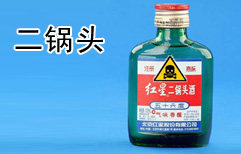
hehe, love the poison symbol on the lesson avatars bottle of 二锅头....obviously a joke
podsterFebruary 6, 2011
二锅头 = "two pot heads" ?
I think CPod is just being socially responsible by putting the poison symbol on. (Let's see if it stays).
bababardwanFebruary 6, 2011
顺便,这个"二锅头"牌子让我想起来英文表达“ two pot screamer", 所以我觉得这个牌子表示“二锅就scream your head off"
bababardwanFebruary 6, 2011
呵呵,很明显这个人物叫做“二毛”的名字是一个双关,差不多。。。“二”代表“二锅头”和“毛“代表”茅台的茅同音, 而且因此喝这些白酒,怪不得只有二毛【明显二锅头让别的毛爆炸】
这个“二毛”也提醒我一个漫画人物叫做“三毛”我最近发现
bababardwanFebruary 7, 2011
噢,这个:
你还记得不?
的“不”用法让我想起来跟Zhenlijiang讨论类似的结构在这里:
https://chinesepod.com/community/conversations/post/11244#comment-204205
那,是一个北方用法
dougwkimSeptember 2, 2011
二锅头真的太厉害的, 据说一般酒的alchoholcontent的几倍。 我的朋友在中国见面朋友的时候, 他只喝了一杯就喝不下去。。。人人都要小心一点儿。如果酒量不高的话, 可能变很危险
What did you notice in this lesson?
You are posting as a guest. Your reply is reviewed before it appears. Log in to post without review.