

xiaomai4January 8, 2013
Co-worker, sounds odd! In the UK we probably say colleagues I think...

richJanuary 8, 2013
And I, an American, often say the same thing about "colleague". It is often used in China by Chinese people when they speak English, though.

chrisJanuary 20, 2013
yep, this is a classic American English vs British English difference. My American colleagues always use co-worker. Whilst I've caught myself using math instead of maths and "zee" instead of "zed" recently, i don't think I'll ever use co-worker ;-)

RJJanuary 20, 2013
actually we use both colleague and co-worker in the US but colleague is usually used in academia or a more formal setting. Professors have colleagues while ditch diggers only have co-workers. Zed on the other hand is probably virtually unknown in the US and maths would mystify many.

chrisJanuary 20, 2013
Good point Shimao, I do also use workmate. Thinking about it some more, I would probably use 'colleague' in a more formal setting or when actually at work. If I'm having a drink with mates and was referring to somebody at work, I'd probably say workmate.
Right-WingnutJanuary 21, 2013
If you were out with friends and bumped into a workmate, would you introduce him by saying "This is my colleague/co-worker/workmate John"? I think I would be more likely to say "This is John. We work together". In this situation I think I would reserve 'my' for family members only. For example,"This is my (beeping) mother-in-law Beryl". (Names changes to protect the 'innocent'). I guess I would also say "This is my dentist Lok-Man", but I don't think I've ever run into my dentist while out.
When I think about it, I don't think the word 'colleague' has ever passed my lips.

mafanniJanuary 7, 2013
what are the grammar rules for 以后.
after a verb means 'after' and before a verb means 'in the future'?
trying to get my head wrapped around it, and what other 'after' adverbs (i.e. 之后 or 然后 ) follow the same rules? 谢了

verazxlJanuary 8, 2013
Please take a look at https://chinesepod.com/lessons/revisiting-before-and-after
以后 after a verb or sentence means 'after...' 下班以后=after work, 我去中国以后=after I went to China.
以后 before nothing, usually a comma, means 'in the future; from now on'
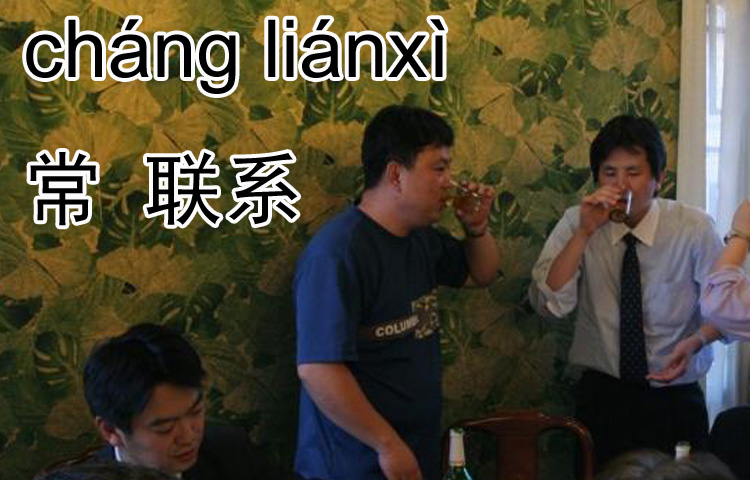
以后,我们常联系。Keep in touch in the future.

shanghai_heliosJanuary 7, 2013
Would a departing employee really admit not having found a job? Especially to a co-worker that is not close? I would expect that the person would say something vague like her or she was going to study, travel, or just take some time off.

ejrungeJanuary 7, 2013
This is not that unusual. The employment opportunities are more dynamic in China, evidently. We often have employees quit a good steady manufacturing job to work for a relative, start their own business, or go to a seemingly less prestigious position that pays more. I also find it odd that many seem to quit before they get their plans ironed out.
What did you notice in this lesson?
You are posting as a guest. Your reply is reviewed before it appears. Log in to post without review.