瞎子和跛子
tvan
May 16, 2010 at 10:06 PM posted in General DiscussionHere's a fairly well-known morality tale called The Blind Man and the Cripple. It was written for overseas Chinese and purchased years-ago in San Francisco's Chinatown. I've retyped the original text and the original translation. My contribution is that the Chinese is in traditional characters with annotations for simplified characters. If you spot any typos, please leave a comment, and I'll fix it/them.
BTW this is written for third graders...

bababardwan
May 19, 2010 at 07:40 AM
哈哈,我同意。。我觉得同样的,不过:
http://zh.wikipedia.org/zh/OMD_%28%E6%A8%82%E5%9C%98%29

jen_not_jenny
May 19, 2010 at 07:38 AM
Ah, sorry, missed some of the follow-up banter there! ;)
Re: carrots....word on the street (quite literally, just asked a strawberry blonde expat friend of mine to take a random poll of native Chinese speakers) we've got one 咖啡色, one 金色 and, one "blonde!"
Remarkable.


bababardwan
May 19, 2010 at 07:04 AM
oh,sorry..thought you might have seen our convo here:
http://chinesepod.com/community/conversations/post/5240#comment-177416
...was just joshing of course, though perhaps xiaoliang has come post my 胡说 founder days,so may not have realised what I´m like, hehe. ;)
ps I think you meant to say 西北,对吧?
bababardwan
May 19, 2010 at 06:57 AM
真,
你真聪明,you don't miss a trick 【怎么说在中文?】,对,我错了,你说的对了,我颠倒那些小屁孩群电影。我喜欢简单脑子歌“你别忘记我”从“早饭俱乐部”电影。
我还喜欢夜半行军乐团的歌“如果你离开”和迷幻药皮草歌“漂亮在粉红色”从电影的名字一样的 【呵呵,最后是这么难中文】
jen_not_jenny
May 19, 2010 at 06:52 AM
Wait, my avatar looks Chinese? And what does xiao_liang have to do with this? I'm so confused.
I would imagine there are at least some red-headed Chinese passport holders, though...the northeast of course has ethnic groups whose people tend towards more middle Eastern/European features.
We need someone on the ground in XinJiang!
bababardwan
May 19, 2010 at 06:28 AM
ok,so what would they call this hair colour:
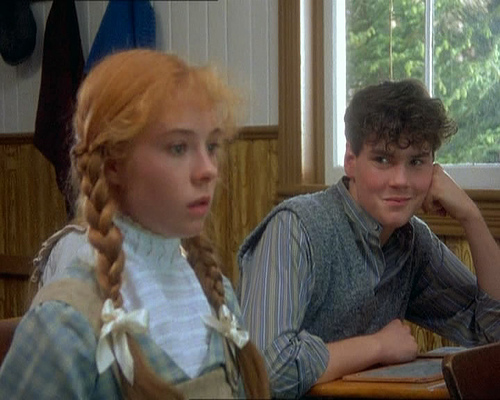
..I think this was just before Anne got called "carrots"
bababardwan
May 19, 2010 at 06:24 AM
oh,so you're not as Chinese as you look then. That xiaoliangs a sharp one. What else have you got thrown into the mix then?
The reason I was asking about hair colour is just for that reason..I've heard Chinese describe hair colour differently to westerners...for example what westerners call grey hair Chinese will call white hair. I think westerners description of hair is often not very accurate. I mean for example what is called red hair in many cases is much closer to orange.It'd be good to post some pics and see what Chinese would call the colour.
bababardwan
May 19, 2010 at 06:14 AM
噢,在这里:
http://maps.google.com.au/maps?hl=en&um=1&ie=UTF-8&q=gent+chinatown&fb=1&gl=au&hq=chinatown&hnear=gent&ei=en7zS5uVK42TkAWFtp27DQ&sa=X&oi=local_group&ct=image&resnum=1&ved=0CB4QtgMwAA
jen_not_jenny
May 19, 2010 at 06:07 AM
I had to ask an infinitely more Chinese person than I for the answer...conversation went something like this:
我:How would you call my hair color in Chinese? not 红色?丹色?
她:褐色
我:我的头发不褐色的啊!
她:但看起来褐色
Finally, grudgingly, she let me call it 栗子色.
酒红色 was also a suggestion, which I overruled.
tvan
May 19, 2010 at 03:16 AM
@tal, 哈哈,Yeah, and she was blonde and born in the famous Chinese town of Ghent!
@barbardwan, actually, it seems that I have heard brown-haired ( to my eyes) Chinese describe themselves as 红发. However, this is just one of my recollections from a conversation, nothing authoritative.
bababardwan
May 19, 2010 at 01:30 AM
jen not jenny has shown there are Chinese redheads [zenme shuo zai zhongwen?...hongse huozhe chengse?]

bababardwan
May 18, 2010 at 03:10 PM
oh I love that group mate....love the soundtrack of 漂亮在粉红色..didn't know they were studying 中文 though...well if it's good enough for them,then it's good enough for me. Hope they pump out some new material in 中文。
tvan
May 18, 2010 at 02:50 PM
So Tal, you don't like 繁體字?Well, as my grandmother always said (冷笑), "简体字 for simple minds." ;-)
tvan
May 17, 2010 at 06:32 PM
@orangina, every time I read one of these children's stories, I wind up with some kind of problem. In this story, most of it is pretty simple. However, one sentence gave me trouble:
...很快的逃出大火熊熊的破廟,兩個人總算都撿回一條命。
in the first part, 熊 is used as an adjective. However, it seems to be describing the temple/廟 rather than the conflagration/大火.
As for the second part, my parsing is, 兩個人/two men, 總算/at long last, 撿/ collected, 回/return, 一條/one, 命/their life.
Two men at long last collected return one life.... Obviously, I'm missing something.
bababardwan
May 31, 2010 at 11:03 AM
thanks zhen for 九死一生
..so interesting that 九 is the number used in this expression when in English we have the expression that cat's have nine lives. Can't help but wonder if it's mere coincidence or not.
zhenlijiang
May 20, 2010 at 07:26 AM
Thanks for that Jen. My J to C dictionary for 命拾い gives me 捡了条命,死里逃生(成),九死一生(成),侥幸未死.
zhenlijiang
May 19, 2010 at 08:42 AM
Thanks Tvan. Most Chinese children's books I've seen have such guides. Not that parents elsewhere aren't serious or selective about what sort of reading material their kids are first exposed to, but even the few times I've been in bookstores in SH esp. on weekends left me with the impression that Chinese parents of young children are intense! So I guess such guides (=promos) are necessary.
In a few years you can read the story again to your 孙子(孙女?)!
jen_not_jenny
May 19, 2010 at 05:46 AM
FWIW,my (occasionally useless) hover-over feature also gives the phrase 撿回一條命 as "a narrow escape."
tvan
May 19, 2010 at 03:27 AM
@zhenlijiang, actually, I just got home from work to the actual book. Per the cover, the Chinese version was first published in 1988 in Taiwan, then ported over to the U.S. for overseas Chinese in 1991.
The U.S. version includes an English-language parental guide. I won't repeat it all, but its gist is "'The Blind Man and the Cripple' makes it easy for children to readily grasp the importance of cooperation." Also, that it helps children "understand the hardships of those who are handicapped." A bit heavy-handed for us adults, but I used to read this story to my children in both Chinese and English.
tvan
May 18, 2010 at 06:21 PM
zhenlijiang, thanks for the Japanese expression. I was relying on a dictionary-based parsing which, as you just demonstrated, suffers from a lack of context.
The book was published in Taiwan and has an 1980's copyright. Both the Chinese and the English translation that I included came from the book. According to the advertising copy it's a Chinese legend, but I don't really know.
This web site still carries the book. http://www.childbook.com/ProductDetails.asp?ProductCode=A135
zhenlijiang
May 18, 2010 at 05:09 PM
Hi guys I haven't yet had the time to really study this story, but would like to butt in just long enough to say I think this 总算 is "just barely managed to ~", not really "at long last". 捡回--same thing I guess Orangina's saying. The two were as good as dead, but they recovered what they'd lost = their lives. We have in Japanese this expression 命拾いをする inochi-biroi wo suru, which means being in danger of death (both lit. and fig.) but to then have a narrow escape, or "miss being killed by a hairsbreadth". 捡 and 拾 both mean picking up something that was dropped or lost, but looking in my dictionary this 捡 seems to really have the sense of acquiring something you didn't work for, that you're maybe not necessarily deserving of.
Was this tale originally written in Chinese?
tvan
May 18, 2010 at 02:48 PM
@orangina, re: 熊熊 I think you're definitely right. I just don't understand the grammatical structure. I've got the common "older learner" problem of being too tied into my mother language's grammatical structure where the adverb generally precedes the adjective that it is modifying. I would have expected something along the lines of 熊熊的大火的...
I'm still working on the last part, though. The English translation, while it might convey the spirit of the story, doesn't seem to accurately reflect the meaning in Chinese; similar to another discussion going on in this group.
http://chinesepod.com/community/conversations/post/8875#comment-177599
orangina
May 18, 2010 at 04:11 AM
tvan, yes! these things are what I was talking about. But I haven't spent as much time with them so wasn't yet able to articulate what I found strange/difficult/new.
I think the adjective is not 熊熊,but 大火熊熊。So it is describing the temple, not the fire. The "fire engulfed temple" to be liberal about it.
For the second part, what do you think of "The two men got themselves together and returned to life." Not that they had died, but until they came up with their plan they were dead men. The piece of life they had left was forfeit.
orangina
May 17, 2010 at 04:02 PM
谢谢 tvan, great story! I will have to read that a few more times... It was a simple story, but there were some interesting word patterns there.
tvan
May 16, 2010 at 10:37 PM
@bababardwan, thx. As you know, doing these translations is a great study exercise. A nice productive way to spend a Sunday afternoon.
tvan
May 16, 2010 at 10:28 PM
BTW, here's the link. Borrowing a page from Zhenlijiang of Green Eggs and Ham fame, you need to select the English translation in order to view it.
bababardwan
May 16, 2010 at 10:27 PM
Hey thanks tvan,can't wait to read this one.I see it starts with our new/old friend 从前 so we're off to a nice start,hehe. It's great to see all these different presentation methods.Thanks for all the annotation...辛苦你了。The English is well hidden.I like your background into above ..who it was written for and the level it was aimed at.Well done mate. :)
Tal
May 18, 2010 at 02:44 AMGreat work tvan, thanks very much. I greatly admire your presentation, (except for the 繁体字 - lol,) I might just have to steal... err I mean use it for my own future efforts. ;)