
marcopolosrhinoDecember 28, 2011
ok, so this is an ancient lesson, but im busy racing through the ele lessons in prep for moving up to intermediate...
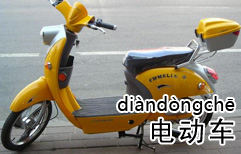
if anyone from the team's still monitoring, id like a little help with verb colloqations (sp.?) for different vehicles. I know 骑 works for both bikes and horses, but is that because they are not electric or motor powered, you kind of have to ride them yourself - correct or not? Would it be used for a 电动车?
also, I know 坐 is used for transportation such as buses and subways where we 'sit' and do not control the vehicle, and I was always told to use 开 for driving a car. Are the above correct, and are there any others I should be aware of?
Thanks in advance...if you're there!

lujiaojieDecember 29, 2011
Yes, you can say:
骑自行车 qí zìxíngchē
骑电动车 qí diàndòngchē
骑马 qímǎ
坐飞机 zuò fēijī
坐火车 zuò huǒchē
坐地铁 zuò dìtiě
坐公交车 zuò gōngjiāochē
and
开车 kāichē(for driving a car)
开飞机 kāi fēijī ( for driving an airplane)
marcopolosrhinoDecember 29, 2011
got it. so perhaps the simplest way to think of it is to use 骑 for things you sit ON and control, 开 for things you sit IN and control, and 坐 for transport you have no control over at all!

anonymous519113December 8, 2010
This is a pretty funny lesson. I love the tone of the girl's voice when she says: 那你想怎么样

alwingateDecember 4, 2010
Finally! A native speaker and a male voice. Thank you God. hehe
CPod just keeps on growing. I want a diandongche.

bennyboykDecember 4, 2010
I love my dian dong che!!! Just wish it went a little further without charging! :-S
skippyjonjonesDecember 3, 2010
So, How much is an electric bike in china? Duōshǎo qián yī diàndòngchē zài zhōngguó? We can pick up a nice on for under $2000 USD.

bodaweiDecember 3, 2010
A few years ago I used to see them starting new for around 2000 RMB. (Your US$2000 doesn't look so hot.)
But .. are you saying that you can buy them in the US? Can they be ridden legally on the streets?

lidiluDecember 4, 2010
It can be even cheaper than 1000 RMB but there's no guarantee of safety... A normal one costs around 2000 to 3000 i think.

light487December 4, 2010
You are up and about very late, Dilu :p what is it.. 11pm there.. on a Saturday?? :)
skippyjonjonesDecember 11, 2010
I live in a college town and we are able to use Vespa Motor bikes as well as mopeds. I have a friend who created a motorized mountain bike with his old electric and gas weed whacker. Thanks for your reply on my post! Peace!

geiwotangbaDecember 2, 2010
在南方什么角落都有些骑摩托车的人等着要带谁到什么地方,不过我最喜欢走路,省钱。
In the south, we have men on motor bikes on every corner waiting to pick anyone up to go anywhere. But, I really like walking...saves money too!
light487December 3, 2010
When I was in Hangzhou for the first time, it was also my first time to ride a bicycle (unpowered) in China. I found it to be a very empowering experience to ride around anywhere and everywhere instead of being forced to use buses or taxis, or walking etc. :) I would never ride a bicycle in Shanghai though.. lol.. well maybe not never.. but it's just too crazy :)
After riding all over the place in Hangzhou I can understand the desire to have an electric powered bike.. :)
geiwotangbaDecember 3, 2010
When I lived in America just a few months ago I would bike many miles a day just for some good exercise, but like you said, the big cities in China the drivers of motor bikes and cars, trucks are so crazy, it seems too dangerous to even walk on the sidewalk! So, I am afraid to use my American habits on the bike to get around in the city. the option of an electric bike is also out for me, as the school dorm I stay in does not have the recharging capabilities.

jennyzhuDecember 2, 2010
Glad you like the lesson! Oh, I have so many good and bad moments made permanent in the podcasts. An audio developmental diary I guess.

忠JaronDecember 1, 2010
Just found the easiest intermediate lesson i've ever heard on C Pod:
https://chinesepod.com/lessons/apartment-hunting
also maybe the first time i ever heard Jenny say
oky doky.
light487December 1, 2010
Haha.. yes. Having spent the last 3 years here at ChinesePOD (though I did take a break in the last 6 months), I always find it amazing to hear how much Jenny's English has improved in terms of using the little bits and pieces that make a native speaker sound native. For example, after my 6 month absence I noticed that Jenny now says "yup" and "nup" and "nope" a lot more now. :) :)
JiaYou Jenny, JiaYou! :)

paulinurusDecember 1, 2010
This lesson is sort of a re-make of the "Traffic Jam" lesson of December 2005.
https://chinesepod.com/lessons/the-traffic-jam
Comparing the two lessons I would say that the Traffic Jam lesson contains as much substance and vocab (probably more) than this lesson. Belated congrats to Jenny for landing the assignment of being a translator for the Terminator.

xiao_ma1119December 1, 2010
Hey guys! This is my first post! (was a little shy....)
Great lesson! Really learning a lot.
Question: What's the difference between 打的 and 打车 (from a previous ELE lesson)?
Keep up the good work!

jackfrombelgiumDecember 1, 2010
just the choice of words are different. "che " here means " taxi " so we say "da che", while at the same time , Chinese in Hong Kong and Taiwan call the taxi "dishi 的士" so i think why sometimes we call " dadi".
(I asked this to an Chinese friend and got this answer)
light487December 1, 2010
Could it also be more in line with a transliteration of the word "taxi" dadi.. kinda sounds like taxi in a way.. or am I reading too much into it? :)

JohnDecember 1, 2010
Glad you liked the lesson! Please keep asking questions.
As Jack says, there's no significant difference. It's kind of like "taxi" vs. "cab."

JasonSchDecember 8, 2010
It's from a transliteration/loan word, but not in Mandarin. The 的 in 打的 comes from the Cantonese 的士 (dīksí) which is a transliteration of the English 'taxi'.
paulinurusNovember 30, 2010
Good lesson... no new vocab for those of us who have studied Ele for a year, however pointing out the three different ways of making a suggestion is noteworthy.
username89November 30, 2010
interesting lesson. I liked it!
Where is the female speaker in the dialogue from?


catherinemNovember 30, 2010
His parents are Shanghainese but he grew up in Tianjin, so that's where his accent is from.
light487December 1, 2010
Heilongjiang.. is the river that separates China from Korea as far as I remember.. or something like that.. that's a pretty long river.. any more specific and you might actually say which city she is from :P hehe
His Tianjin accent is also why he is using the "er-hua" sounds but at the elementary level, we should be used that by now.. :)
catherinemDecember 1, 2010
In this context I meant the province. Her hometown is Mudanjiang (mu3dan1jiang1, 牡丹江).
light487December 1, 2010
Yay! :) Thanks! :) You know me.. need to know all the little details! :P Now I can look it up on the map and check it out :)
What did you notice in this lesson?
You are posting as a guest. Your reply is reviewed before it appears. Log in to post without review.