gracechen7874May 31, 2019
wow, chinese soup is very easy to make. this lesson also teach me how to cook, perfect.

tonybranigan168February 20, 2013
Some queries about translations in this lesson:
1. in the Supplementary Vocabulary, 开水 is translated as "to boil water". In the lesson, John says that it is a noun, meaning boiling or boiled water, and not a verb. Who's right?
2. the Expansion sentence 明天记得把你的护照带来。is translated as "Remember to take your passport with you tomorrow". Could it equally mean "bring"?
3. The Grammar sentence 你可以在这一站下车,然后去对面坐 is translated as "You can get off at this stop, and then get on on the other side". Woud a Chinese person readily understand 坐 as meaning "get on again" in this context, rather than "sit down"?

TomMangioneFebruary 22, 2013
1. John's correct. 开水 should be translated as 'boiled water' and not 'to boil water'. The entry in the Supplementary Vocab has been changed!
2. 带 could equally be translated as 'bring' in this sentence.
3. The meaning of 坐 in this sentence would be clear to a native speaker. The word 坐 can mean 'to sit' and 'to ride' (a bus, train, etc.) depending on the context. Since in the first clause of the sentence the speaker is talking about being able to get off at the next station, its pretty clear that sentence has something to do some kind of transportation transfer, so 'to ride' is a better fit than 'to sit'.
Thanks for your comments!

chrisJanuary 26, 2013
Lesson transcript being worked on here:
https://chinesepod.com/community/conversations/post/13332
Participate, view, ignore - the choice is yours.


nicolahill113January 23, 2013
I'd translate 烫 as blanch, rather than scald, or quickly boil, when used in a cookery instruction. Blanching is the process, particularly for vegetables, of removing starchiness by boiling for a very short time. For example beansprouts, only a few seconds; or green beans, a minute or so. It particularly applies when you are pre-cooking, ahead of, say, stir frying.
I've noticed lots of chinese recipes boiling pork ahead of cooking it with the flavour-giving vegetables and spices, though for bigger joints sometimes it's as long as 20 minutes!


JoachimJanuary 23, 2013
This might seem a strange question as it involves milk and other foreign stuff, but: Would Chinese drink a cereal or it eat?

mclartyJanuary 23, 2013
I too am curious what people who know this would say. But I'd guess (after many breakfasts in China) there is no standard usage for this, unless it is standard among workers in international hotels. Would people be likely to call our breakfast cereal "粥", zhou1, usually translated to English as congee?
The web uses ""吃粥" about half as often as ""喝粥".

sinbadJanuary 25, 2013
In Shanghai, cereal is gǔwù. zhōu is always congee... at least in Shanghai, and at least to my knowledge. :) They eat gǔwù, not drink it, although they might drink the milk, if they were ever to try such a crazy thing. ;) There is another word gǔ lèi, but I've never heard anybody use that one.
davidfongJanuary 25, 2013
Is that ’gǔwù‘ = 谷物? useful word for whenever I am next in a foreigner-oriented supermarket in China....


humalinJanuary 21, 2013
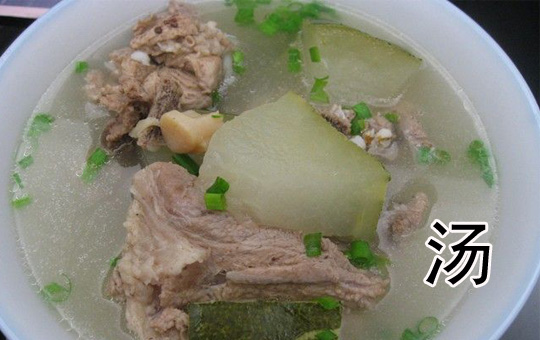
In Mexico we say "tomar sopa" => "drink soup". I thought it was the same in english... it seems I'm not only improving my chinese...
mclartyJanuary 21, 2013
A terrific Chinese take out by my university includes "soup or soda" with many orders. I never thought much about that. Plenty of restaurants offer soup or a salad. It is just a cholice. But one day the counter man said to a Chinese customer "你喝什么?" I realized soup and soda are not different things! They are both drinks.
florenciafengJanuary 21, 2013
Hi everybody!
Same with "icecream" right? In Argentina for example, we say "tomar helado" (tomar= drink). But in China they say 吃 冰淇淋 chī bīngqílín. But in Argentina, we do drink soup, not eat :)
Well, not so much of a relevant comment, but I wanted to say something before I dig into today´s lesson.
再见!

helzcurrahJanuary 22, 2013
I thought "tomar" meant "to have" rather than just meaning "to drink" (which would be "beber"). Therefore I didn't register it as being weird when I was learning Spanish. In English, you can "have" a drink or an ice cream, but only "drink" a drink!

RJJanuary 21, 2013
Evidently in China you can slurp, chomp, or drink your soup from the bowl, but whatever you do, dont blow on a spoonful to cool it off. Its rude. Anyone else have this experience, or was I just with a tough crowd?

helzcurrahJanuary 22, 2013
Haha, one of the first questions I asked my colleagues was whether it's ok to blow on my food to cool it. They just gave me a weird look and told me no-one would ever do that, so I don't think it's explicitly rude in Chinese culture.
I only asked, because they were eating noodles and asked me if I minded them "making noises" while they ate.
RJJanuary 22, 2013
Hmmm, the answer you got, that "no one would ever do that" kind of tells me its not exactly considered acceptable. Maybe rude is the wrong word here but evidently its not done, and by doing so you are considered odd. Are Americans the only ones impatient enough to gently blow on hot coffee or soup?
podsterJanuary 22, 2013
Have to agree with you here. I remember a tip I got on cross cultural issues from someone who told a story about a failed home stay by an exchange student. The student thought things were going great, while the host family eventually declared the situation intolerable. The straw that broke the camel's back was leaving a wet towel in the wrong place. But the student had actually asked if it was "okay" to do so. The solution? The student should have asked "where SHOULD I hang my towel?" rather than "is it okay if I put it here? " because in the culture of the host family they did not want to say "No, you can't do that." So when they said "uh, well, yeah, I guess you could put it there" the student heard "yes, that's perfectly fine" when in reality the host family was disgusted. So the moral is to ask "open-ended" questions.


guolanJanuary 21, 2013
I'm a little surprised/frightened by how little of the cooking vocabulary I understood on first listen! Yikes! Apparently, I've neglected increasing my cooking vocabulary just as much as I've neglected increasing my cooking skills!

hamshankJanuary 21, 2013
Wow... maybe an American English Vs British thing but I always say Drink Soup rather than eat soup...
I don't think I have ever had anyone ask me if I want to eat soup... but then again, I suppose it is less common to actually say eat or drink as people normally say things like "do you want some soup" or "I had some soup" etc...
adam_p_laxJanuary 21, 2013
North Americans always say "eat soup" or "have soup", so it must be an American vs. Brit English thing.
helzcurrahJanuary 21, 2013
For me, it depends how the soup is served. If it comes in a bowl with a spoon, then I "eat" it, but if it arrives in a cup then I "drink" it!
guolanJanuary 21, 2013
That is so interesting. You are British? I'm American. I didn't know anyone ever "drank" soup in English. I love learning how the English language differs from country to country! (And, state to state, within the USA...)
From now on when my Chinese students say "drink soup", I won't correct them; I'll just let them know that Americans and British folk say it differently.
JohnJanuary 21, 2013
Oops, sorry about that... I can't always be 100% clear on what's American English and what's universal English.

Right-WingnutJanuary 21, 2013
Wow, I've now found 2 areas where Australians side with Americans rather that the British.
1. Eat soup rather than drink (although perhaps I might 'drink' a mug of instant soup).
2. Britain has the public/private school idea back to front (at least by my concept of what public/private means).
I don't have time to list all the areas where Americans have it wrong
[Because of course Australian English is the standard :) ]
helzcurrahJanuary 22, 2013
I am British, and you're right. We do have public and private schools completely back to front!
I guess the soup I'm talking about "drinking" is an instant soup like Bovril, or Batchelors....
For "real" soup (I mean thick, creamy and with bits of meat and/or vegetable in it), we would always "eat" that.

waiguorenFebruary 16, 2013
I think another area Australians side with Americans is calling soccer 'soccer', as opposed to 'football'...

veronique21February 16, 2013
Sorry, Waiguoren, I did not understand who say football: American or Australian ?
bababardwanFebruary 16, 2013
Americans and Aussies both tend to say soccer. English and probably most other English speaking countries call it football.
What did you notice in this lesson?
You are posting as a guest. Your reply is reviewed before it appears. Log in to post without review.