cowenparkseattleJune 22, 2014
Can someone help me understand the grammar of this Expansion sentence? Thanks.
他熟练的操纵着机器。
tā shúliàn de cāozòng zhe jīqì。
He's someone experienced with operating machines.

bonscottAugust 31, 2014
Would someone from Chinese Pod please answer this.
I am also struggling with it. It particular, I am wondering if "zhe" is the correct Pinyin for 着.

earlsAugust 31, 2014
bonscott, I believe zhe is correct.
操纵着 (cāozòngzhe) = operating
An explanation of the aspect particle "着 zhe" can be found here:
http://resources.allsetlearning.com/chinese/grammar/Aspect_particle_%22zhe%22
bonscottAugust 31, 2014
Thanks earls. But I really would like a Chinese Pod teacher to explain the grammar of this particular sentence. I do believe I understand the use of 'zhe'. If that is not the issue, then I guess I don't understand the use of 的 in this sentence.

toianwSeptember 1, 2014
I think the 的 should be a 地 and the English translation should be something more like: "He operated the machine with great skill".

Fiona@ChinesePodSeptember 1, 2014
Hi all!
I believe that there are three main reasons this sentence can appear confusing - the translation, the use of 的/地 and the particle 着. Let me help break it down and hopefully it will help clarify some of the issues here. It’s a bit long, but I hope it helps :)
1) Translation:
I can see why this sentence can appear confusing due to the translation. I agree with toianw, in that I would have translated it differently. Here is what I would have done -
"He is skilfully operating the machine".
Skilful: 熟练 adjective
Skilfully: 熟练地 adverb (this then brings me onto my second point...)
2) 的/地/得:
As 熟练 is followed by the verb 操纵, toianw is right in saying that the correct character is 地. bonscott, in this case, we are further clarifying the verb 操纵 by adding a 地 to 熟练.
Now, the use of 的/地/得 is something that native speakers often don't distinguish between and frankly don't know how to. Even I have to stop and think about it sometimes. (I will ask for this to be corrected.)As a matter of fact, it is something my Mandarin students often use to impress their native friends with ;) Here is an outline of how it's used:
的 in front of nouns 晓明的帽子、可爱的婴儿
地 goes in front of verbs 慢慢地走、快快地跑、高兴地笑
得 goes after verbs 吓得脸色发青、笑得东倒西歪
3) 操纵着 :
the 着 in this sentence indicates that it is action is continuous. earls explanation is correct and the link is great.
Thanks so much to those that have contributed to this discussion. Peers often provided the best explanations and that’s what these forums are about.
Let me know if you have any further questions and please feel free to contact me at fiona@chinesepod.com
Fi :)
bonscottSeptember 1, 2014
Wow, Fiona, thanks for the detailed response.
I figured there was something wrong with the sentence, but I just couldn't get a handle on what.
The combination of that translation and the 的 really threw me.
It makes sense now - thanks again.

mikeinewshotSeptember 1, 2014
Thanks Fiona. You are a breath of fresh air.
The main problem was that the sentence was wrong. I agree that Mandarin learners often understand the difference between the 'de's' better than some native speakers. The same problem sometimes comes in English where native English speakers have never studied English grammar ...
earlsSeptember 1, 2014
Fiona, what a clear explanation! You are truly a great addition to the ChinesePod staff.

niceguyMay 3, 2014
I rarely even look at discussions anymore. I'm tired of hearing the same cry babies assaulting every lesson. Chinesepod rocks. There is nothing that even comes close.

anonymous519113May 12, 2014
I agree, Chinesepod is a great service, but we are customers and we should complain when something isn't right.
anonymous519113May 12, 2014
I'd just like to add, one reason that standards are slipping could be that there are so many new lessons all the time! I can't speak for everybody, but I think 2 new lessons per level each week should be plenty.
anonymous519113May 12, 2014
And if that's not enough for some people, how many lessons do customers expect? Maybe Chinesepod could do a customer survey?
adam_p_laxMay 12, 2014
I agree with you, if you they could reduce output and better organize the lessons they currently have into self study courses that would be better in my opinion

verazxlApril 30, 2014
Sorry for the vocabulary part. We should have been more careful. Thank you all for your suggestion. We have changed that part.
mikeinewshotApril 30, 2014
Thank you Vera. It's also reassuring when someone actually listens to the users. There are a number of other lessons which suffer with similar problems which have not been changed however.
I hope that 'being more careful' becomes part of Chinesepod process in the future.
mikeinewshotMay 1, 2014
Vera, sadly the latest 'intermediate' lesson - having dinner with a client suffers from the same problem.
VDragonUQApril 29, 2014
可惜了! Agree with mikeinewshot - there are growing quality control problems. In general, the quality of the translations into English has gotten increasingly shoddy. There are even wrongful translations from Chinese into English nowadays. A while back, I've stopped reporting them as usually, my emails are ignored, defensively \"explained,\" and even when admittedly wrong, not updated and corrected.
Well, perhaps ChinesePod unfortunately reached the tipping point of most for-profit enterprises - at first, quality, quality, and quality until reaching a profitable critical mass of customers. And then it just takes it easy and harvest the profits...perhaps eventually to sell it to another company...
But the good news is that my years with ChinesePod has helped raise my level where I can in fact discern the lazy translations...and use other tools to figure out the accurate translation.
adam_p_laxApril 29, 2014
well they already sold chinesepod to bigfoot ventures in 2012 which may partially explain the decline in quality and the major staff changes in recent years.
anonymous519113April 29, 2014
Well, that's disappointing. How do people rate the quality of other podcast services, such as Pop-up Chinese?
MatteoLovesPerlaApril 30, 2014
Pop-up Chinese... You might as well watch Chinese movies with commentators.

jennyzhuApril 28, 2014
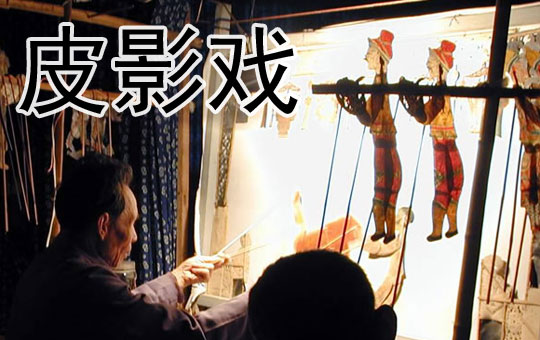
BTW, this lesson is inspired by one of the ChinesePod users who actually made a shadown play film. This lesson is for you.
kb042083April 28, 2014
Jenny, Shanell, Good lesson you two are becoming a team. this lesson helped my vanishing memory. I recall watching a movie about 10 years ago titled \" To Live\" directed by Zhang Yimou. the film is set in 1930's 1940's China and won several awards. I remember in the opening minutes of the movie there is A very clever piying xi shadow puppet scene. I think the entire movie can be viewed on utube now.

mikeinewshotApril 28, 2014
Am I being too critical if I point out that 纸板, zhǐ bǎn cardboard, does not appear in the vocabulary,nor does 什刹海; and that 人物 is given as 'person' rather than 'character'. Also with have 下 and 意思 in the vocabulary that really shouldn't need to be in an intermediate lesson.
I had once come to expect a very high level from Chinesepod, but I fear standards have slipped, as I find issues with virtually the vocabulary section of virtually all the lessons I look at.
You need a proof reader/reviewer - you could offer me the job - Just Kidding.
Incidentally Jenny used what I consider a very useful word which I have sought for some time - 语境 - context
adam_p_laxApril 28, 2014
thats its ridiculous to include those at intermediate level. It seems like recently they have been "dumbing" down the intermediate/upper intermediate level lessons. I hope this is not a long term trend.
mikeinewshotApril 28, 2014
I don't think it is deliberate. I suspect it is happening because of lack of quality control and oversight.
anonymous519113April 29, 2014
Yeah, I've noticed standards seem to be slipping, too. Sort it out guys! 加油!
bendobayJanuary 23, 2015
If only they were "dumbing down" upper intermediate. I am finding the transition extremely difficult. I have found the best approach is to go back to the earlier lessons when John was doing them (i.e., before they changed to the 2 native speaker rule). There should be enough lessons there to work as a real transition between intermediate and upper intermediate.
What did you notice in this lesson?
You are posting as a guest. Your reply is reviewed before it appears. Log in to post without review.