Relevant Content
We'll always make sure you know exactly what the lesson is about. You will easily understand whether it is relevant for you.

Too Heavy!

Great Hosts
Here at ChinesePod, all our lessons are presented in an entertaining manner by our great hosts. You'll find language learners, teachers, and even professors sharing their insights, ideas, and teaching methods in our video and audio lessons.
Brief Lesson Summaries
A brief introduction of the lesson will always tell you what this lesson is about and what language level is the intended target. If you're interested in the subject, but might not be able to understand it in full, fear not; we have transcripts of lesson dialogues vocabulary so you can follow along.
IN THIS LESSON
ID: 1107 Newbie
We at ChinesePod are always ready to give you a hand as you learn Mandarin. In today's lesson, learn how to share your burdens with a friend, all in Chinese!
Awesome Materials
Our lessons contain natural communication in Chinese in video and audio format. We have have lessons focused on video or a podcast format and our lessons have transcripts of Lesson Dialogues, Important Vocabulary, Expanded Materials for a deep dive into the lesson topic and Exercises focused on testing your retention.
Detailed Vocabulary
Each lesson has it's unique vocabulary and will provide you with definitions and recordings so you can practice the pronunciation. You will also be able to grasp the core material of a lesson at a glance. Here we're showing you the Simplified Chinese version.
SIMPLIFIED PINYIN ENGLISH  
我的 wǒ de my
包 bāo bag
太 tài too
重 zhòng heavy
我的包太重了!
wǒ de bāo tài zhòng le!
My bag is too heavy!
我拿吧!
wǒ ná ba!
I'll carry it!
好,给!
hǎo,gěi!
Great, here you go.
呃,真的很重!
è,zhēnde hěn zhòng!
Woah! It really is heavy!
Natural Dialogues
Each lesson is centered around a natural dialogue with key vocabulary directly prepared and translated for your use. You can also listen to each sentence as an individual recording to improve your listening and comprehension skills.
Try It For Free
ChinesePod is 100% Free to Try. Create an account today and get started!

Comments (49)

Discuss in the forum
X
xuchen
Be careful boys, I've seen more then a few boyfriends with purses that weight a TON.... and not by choice. 你的包比你重!! Your bag is heavier than you!!
pearltowerpete
As an American I am always secretly envious of my European friends with their mens' hand-bags. They keep your water, maps, books, and camera very handy. But as a 纯爷们儿 (chúnyéménr) I just can't make the leap.
matt_c
@xuchen - I know what you are saying there. When I go out, my wife often gets me to put her things in my bag, or if I have a coat with decent pockets I have to cary her over-stuffed purse-like-pouch-thingy in my pockets, totally ruining my coolness with bulges in the wrong places! Lol.
miantiao
pete We call them manbags back home. I'm not sure if this term is indigenous or whether it came from the US or UK
songyian
How would one say in Chinese-- messenger bags are bad for my back/spine? :)
songyian
messenger bag man bag?
miantiao
manbag 不知道中文怎么说. 我猜一下吧;爷们儿包?男子汉包?雄包?  
bababardwan
Perhaps the explanation as to why the 包真的是太重了[bag really is too heavy] lies here.
bababardwan
These guys look so comfortable and natural with their manbags:
miantiao
太有男人的味道!我要一个,今天去shaahping买个更漂亮的! 太搞笑这个啊!意大利队好像,呵呵。世界杯被他们枪了,就算上意大利演员对,太不像话了。
paulinurus
Last summer after a game of golf, we were at a Chinese restaurant having dinner with our golfing friends (a Chinese couple) when a young Chinese man walked in with his girlfriend/wife holding her handbag. After they've passed by, our Chinese friend's wife expressed her disapproval of the man carrying the handbag. Maybe this is cool with the younger generation?  bababarwan, haha! killer application! miantiao, 我去过意大利,有的男人一定带很漂亮的手提包!I;ve been to Italy and have seen some men carry really beautiful handbags.  
RJ
manbag? Does that come with guyliner for your eyes? :-)
changye
There are mainly two ways to say "heavy" in Chinese, one is 重 (zhong4), as shown in today's lesson, and other is 沉 (chen2), both of which are basically interchangeable when meaning something is physically heavy. 重 has a broader meaning than 沉, and it's also used for abstract things, like 病情很重 (the state of ilness is serious) and 很重的责任 (a heavy responsibility). The word "沉重", of course, means "heavy", and it's often used in abstract sense. 沉 is pronounced as "shen3" in the cases of a family name and the city 沈阳 (shen3yang2) in northeast China.
paulinurus
Hi Changye, Can 重 also be used as a verb meaning to weigh? Once I heard the owner of a Chinese take-out selling Emperor chicken saying just one word "zhong4" to the person at the counter and she weighed the chicken.  
L
lichunhuan1998
重sometimes is used in the case when you buy something need to be weighed, e.g.这袋土豆重20斤,and it is seldom in this case be used as a verb
changye
Sorry, correction. 沉 is pronounced as "shen3" in the cases of a family name and the city 沈阳 (shen3yang2) in northeast China. In my above post about 沉, I made a mistake in the last paragraph. 沉 (chen2, heavy) and 沈 (shen3) are two different characters in modern Chinese. Confusingly enough, 沉 is the simlified form of the traditional character 沈, which is still used in Taiwan and Japan. To make things more confusing, the simplified character 沈's counterpart in traditional ones is 瀋. So please just forget it, haha. Thanks for pointing that out, lichunhuan1998!
changye
Hi paurinurus 重 also has the meaning "weight" (noun), and it's used like 这个有几斤重? (How much does this weigh?). Probably the 重 you heard is an abbreviation of 有多重?.....(?) The transitive verb "weigh" can be translated as "称 (cheng1)" or "约 (yao1)", and they are often used like 称一下,称一称,约一下,or 约一约. "约 (yao1)" is a colloquial word.
matt_c
@rjberki rofl !!!
matthiask
I kinda like 重, as it is the really heavy variant of 中: Every possible position has an extra 一 stroke. At least, that's how I can remember it. ^_^
matt_c
@matthiask that's a really cool way to remember it.
rich
But Pete (in reference to the second post here), keep in mind, we Americans can carry something that Brits dare not speak of (psst...it's called a "fanny" pack...heh heh)... ok so, they have them, but called "waist packs" or whatever...yet makes me just think it is something they put their rubbish in (waist, waste, etc.). ;) In other news...it's Dr. Seuss' birthday again!  Can't believe it's already been a year since this Newbie lesson: https://chinesepod.com/lessons/chinese-green-eggs-and-ham
rich
Changye, how confusing is it to go back and forth between Japanese and Chinese?  I can't imagine learning Japanese at the moment yet, fearful I would be wanting to say the Mandarin pronunciation or something.  Was talking about Japanese using 汉字 in as one of their scripts to a Scottish guy the other day, and he wondered if you guys pronounced them at all the same and I knew enough that sometimes for one character, you will say 3-4 syllables, right?  Totally unrelated to the Chinese counterpart (where as Korean is much more similar to how they would pronounce Chinese characters).  Is there any logic behind what sound is given to a character?  Can it be any length of syllables?  Just curious (totally off topic, but hey, this is heavy!)
RJ
@matthiask - yea thanks, I will never forget it now. @Rich - the fairy packs are a bit 奶油 also I think. Cant do it. Man up :-)
changye
Hi rich To tell you the truth, I sometimes can't remember how to pronounce (or write) a Japanese kanji, while I know how to read it in Chinese and Korean. It seems they are all mixed up in my head.... As for readings of kanji, actually it's a long story. Phonological relationship between Chinese characters and Japanese kanji is one of the highlights in historical linguistics in east Asia. Roughly speaking, kanji readings are basically based on middle Chinese sounds (the 6th - 10th century), and they were a little modified (or simplified) according to Japanese pronunciation system in those days. P/S. A Japanese kanji usually has several readings.
dtoronto
When travelling in China, my wife uses a leather back pack - bei bao - that I also find useful for carrying my things in it.  It is neutral in color (kinda beige) and I have no problem carrying it - particullarly since it is also convenient for my items as well (water, camera, wallet, cellphone, sunglasses, mp3 player, smokes ... hey, whose bag is this anyway?)  It is very convenient in the warmer weather, because if you are wearing short pants, your pocket options are limited, less you weigh down your shorts too much. Finally, this bag is not enormous - it is just bigger than a purse, but it is a back-pack.  For plane/train travel, I have the traditional hiking style back pack which is also stowable as carry-on luggage but also carries all the above mentioned things.  
M
missworldtraveler
I love to see men carrying things for women -- a backpack, shopping bags, a briefcase, a large bag.  But, her small purse?  I can understand why he would hold it for her if she were busy, however, to walk around with it as if it were his own is something I grapple with.  Besides, women (in my opinion) look a lot more fashionable carrying their own purses -- especially if they have shoes to match.
S
schlagi
seems there is some typo in the PDF file on the last line is written dezhen instead of zhende ?      
travelgirl21
I liked the lesson... although I usually just carry my own 包 even if it is 太重了
jennyzhu
Speaking of bags and especially heavy bags, we have the word '书包'/shu1 bao1, which is a word only valid if you are a student and your primary reason for carrying a bag is to carry books. In China, students don't leave books in school, because they need them to study and help do homework everyday. There are so many books they have to carry that the government started a big campaign to lighten 书包 and alleviate academic pressure. But at the end, it didn't really work. School life is still a cutthroat chase. But on the brighter side, students now have bags with wheels. At least it's easier on their shoulders.    
doaleon
  Is 超重行李 (chāo zhòng xíng lĭ) excess baggage in Chinese?  
kevina
We just covered several different kinds of bags in my mandarin class. They included: Shou(3)ti(1)bao(1) handbag  手提包 Shu(1)bao(1) book bag  书包 Qian(2)bao(1) wallet (money bag, ha ha)  钱包 Shou(3)ti(2)xiang(1) Briefcase  手提箱    
pearltowerpete
Hi doealeon You're right!
F
fishinh2o
重 also has another pronunciation as (chong2) means again,repeat, once more like 重庆 (chong2 qing4):the name of a city, 重复 (chong2 fu4)
L
lilleput
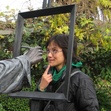
hmm... I didn't sign of on anything to the people at chinesepod!! so why did they use my picture as an illustration for this lesson?   ;)
suburbanite
I had the experience of having my suit case being deemed 太重了at a hotel in China.  Two young skinny clerks carried the case up the stairs (there was no elevator).  It was embarrasing.  I was grateful for the help.  The could have taken something else.  It was not actually not that heavy, just bulky. As for the 'man bag', I see it and it baffles me.  I guess if you have multiple phones and some map or organizer it is a viable alternative to a standard brief case.  I think that is why 外国人 opt for backpacks.  It is somehow more acceptible.
dunderklumpen
Somebody plz help me out here. I have no clue what a manbag is...? A picture would help.
L
lilleput
dunderklumpen: a manbag is a bag on a mans shoulder or in a mans hand. Not a popular thing around these parts
silentnoise
Manbags are extremely popular in the UK.  In fact, backpacks are less favoured as manbags are considered more trendy. @rich - slight correction, we don't really use the word "waist bag" for a fanny pack, in the UK at least we mainly refer to a "waist bag" as a "bum bag".  
sebire
Manbag: Indiana Jones has one, they can't be that bad!
F
fishinh2o
  in China, this manbag is called 斜挎包 xie(2) kua(4)bao(1), literally means diagonally-carried-bag. It's very popular in students and office clerks, both woman and man.
miantiao
我还是觉得  男子汉包 好听。我看那种普遍假皮包不怎么好看。 看看上面的足球队员们带着的包,真漂亮,很有感染力! yeah we use bumbag in oz as well.i wonder how americans would interpret bumbag  
S
stamper
  The bags above are called 拉杆包(la1 gan3 bao1) Just like 拉杆箱(la1 gan3 xiang1)
Y
yueer
上面的那张搞笑图片的球员是阿根廷的球员,不是意大利人
dunderklumpen
lilleput, sebire Thanks! Ken, Jenny 你们以前一起做了很多很多播客,今天的播客还是很绘声绘色很有意思,令人佩服。(I hope that makes sense...)
bababardwan
yueer, 你说对了;就是阿根廷的足球员 [you speak correctly;precisely to be argentina soccer players] 照片就是拿了从1994在美国这里 [你们要卷] [picture precisely taken from 1994 in the usa here[you need to scroll]] They are in their away jerseys
kevina
Silentnoise and Miantiao -  In the US a bum bag is called a fanny pack.
RJ
miantiao Americans would probably think a bum bag was the thing hobos tie to the end of a stick. These are the only bums we know. and may I add that I wouldnt think any self respecting bogan would use either a bum bag or a fanny pack. Man up, put the bag down. :-)
miantiao
rj yeah thats what i thought. we have swagmen and their swags,well did have anyway,now the young generation call them losers.and the government categorise the once jolly swagman as an itinerant worker, or part-time worker,or unemployed. i don't know what i'd do without my manbag. however, fanny pack sounds interesting. this may not be an appropriate forum to explain how aussies would interpret such a device.
triphazard
I have not actually heard shu1 bao1 used much when referring to a students backpack in the States. Also, on a completely different note, I like how Chinese is more straightforward than English! For instance: 'Wo3de bao1 tai4 zhong1le!' No 'shi4' at all, not needed. I like it! Question though, in what kind ofcase would you use 'shi4'?