Relevant Content
We'll always make sure you know exactly what the lesson is about. You will easily understand whether it is relevant for you.

Chinese Idol 2

Great Hosts
Here at ChinesePod, all our lessons are presented in an entertaining manner by our great hosts. You'll find language learners, teachers, and even professors sharing their insights, ideas, and teaching methods in our video and audio lessons.
Brief Lesson Summaries
A brief introduction of the lesson will always tell you what this lesson is about and what language level is the intended target. If you're interested in the subject, but might not be able to understand it in full, fear not; we have transcripts of lesson dialogues vocabulary so you can follow along.
IN THIS LESSON
ID: 1270 Intermediate
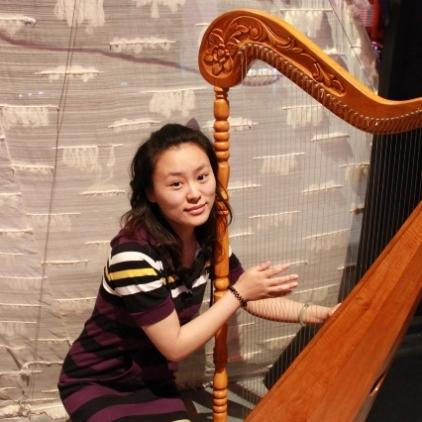
The competition is heating up as the judges decide to throw musical instruments into the talent show mix. Learn the Chinese words for playing various instruments, and be sure you know what "PK" means. (And you thought all Chinese words were written in characters?)
Awesome Materials
Our lessons contain natural communication in Chinese in video and audio format. We have have lessons focused on video or a podcast format and our lessons have transcripts of Lesson Dialogues, Important Vocabulary, Expanded Materials for a deep dive into the lesson topic and Exercises focused on testing your retention.
Detailed Vocabulary
Each lesson has it's unique vocabulary and will provide you with definitions and recordings so you can practice the pronunciation. You will also be able to grasp the core material of a lesson at a glance. Here we're showing you the Simplified Chinese version.
SIMPLIFIED PINYIN ENGLISH  
评委 píngwěi judge
讨论 tǎolùn to discuss
结果 jiéguǒ results
建议 jiànyì to advise
欢迎回来!评委老师们,讨论好了吗?
huānyíng huílai!píngwěi lǎoshī men,tǎolùn hǎo le ma?
Welcome back! Judges, are you finished discussing?
讨论好了。结果是兰兰和唐兵PK。
tǎolùn hǎo le。jiéguǒ shì Lánlan hé Táng Bīng PK。
We're finished. The result is an elimination round between Lanlan and Tang Bing.
PK,好啊!不过我有一个建议。让他们PK乐器,怎么样?
PK,hǎo a!bùguò wǒ yǒu yī ge jiànyì。ràng tāmen PK yuèqì,zěnmeyàng?
An elimination round! Great! But I have a suggestion. Let's have them battle it out with instruments. How about that?
我同意。
wǒ tóngyì。
I agree.
Natural Dialogues
Each lesson is centered around a natural dialogue with key vocabulary directly prepared and translated for your use. You can also listen to each sentence as an individual recording to improve your listening and comprehension skills.
Try It For Free
ChinesePod is 100% Free to Try. Create an account today and get started!

Comments (70)

Discuss in the forum
timlb
Fun lesson, thanks! I wonder if there's a term for what we in the West call "folk guitar" or "steel-string guitar". Perhaps just using 吉他 implies that it's that one; 电吉他 is used for electric guitar, and 古典吉他 for classical guitar. Also, I've seen 打 used for playing the piano, as well as 弹 (I guess they're as confused as we are about what kind of instrument the piano really is, as it's closest to being a percussion instrument). If you don't know the correct verb to use, can you just use zou4 (奏)which can be used to say "play music" or "play a musical instrument" in a more general sense? 奏音乐,奏乐器。 I love the PK term; I'm going to use that next time I play my Chinese friends in pingpong, just before they slaughter me...
li4wei3
我觉得二胡比吉他好听。 Hmm...the dialog is missing the translation for "轮到". And I want to save that word.
miantiao
力伟, 轮到你了 it's your turn. 不过  ‘该你了’ 比较顺口。
T
thomasf
what about the bagpipes where you have to blow and use the fingers?
John
li4wei3, 轮到 is in the key vocabulary. It's also now properly appearing on the dialogue page.
amandali_counselor
hi,thomasf we use 吹(chui1) for bagpipes that is 吹风笛(chui1 feng1 di2), because we use mouth to blow it.
connie
Hi timbrace To play the piano is 弹钢琴 tán gāngqín. I've never seen 打 used for playing the piano. If you don't know the correct verb to use, you can use 演奏(yǎnzòu)。Like, 演奏音乐 yǎnzòu yīnyuè,演奏乐器 yǎnzòu yuèqì.....
DavidXuzhou
hi timbrace, folk guitar, 民谣吉他 min2 yao2 ji2 ta0 steel-string guitar, 钢丝弦吉他 gang1 si1 xian2 ji2 ta0 nylon-string guitar, 尼龙弦吉他 ni2 long2 xian2 ji2 ta0 peak, 匹克 pi3 ke4 fret, 品 pin3 (measure word: 把 ba3, 一把吉他。) As we can see, most of them are direct translation from English. So, it's kind of easy to guess out ;) But, there is another situation. Most Chinese guitarists (吉他手/吉他演奏家) and guitar lovers sometimes use "琴" often. Like, “哥妹儿,你这把琴不错,新买的吧!”(Bro, your guitar is so cool, just bought it?). Here "琴" indicates guitar. And yes, you are right. It's a wise and brilliant idea to use "演奏 + any musical instruments" pattern to mean "to play". Such as, 演奏小号(to play a trumpet),演奏钢琴(to play a piano), and 演奏爵士鼓(to play drum sets). Also, if the pattern is reversed. It will be "any musical instruments + 演奏 +家". That's instrumentalists. Such as, 小号演奏家 (trumpeter), 钢琴演奏家 (pianist), and 爵士鼓演奏家 (drumer). Plus, here the word 演奏家 means high level players, who had already got great achievments. For those low level palyers, we use "手shou3". Such as, 小号手,吉他手,鼓手(we don't say 钢琴手). And for those fans, lovers, band players or someone's modest, they will use "玩+乐器+的", or "to play + 乐器+的". e.g. “她交了个新男朋友,是个玩吉他的”。     "我不是大师,我只不过是个拉小提琴的。"     "乐队里打鼓的已经有了,就是我。" Ok, back to the question. How to use different verbs to match different musical instruments to mean "to play" in Chinese? Well, let me have a break first :)
jimijames
Did you know? The action of pressing the keys of the piano, both black and white keys, actual "pluck" strings inside the piano to make the music of the piano. 弹钢琴吧! "Ebony and Ivory.....live together is perfect harmony....side by side on my piano......."   Cheers
philidor
Very interesting! Though it seems the judges/presentator are making up the rules as they go along, don't they? My question: what is "to play the oboe" in Chinese? (I do, so I wonder how to tell people :) )
DavidXuzhou
Ok, let me tell you. It's easy, 'cause there are only 5 verbs, 4 types. 吹 chui1,拉 la1,弹 tan2,打 da3/敲 qiao1 Think about the action word in the brackets …… 1.吹 (to blow): To any musical instruments which related to mouth, use 吹.  e.g. 吹小号,吹萨克斯(to play a saxphone),吹笛子,吹口琴(to play a harmonica).   2.拉 (to pull/to draw): Moving back and forth. Most are string instruments.  e.g. 拉小提琴,拉中提琴 (to play a viola),拉二胡.   3.弹 (to press): To any musical instruments which you use your FINGERS to hit the surface or string and to play it, use 弹.  e.g. 弹吉他,弹琵琶,弹钢琴.   4.打(to hit): To any musical instruments which you use sticks, other assists or your palms, not your fingers, to hit the surface or string. Use 打 or 敲.  e.g. 打鼓,打康加鼓(to play congas), 敲扬琴,敲木琴 (to play xylophone) For this type, 敲 is more used of those pitched or tuned percussion instruments, such as xylophone, marimba. For timpani, congas you can use both verbs. Because they are in the middle between pitched and not pitched. Another tip, 打 is more powerful, 敲 is more flexible.   Hope this will help :)    
jimijames
@philidor My suggestion would be 吹双簧管 chuī shuānghuángguǎn blow the oboe - to play the oboe oboe - 双簧管 shuānghuángguǎn   Connie, is that right? Cheers    
changye
Hi jimijames Probably the word "strike" might be appropriate for a piano (钢琴), and "pluck" should be for a cembalo/harpsichord (大键琴).
S
shenyajina
@jimijames, exactly! "吹双簧管"
connie
jimijames , You're right. to play the oboe: 吹双簧管 chuī shuānghuángguǎn
jimijames
@changye Yes I agree with you, the hammers in the piano do strike the strings, but I would guess why 弹 instead of 打 is used because the music of the piano comes from its strings. And also the piano the is not "拉ed" like the accordion. 真是一种矛盾的情况. Cheers
philidor
Thanks jimijames, shenyajina, connie! Now I know!
changye
Hi jimijames Chinese people use the word "弹" (play) for the piano not based on its structure/mechanism, but just based on its name "钢琴". The same goes for 风琴 (Organ). That said, people say "拉手风琴" (play the accordion), hehe. why 弹 instead of 打 is used because the music of the piano comes from its strings.
jimijames
@changye Thank you for this insight. Cheers
philidor
about oboes and such: isn't the basson also a kind of shuānghuángguǎn? If so, how are they distinguished? (xiǎo shuānghuángguǎn vs. dà shuānghuángguǎn, perhaps??)
J
jennyhow
wow PK really suprised me because in Hong Kong it has a bad meaning It means "one born out of wedlock" and is said quite often of bosses etc. So I will be careful here when practicing my mandarin J-H
DavidXuzhou
Hi philidor, basson is 巴松管(ba1 song1 guan3) or 大管(da4 guan3) Basson is more biger and sounds lower than oboe. And they are all belong to 木管乐器(mu4 guan3 yue4 qi4, woodwind instruments).
philidor
dldshanghai, thanks! Actually, my brother plays the bassoon (professionally) and I play the oboe (amateurishly)
DavidXuzhou
philidor, Interesting, so you and your brother can play in duet. 二重奏 (er4 chong2 zou4)
sdkloos
Neat lesson.  I heard from several different people that PK means "people killing".  Definition in the lesson of "play a kill" also works and is softer, just never heard it before.
monix
To say "I do not play any music intrument" in Chinese is "我什么乐器都不会弹" or should I say "我什么乐器都不会演奏"?   
changye
Hi monix Just saying "我什么乐器都不会" would be OK. 你会乐器吗? Do you play a musical instrument?你会汉语吗? Do you speak Chinese?
timlb
Do you also use 弹 for stringed instruments that are plucked using a plectrum and not directly with the fingers?
timlb
Connie, if you google 打钢琴 you'll get pages of results; maybe it's what folks use for the piano if they don't know to use 弹? 
changye
Hi timbrace You can also use "弹" for string instruments that are plucked with a plectrum, such as 柳琴 (China), 三味弦 (Japan), and 吉他 (when you play using a plectrum). A plectrum is translated as "拨片" (bo1pian4) or "拨子" (bo1zi) in Chinese. As for "打钢琴", you can use "打" when you play avant garde piano music.....just a joke. Actually, "打钢琴" might be more appropriate than "弹钢琴" for some music works, for example, by Bartok (巴托克) and Prokofiev (普罗高菲夫), hehe.
kimiik
I guess that 民族乐器 always implies 中国民族乐器 because recently I was immediately corrected when I described the Didgeridoo as a 澳洲土著人的民族乐器.
jianxuexi
Is this how I would say, "I get a lot of support from my family"? 我的家人给我很多支持。 jian
jennyzhu
@jianxuexi, Yes, your sentence is correct.
pinkjeans
Although it is probably grammatically incorrect, lots of people do use the term 打琴 to mean 弹钢琴。You'll hear that a lot amongst immigrant Chinese whose language has been diluted by other languages and regional influences. My Cantonese speaking relatives in Malaysia are totally guilty of it. But I'm relying on people like Connie and Chinesepod to keep me on the straight and narrow here! 谢谢!
D
derew
  this lesson is super useful. just want to say thanx. Can't stop listening to this lesson.真的
simonpettersson
It's fun to see the many things a letter combo like "PK" can mean. Though, sdkloos, I think what's used in the lesson is "player kill", not "play a kill". Just for some more perspectives, in Sweden, "PK" means "politiskt korrekt", that is, "politically correct", things that are sure not to offend anyone. A vast difference there. This lesson was very nice, though the long periods of music playing (though very 好听) will mean I'll have to do some editing to get good mileage out of the dialogue-only audio. No big deal, though. Also, was this an easy intermediate lesson or am I getting better?
John
derew, Glad you enjoy it!
Tal
This is a good lesson. Too short though! I was especially disappointed not to hear 兰兰 sing all of月亮代表我的心。 Totally sweet 吉他 accompaniment! Totally beguiling vocal! I think it might have been my all time favorite version. 如果兰兰在这个比赛没有获胜,我会哭了!
Tal
哦,对了。Usually I won't take issue with the English translations provided, but I feel that the translation for one of the expansion sentences is rather misleading. 跑步 would surely be much better translated as 'jogging' or 'running' NOT 'racing'.
zhenlijiang
Expansion sentences for 一边: 她一边工作,一边听歌。 He's doing a bit of work while listening to some music.--Should be "She". 我一边跑步,一边学中文。 I've been doing a bit of racing and a little studying Chinese.--As Tal has said, this should be "running" or "jogging", not "racing".
JasonSch
Thanks for pointing those out! Both corrections are correct and we'll have em changed soon.
zhenlijiang
I'm not Tal but you're welcome. Thanks for the response.
JasonSch
Well he pointed out the first mistranslation, so I figured I'd throw him some credit as well. ;)
peteroc
It is easier for me to think of PK as it relates to soccer/football.  When a game ends in a tie, the winner is decided by penalty kicks.....hence PK.  The penalty kicks are a direct face off to see who will win.  But I guess "player kills" is probably why it is used in Asia.
miantiao
sounds rather drastic doesnt it. but then literal translation is always a difficulty. i've heard pk also means to boycott? or desist?
J
jheitz
So, does 吹牛 (chui1niu2) mean to play the cow?
Tal
哈哈!An amusing suggestion. I was about to tell everyone it means to 'blow the cow' and make some kind of joke, but on reflection I'd better just say that it means 'to be boastful', to 'talk big'. ;)
orangina
I'm thinking 吹牛 is something along the lines of "tooting your own horn." Just to keep things innocent.
Tal
I like it orangina! There also 'blowing your own trumpet' right? ;)
orangina
yup, same thing!
calicartel
About the audio review, may I suggest the reading of the English translations in the expansion to be as loud as the Chinese. I end up guessing the English after hearing the Chinese, which is a good sign in that it proves my Chinese is not so bad. But there's no reason for the English - if it is to be read out at all - to be spoken in a barely audible whisper. I'm listening to these files while commuting so it is essential for the decibel level to be consistent from one line to the next (this also applies to lesson dialogues of course). I would hate to have to choose which CP resources to use purely on acoustic grounds.
miantiao
吹牛和打屁的意思差不多
miantiao
hey tal, yeah i think foot 'racing' or 'race' would be 跑赛。 100米快跑赛 - 400米快跑赛。sprint.  does anybody know the chinese translation for middle distance and long distance running race? would it be 慢跑赛 五千米慢跑赛 maybe? if so, then the winner of a 慢跑赛 would be the one who 跑's the 快est.
R
rainstlin
Hi miantiao, first, 'racing' or 'race' in Chinese is 赛跑。 middle distance and long distance running race is 中长跑(比赛)and 慢跑 means jogging. I hope my answer would help.
miantiao
rainstlin, helps a lot, thanks
sebire
Changye Actually, "打钢琴" might be more appropriate than "弹钢琴" for some music works, for example, by Bartok (巴托克) and Prokofiev (普罗高菲夫) :O Get to the 胡说 group! Hehehe.
pretzellogic
for discussion's sake, is there a difference in measure words in Chinese between playing upright bass (cello), and and electric bass? especially when you use a bow on the upright, then switch to your fingers?
chenlei
I had a quick listen to this lesson as I was trying to decide on a topic to discuss with my language partner and ended up having a lot of fun getting into more depth on this with her. She was particularly impressed that I knew what 'PK' was, so thanks for that. I have ended up with about 4 chinese friends coming over to watch X factor (American Idol in the UK) on Saturday night though! Can I just ask what is the official name of the show in Chinese? I know of 超级女声 but that was in 2005, right? and I've also heard of 快乐男声 and 快乐女声.....is this a different show? Not being in China at the moment makes it difficult to know!
DavidXuzhou
@pretzellogic, The measure words for cello and electric bass are same in Chinese, 把 ba3. Here are some measure words for musical instruments: 一把大提琴(cello), 一把电贝司(electric bass), 一把小提琴(violin), 一把二胡(erhu), 一把吉他(guitar), 一把琵琶(pipa). 一台(tai2) or 架(jia4)钢琴(piano), 一台竖琴(harp) 一台马林巴(marinba), 一台合成器(synthesizer). 一支(zhi1)双簧管(oboe), 一支长号(trumbone), 一支长笛(flute), 一支大号(tuba). 一套(tao4)爵士鼓(drums), 一套定音鼓(timpani), 一副(fu4)镲(cymbal). Hope it could help a little.
helenshen_counselor
@chenlei, "超级女声” and "快乐女生" are same competition shows, the best female singer will win. American Idol, we call it “美国偶像”,Měiguó ǒuxiàng.
J
johnyaku
I don't know for sure, but I strongly suspect that 吉他 is a better transliteration for "guitar" in a dialect other than Mandarin, because "j" becomes "k" in a lot of southern dialects (and in the Japanese readings of many characters that start with "j" in modern Mandarin). A lot of early contact took place down south, so my guess is that that's where the borrowing took place.
changye
Hi johnyaku That's a good observation, and what you pointed out is true. I also think that 吉他 is a southern dialect transliteration, probably it's a Cantonese sound "kit-ta / git-da". A lot of foreign words were imported to mainland China through south regions , such as 广东 (Canton) and 香港 (Honk Kong), mainly when these regions were economically more advanced than northern China. Here are some good examples, 的士 (di2 shi4, taxi) and 曲奇 (qu1qi2, cookie). Their Cantonese pronunciations are "tik-shi" and "khuk-ki" respectively, which are very similar to "taxi" and "cookie" in English. For the record, "吉" (ji) was pronounced as "ki" in northern Chinese (Beijing dialect included) until a few hundred years ago. Modern Mandarin doesn't have sounds like "ki, gi, hi" anymore.
J
jshang
jianxuexi says  Is this how I would say, "I get a lot of support from my family"? 我的家人给我很多支持。 ----------------- Jian, Actually 'support' is used more as a verb, e.g. 我的家人很(or 非常)支持我! 谢谢你那么支持我! If used as a noun, it's more like: 谢谢大家对我的支持。 谢谢大家给我的鼓励。 What you have, '我的家人给我很多支持。' is 'westernized' Chinese :-) .    
hunchiepunker
I'm sure some of the commenters here are familiar with Beijing band P.K. 14. Here's a page on them: http://wiki.chaile.org/index.php/P.K._14 Anyway, the "PK" in this lesson made me think a bit about their name, and how odd some of the wordplay here may really be. For instance, 14 has dire significance in Chinese. In combination with the meaning of PK found in this dialog and in China's online world, their name could be construed as "Player Killed is Dead" - pretty dark stuff! However, in Chinese, the band goes by ”青春公共王国“, or "Public Kingdom for Teens" - or alternatively, "P. K. For Teen" with a pun on the english pronunciation of the arabic numerals "14". Super weird. Anyway, this all just seemed interesting to me. I wonder if "PK" really has anything to do with this group's name.
hunchiepunker
Oh! I'm gonna continue on here about this band. Please pardon the digression. I saw this quote above: "Just for some more perspectives, in Sweden, "PK" means "politiskt korrekt", that is, "politically correct", things that are sure not to offend anyone. A vast difference there." One of the members of this band is Swedish. The drummer - though he speaks mad Chinese. And they often tour with International Noise Conspiracy, which is a Swedish band. simonpettersson, There may actually be a connection there!
lujiaojie
jianxuexi:I get a lot of support from my family.Yes, you can say: 我的家人给我很多支持。
mandarinkoala
@_tal_. I thoroughly agree with you. This lesson is way too short, however, a thoroughly useful and great lesson nonetheless. So have said others. Why is "playing the drums" so different? Heard the dialogue but don't really get the meaning. Oh, @CPod. Is there a "Chinese Idol 3"? Thought you could extend the vocab etc. I feel this was better than the first, but "hunger for more!" My (chinese) wife liked this lesson as well. She is a GuZheng player, while I am a guitar, Bass, & ErHu musician. Great stuff!  
Q
qweasdzxclyp
Li Yuchun(李宇春) is the only real idol in China. There is a poem about Li yuchun. 春哥纯爷们 铁血真汉子,一岁能杀鸡,三岁造飞机。 五岁开坦克,六岁穿铁衣。四境百里传春哥,人人闻风而丧胆。 若问汉子谁能敌?个个摆手面色惊! 十岁练武打,十二会做法。 十五懂发电,眨眼数百瓦。浑身肌肉展雄姿,意气风发震四海。 若问春哥多强壮?伸直双臂过火车! 十九练竞速,追随火箭跑。 二十进男足,断子绝孙脚。春哥上场皆畏缩,巴西德国俱投降。 若问爷们力多大?一呼一吸龙卷风! 三十学瞳术,虐杀写轮眼。 四十喜背书,大英图书馆。宇春挥手造宇宙,万物俯首拜英雄。 若问法力有多大?耶稣如来避三分! 五十统尘世,六十管三界。 七旬一咬牙,天崩而地裂。力量无边觉寂寞,自感无趣退江湖。 举头沉默望青山,山中野兽俱哀鸣。 春哥从此成神话,千古佳话百世传神州回望花成堆,山顶千菊次第开。一爆菊花妃子笑,无人知是春哥来。
G
gracechen7874
轮到你了 。 可以说“该你了”吗?
8
8890909
轮到你了 。 can we change to say gai ni le ma?