Relevant Content
We'll always make sure you know exactly what the lesson is about. You will easily understand whether it is relevant for you.

Going to the Toy Store

Great Hosts
Here at ChinesePod, all our lessons are presented in an entertaining manner by our great hosts. You'll find language learners, teachers, and even professors sharing their insights, ideas, and teaching methods in our video and audio lessons.
Brief Lesson Summaries
A brief introduction of the lesson will always tell you what this lesson is about and what language level is the intended target. If you're interested in the subject, but might not be able to understand it in full, fear not; we have transcripts of lesson dialogues vocabulary so you can follow along.
IN THIS LESSON
ID: 1467 Intermediate
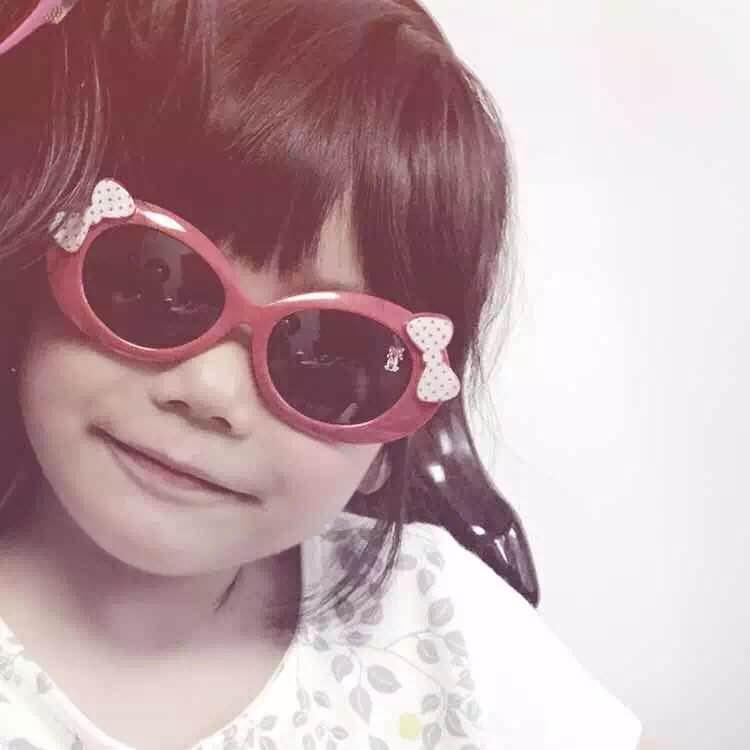
Today we're following a mother and her daughter to the toy store. Unfortunately for this mom, there's nothing her child doesn't want! Learn how to discuss kids' playthings, as well as how modern parents deal with their demanding little emperors in this intermediate level Chinese lesson.
Awesome Materials
Our lessons contain natural communication in Chinese in video and audio format. We have have lessons focused on video or a podcast format and our lessons have transcripts of Lesson Dialogues, Important Vocabulary, Expanded Materials for a deep dive into the lesson topic and Exercises focused on testing your retention.
Detailed Vocabulary
Each lesson has it's unique vocabulary and will provide you with definitions and recordings so you can practice the pronunciation. You will also be able to grasp the core material of a lesson at a glance. Here we're showing you the Simplified Chinese version.
SIMPLIFIED PINYIN ENGLISH  
玩具 wánjù toy
就 jiù just, only
保证 bǎozhèng to guarantee
芭比娃娃 Bābǐ wáwa Barbie doll
妈妈,我们去玩具店吧!
māma,wǒmen qù wánjù diàn ba!
Mom, let’s go to the toy store!
不行!家里玩具那么多,不能买了。
bùxíng!jiālǐ wánjù nàme duō,bùnéng mǎi le。
No way! There are so many toys in the house, we can’t buy any more.
就进去看看,我保证不买。
jiù jìnqù kàn kan,wǒ bǎozhèng bù mǎi。
Let’s just go in and have a look. I promise we won’t buy anything.
好吧!
hǎo ba!
OK...
Natural Dialogues
Each lesson is centered around a natural dialogue with key vocabulary directly prepared and translated for your use. You can also listen to each sentence as an individual recording to improve your listening and comprehension skills.
Try It For Free
ChinesePod is 100% Free to Try. Create an account today and get started!

Comments (30)

Discuss in the forum
Tal
拼图 is an interesting term, but I think we have to be clear it doesn't refer to any kind of puzzle toy (e.g. a Rubik cube) but specifically a 'picture puzzle', like a jigsaw (拼图游戏)?

John
That's right. The old-fashioned kind.
zarichard61
Hi,nice to meet everybody!

pretzellogic
Wow, do Chinese mothers actually say things like, "girls can't play with remote controlled cars"? Or is this merely a gender role stereotype on Cpod's part?
Tal
Western mothers say that too, despite modern concepts of gender equality. I'd say in China people are generally less concerned about creating the pretense that boys and girls can be treated the same.
pretzellogic
ok, once again, I am guilty of "I saw a Chinese person do this once in my neighborhood; therefore, this happens with all Chinese everywhere".
tiaopidepi
Don't worry about it, mate. I work in a very multicultural city and cannot tell you how frequently I hear "Americans all...." when I should be hearing "Seattleites all..." We all generalize. It helps tie those neurons together.
John
You'll hear this kind of thing. When we make use of stereotypes, we do it consciously because it's useful (i.e. it reflects that types of things you will hear real people say).
pretzellogic
Maybe I want some dialogue like, Lulu: "Mom, I want a chemistry set. Dudu was picking on me in class, so I want to use some ammonium nitrate to blow his chair up". Mom: "Oh, Lulu, little girls don't blow people up".
socratesinsichuan
This is one of the things I think Chinese Pod does a great job of, namely, delivering valuable cultural information along with great language lessons. Almost invariably, a generalization/cultural observation I find here resonates with my own experience in China
bababardwan
hehe, classic, love it
suansuanru
I am guilty of "I saw a Chinese person do this once in my neighborhood; therefore, this happens with all Chinese everywhere". I love this sentence. ;)
pretzellogic
Maybe over-the-top exaggeration can be humorous at times after all :)
holothurian
Almost every day I hear that "waiguoren dou blah blah blah". I have almost never heard it said in a disparaging way, it is not a big of a deal, at least for me. It is just as commmon to hear "Sichuan ren dou blah blah blah". I have lived in 15 countries at least, it has been the same in every one. A human condition.
bababardwan
我同意。。地球人都概括
changye
人就那样!
bababardwan
我有很多狗。。都叫做“Rex”。。它们都听错了”x人blah blah blah"
changye
Toy Story 《玩具总动员》
ellen_counselor
我喜欢这个电影
masterkrang
i always have a question regarding the changing of third tones when they are grouped together. i know a word that is two third tones will change to a 2nd and 3rd tones, but when you have three 3rd tones together like 给你买, seems like when you guys are saying it as 2nd, 2nd and 3rd. now what about four consecutive 3rd tones? five?
connie
1. If there are two 3rd tones, the first one is pronounced as a 2nd tone. 2. If there are three 3rd tones, they are generally pronounced as 2nd, 2nd, 3rd. eg, 给你买,我也有, 3. If there are more than three 3rd tones, we first break them into smaller groups based on their meaning, and then pronounce them according to the tone change rules listed above. eg, 我很想你。wǒ hěn xiǎng nǐ. 2nd 3rd / 2nd 3rd 我很想给你买。wǒ hěn xiǎng gěi nǐ mǎi. 2nd 2nd 3rd / 2nd 2nd 3rd or 3rd / 2nd 3rd / 2nd 2nd 3rd 请你给我五碗米。qǐng nǐ gěi wǒ wǔ wǎn mǐ. 2nd 3rd / 2nd 3rd / 2nd 2nd 3rd
F
flibberty2
The song in the background sounds like 'This Old Man'. Could anyone provide a link to the Chinese words, and maybe a sound file? Thanks.
neddanison
好像他們唱的是英文。I hear them singing English -- not the "This Old Man" words, though.
neddanison
那個孩子說“媽媽壞”,翻譯成“Mom,you're mean!” 我不知道這樣的話合適几歲的孩子。在中國,幼兒園小朋友常常對他們的父母說這樣嗎?
gaojian
他們討論的時候,提到“壞” 這鍾說法。我認為小孩子們會說這句話。在台灣叫英文的時候,我五,六歲的學生都會用這樣的詞彙。
neddanison
嘿,gaojian 謝謝您的回答! 我以前也是住在台灣。 也注意到小朋友說“媽媽壞”那樣話。我想 -- 那是說我不知道 -- 小孩子們過了差不多六歲不能這樣子說。您認為呢?
gaojian
他們不該說,但是他們卻會說! 哎牙,今年的小孩子! 哈哈
chris
Just wanted to say there are some particularly good expansion sentences in this lesson from a grammar perspective - really got me thinking about the structures used.  I particularly liked this one: 已经下了一星期的雨了真烦人 (It's already been raining for a week, it's so annoying). I would never have come up with this Chinese sentence if asked to translate the English, even though I know all the words!
root
In the dialogue section, 等你生日的时候,妈妈给你买。  When it’s your birthday, and I’ll buy you one. translation should be fixed, it's not "I"...
lujiaojie
Fixed now. Thanks!