 D
I absolutely love these historical/classics lessons! I eat them up. Can we expect more of these kinds of lessons? I know besides this classical Chinese lesson there is also a romance of the three kingdoms lesson. I wouldn't mind seeing a 红楼梦 Lesson in the near future :P
 R
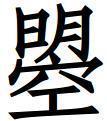
Hi 曌,I found your Chinese name fascinating. Just want to compliment you for your courage to adopt such a personal ID. Tang empress Wu Ze Tien is considered the pioneer women liber, way ahead of hers and our time. She made up such a word, definitely has no issue in her self-esteem, self-sustaining...
By the way, I, a chinese, married to a Canadian living in the States. He is super nice guy.
The world has become smaller.
From 武則天 to 髙宗玉 is only an email away. Cheers, 為世界和平乾杯。
 T
Describing Wu Zetian as a 'pioneer in women's liberation' is a reflection of modern people's tendency to read into history modern values and concepts - not any kind of an accurate description of history. It's like when the Song general Yue Fei is taught as a hero of the Han ethnicity (when there was no concept of Han as an ethnic group at the time), or Ghenghis Khan is described as a Chinese hero who unified the country (he would have been quite surprised by such a description). Wu Zetian was a power hungry, bloodthirsty tyrant, much like most emperors who seized control rather than inheriting it - not a feminist.
To doodle16 - there is already a 红楼梦 lesson in the advanced archives (I still remember listening to it many years ago - at the time, it was my first exposure). Also a lesson on 西游记, titled monkey king or some such...might be a 水浒传 one too, not sure.
But if you are interested in historical lessons, I'd highly recommend audiobooks of the series 上下五千年 - about 350 excellent lessons, each 5 or so minutes long, on Chinese history, complete with transcripts. I know Mark has also started using it, so I am likely not the only person who would recommend it. A second ago I went to look for a purchasing link on chinese amazon - but it seems someone decided to make it into a free app for ios. I'm going to download and ensure this is the same version. At any rate, I encourage you to search it out as a source.
i would like a similar lesson which gives the proceding of that poem 有朋自远方来,不亦 . . . I would like to understand that whole poem! Greetings from Switzerland
 P
If you are interested in Chinese poetry you may enjoy the "Poems with Pete" lessons on ChinesePod.
https://chinesepod.com/library/channels/list/Poems+with+Pete
T
It's from 论语 lun2yu3. I'll make a quick annotation of difficult characters and translation for you, to hold you off until you get your full lesson ;)
Original:"子曰:学而时习之,不亦说乎?有朋自远方来,不亦乐乎?人不知而不愠,不亦君子乎?"
Annotated: 子(indicates Confucius)曰(yue1, said, says):学而时(means 'frequently' here)习之(means 那,这, here refers to that which you studied)),不亦说(here read yue4, standing in for the modern 悦)乎?有朋自远方来,不亦乐(le4 ;) )乎?人不知而不愠(yun4, angry),不亦君子乎?
Translation : confucius said: Studying and then frequently practicing/reviewing, is it not a very joyful thing? Having people who share your values come from distant places to visit, is it not a very happy thing? When people do not understand you and yet you do not get angry, is this not a person with good morals/upright behavior?
Note that the final 知 here is a bit ambiguous - you might be able to make a case for interpreting it as standing in for 智 instead of representing the modern 知 (similar to the 说 stands in for 悦 - in ancient times alot of the chaacters we love had yet to be born in or come into their own). My own research is not in this field (classical Chinese philosophy), and I lack the expertise to decide whether that would be a viable interpretation or not, so I kept it as 知 in the translation.
 T
"Wu Zetian was a power hungry, bloodthirsty tyrant...".
Yeah, but dude, in China they are the heroes. Every schoolchild and student here believes that Genghis Khan was a great Chinese hero. I always thought that one legend that would always be retold in any culture would be the story of Popeye. Maybe we're all just too western in this thing.
D
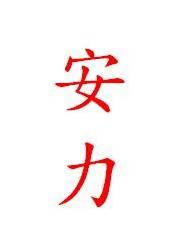
Thank you! When I actually adopted that name as my 姓 I had many a strange looks. I picked it because it sounds like my last name and because I have a great passion for history and admiration for 武则天. Maybe someone for me to live up to? ;)
It's actually kinda strange though when you take into account that I am a guy.
@tingyun: Thanks for the information! and please allow me to come to the defence of my name sake. She may not be a modern feminist but I would go far as to say she is a particularly bloodthirsty tyrant. There have been many grizzly tails written about her but not all of them necessarily have a basis in fact (such as the story of her killing her daughter which has no true evidence of happening). Past rulers are often written out to be far more tyrannical than they really were to the benefit of their successor (such as horrific portrayal of Caligula and Hannibal).
I would like to go as far as to say that when it came to her rule, she was neither particularly forward thinking nor particularly brutal. She was just like all the other emperors. In the end she is the same, and that should say something about women when it comes to leadership.
T
Hi Tal,
Yep - My point is just that if you want to make a hero out of a brilliant conqueror, don't try to dress it up as something egalitarian. ;)
Hi Doodle,
We don't seem to disagree on anything - I did say "much like most emperors who seized control rather than inheriting it" (that is perhaps the only possible area of disagreement, I think you can't compare her to ones that inherited within a stable succession). I didn't mean any of those random stories - to me, random incidents of violence against isolated individuals will never stand as significant in the contexts we are talking about.
And agreed on her very, very impressive ability.
D
Oh right, I suppose where we disagree is on is if the emperors were tyrants to begin with. Being from a monarchy myself, I would say I'm certainly biased to one side.
However if you have any specific sources or recommended reading about Wuzetian and her reign, I'd love to learn more about my name sake.
Ting Yun, thank you very much for taking the trouble and giving explanation. Whish you a nice day! D.
T
Hi Doodle,
Actually, I should make this clear - I only used language like 'tyrant' and 'bloodthirsty', which is loaded with modern moral sensibilities and judgments, to satirize the silliness of looking at these sorts of historical figures and assigning positive modern moral judgments like feminist and woman's liberation. My point was that if you look at any of these conquering emperors from a modern moral perspective, you are going to cringe, not say "you go girl!" - but that does not mean I think any such moralizing about the past is useful (I do not).
As for your question about interesting reading, since we broached the subject of moral judgments, have you read the concluding moral evaluations of wu zetian contained in the Tang histories? Always interesting to see how the ancients dealt with such historical judgements, and what implicit moral standards they chose to use, as well as where they chose to praise and where they chose to condemn.
《旧唐书》:史臣曰:治乱,时也,存亡,势也。使桀、纣在上,虽十尧不能治;使尧、舜在上,虽十桀不能乱;使懦夫女子乘时得势,亦足坐制群生之命,肆行不义之威。观夫武氏称制之年,英才接轸,靡不痛心于家索,扼腕于朝危,竟不能报先帝之恩,卫吾君之子。俄至无辜被陷,引颈就诛,天地为笼,去将安所?悲夫!
昔掩鼻之谗,古称其毒;人彘之酷,世以为冤。武后夺嫡之谋也,振喉绝襁褓之儿,菹醢碎椒涂之骨,其不道也甚矣,亦奸人妒妇之恒态也。然犹泛延谠议,时礼正人。初虽牝鸡司晨,终能复子明辟,飞语辩元忠之罪,善言慰仁杰之心,尊时宪而抑幸臣,听忠言而诛酷吏。有旨哉,有旨哉!
赞曰:龙漦易貌,丙殿昌储。胡为穹昊,生此夔魖?夺攘神器,秽亵皇居。穷妖白首,降鉴何如。
《新唐书》:昔都孔子作《春秋》而乱臣贼子惧,其于杀君篡国之主,皆不黜绝之,岂以其盗而有之者,莫大之罪也,不没其实,所以著其大恶而不隐欤?自司马迁、班固皆作《高后纪》,吕氏虽非篡汉,而盗执其国政,遂不敢没其实,岂其得圣人之意欤?抑亦偶合于《春秋》之法也。唐之旧史因之,列武后于本纪,盖其所从来远矣。夫吉凶之于人,犹影响也,而为善者得吉常多,其不幸而罹于凶者有矣;为恶者未始不及于凶,其幸而免者亦时有焉。而小人之虑,遂以为天道难知,为善未必福,而为恶未必祸也。武后之恶,不及于大戮,所谓幸免者也。至中宗韦氏,则祸不旋踵矣。然其亲遭母后之难,而躬自蹈之,所谓下愚之不移者欤!