Relevant Content
We'll always make sure you know exactly what the lesson is about. You will easily understand whether it is relevant for you.

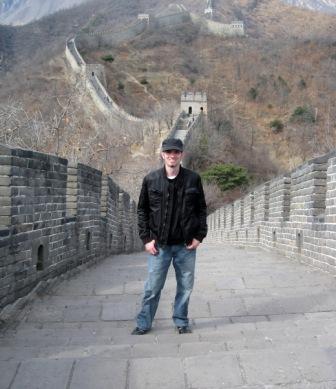
Let's Go to Beijing

Great Hosts
Here at ChinesePod, all our lessons are presented in an entertaining manner by our great hosts. You'll find language learners, teachers, and even professors sharing their insights, ideas, and teaching methods in our video and audio lessons.
Brief Lesson Summaries
A brief introduction of the lesson will always tell you what this lesson is about and what language level is the intended target. If you're interested in the subject, but might not be able to understand it in full, fear not; we have transcripts of lesson dialogues vocabulary so you can follow along.
IN THIS LESSON
ID: 6583 Intermediate
Peaceful and hectic, gritty and ancient: Beijing is amazing. Here's an Intermediate video about China's capital, hosted by Connie. Learn to use Mandarin to order some meat on a stick, and try some traditional noodles. It's all happening in the Jing.
Awesome Materials
Our lessons contain natural communication in Chinese in video and audio format. We have have lessons focused on video or a podcast format and our lessons have transcripts of Lesson Dialogues, Important Vocabulary, Expanded Materials for a deep dive into the lesson topic and Exercises focused on testing your retention.
Detailed Vocabulary
Each lesson has it's unique vocabulary and will provide you with definitions and recordings so you can practice the pronunciation. You will also be able to grasp the core material of a lesson at a glance. Here we're showing you the Simplified Chinese version.
SIMPLIFIED PINYIN ENGLISH  
同事 tóngshì colleague
一起 yīqǐ together
一共 yīgòng in total
待 dāi to stay
Try It For Free
ChinesePod is 100% Free to Try. Create an account today and get started!

Comments (33)

Discuss in the forum
K
kaohsiung
明年7月的時候,我打算去北京。 聽說夏天的時候是最好的時間去那邊。 這課程的食物都吃過, 可是我還不知道"haw" 是什么東西? 在臺灣每一個地方有特產, 比如說: 岡山羊肉, 新竹貢丸, 臺南但仔面, 等等。 其實我認為那樣的菜的口味不會那么特別。。 當地的人說“真很有名” 實際上,這樣的食物很普利。。。 在中國大陸“ 北京烤鴨” 是不是比別的地方的烤鴨好吃嗎?    
O
ocean2sun
这样说吧,制作方式是北京烤鸭与其他地方的烤鸭不同的根本之处。so when you taste it ,you will love it ,i promise ,t
X
xinyaomeimei
hello
changye
The capital city of the PRC had many names in the past, including both official and unofficial ones. The oldest recorded name is 蓟 (ji4). The city was first called “北京” in 1403, and later changed to 京师 and 北平. In 1949, the PRC government officially named the city “北京”. In Taiwan, the official name of Beijing is "北平", but not "北京", for political reasons. I love 燕京啤酒!   蓟 (ji4) 燕都 (yan4 du1) The capital city of 燕国. 燕京 (yan4 jing1) 幽州 (you1 zhou1)幽都 (you1 du1) 南京 (nan2 jing1) .....!!  Don't ask me why. 燕山 (yan4 shan1) 中都 (zhong1 du1) 大兴 (da4 xing1) 大都 (da4 du1)  The capital city of Yuan dynasty. 汗八里 (han4 ba1 li3)   The other name of  大都. 北平 (bei3 ping2)  Ming dynasty, and 1928 ~ 1949 京师 (jing1 shi1) …… etc.
U
uihuhasin
that was upper elementary at best
A
anonymous239594
Seeing Connie is always such a pleasure!
F
feyga
 did you say in the story this? "我们 还吃了很多好吃得东西" ?
urbandweller
This was a great lesson! I can relate to this tourist type stuff and I actually understood most of it! Maybe because I experienced alot of that while in Beijing. I think it triggered some things in my memory. I heard a great man once say "You know more than you think you know!" It makes sense in a strange way! haha! Can you guys do a similar one for Shanghai that would include the major attractions such as the Bund, Yuyuan Gardens, and Nanjing Lu?? Thanks Cpod.
bill
Hi changye, Regarding 南京 isn't it true that during some historical periods it was the capital city of China rather than 北京? Otherwise, a well produced, instructive and fun video. Connie always speaks clearly, without hesitation and with a special charm that I think appeals to all CPod course levels. Bill  
menglelan
加油Connie!!!  
tvan
kaoshiung, 我覺得廣東烤鴨比北京烤鴨好吃,但是如果你要決定你一定要去北京吃。當然臺灣的北京鴨比不上北京的。 Bill, I'm no expert on Chinese history but, despite being named one of China's four ancient capitals, I think that, using Chinese standards, Beijing only qualifies as a "middle aged" capital.  It was made the capital by the Mongols around 1200 A.D.    洛阳/洛陽/Lùoyáng and 西安/Xīān have much longer, storied histories. Of course, given China's numerous civil wars, it is arguable what even constitutes a "Capital of China", since many other cities were capitals of derivative states.  Even as recently as WWII, Chongqing served as China's capital city.  (Yeah, yeah, I know; there's only one China.)
John
Here's the transcript: 去年五月一号,我和我的同事肖霞一起去北京玩儿。 我们是坐火车去的。 在北京一共待了7天。 去了很多很好玩儿的地方,有天安门,故宫,颐和园,天坛,还有长城。 我们还吃了很多很好吃的东西,有羊肉串儿,有冰糖葫芦,有北京烤鸭,还有炸酱面。 去了这么多好玩儿的地方,吃了这么多好吃的东西,我们都非常高兴。 而且我们都很喜欢北京。
changye
Hi Bill, As you said, the current 南京 in 江苏省 (Jiang-su province) was the capital city of some dynasties in China, such as 明朝 (1368 - 1644) and 吴国 (222 - 280). The city was called “建业”, which is a well known name among history fans, when it was the capital of 吴国. And surprisingly enough, the 南京 is still the official capital city of Taiwan! Exactly speaking, 台北 is the provisional capital of Republic of China even now. Now, as for 北京, the capital of the PRC, was called “南京” in the era of 辽国 (Liao dynasty, 907 - 1125), which mainly governed northern China. There were five capital cities of 辽国 then, namely 上京,中京,东京,西京,and 南京 (= current Beijing). The first capital was 上京, and other four cities are called “陪都” (pei2 du1), which means a “backup” capital. The 南京 was the southernmost capital in the ancient dynasty “辽国”. Map of 辽国 https://ja.wikipedia.org/wiki/%E7%94%BB%E5%83%8F:China_Song_Dynasty.jpg
weijin
kaohsiung, 'haw' is Chinese hawthorn. 中文叫山楂。是一種水果,也是中醫的一種草藥,對消化有利益的。吃過hawflakes嗎?也是來源山楂的食品。
baishen
Great work Connie and crew for another great story with great photos. Thanks again John for the transcript.
John
What I liked about this story is that there were real photos from the real trip to accompany the story. (It's not practical to do that for every story!) Maybe not many Elementary-Intermediate students are familiar with her, but 肖霞 (Xiao Xia) used to be a teacher of the Advanced podcasts at ChinesePod. You can still find her in the lesson archives...
B
bobrobelka
Hello! Maybe somebody knows where to find "keys"? I mean this: 蛇 she2 (snake) This character contains of 2 parts ("keys"). 虫 - chong2 (insect) 它 - ta1 (it) But some words consists of many characters which meanings I can't find - so if you nkow the place where to find - please share... :)
B
bobrobelka
thanks JOHN for transcription:)
Jess_Andersen
Hi John, The third line should read: 在北京呢一共待了七天。 Thank you for leaving that for me to find. Jess.
bill
tvan and changye, Great information ! 多谢, Bill  
pearltowerpete
Hi bobrobelka The "keys" you're talking about are called "radicals," from the Latin for "root." This is a rich field of study. Learning the 214 traditional radicals or the 188 simplified ones (there is a lot of overlap) will be very helpful in your studies. They're an invaluable way to break apart words and make them easier to remember. Plus, they're fascinating. Your Chinese dictionary is probably organized by radicals. That would not be a bad place to start.
B
bobrobelka
Thanks, Pete, it was helpful! Have found them in DimSum program.
B
baiwenkai
Thanks for the transcript John. I got most of the dialogue, but you clarified the missing bits. Thank you to Connie also whose diction is very clear, no heavy accents. 白文凯
C
crosslink
'What's The Story' is very useful - thanks. It would be so good if you provided a worksheet to go with it. The questions could be (1) true/false  (2) missing words (3) multiple choice. Easy for you to do and it would give us an opportunity to focus our listening in order to complete the questions.
calkins
Here are the vocabulary files for this video lesson, if you want to import them into HanziHelper, ZDT or PlecoDict (just right-click the links below and "Save Link As"). HanziHelper (Traditional only)ZDTPleco (Traditional)Pleco (Simplified)
pretzellogic
I keep forgetting (as if you didn't say it often enough), that cpod is based in Shanghai.
R
ruyide
What is the difference between the DAI (meaning stay) used in this video and the other DAI, which is a completely different character but with the same meaning, according to the dictionary.
pearltowerpete
Hi ruyide The reading of 待 as dai1 and meaning "to stay" is informal. 待 as a 多音字 (character with multiple readings) is being used instead of 呆 dai1 which also means to stay, but can also mean "stupid or befuddled."
R
ruyide
Pete, xie xie ni de bangzhu. Mafan ni le.
B
bill_w
看这个之后,我就很想北京! After watching this, I really miss Beijing! ...especially central heating...  :)     
modernnomad
Connie.. love the podcast.. your speaking pace was just right .. i also loved that you included a lot of Beijing landmark's name in Chinese which will be very useful when I pop over in Beijing sometime this year!
E
Engelchen Lili
Stumbled across this older video. Although tech has developed and there are lots of new opportunities to make lessons, it's still nice to watch these older ones and see how far ChinesePod has come. A thing I like about this lesson is that there is only a part transcripted in the second run, makes it easier to focus on the listening. 
anonymous1068458
Thanks for the feedback!! We have came all the way to this new version of ChinesePod. Thank you so much for accompanying us all along. We really appreciate for the comments and feedbacks that you gave us. Happy Chinese New Year🧧!!!