Relevant Content
We'll always make sure you know exactly what the lesson is about. You will easily understand whether it is relevant for you.

Xīnkǔ 辛苦

Great Hosts
Here at ChinesePod, all our lessons are presented in an entertaining manner by our great hosts. You'll find language learners, teachers, and even professors sharing their insights, ideas, and teaching methods in our video and audio lessons.
Brief Lesson Summaries
A brief introduction of the lesson will always tell you what this lesson is about and what language level is the intended target. If you're interested in the subject, but might not be able to understand it in full, fear not; we have transcripts of lesson dialogues vocabulary so you can follow along.
IN THIS LESSON
ID: 7044 Elementary
Are you tired of being tired? Lets talk about a kind of tired that trumps all those measly forms of fatigue. Its more than just tired however... its xīnkǔ! This multifarious word is so meaningful that it gets its own show. So go and grab your self a cup of coffee and perk up to this weeks episode.
Awesome Materials
Our lessons contain natural communication in Chinese in video and audio format. We have have lessons focused on video or a podcast format and our lessons have transcripts of Lesson Dialogues, Important Vocabulary, Expanded Materials for a deep dive into the lesson topic and Exercises focused on testing your retention.
Try It For Free
ChinesePod is 100% Free to Try. Create an account today and get started!

Comments (39)

Discuss in the forum
S
shagrat
Hi Guys, you're showing a pdf logo on this Qing Wen episode which I immediately thought "great - at last" but the link doesn't work. Is it just a CP "glitch" or is my PC the problem? Qing Wen is probably my favourite podcast, because I just love the way Clay keeps those two unruly girls Amber and Connie in their place (haha)
light487
辛苦 > hard, exhausting, with much toil 辛 > bitter; toilsome, laborious; 8th heavenly stem (7 strokes)。 苦 > bitter; hardship, suffering (11 strokes)。
B
brims
Connnie, one question for you: so does 辛苦 have a positive connotation to it? For example, let's say that my work is 辛苦 lately. What's the feel behind the word?
zhong_bide
Agree with shagrat - PDF file does not load - suggestion comes up that it is damaged. Can we have it, as well as the Fruit Salad one, fixed please?
light487
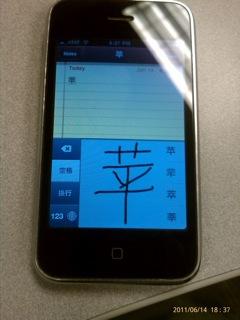
Also.. I just noticed that in the title for this 请问 you have the incorrect character for xin1. You have xing4 which is 幸 meaning luckily/fortunately instead of 辛.. 1 too many strokes there. :)
B
bigkev
A quick off topic question. What is the difference between a waigouren and a louwai?
bill
Thanks for another one of those jewels of the Chinese language. This reminds me of when I would return home from "work" really wiped out. My wife would say, 你很累!And I'd smile and say, "It's a labor of love." 我很辛苦 would've been just right. Bill
sarahjs
Clay and his coffee drives my mad ;)
A
auntie68
CPOD, I think you've been busted by light487, who has been learning Mandarin for... how many months? If I hadn't been following his Mandarin progress via reading his posts, I think I would have trouble believing how far into Chinese characters he is. A real Mandarinomaniac!
A
auntie68
P/s: Cute doggie in the new avatar. I like it.
sarahjs
Light is right!!!!!! Well done. Even my book states: (regarding xin1 辛 to mean bitter) 'The student should be careful to distinguish it from xing1 "be lucky" 幸' (The book being 'reading and writing chinese'... mine's the trad one)
sarahjs
I'm wondering If Light has the same book as me?........ His first post for 辛 has the exact same description as mine. The book is fantastic, it helps me to write some of the more complicated characters, as I am using the traditional Chinese writing. Traditional Book http://www.amazon.co.uk/Reading-Writing-Chinese-Guide-System/dp/0804832064/ref=sr_1_3?ie=UTF8&s=books&qid=1208907340&sr=8-3 Simplified Book http://www.amazon.co.uk/Reading-Writing-Chinese-Simplified-Character/dp/0804835098/ref=sr_1_1?ie=UTF8&s=books&qid=1208907340&sr=8-1
light487
Yes I have the same one! The Simplified one though. Unfortunately I have limited access at work and I can't see or write in chinese characters at all so I can't reply using the characters.. I'm still having trouble with sentence construction too.. I wanted to say "I have the same book".. but I couldn't remember the word for have.. I think it is yeo3 ?.. but then of course I don't know the noun for book (I only found it yesterday for the first time..) and I don't know the word for same either.. haha.. so I can't do much else but read, listen and talk like a caveman.. :)
connie
Hi light487, Yes, you are right. The correct one is 辛苦(xīnkǔ).
amber
hi guys, Yes, fixed the Xīnkǔ 辛苦 now :P No there are no PDFs for QW, sorry... that is a little glitch. Thanks for your patience with our moving offices glitchiness!
connie
Hi everyone, here are the sentences used in the podcast today: 能不能辛苦你一下?Néng bu néng xīnkǔ nǐ yīxià? 我要辛苦你一下。Wǒ yào xīnkǔ nǐ yīxià. 自己做吧。Zìjǐ zuò ba. 这次要辛苦你一下。Zhècì yào xīnkǔ nǐ yīxià. 辛苦你了。Xīnkǔ nǐ le. 老婆,辛苦你了。Lǎopo, xīnkǔ nǐ le. 那天很辛苦。Nàtiān hěn xīnkǔ. Clay最辛苦。Clay zuì xīnkǔ. 有的时候在上海开车也很辛苦。Yǒude shíhou zài Shànghǎi kāichē yě hěn xīnkǔ. 有时录请问很辛苦。Yǒushí lù Qǐngwèn hěn xīnkǔ. Clay, 辛苦你一下。Clay, xīnkǔ nǐ yīxià. 不行。Bùxíng. 好的。Hǎo de. 辛苦了。Xīnkǔ le.
artkho
Fellow cpoddies, we all heard Amber, preparing Qingwen can zap her energy. So here's a haiku each of us can recite to Amber to butter her up: Amber 辛苦了 辛辛苦苦录请问 我辛苦你了 :D
light487
Aww.. wish I could read that at work.. but I not allowed to have non essential software and tools on work computer :( I will wait till I get home to read Haiku! :) I'm sure it's all to do with last mintue, rush rush, busy busy of moving that al the "little" mistakes occurred. It's all good.. I'm just happy we got another qing wen.. Still waiting for that surprise Amber! :) Nope! I didn't forget about it! :)
bazza
I like the phrase 自己做吧。 ;)
denswei
你好, Light487 我在办公室里有同一的难题, 所以我用这个网站: http://userwww.service.emory.edu/~zxie3/ime.html Since they don't allow non-essential software at work, I use this website to type Chinese on a windows office computer. One nice thing about this website is that you can do a "save as" to your computer and use it off line. (however, I can still read Chinese on my work computer) But I home, I use a Macintosh, which has about 8 Chinese entry systems built in!
light487
谢谢denswei! 个将要有助! 这也很好: http://usa.mdbg.net/chindict/chindict.php
light487
Hrmm I think I wrote the 2nd line wrong..
tvan
bigkev, If you're talking about the phrase I think you are, I used to hear louwai in San Francisco. It is a Cantonese coloquial term for foreigner and has the same meaning as WàiGúoRén/外國人/ 外国人. It's Mandarin equivalent is LǎoWài /老外.
zhong_bide
Connie, I really always appreciate you giving us the transcripts of the relevant sentences. Thanks
orkelm
I'm 50 years old and have never been a groupie before. But there was actually a little sentimental tug knowing that this was the last lesson from the old factory. How weird is that? Clay, thanks for the comparison of ma fan and xin ku, that helped put it together for me.
lunetta
Orkelm, I couldn't being a little starstruck myself when I watched the videos they put together for us. Amber and Clay would be the perfect CPod celebrity couple. Of course, celebrity couples tend not to last very long so maybe it's better if they're just friends... :-) No matter what, 辛苦你们了! (And that includes Connie as well. Where would the other two be without her?)
忠Jaron
could I say... I think study chinese language is xin1 ku3 ?? or tamen1 xin1 ku3 (trying to state that they work hard) or ni2 shi2 xin1 ku3 (you are a hard (good) worker) I don' know ??
S
standuke
I went home yesterday and told my wife '辛苦你了'. She was very touched, and then she asked my why I had never said that before. Of course I've tried to say more or less that in English, but it's pretty obvious the Chinese has a special meaning she never got from the English. It was very sweet! 谢谢你们!
Joachim
Would rituals when moving into a new home be a topic for a 请问? Like, in Germany, when you move into a new house or flat, neighbors would give you some bread and salt. Anything like this in China? Are there any - possibly ancient, superstitious - acts when people move house?
sfrrr
I think the bread and salt is pan european, although my French friends add a bottle of red wine too. Relatives of mine from Russia even do the bread and salt routine.
light487
:( bu.. I still can't see if I am typing the right characters because I can't see them. I got the box coming up to ask me if I wanted to install the simplified Chinese language but it then said I don't have access to do it.. :( So even with those websites I can't access chinese characters online.. I'll just have to practise my pinyin instead, which is the same thing really considering that I type in the pinyin to write the characters on the screen.. it's just not the same... *sigh*
amber
hi jarona, You can say those like this: 我觉得学汉语很辛苦。 Wǒ juéde xué Hànyǔ hěn xīnkǔ. I think studying Chinese is really hard. 他们很辛苦。 Tāmen hěn xīnkǔ. They work really hard. 你是个很努力的员工。 Nǐ shì ge hěn nǔlì de yuángōng. You are a hard worker.
amber
hi brims, When you say 辛苦 (xīnkǔ) to other people, it can have a variety of meanings, positive mostly, complimentary often, as discussed in the podcast. But if you say it about yourself, it is usually because you are complaining, as in, "最近我工作很辛苦。" (Zuìjìn wǒ gōngzuò hěn xīnkǔ.) Lately my work is so tiring / difficult.
A
andrewm
"最近我工作很辛苦。" (Zuìjìn wǒ gōngzuò hěn xīnkǔ.) Lately my work is so tiring / difficult. If you replaced the word "辛苦 xīnkǔ" with the word "辛勤 xīnqín" or the word "努力 nǔlì", would that be complimenting yourself? As in "Lately, I've been very hardworking."
amber
hi andrewm, You could say: 最近我工作很努力。 Zuìjìn wǒ gōngzuò hěn nǔlì. It has a more complimentary tone, yes. You wouldn't use 辛勤 (xīnqín) in this case.
Michael Krzykowski
denswei, 谢谢。, I tried the website you listed. 我能写字。 I was able to type pinyin on the site and then copy the result to this box. It makes a good alternative at the office.
wolson
Some of you may wonder where I have been for a couple of weeks? 辛苦 is an apt description for my past three weeks! In one day I had 17 different events including climbing the Great Wall in two different locations. On one day, we were to fly to Beijing, arrive about noon, drive to Qinhuangdao, have an evening event with some officials and retire. The plane from Shanghai to Beijing was fours late. Then, we spend two hours on the Beijing streets getting to the highway due to Friday evening traffic. We arrive Qinhuangdao after 11:00 PM. So we go to bed, right? WRONG! At midnight we have a full Chinese Banquest with the officials. So we get to bed only to get up at 7:00 AM and begin a very long day of activities. On that day one of our party virtually collapsed and could not continue the day beyond about 4:30 PM. My day did not end until after 11:00PM that day. Then on the day before returning, I fell and bruised my ribs. They are still giving me problems. That was my last two weeks in China. I finally got back to US last Tuesday. Since I was gone for two months, my workload here was several times my normal workload. And of course, I was jet-lagged in zombie-land. It is finally starting to ease off and I almost feel human again. What doesn't kill you makes you stronger! So 辛苦 is extremely timely and appropriate.
J
josth
Hi-Light, ;-) Think of it the positive way, once you master typing the pinyin, having Chinese installed makes is soooo easy to really write. Bigkev & Tvan: wai4 guo2 foreign country When verifying that, I came across this one: 天不怕,地不怕,就怕洋鬼子说中国话tian1 bu2 pa4, di4 bu2 pa4, jiu4 pa4 yang2 gui3 zi3 shuo1 zhong1 guo2 hua4Not afraid of heaven, not afraid of earth, only afraid of foreign devils speaking Chinese.  
Y
yingyue
You can say it to your mum: 妈妈,您辛苦了( Mum, you have been working so hard) anyway, when you say "你辛苦了" to someone, it is a compliment and to show your care to him/her.