User Comments - pjolicoeur
pjolicoeur
Posted on: Saving with Alipay
March 18, 2014 at 12:22 PMGlad to know that I'm not the only ones having problems with playing the recordings using Safari. Often times, they don't work at all, and it seems to come and go. I don't know if it's a Safari problem or internet speed problem. (I access the site from Shanghai, and don't know where the servers are located.)
Posted on: Family Ties
March 10, 2014 at 12:53 PMHi there. Just curious about the placement of 不 in the following clause:
你不都知道吗
I find this a little awkward, and would normally say "你都不知道吗“, and am wondering if putting the 不 before 都 changes the emphasis, as well as the implication about what the listener knows. That is:
你不都知道吗 = You don't know everything (about sth)?
你都不知道吗 =You don't know anything at all (about sth)?
Thanks for the clarification!
Posted on: Train Ticket Scalpers
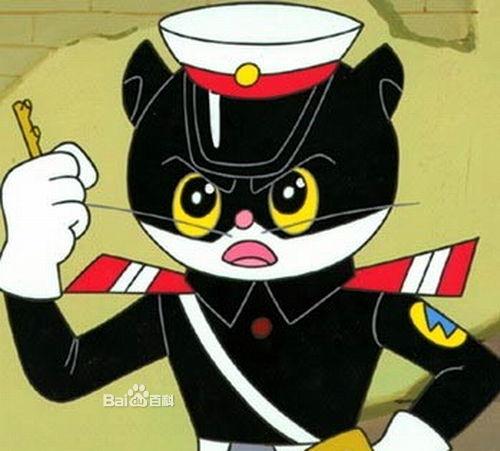
January 30, 2014 at 1:36 AMGlad you like it! It's Mr. Black from the Black Cat Detective show, a cartoon airing in the mid-80s. You can find it on YouTube and other streaming sites. http://en.wikipedia.org/wiki/Black_Cat_Detective
Posted on: Train Ticket Scalpers
January 29, 2014 at 7:22 AMThank you for the clear answer!
我最近发现了黑猫警长,他也要抓黄牛!我也喜欢葫芦兄弟,该两个卡通都不错。
Posted on: Train Ticket Scalpers
January 28, 2014 at 1:02 PMGood lesson.
I'm curious about the difference in usage between 验 and 查. Could you also use 查 in this instance? Is 验 more formal, emphasizing that the ticket will be inspected, whereas 查 is more general and means to simply to check something? Thanks!
Posted on: Farm Life Tourism
May 21, 2013 at 2:12 PMGreat lesson. I just came back from Moganshan where I stayed last weekend, about a three hour drive southwest from Shanghai (which Jenny mentioned at the end of the lesson). We were in Houwu Village (后坞村) and stayed in a 农家乐 for only 120 RMB / night. Very clean and comfortable. We had lunch there one day and lunch at another nearby one the next day. Jenny is right that there are no real standards to these kinds of inns, so it's best to check them out and see the rooms before deciding to stay. Fortunately with Dianping and other websites, one can find some reviews before making the trip.
Posted on: Ordering Food for the Group
September 9, 2010 at 5:51 AMI was pretty intimidated about ordering when I first came to China, but after a while, you develop a list of dependable, popular dishes. I'll always try to get a couple of those (宫保鸡丁, anyone?), and then maybe pick the local specialty and a new dish or too. At least in China, most decent restaurants have picture menus, making it a lot easier to order. Some basic phrases, like 这是辣的吗? (is this spicy), or 这是什么肉? (what kind of meat is this) help out. At least, most dishes aren't too terribly expensive (stay away from the abalone), so if you order something that doesn't work out, it's not a big deal. Just try something else.
Posted on: Ordering Food for the Group
September 9, 2010 at 5:45 AMJohn's comment about the difference between ordering in Beijing and Shanghai is right on. The dishes in Shanghai do tend to be smaller. I'll usually try to get one hot dish per person, plus 1/2 to 2/3rds as many cold dishes. The great thing about Chinese food is that if you didn't order enough dishes at first, you can easily add a couple more later on. So, you can be a little conservative when first ordering and not worry about either wasting food or not ordering enough.
Posted on: Ordering Food for the Group
September 9, 2010 at 5:43 AMOr 《AA制》, but it's fairly uncommon among good friends. It's usually better and more common for friends to trade off. One will buy dinner one evening, and the friend can reciprocate another night. It seems that AA制 might be catching on more, particularly if the group involves foreigners or are not close friends. In Shanghai, if I'm mainly with other westerners, we usually do AA制,but among Chinese friends, it's almost always one person who pays all.
Posted on: Running into an Ex
April 15, 2014 at 12:39 PMInteresting. I had the mistaken impression that 小三 was more for men, while 二奶 is used for women.