
Relevant Content
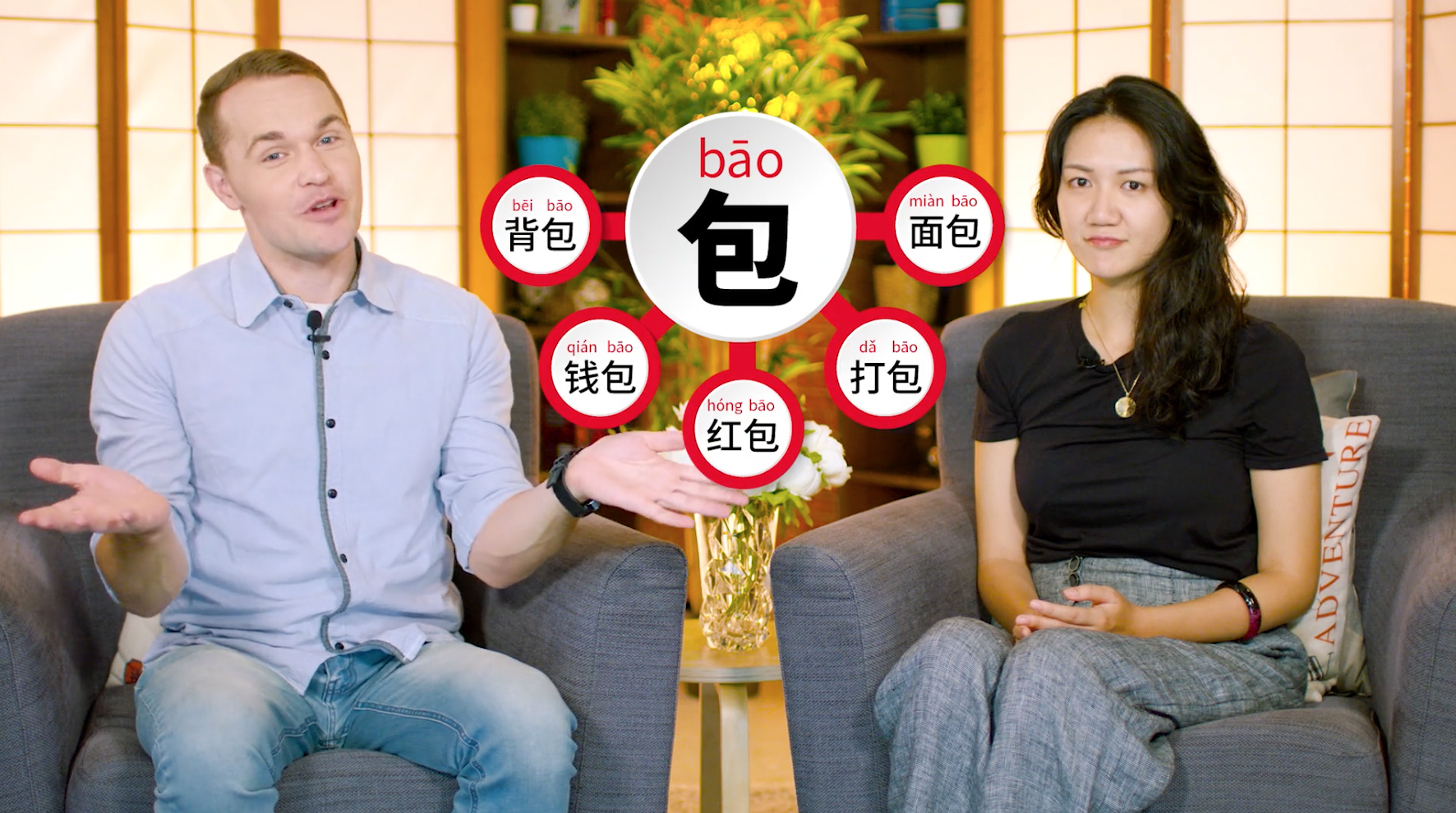
We'll always make sure you know exactly what the lesson is about. You will easily understand whether it is relevant for you.

Buying Organic Food

Great Hosts
Here at ChinesePod, all our lessons are presented in an entertaining manner by our great hosts. You'll find language learners, teachers, and even professors sharing their insights, ideas, and teaching methods in our video and audio lessons.
Brief Lesson Summaries
A brief introduction of the lesson will always tell you what this lesson is about and what language level is the intended target. If you're interested in the subject, but might not be able to understand it in full, fear not; we have transcripts of lesson dialogues vocabulary so you can follow along.
IN THIS LESSON
ID: 2550 Elementary
In this lesson we look at the organic food and whether or not the taste difference is worth the heftier price tag.
Awesome Materials
Our lessons contain natural communication in Chinese in video and audio format. We have have lessons focused on video or a podcast format and our lessons have transcripts of Lesson Dialogues, Important Vocabulary, Expanded Materials for a deep dive into the lesson topic and Exercises focused on testing your retention.
Detailed Vocabulary
Each lesson has it's unique vocabulary and will provide you with definitions and recordings so you can practice the pronunciation. You will also be able to grasp the core material of a lesson at a glance. Here we're showing you the Simplified Chinese version.
SIMPLIFIED PINYIN ENGLISH  
种 zhǒng kind, sort
番茄 fānqié tomato
可 kě [emphatic marker]
有机 yǒujī organic
妈,买这种小番茄吧。
mā,mǎi zhè zhǒng xiǎo fānqié ba。
Mom, why don’t you buy these small tomatoes!
哎哟,这么贵!
āiyōu,zhème guì!
Wow! They’re so expensive!
这可是有机的,没有农药和化肥。
zhè kě shì yǒujī de,méiyǒu nóngyào hé huàféi。
But these are organic, they’re pesticide and fertilizer free.
太贵了,这么一点要十几块钱。
tài guì le,zhème yīdiǎn yào shíjǐ kuàiqián。
They’re too expensive, over RMB10 for just this!
Natural Dialogues
Each lesson is centered around a natural dialogue with key vocabulary directly prepared and translated for your use. You can also listen to each sentence as an individual recording to improve your listening and comprehension skills.
Try It For Free
ChinesePod is 100% Free to Try. Create an account today and get started!

Comments (9)

Discuss in the forum
veronique21
What about GMO ? I've heard that China produces genetically modified rice. Is it used in China ? Is it written on the products that it's GMO ? And how to say GMO in Chinese ?
toianw
Hi veronique GMO is 转基因生物 (zhuǎnjīyīn shēngwù). At the moment, China doesn't allow the commercial production of any GMO food products, though they are spending a lot of money researching them. Having said that, there was also a story a bit back about supermarkets in Hubei province selling illegal GM modfied rice (see here).China also imports a lot of GMO soy beans and corn (mostly from the US and South American countries). I believe most of these are used to produce cooking oil and for animal feed (with Chinese eating more and more meat). Accoring to Baidu Baike, labelling is required, though your more likely to see 非转基因 (non-GM) in big characters on the labels of cooking-oil. There's been a lot of debate about GM foods in China recently (we had a recent Meida lesson about this on CPod) Most Chinese people seem to be very suspicious of GM products - the government are planning a media campain to try and persuade people that they're safe (see here - for example).
veronique21
Hi Toianw Thank you for your very complete answer and the links. It seems that China want a fait accompli to be adopted by population. GMO is really not a simple question...
kdogg36
From what I have read, it seems like the anti-GMO movement is just about as legitimate as the anti-vaccination movement or young-earth creationists.

bonscott
Yes, young earth creationism is utter BS. The anti-vaccination movement has some valid concerns, but in the end the welfare of the populace should outweigh the minimal risks associated with vaccination. But not so sure about GMO. I don't believe we have the knowledge at this stage for anyone to claim with absolute certainty that it is safe. There probably is nothing in it, but as there is no population-wide danger to opting out like there is with immunisation, I don't see why we can't have mandatory labelling, just so people are free to choose.

A
ashaman5
I had originally learned "xi hong shi" for tomato. Is that antiquated or in writing only? It seems fan qie is much more common, which originally confused me as I know "qie" as eggplant.
KathieB
I lived in northern China for several years and they only used xi hong shi for tomato, however used fan qie jiang for tomato sauce.   Looking at the date of this post though - I am sure you have already worked it out. Kathie
tony.cpod
So is kěndìng (肯定) the same as yídìng (一定) then? Both seem to mean "certainly" or "definitely".
Constance Fang
Although they both mean 'certainly' or 'definitely', 肯定 is more certain than 一定. The difference between 肯定 and 一定 is that 肯定 can use as a adjective. You can say '我很肯定他會來'. Besides, 肯定 can also means 'to agree' or 'to approve'. For example, '他工作認真,大家都肯定他'.