User Comments - Gwilym-ChinesePod

Gwilym-ChinesePod
Posted on: Networking Event
March 16, 2015 at 1:34 AMThe exercises do not work on the iPad app, and the reordering does not work on touch devices on the website. If you'd like to practice, the best bet it to go on the main website on a computer.
Posted on: 平行宇宙
March 13, 2015 at 10:06 AM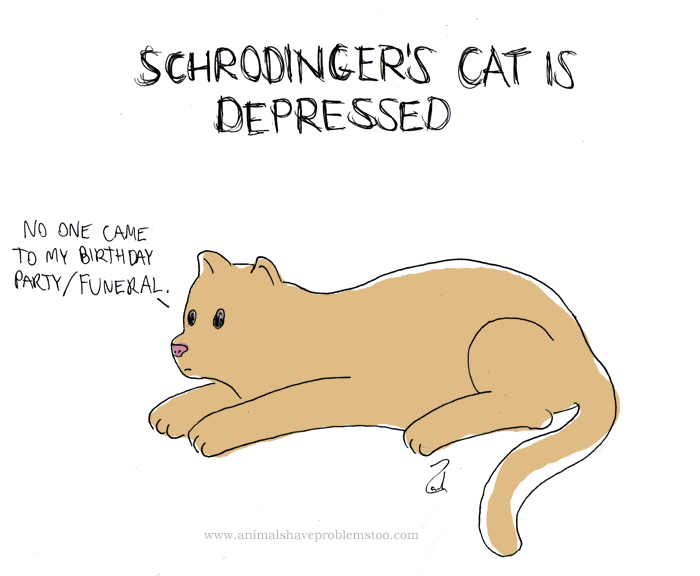
source: http://www.iamdann.com/2010/08/30/schrodingers-cat-an-argument-against-zombies
Posted on: 平行宇宙
March 13, 2015 at 10:03 AMAre there any methods in particular you have in mind?
Posted on: Rebooking a Dentist Appointment
March 11, 2015 at 5:06 AMIn their basic form they are pretty much similar and can be used interchangably.
If you do use 本来/原来, you would probably finish the sentece with 后来。
原来 also has an extened meaning which means "all along", or a sudden realisation.
You cannot however switch up certain set phrases such as 原来如此。
原来 you might use to talk about how things in the past 看起来ed, whereas 本来 would be about events and time in the past.
Sorry if this is confusing. TL;DR, they're very much the same.
Posted on: If Not You, then Who?
March 11, 2015 at 3:16 AMThis issue happens every now and then, and has something to do with how the publishing system works with the website (it's releated to having the wrong lesson ID initially). Either way, i've asked Armel to look in to it. For now, could I ask you to bookmark the lesson to add it to your self-study and RSS feed. The lesson ID is now fixed, but the self study db doesnt get updated.
Posted on: Rebooking a Dentist Appointment
March 11, 2015 at 2:42 AMPosted on: Rebooking a Dentist Appointment
March 11, 2015 at 2:41 AMFor those that don't like dental noises, here is the track 'sans drill'
Posted on: Entire/Whole: 整 (zhěng) vs 全 (quán) [Video/Audio]
March 8, 2015 at 8:47 AMIt's just a different font style, like how we have sans serif fonts and serif fonts. (sans is French for "without" (without the extra strokes). The character is made up of two radicals, a person (人) and a king (王)。 Pleco also says that the 人 could be a 入 (to enter). The PDF uses a standard computer font (Ariel I think) so has no extra strokes. Check out this cool websiteby our good friend Dave which exlpodes all characters into radicals. I made a quick pic to show some different simplified fonts of the same character. 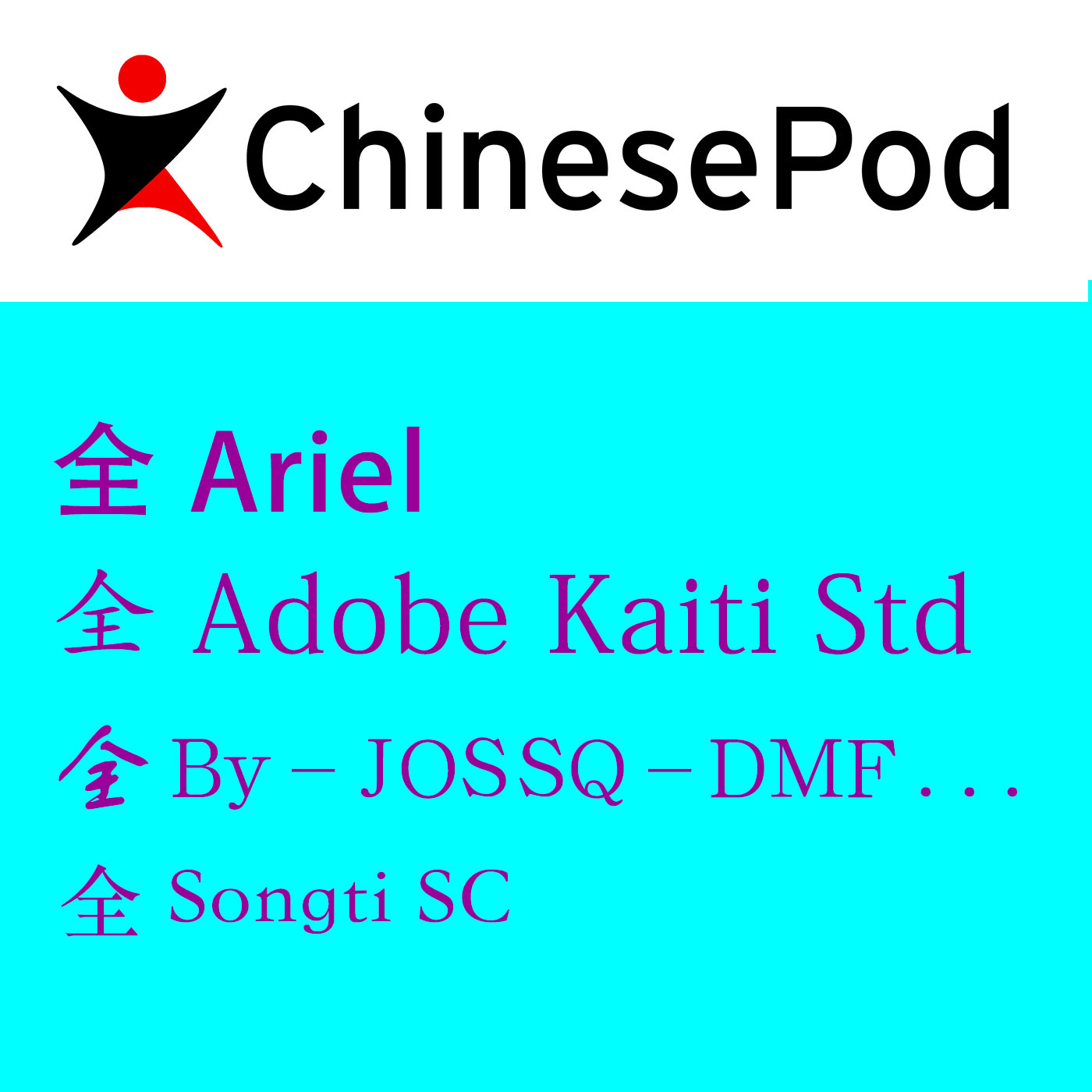
Posted on: Introduction to Pinyin
March 6, 2015 at 4:46 AMCheck out our support page for the answer to this one.
Posted on: Networking Event
March 17, 2015 at 2:26 AMWe've now added the feature to re-order sentences on touch devices. This means you can now do all the Cpod lesson exercieses on your phone or tablet without needing to be on a computer.
Let us know if you have any problems with this new feature